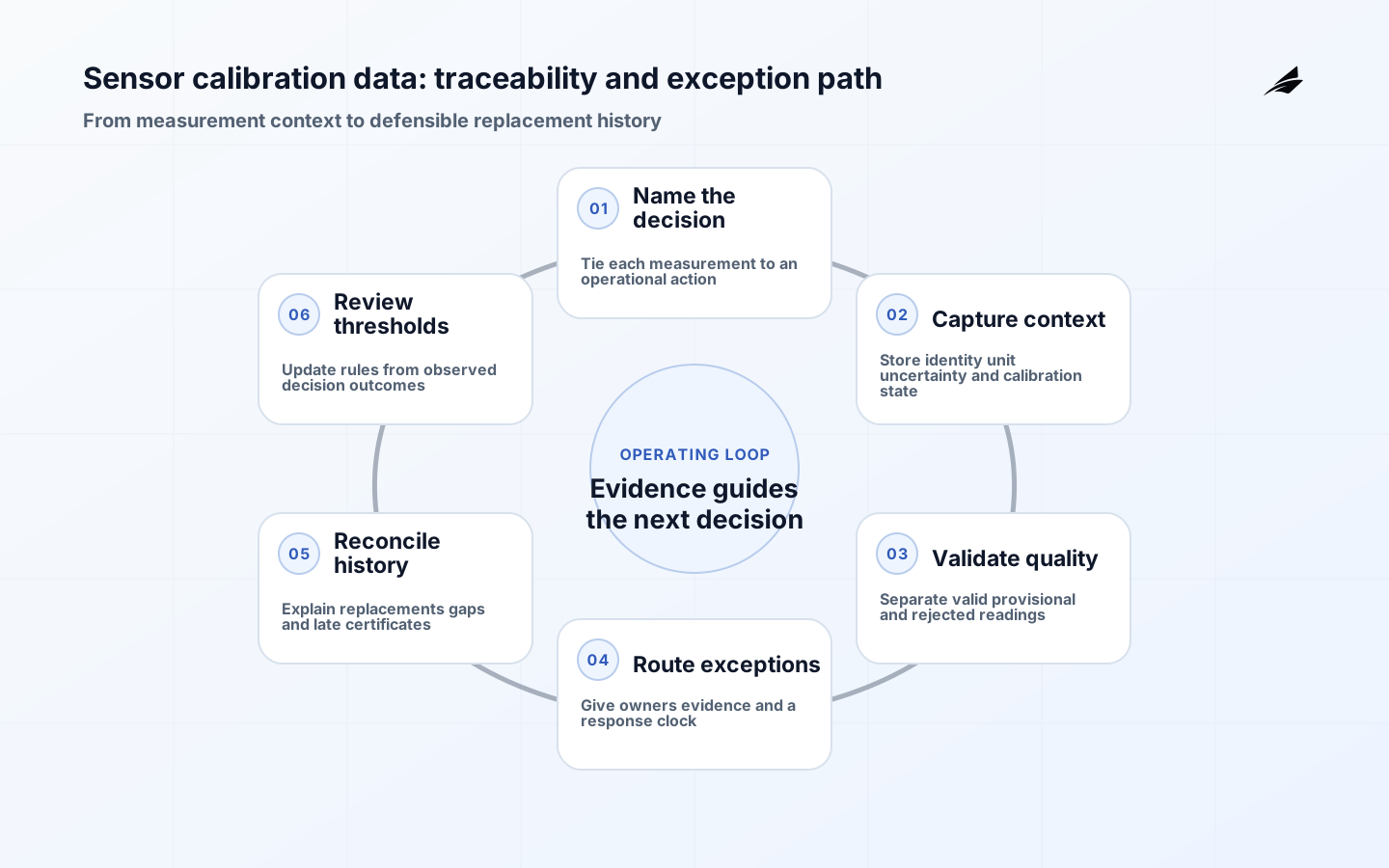
Sensor calibration data is not a certificate stored in a procurement folder. It is the evidence that lets an operator decide how much confidence to place in a measurement at a particular time and in a particular configuration. IT managers need it because sensor values move through gateways, pipelines, dashboards, alerts, and business workflows that may outlive the original device team. If the calibration context is lost, a clean-looking number can become misleading. Treat calibration as data lineage: a measurement should remain connected to the instrument, method, reference, result, uncertainty, and effective period that made it usable.
Sensor calibration data — Define the decision behind the measurement
Start with the operational use: compliance evidence, billing, preventive maintenance, safety interlock, or trend analysis. The consequence of an incorrect value determines how much calibration detail, review, and retention are justified. A trend-only vibration signal may tolerate relative consistency; a custody or safety value may require stronger traceability and explicit out-of-tolerance handling. Asking this first prevents both extremes: collecting PDFs nobody can use, or discarding the context needed when a critical reading is challenged.
| Use of the reading | Calibration expectation | System behavior when status is uncertain |
|---|---|---|
| Exploratory trend | Record method and last known status. | Show confidence caveat; do not use as an automatic control. |
| Maintenance threshold | Track effective date and tolerance against trigger rule. | Create a review task before an irreversible action. |
| Compliance record | Retain traceable certificate, result, uncertainty, and approver. | Hold the record for investigation and follow governed correction. |
| Safety control | Validate suitability and redundancy at design time. | Move to the documented safe state when evidence is invalid. |
Sensor calibration data — Keep the measurement context with the data
At minimum, link a reading to asset identity, sensor model and serial number, channel, units, scale or conversion, calibration status, calibration event identifier, effective interval, and quality flag. Store original values and transformations so a future analyst can see whether a unit conversion, offset, or smoothing rule changed the result. The NIST IoT Device Cybersecurity Capability Core Baseline provides device-capability context, while ISO/IEC 17025 frames competence and traceability for calibration work. A data lake that retains only a normalized number may be efficient, but it cannot answer the question that matters after an incident: what did the instrument mean when it produced this value?
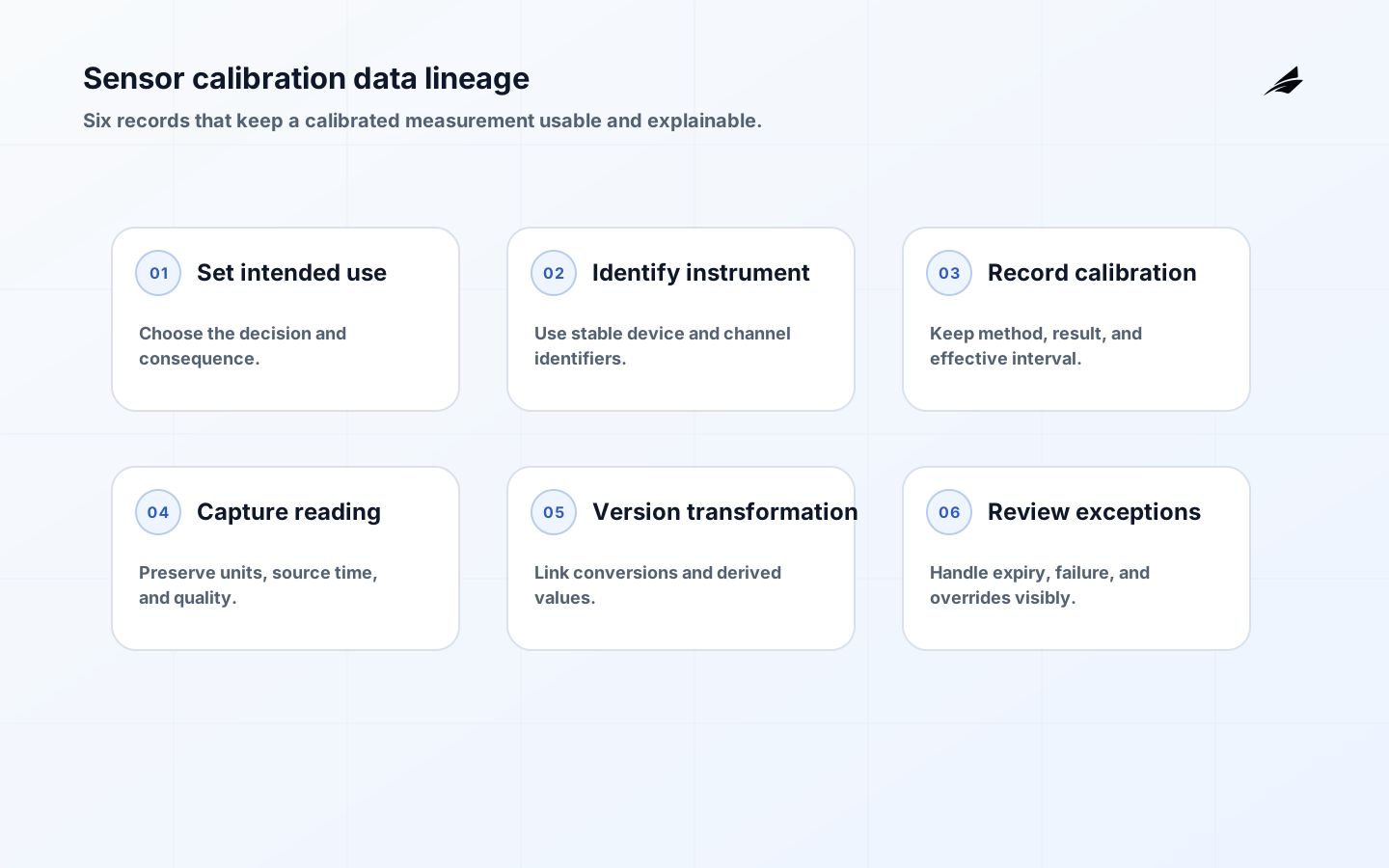
Time matters twice. The calibration may have been performed on one date and become effective after verification; the reading may be observed by the platform later than it occurred at the sensor. Preserve those separate times. The OGC SensorThings API Standard offers a useful model for linking observations to their time and thing context when data crosses unreliable links. A late upload should not quietly acquire the calibration status that is current today if a historical status is needed.
Sensor calibration data — Compare document-only and data-first models
A document-only model can satisfy a basic audit request when calibration is rare and measurements are not automated. It fails when systems need to evaluate status at ingestion or when many instruments share similar names. A data-first model stores structured calibration facts and links the source evidence, making validation and alerting possible. The practical answer is often hybrid: structured fields for operational decisions, plus the signed report or certificate for supporting detail. Avoid turning every report into unsearchable attachment metadata.
Sensor calibration data — Build an exception path before automating alerts
Define how the platform handles expired status, failed checks, unavailable certificates, replacement sensors, and assets that move sites. The implementation should surface a clear status to the person using the reading and route exceptions to an accountable owner. Validate with a historical replay: feed readings that span a calibration expiry and a sensor replacement, then prove that reports, alerts, and exports retain the correct context. NIST SP 800-92 supports treating the resulting records as an auditable event trail rather than device-only metadata.
| Data event | Required fields | Review question |
|---|---|---|
| Calibration completed | Method, reference, result, uncertainty, effective interval. | Is the instrument suitable for its intended decision? |
| Reading ingested | Sensor identity, event time, units, quality, calibration link. | Which context applied when it was measured? |
| Sensor replaced | Old and new identities, site, reason, handover time. | Did the data stream switch without blending instruments? |
| Status overridden | Actor, reason, scope, expiry, approval. | Who accepted the risk and when will it be revisited? |
Sensor calibration data — Govern calibration data as an operational asset
Assign ownership across metrology or quality, operations, and IT. Quality may define suitability; operations may arrange field work; IT must preserve the records and enforce data behavior. Monitor instruments approaching expiry, readings missing context, manual overrides, repeat failures by model or site, and transformations without a version. Combine this with sensor data pipeline design and the follow-on calibration implementation guide so data governance reaches the actual operational path.
- Use immutable instrument identity rather than a display name as the calibration join key.
- Store measurement units and transformation version beside derived values.
- Give every override a short review horizon and a visible owner.
- Keep out-of-tolerance results; they are evidence, not clutter.
- Test historical reports after changes to sensor mapping or site structure.
Key takeaways
- Sensor calibration data is decision evidence, not a detached document.
- The intended use determines the right level of traceability and automatic action.
- Readings need instrument, time, units, status, and transformation context.
- Structured calibration facts make expiry and exception handling operable.
- Historical corrections must preserve the state that existed at the time.
Frequently asked questions
Sensor calibration data — Must every dashboard display measurement uncertainty?
Not necessarily. The interface should show the status and precision appropriate to the decision, while the underlying record retains enough detail for qualified review. Hiding an expired or unsuitable status is more dangerous than omitting a technical uncertainty notation from a routine operational screen.
Sensor calibration data — What changes when a sensor is replaced?
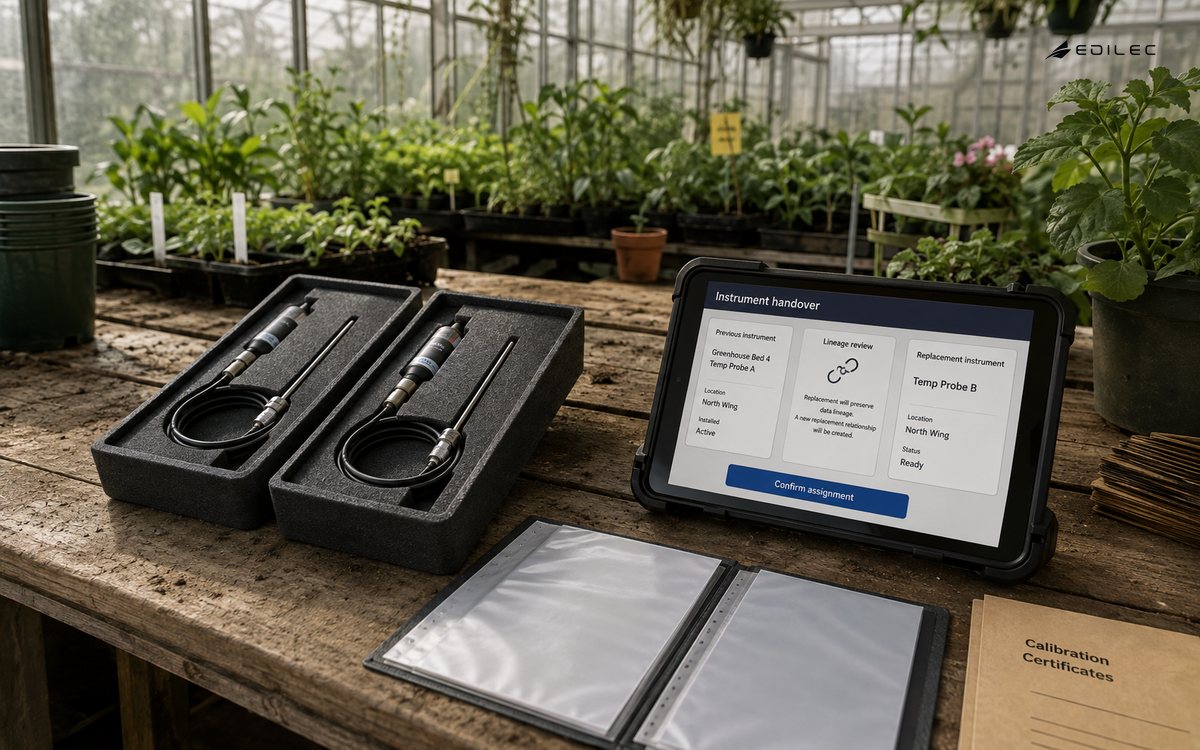
Treat replacement as a lineage event, not as editing a serial number in place. Close or supersede the old assignment, create the new instrument relationship, capture the handover time, and ensure the ingestion path can distinguish readings from both devices during the transition.
Sensor calibration data — Calibration scenarios to rehearse
Imagine two sensors of the same model at the same site, one recently calibrated and one overdue, feeding a common dashboard. The platform must not collapse them into a generic site average without retaining their individual status. If an aggregate is still useful, publish the inclusion rule and show when a measurement was excluded or weighted differently. That enables an operator to question the result without needing to reconstruct a hidden calculation from raw files.
Imagine a laboratory corrects a certificate after discovering a transcription error. The system should preserve the earlier record, attach the corrected evidence, define the effective scope, and identify which readings or reports may be affected. The operational owner can then decide whether to recalculate a trend, notify a customer, or simply retain the correction for audit. Silent replacement is tempting because it keeps screens tidy, but it removes the basis for a defensible response.
Imagine a field technician temporarily substitutes a spare instrument during a repair. The system needs a handover record rather than a name edit: which channel moved, when it moved, what calibration context applied, and when the original returned. This is especially important where historical data supports warranty or performance claims. Effective-time mapping avoids creating a false continuous history across two physical instruments.
Finally, involve the people who consume the measurement in quality reviews. A data engineer may detect a missing calibration link, but the process owner decides whether the affected data can support the operational action. A regular review of expiry, override, out-of-tolerance, and missing-context cases turns calibration management into a shared operating discipline instead of a document chase handed off between departments.
Conclusion
Trustworthy sensor calibration data keeps a number connected to its meaning. By modelling calibration facts, measurement time, transformations, and exceptions together, IT teams give operations a defensible basis for action. The payoff is not prettier asset records; it is the ability to explain why a reading was trusted, questioned, or withheld. Keep the model practical by starting with the instruments and reports that change consequential work, then extend it when repeated investigations show a gap. A calibration record that operations can find and interpret during an incident is more valuable than a technically complete archive that lives outside the data path. The design succeeds when quality, field service, and IT can all ask the same record what was true at the relevant time.
A calibration record should answer whether an instrument was suitable for the reading and whether the reading is safe to use for the decision at hand. Preserve the method, reference, uncertainty, environmental conditions, effective interval, and configuration context beside the value or in a durable linked record. Route expired certificates, unresolved identities, unexpected units, and out-of-tolerance results to quarantine with an owner and response clock. A replacement sensor needs a new identity, a linked asset history, a handover time, and a comparability rule; it is not merely another row in a table. When calibration evidence travels to a dashboard or maintenance queue, carry its quality state with it so downstream users do not mistake an unqualified number for settled fact.
Related reading: Related guide 1, Related guide 2, Related guide 3.
Review calibration exceptions with the people who consume the measurements, not only the team that manages instruments. A dashboard owner may need a qualified-but-uncertain value, while a safety workflow may require quarantine. Record that decision policy explicitly and revisit it when the asset, method, unit, or operating environment changes.