Connected operations is not a screen full of live points. It is the ability to use timely, qualified information to make a named operating decision, assign the work it creates, and learn whether that action improved safety, uptime, quality, or cost. A dashboard without those links can be impressive and still leave the operating routine unchanged. Connected operations for connected systems becomes useful when the team can preserve that context from the field boundary through the decision and the work that follows. This guide focuses on the operating design: ownership, data contracts, recovery, and evidence. It is deliberately more specific than a technology selection checklist because a production issue is usually an unclear responsibility or an untested exception.
Connected-operations handoffs — Define the operating scope
Choose one recurring decision and map the people, data, rule, action, and measure around it. For example, a production supervisor may decide whether a recurring motor alert warrants a planned inspection. The system must reveal the relevant asset history, data quality, current workload, and the owner who can accept or defer the risk. NIST SP 800-82 Rev. 3: Guide to Operational Technology Security helps the connected-operations handoff define the control boundary around that inspection decision. Write a one-page operating statement before choosing components: name the physical or business outcome, the asset or client population, the decision supported, the acceptable delay, the accountable owner, and the condition in which the system must decline to act.

| Design question | Practical answer | Evidence before launch |
|---|---|---|
| What is the unit of work? | Give each observation, client, asset, visit, or lifecycle transition a stable identifier. | A sample record can be traced from source to user action. |
| Who owns meaning? | One role approves field definitions, compatibility, and retirement of the contract. | An owner and change path appear in the runbook. |
| What happens when data is uncertain? | Expose quality, timing, and failure states so no value is silently substituted. | A rehearsal should show what an operator sees when input is stale or invalid. |
| How is it recovered? | Recover through a scoped replay, replacement, or reversal procedure with an accountable approver. | A rehearsal record captures the expected and actual result. |
Connected-operations handoffs — Set boundaries before scale
Keep local control and enterprise coordination distinct. The field system may need to protect equipment within milliseconds; the operations application may combine trends over hours to plan a visit. Define which state is authoritative in each layer, how it is synchronized, and which decision must still work if the connection is absent. For connected operations handoffs, make workflow ownership explicit before the workflow reaches its next decision point. NIST SP 800-92: Guide to Computer Security Log Management Decide which identifiers and payload elements are sensitive, which parties need them, and what a support engineer may retrieve during an incident. A contract that names an owner but omits its access path is still incomplete.
Choose compatibility rules that match the consequence of change. Additive optional fields may be safe when consumers ignore what they do not understand; renamed fields, altered units, and changed authorization semantics need a migration. Maintain examples for normal, degraded, and rejected messages or requests. They make reviews concrete and prevent a documentation page from drifting away from deployed behavior. For connected operations, it protects a decision rule from an unreviewed semantic shift.
Connected-operations handoffs — Build controls into the workflow
An alert becomes an operational signal only when it has a condition, severity, owner, acknowledgement expectation, escalation policy, and closure evidence. Avoid measuring success by alert volume. Measure whether the right person received a qualified signal early enough to take an appropriate action. In connected operations handoffs, test record correlation against the user action and record the resulting control evidence. NIST IR 8259r1: Foundational Cybersecurity Activities for IoT Product Manufacturers Review access as a chain of identity, policy, service exposure, and monitored action. A secure transport channel matters, but it does not prove that the caller should perform the action or that the action was understood correctly.
| Failure or change | Control to design | Operator evidence |
|---|---|---|
| Identity is revoked or replaced | When credentials change, revoke the old scope, issue the new one, and preserve ownership history. | Revocation time, replacement identity, and successful policy evaluation. |
| Connection or power is lost | Use bounded local behavior, queue limits, and a safe rejoin procedure. | Last known state, queue age, and reconciliation result. |
| Contract changes | Version the schema or configuration and test compatible consumers first. | Change approval, deployed version, and validation outcomes. |
| A decision is disputed | Separate source context and action history from mutable presentation data. | Record identifiers, timestamps, operator, and before-and-after state. |
Connected-operations handoffs — Operate with signals that change decisions
Review the full loop: signal detected, context assembled, decision made, work assigned, action completed, result verified. Track unacknowledged critical signals, noisy rules, overdue work, repeat faults, and manual overrides. These measures expose whether the organization has an information problem, a workflow problem, or both. Do not set a single universal threshold and call the system observed. Segment the measures by site, asset or client class, software version, and criticality. A rising fleet-wide error rate calls for a different response than one intermittent unit at a high-consequence location. Weekly review should end with a named corrective action, an owner, and a date to inspect the result.
Connected-operations handoffs — Rehearse production conditions
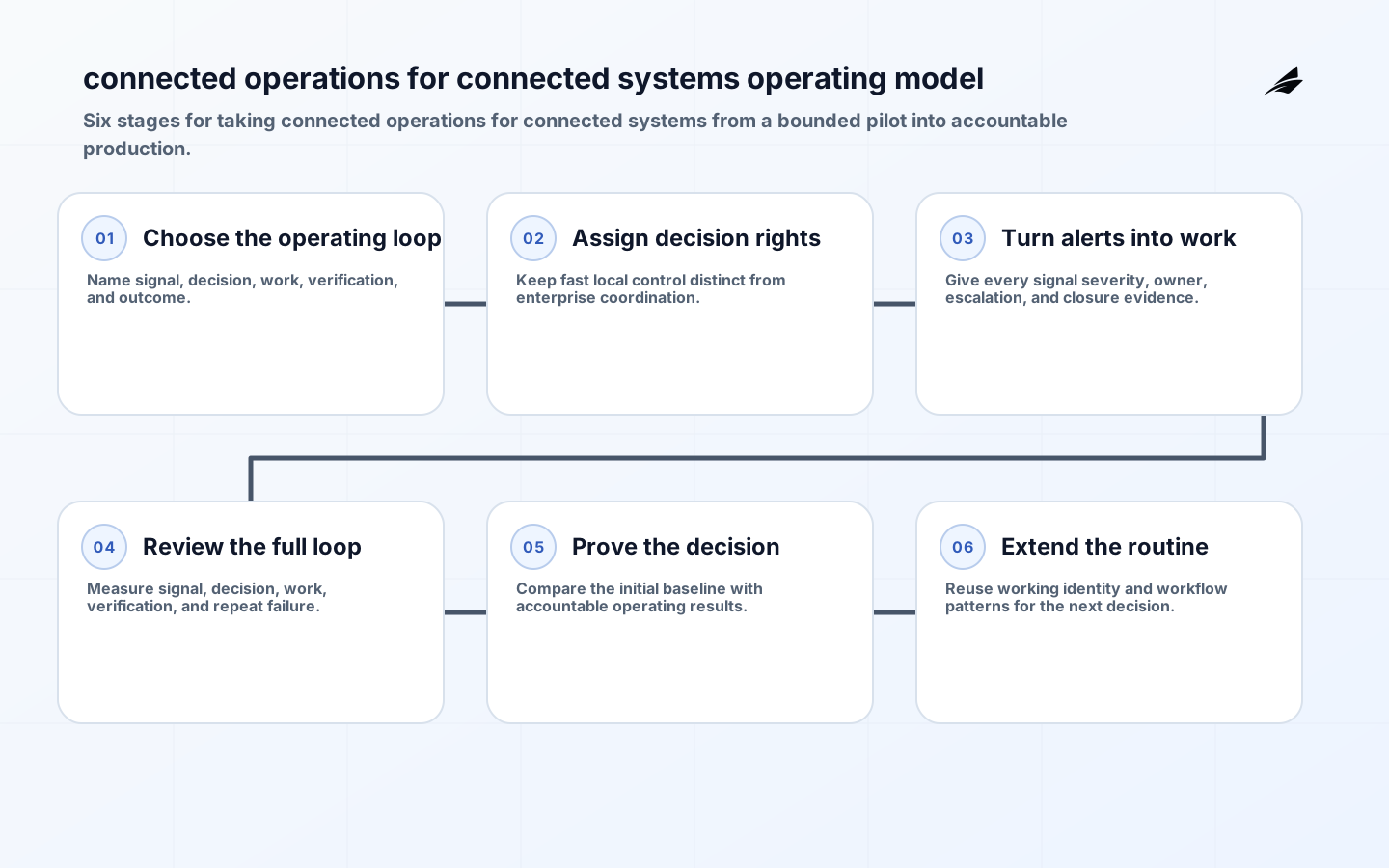
Start with a single equipment family and one avoidable loss, such as unplanned shutdowns linked to a known failure mode. Agree on the baseline, the decision rights, and the evidence that will count as improvement. Once the loop operates reliably, extend its shared identity and work patterns to the next use case. Use the rehearsal to decide what the system will do when reality is inconvenient, rather than leaving that choice to the on-call engineer. Capture screenshots or records from the user-facing surfaces as well as technical logs. A resilient design keeps the operational team informed without asking them to infer safety or data quality from a vague platform status message.
- For the first production use case, name business, technical, and on-call or support owners.
- Exercise faults against real identity, configuration, and data paths; do not test only the dashboard.
- For each rehearsal, record the decision, action, recovery result, and follow-up measure.
- Read the related implementation guide alongside this scope so the operating model connects to the next capability.
Connected-operations handoffs — Sequence the implementation
First establish the inventory and contract, then instrument the smallest useful path, then introduce the decision or workflow, and only then broaden the population for connected operations for connected systems: a practical guide. This order avoids collecting a large volume of poorly understood data. It also provides a clean rollback point: a newly added consumer or rule can be disabled without deleting the source evidence. Use operator-visible recovery to keep connected operations handoffs decisions traceable when conditions change in the field. NIST IR 8259A: IoT Device Cybersecurity Capability Core Baseline
At each stage, approve an observable exit condition. The connected operations handoffs design is stronger when workflow ownership is checked alongside the affected workflow outcome. For connected operations handoffs, make record correlation explicit before the workflow reaches its next decision point. For connected operations for connected systems, that material is part of the operating system, not aftercare.
Key takeaways
- Connected operations for connected systems is an operating capability, not merely a deployed component.
- Assign durable owners and evidence to identities, contracts, quality states, and actions.
- Design degraded behavior before scale turns a small ambiguity into an expensive incident.
- Link this work to a complementary production decision and the earlier planning guidance so the operating model stays coherent.
Frequently asked questions
Connected-operations handoffs — What is the first practical step for connected operations for connected systems?
In connected operations handoffs, test site escalation against the user action and record the resulting control evidence. For connected operations for connected systems, a narrow path reveals missing ownership and quality information faster than a broad platform rollout.
Connected-operations handoffs — Does this require replacing the current platform?
For connected operations for connected systems, replacement is rarely the first move. A practical connected operations handoffs review connects operator-visible recovery to an owner, an observable state, and a recovery action. Use workflow ownership to keep connected operations handoffs decisions traceable when conditions change in the field.
Conclusion
Connected operations for connected systems earns trust when people can explain what happened, who was allowed to act, what the data meant at the time, and how the system recovered. The connected operations handoffs design is stronger when record correlation is checked alongside the affected workflow outcome.
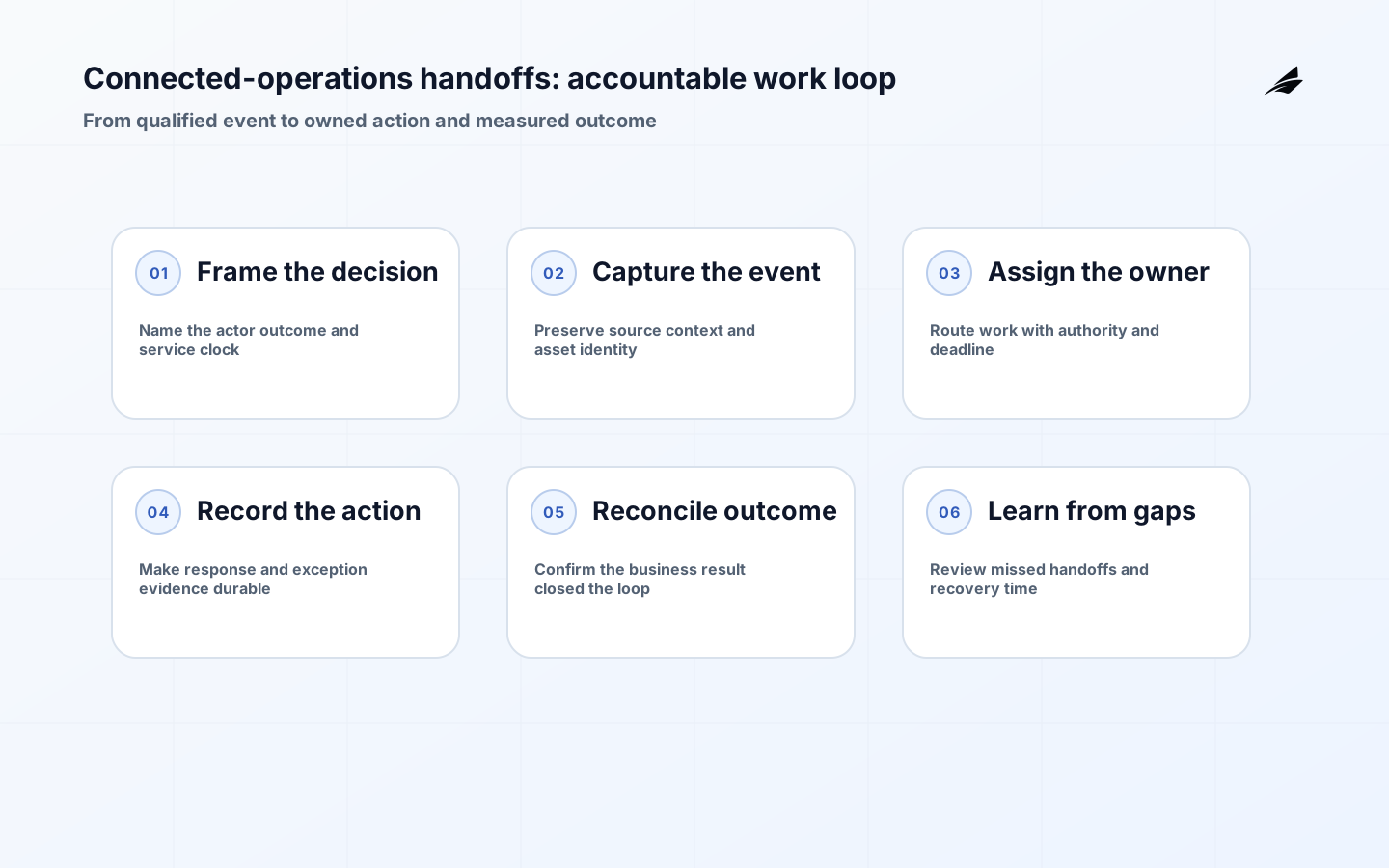
Connected operations becomes accountable at the handoff, not at the moment a signal appears on a screen. Define the event quality state, receiving owner, service clock, required action, completion evidence, and exception route. Test late records, duplicate events, missing acknowledgements, and corrections that arrive after work has started. A useful operating review compares the system record with what the field or support team actually did, then assigns a named improvement. Keep the work transition understandable to the person receiving it: a green platform status is not enough if no one knows whether the task was accepted, deferred, or safely closed.
Related reading: Related guide 1, Related guide 2, Related guide 3.
Make the handoff contract visible in the tools people already use. A receiving owner should see the event quality, required action, deadline, prior attempts, and completion evidence without searching several systems. When the workflow crosses a team or site boundary, the service clock and escalation rule should travel with the work.