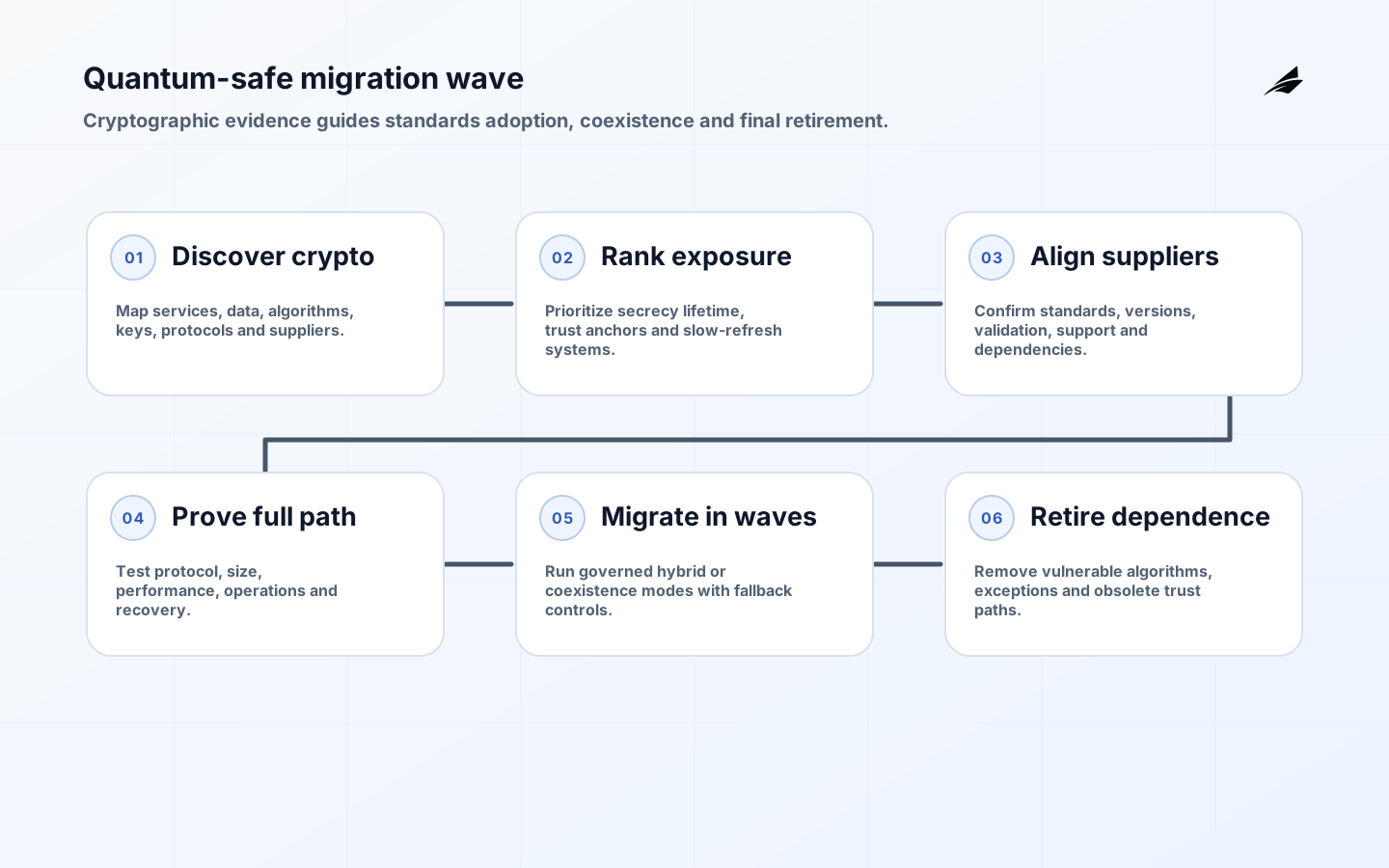
Quantum-safe transformation is the multi-year work of finding where an organization depends on public-key cryptography, prioritizing long-lived risk, adopting standardized post-quantum cryptography as products and protocols mature, and retiring vulnerable algorithms safely. It is not a single product installation. The program touches applications, networks, identity, certificates, code signing, hardware roots of trust, suppliers, data retention and operational continuity.
This FAQ is for security, architecture, procurement and risk leaders beginning or governing migration. The quantum-safe practical guide provides broader context and the quantum-safe implementation checklist turns it into controls. Buyers can compare the transformation services delivery plan and services implementation checklist.
What does quantum-safe mean?
In enterprise planning, quantum-safe usually means using cryptographic mechanisms intended to resist attacks by both classical and sufficiently capable future quantum computers. The immediate focus is public-key cryptography used for key establishment and digital signatures. Symmetric cryptography and hashing are affected differently and are addressed through appropriate parameters and guidance. Do not treat quantum key distribution as a general replacement for post-quantum algorithms; it requires specialized infrastructure and has different limitations.
No one can provide a reliable date for a cryptographically relevant quantum computer. Migration still needs to begin because sensitive data may be collected now and decrypted later, while enterprise cryptography takes years to discover and replace. Hardware, operational technology, certificates, partners and standards have long cycles. The risk decision therefore combines data secrecy lifetime, system lifetime, migration lead time, exposure and consequence rather than a forecast about one breakthrough date.
Which post-quantum standards are available?
NIST published FIPS 203, FIPS 204 and FIPS 205 in August 2024. They specify ML-KEM for key encapsulation, ML-DSA for digital signatures and SLH-DSA as a stateless hash-based signature approach. NIST continues related standardization and implementation guidance, so teams should follow current project and product-validation status. Use standardized, validated implementations that fit applicable sector and national requirements rather than implementing mathematical primitives independently.
| Function | Current dependency examples | Migration question |
|---|---|---|
| Key establishment | TLS, VPN, messaging and service-to-service connections | When do protocol and product versions support approved PQC modes? |
| Digital signature | Code, documents, firmware, certificates and transactions | What verifies long after signing, and can formats carry larger keys? |
| Identity infrastructure | PKI, device enrollment, smart cards and authentication | How will trust chains and lifecycle systems coexist? |
| Data at rest | Envelope encryption and key-management services | Which wrapped keys and archives must remain protected? |
| Secure boot | Firmware and hardware roots of trust | Can long-lived devices receive compatible trust updates? |
| Partner exchange | B2B gateways, APIs and managed file transfer | Which party controls protocol and cutover timing? |
How should cryptographic discovery begin?
Start from critical services and data, then trace cryptographic use through application code, libraries, protocols, certificates, key stores, appliances, cloud services and suppliers. Combine source and dependency analysis, network observation, certificate inventory, configuration scanning, interviews and procurement records. Automated discovery helps but will not find every proprietary protocol, dormant recovery path, embedded device or contractual dependency. Record confidence and evidence so the inventory shows what remains unknown.
| Inventory field | Why it matters | Example value |
|---|---|---|
| Business service and owner | Connects crypto to accountable impact | Customer payment authorization |
| Data and secrecy lifetime | Identifies collect-now-decrypt-later exposure | Personal records retained 15 years |
| Cryptographic function | Separates key exchange, signature, storage and identity | TLS service authentication |
| Algorithm and parameter | Shows vulnerable dependency precisely | RSA-2048 certificate |
| Implementation location | Determines who can change it | Managed gateway firmware |
| Supplier and roadmap | Exposes external timing and contract leverage | Vendor PQC release planned |
| Agility and constraints | Reveals format, performance and hardware limits | Fixed certificate buffer |
| Migration status | Supports wave planning and residual risk | Lab validation in progress |
Treat the inventory as a maintained data product linked to asset, software and supplier management. Establish identifiers and update triggers for releases, certificate issuance, procurement and architecture review. CISA has published strategy work on automated PQC discovery and inventory, reflecting the scale of the challenge. Measure coverage by critical service and confidence, not simply the number of cryptographic objects found.
How should migration priorities be set?
Prioritize data that must remain confidential for many years, trust anchors that protect long-lived products, externally exposed key exchange, critical signatures and systems with slow replacement cycles. Add supplier readiness, protocol maturity, performance, ability to test and normal refresh dates. Some low-risk commodity services will receive PQC through routine provider upgrades; bespoke industrial or embedded systems may need early planning despite later technical migration.
The UK NCSC published an indicative enterprise timeline: complete discovery and an initial plan by 2028, complete high-priority migration and refine the plan by 2031, and complete migration by 2035. These dates are guidance for the relevant audience, not universal legal deadlines, but they illustrate the scale and urgency. Organizations should set their own milestones from regulation, threat, data lifetime, sector coordination and supplier roadmaps.
What should an early pilot prove?
- Select a bounded nonproduction service that represents a priority protocol, library and operational team.
- Record current handshake, certificate, key, payload, latency, CPU, memory and failure behavior.
- Use approved product implementations and exact algorithm or hybrid configuration under test.
- Verify interoperability, downgrade resistance, logging, monitoring, key lifecycle, backup and recovery.
- Exercise larger keys, signatures and messages through proxies, hardware, databases and management interfaces.
- Document deployment, rollback, coexistence, support and evidence needed before a production wave.
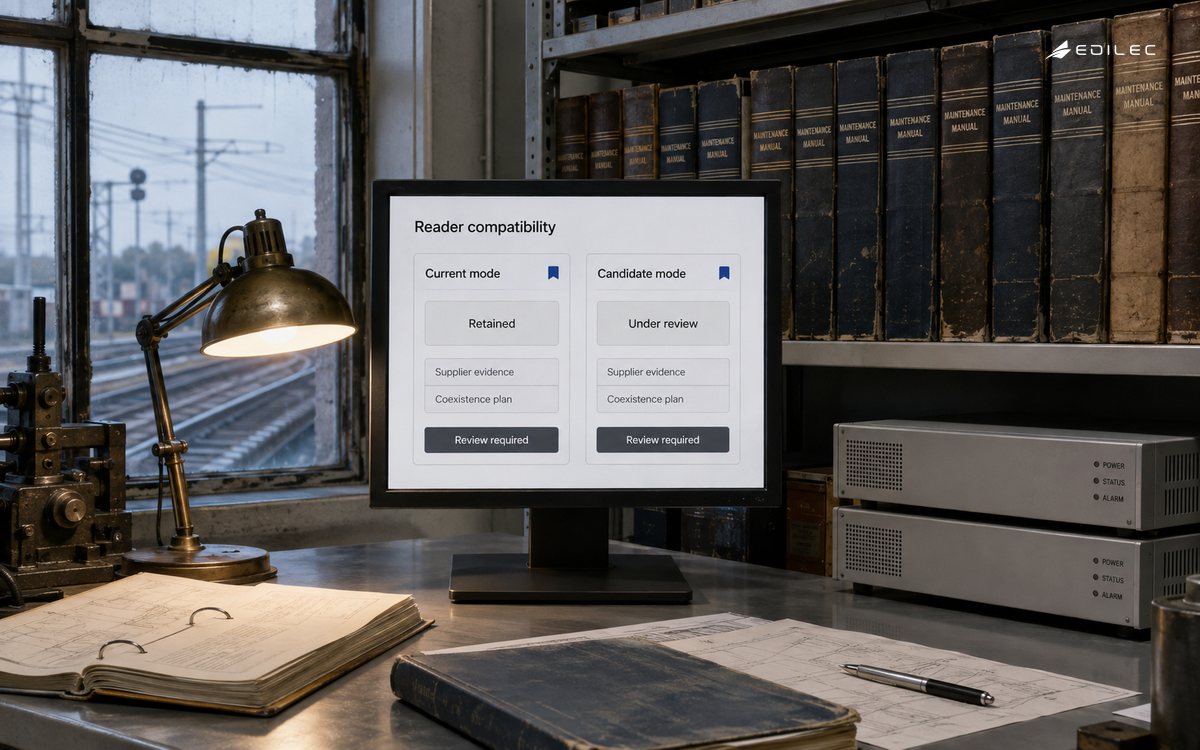
A pilot should test the surrounding system, not only that two endpoints complete a cryptographic operation. Post-quantum keys, signatures and protocol messages can be larger, exposing assumptions in buffers, certificates, databases, hardware and network devices. Measure performance at representative concurrency and degraded conditions. Verify that observability identifies the negotiated mode without exposing keys and that fallback cannot silently force an unacceptable algorithm.
What are hybrid migration and cryptographic agility?
Hybrid approaches combine classical and post-quantum mechanisms during transition so security does not depend only on a newer algorithm while interoperability evolves. The exact construction must come from applicable protocol standards and vetted products; combining algorithms informally can introduce weakness. Define where hybrid mode is required, how success is verified and what criteria permit classical-only support to be removed. Coexistence without an exit plan can become permanent legacy.
Cryptographic agility is the ability to identify and replace algorithms, parameters, keys, certificates and providers without redesigning the whole business service. It requires abstraction with clear policy, configurable suites, inventory, test automation, update mechanisms and operational ownership. Agility does not mean runtime selection by any caller or accepting arbitrary algorithms. Central policy should constrain approved choices while product teams test compatibility and performance.
What should suppliers be asked?
Ask where the product uses public-key cryptography, which components and protocols are customer-configurable, which NIST-standard algorithms and validated modules are or will be supported, how hybrid operation works, and what hardware or license changes are required. Request roadmap dates with dependencies and support periods, not a simple quantum-ready claim. Include API, data export, inventory evidence, vulnerability notice and migration assistance in procurement and renewal discussions.
How should the program be governed?
Assign an executive risk owner, cryptography lead, enterprise architecture, security engineering, infrastructure and application owners, procurement, legal and business continuity. Create policy for approved algorithms, exceptions, inventory, new procurement and change evidence. Coordinate PQC with certificate automation, key-management modernization, software support and asset refresh rather than running a disconnected research program. Track critical-service inventory coverage, supplier response, pilots, migration waves, exceptions and retired vulnerable dependencies.
Budget discovery and planning before precise migration cost is known. Cost drivers include estate diversity, embedded hardware, certificate and key infrastructure, supplier upgrades, performance testing, dual operation, regulatory validation and long-lived archives. Align upgrades with planned refresh where risk permits, while avoiding new purchases that deepen dependency. Keep incident response for ordinary cryptographic failures active; preparing for future quantum risk does not excuse weak key management today.
Key takeaways
- Begin now because discovery, standards adoption and supplier coordination take years.
- Use NIST-standard algorithms through vetted products and applicable protocol guidance.
- Build an evidence-backed inventory linked to services, data lifetime and owners.
- Prioritize long-lived secrets, trust anchors, exposed protocols and slow-refresh systems.
- Test the complete protocol and operational path, including size and performance effects.
- Design hybrid coexistence, cryptographic agility and legacy retirement as governed transitions.
Frequently asked questions
Should all cryptography be replaced immediately?
No. Inventory and prioritize now, then migrate as standards, protocols, validated products and business risk support it. Uncoordinated replacement can introduce interoperability and security problems. Also continue normal cryptographic hygiene: supported algorithms, strong parameters, protected keys, certificate automation and timely patching reduce current risk and improve future agility.
What about encrypted archives and backups?
Classify them by data lifetime, encryption design, key wrapping, restore dependencies and ability to re-encrypt. Test restoration before changing protection. Some archives may need rewrapping or migration; others may expire before relevant risk. Preserve retention, legal hold and integrity evidence. A backup that cannot be restored through the future trust chain is not protected continuity.
Will cloud providers handle the migration?
They will update many managed layers, but customers still own application libraries, certificates, data classification, partner protocols, configuration and acceptance. Obtain service roadmaps, determine shared responsibility and test negotiated behavior. A provider capability does not prove that every client, gateway and downstream system in the business journey uses it.
Conclusion
Quantum-safe transformation is an orderly enterprise migration, not a prediction contest. Discover cryptographic dependencies, relate them to data and service risk, use current standards and vetted implementations, coordinate suppliers, prove representative paths and retire vulnerable reliance in waves. Organizations that build inventory and agility now can adopt maturing protocols without emergency change later, while improving cryptographic governance for present-day threats.