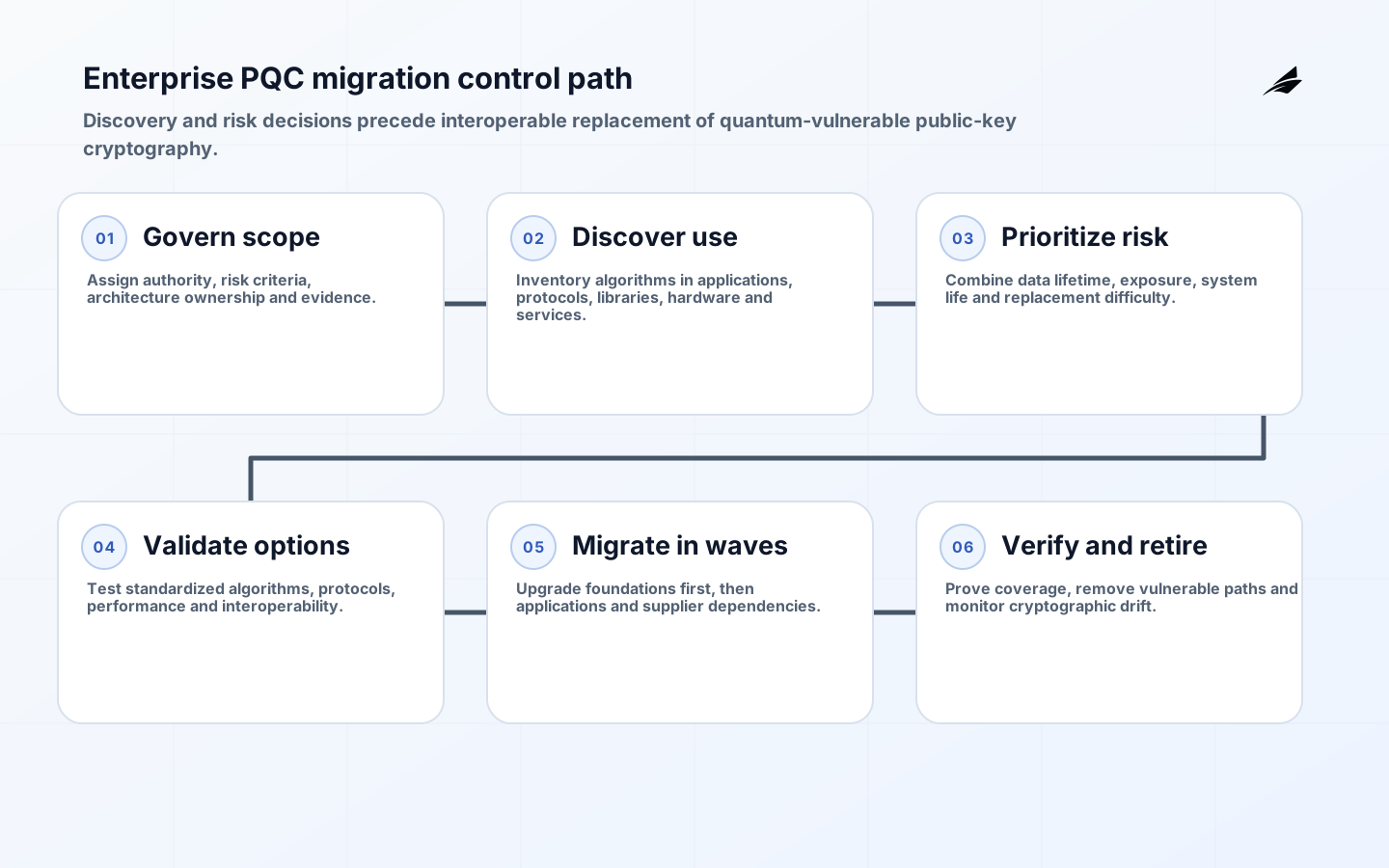
Post-quantum cryptography readiness is an enterprise change program, not an algorithm installation. Public-key cryptography is embedded in TLS, certificates, code signing, identity, remote administration, software updates, key management, devices and supplier services. NIST finalized its first three PQC standards in 2024: ML-KEM in FIPS 203 for key establishment, ML-DSA in FIPS 204 for digital signatures and SLH-DSA in FIPS 205 for stateless hash-based signatures. Those standards make implementation planning concrete, but they do not identify where an organization depends on vulnerable algorithms or guarantee that every protocol and product is ready.
A useful readiness engagement builds a governed cryptographic inventory, ranks migration by business risk, validates vendor and protocol support, pilots representative systems and delivers funded migration waves. It also avoids unsupported certainty about when a cryptographically relevant quantum computer will exist. The immediate risk is long transition time and data that must remain confidential for years. Systems procured today may still be operating when policy or threat assumptions change. Readiness therefore means reducing uncertainty and improving cryptographic agility while standards, implementations and ecosystem support mature.
What belongs in the scope of a PQC readiness service?
Scope the business services and information first. Record data classification, confidentiality lifetime, authenticity needs, regulatory commitments, external exposure and system retirement date. Then trace cryptographic use across applications, APIs, networks, certificates, secrets, libraries, operating systems, hardware security modules, firmware, backups and third parties. Include signatures as well as encryption: software updates, documents, tokens and audit evidence may need to remain verifiable for a long time. Excluding identity or signing because the initial concern was encrypted traffic creates an incomplete roadmap.
Define deliverables that can be accepted: inventory coverage, risk model, dependency map, vendor evidence, target patterns, pilot results, migration backlog, cost range and governance cadence. Distinguish discovery from remediation. Automated tools can identify certificates, algorithms and protocol negotiation, but source review, architecture records and supplier inquiry are needed to explain purpose and ownership. The engagement should also state what it cannot prove, such as cryptography inside opaque appliances or SaaS services. Unknowns become assigned follow-up work, not silently assumed coverage.
| Scope area | Evidence to collect | Readiness question |
|---|---|---|
| Data and services | Classification, retention, contracts, recovery objectives | How long must confidentiality or authenticity survive? |
| Applications | Libraries, code paths, certificates, key stores | Can algorithms and key sizes change without redesign? |
| Infrastructure | TLS, VPN, SSH, PKI, HSM and device inventory | Which shared foundations block many workloads? |
| Suppliers | Roadmaps, versions, support dates and test evidence | When will an interoperable supported option exist? |
How should a cryptographic inventory be built?
Use multiple discovery methods. Scan network endpoints and certificate stores, inspect software bills of materials and dependency manifests, search configuration and source, query cloud key services, collect PKI records and review device management platforms. Normalize findings into a cryptographic bill of materials that records algorithm, parameter, protocol, library, key location, certificate authority, purpose, data, service, owner and environment. Preserve the observation date and method because cryptographic use changes with deployments and negotiation. A detected RSA certificate is not enough; the inventory must show whether it protects a public API, signs firmware or authenticates an administrator.
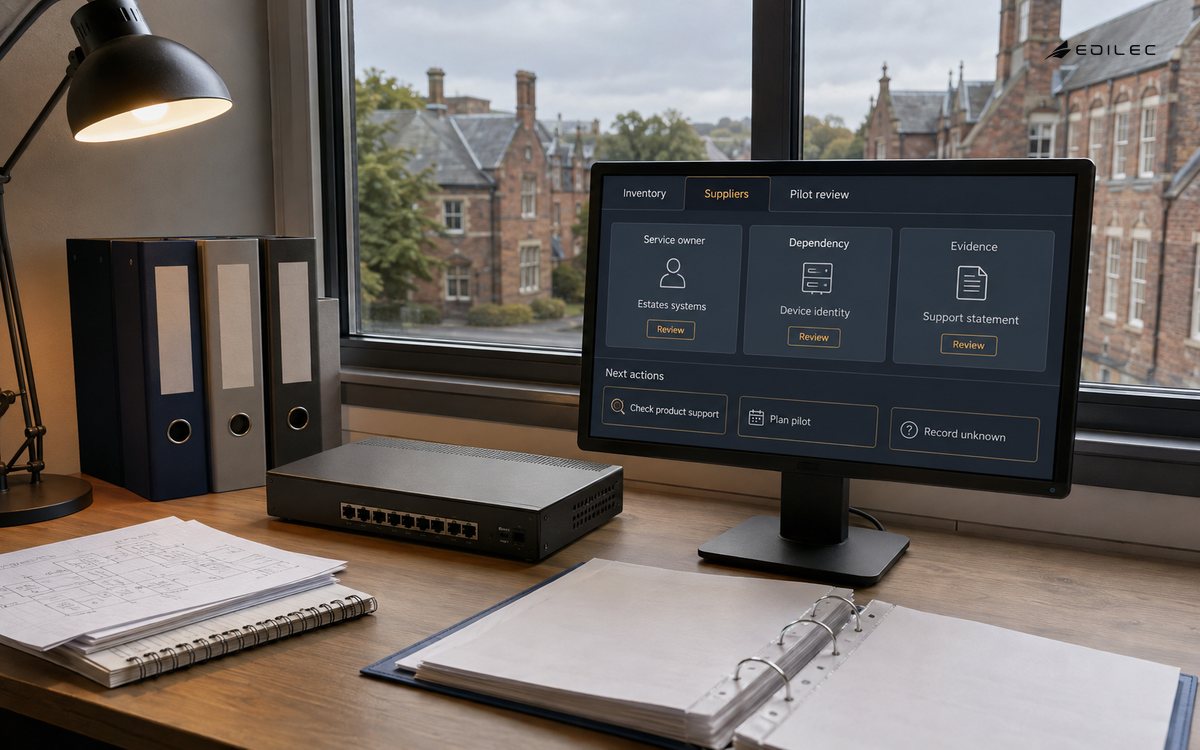
Measure coverage rather than celebrating raw counts. Reconcile discovered endpoints with asset, application and service inventories. Sample high-risk systems manually and document blind spots. Add cryptographic telemetry to build and deployment workflows so new dependencies do not bypass the program. Inventory access requires care because it can expose security architecture and key metadata; restrict it, log changes and avoid collecting private key material. The result should support queries by business service, vendor, algorithm, expiry and migration wave, not remain a one-time spreadsheet.
How is migration priority calculated?
Combine four dimensions: how long information must remain protected, how exposed the cryptographic channel or artifact is, how long the system will remain in service and how difficult replacement will be. Long-lived confidential data and internet-facing key establishment deserve early attention because captured traffic could be retained for future decryption. Long-lived signatures also matter where authenticity must be demonstrated years later. Add concentration risk: a root certificate authority, HSM platform, identity provider or embedded library may affect hundreds of services and should be investigated before isolated endpoints.
Priority is not the same as immediate production replacement. Some protocols and products may not yet have mature, validated or interoperable support. Mark the next decision for each item: retire, upgrade normally, demand a vendor roadmap, prototype, run a hybrid trial or migrate. Set review triggers such as a new standards profile, validated module, protocol update, procurement event or policy date. This prevents a static risk score from becoming false precision. Senior governance should accept residual risk and funding trade-offs, while technical owners maintain the evidence.
| Migration wave | Typical candidates | Acceptance evidence |
|---|---|---|
| Foundation | PKI, key management, crypto libraries, gateways | Supported algorithms, key lifecycle and interoperability tests |
| Exposed services | Public APIs, remote access, partner connections | Negotiation, fallback, performance and monitoring results |
| Enterprise applications | Identity, messaging, databases, document signing | End-to-end workflow and rollback evidence |
| Long-life and embedded | Devices, firmware, archives, constrained systems | Lifecycle plan, supplier commitment and replacement route |
What architecture and protocol decisions are required?
Choose algorithms through applicable standards and product profiles, not by inventing an enterprise suite from primitive names. FIPS 203 defines ML-KEM; FIPS 204 and 205 define signature schemes with different operational characteristics. A protocol determines how keys, certificates, negotiation and downgrade protection work around those primitives. Confirm parameter sets, implementation status, validation requirements and ecosystem support. Larger keys, ciphertexts and signatures can affect handshakes, packet fragmentation, certificate chains, devices and latency. Benchmark representative paths rather than extrapolating from a microbenchmark.
Hybrid approaches can combine classical and post-quantum mechanisms during transition, but they add protocol, implementation and assurance complexity. Use them only where a recognized profile and interoperable implementations define combination and failure behavior. Preserve algorithm agility without allowing insecure runtime choice: configuration should be policy-controlled, observable and tested. Design rollback carefully so an operational issue cannot create permanent downgrade. Key generation, rotation, backup, destruction, certificate issuance and incident response all need updates; a successful handshake alone is not a complete migration.
How should vendors and procurement be handled?
Ask vendors for specific evidence: affected products and versions, supported standards, protocol profiles, validation plans, performance limits, release dates, migration tooling, rollback, telemetry and end-of-support. “Quantum-ready” is not a technical specification. Contract language should require notice of roadmap changes and continued export of keys, certificates and configuration where appropriate. Procurement should score cryptographic agility and supported upgrade paths, particularly for hardware and devices whose life exceeds normal software refresh cycles.
Map transitive dependencies. A SaaS provider may rely on a cloud load balancer, certificate service, identity platform and client libraries with separate timelines. A network appliance may support PQC on one interface but not management or clustering. Record the dependency and the person accountable for follow-up. Where supplier support will arrive later, reduce exposure through retirement, data minimization or architecture changes rather than deploying unreviewed cryptography. Exit planning matters because vendor delay can become the critical path for the whole program.
What drives cost and schedule?
Cost comes primarily from discovery, integration, testing, infrastructure refresh, certificates, validation, supplier coordination and operational change, not from the mathematical algorithm itself. Estimate by migration archetype: centrally configured TLS endpoints, application libraries, enterprise PKI, signed artifacts, managed services and embedded hardware. Count environments, owners, release windows and external partners. Include performance capacity, dual-operation periods, training and assurance. A narrow pilot may take weeks; an estate with unsupported appliances and long-lived devices may require years of planned refresh.
Use ranges tied to known assumptions and confidence. Fund discovery first to replace guesswork with quantities, then maintain a rolling forecast per wave. Avoid promising one completion date for every system. Track inventory coverage, vendor readiness, tested patterns, migrated high-risk services, exceptions and vulnerable paths retired. Program success is reduced cryptographic dependency risk and faster controlled change, not the number of certificates replaced. Budget should preserve normal security patching and lifecycle work; PQC does not displace current threats.
How should pilots and rollout be accepted?
Select pilots that represent real constraints without placing critical production data at unnecessary risk. Include a public service, an internal identity or signing flow, a high-throughput path and a constrained or supplier-dependent system. Test interoperability across clients, proxies and libraries; measure handshake, CPU, memory, bandwidth and failure behavior; exercise certificate rotation and rollback; and inspect logs for negotiation and downgrade. Compare against a documented baseline and capture defects in shared implementation patterns.
Roll out through controlled cohorts with entry and exit criteria. Confirm monitoring, support ownership, compatibility and recovery before increasing scope. Retire classical-only routes where policy permits; otherwise time-bound the exception and monitor use. Update architecture standards, procurement controls, incident runbooks and developer guidance so migrated systems do not regress. An independent review should reconcile the final inventory with service ownership and verify that claimed coverage is supported by scans, configuration, tests and supplier evidence.
Key takeaways
- Build a purpose-aware cryptographic inventory before choosing migration waves.
- Prioritize data lifetime, exposure, system life, replacement difficulty and shared dependencies.
- Use NIST standards through recognized protocol and product profiles.
- Demand specific supplier evidence instead of broad quantum-ready claims.
- Test interoperability, performance, key lifecycle, downgrade and rollback.
Frequently asked questions
Should enterprises replace all RSA and ECC immediately?
No. Begin inventory, risk prioritization, procurement changes and pilots now. Production replacement should follow applicable standards, supported protocol profiles and tested implementations. Urgent priority depends on data lifetime, exposure, system lifecycle and policy.
Are symmetric algorithms also broken by quantum computing?
The primary migration concern is current public-key cryptography. Quantum search changes symmetric security margins differently, so follow applicable standards and profiles for key sizes rather than redesigning every symmetric control independently.
What is crypto agility?
Crypto agility is the governed ability to discover, change, test and retire cryptographic algorithms, keys, certificates and protocols without unsafe redesign. It requires inventory, abstraction, policy, observability, deployment and supplier support, not merely a configurable algorithm name.
Conclusion
Enterprise PQC readiness turns a broad future threat into controlled engineering work. Inventory every material use of public-key cryptography, connect it to business risk and ownership, establish supported target patterns and validate them in representative pilots. Fund migration through waves that account for shared foundations and supplier timelines. The strongest deliverable is not a prediction about quantum computers; it is an enterprise that knows its cryptographic dependencies and can replace them safely as standards, products and obligations evolve.