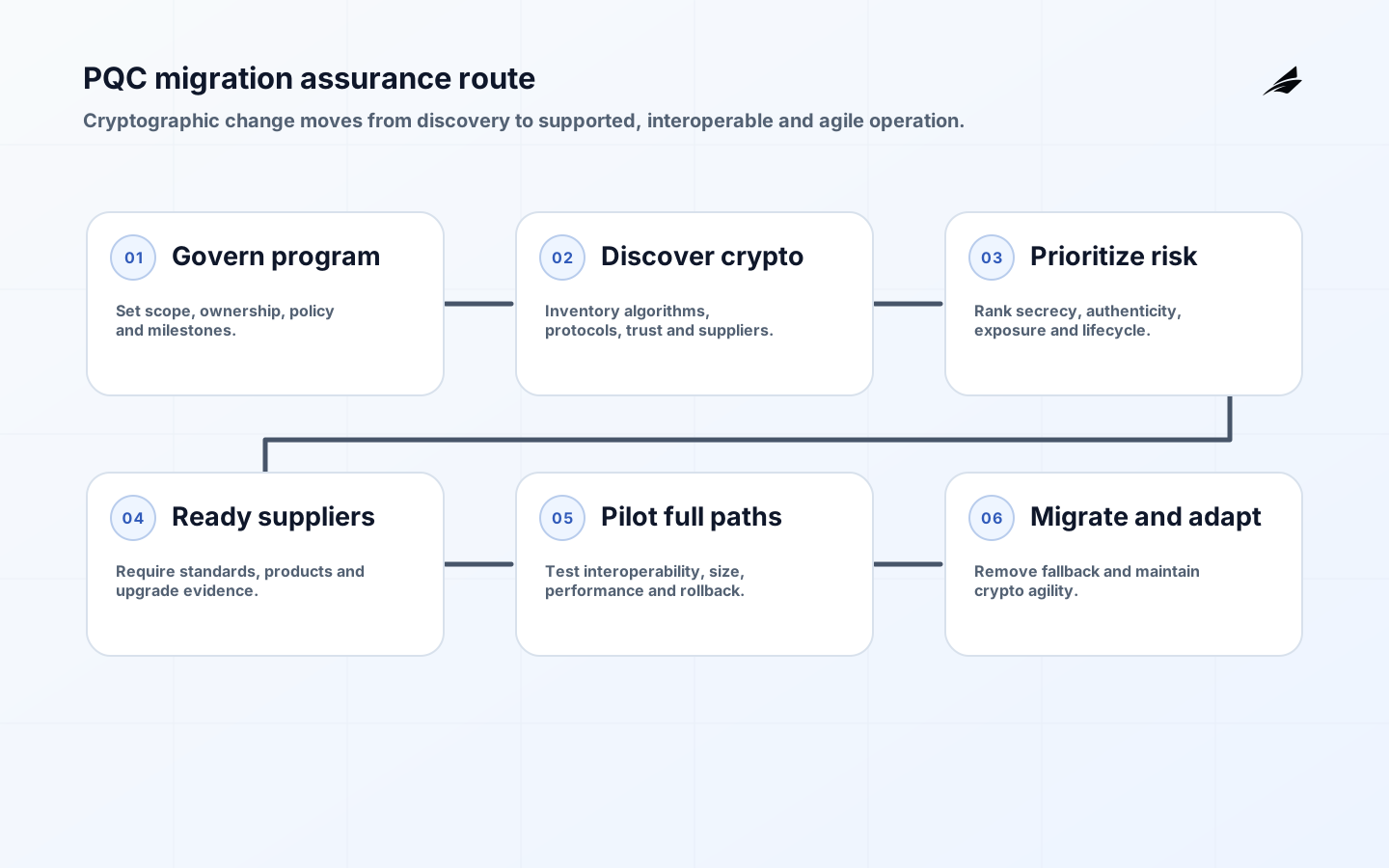
Quantum-safe transformation is a multi-year migration from quantum-vulnerable public-key cryptography to approved post-quantum cryptography and more adaptable cryptographic management. NIST finalized FIPS 203, 204 and 205 in August 2024, so organizations can move from general awareness to product and protocol planning. This quantum-safe transformation implementation checklist focuses on discovery, data risk, suppliers, pilots, migration evidence and long-term crypto agility rather than predicting the date of a cryptographically relevant quantum computer.
Use the quantum-safe business guide for executive context, the quantum-safe FAQ for algorithm questions and the quantum-safe services checklist for a complementary delivery route.
1. Establish governance and migration scope
Name an executive risk owner and a cross-functional program including security architecture, public-key infrastructure, identity, applications, networks, data, operational technology, procurement, legal and suppliers. Define systems, products and business units in scope. Separate post-quantum cryptography from quantum key distribution; migration for ordinary enterprise systems centers on standardized PQC algorithms and supported implementations.
Set milestones from regulatory, customer and national guidance relevant to the organization. The UK NCSC recommends discovery and an initial plan by 2028, highest-priority migration by 2031 and completion by 2035 for its intended audience. Treat such dates as planning inputs, not universal legal deadlines. Fund discovery and pilots now because hardware, embedded products, certificates and partner protocols can have long replacement cycles.
| Program artifact | Minimum content | Owner |
|---|---|---|
| Cryptographic policy | Approved, transitional and prohibited uses | Security governance |
| Inventory schema | Asset, algorithm, purpose, data and dependency | Architecture and asset owners |
| Risk method | Secrecy life, exposure, criticality and replaceability | Enterprise risk |
| Supplier register | Product support, roadmap and evidence | Procurement |
| Migration roadmap | Waves, tests, rollback and retirement | Program owner |
2. Discover cryptography and dependencies
Inventory where public-key cryptography establishes keys, signs software, authenticates identities or protects protocols. Cover TLS and VPN endpoints, SSH, email, code and firmware signing, certificates, PKI, HSMs, libraries, mobile applications, backups, document signatures, devices, OT and third-party services. Scan configurations and binaries where tools support it, but validate findings with owners because negotiated algorithms and embedded dependencies are easy to miss.
Record algorithm, key size, protocol, certificate authority, library, hardware, owner, environment, data class, external party and replacement path. Identify roots of trust and verification components that may need earlier change than applications. Keep the inventory alive through procurement and deployment pipelines. Discovery is complete enough to plan when critical business services can trace their cryptographic dependencies and unknowns have owners.
3. Prioritize by data and system risk
Prioritize information whose confidentiality must outlast plausible migration and attack timelines, addressing harvest-now-decrypt-later exposure. Also prioritize long-lived signatures, firmware and roots of trust where authenticity must endure. Combine secrecy or validity lifetime with exposure, mission consequence, asset lifetime, supplier lead time and replaceability. Do not rank solely by current data sensitivity.
Create waves: high-value externally exposed key establishment, long-lived trust anchors, systems already being replaced, and complex legacy or operational technology. Coordinate with ordinary lifecycle work to avoid replacing hardware twice. Accepting a later wave requires documented rationale and interim controls, not a vague assumption that quantum risk is distant.
| Priority factor | High-priority example | Planning response |
|---|---|---|
| Long secrecy life | Sensitive records valuable for many years | Accelerate transport and stored-key review |
| Long authenticity life | Firmware or signed archive verified for years | Plan signature and trust-anchor transition |
| Exposure | Internet-facing exchange or widely distributed artifact | Pilot interoperable protection early |
| Low replaceability | Embedded device or fixed cryptographic hardware | Engage supplier and budget lifecycle replacement |
| Dependency breadth | Shared PKI, identity or library | Treat as foundational migration work |
4. Set supplier and standards requirements
Ask suppliers which products and versions will support ML-KEM under FIPS 203, ML-DSA under FIPS 204 and, where appropriate, SLH-DSA under FIPS 205. Request implementation, validation, protocol, interoperability, performance, key-management, upgrade and rollback evidence. Product support for an algorithm name does not prove that the organization’s protocol, certificate profile or hardware path is ready.
Update procurement to require cryptographic inventory, configurable algorithms, secure update, vulnerability response, roadmap notice, data export and end-of-support terms. Avoid inventing proprietary algorithms or deploying experimental combinations without a standards and interoperability basis. Hybrid mechanisms may support transitional risk goals in some protocols, but they add complexity and must follow authoritative protocol guidance and tested product support.
5. Pilot performance, interoperability and operations
Choose a bounded real use case such as an internal service connection, test PKI path or signing workflow. Benchmark key and signature sizes, handshake or verification time, CPU, memory, network, certificate and message limits, HSM behavior, logging and failure modes. Test every client, proxy, inspection device, library and partner on the path. Larger artifacts can expose assumptions far from the cryptographic component.
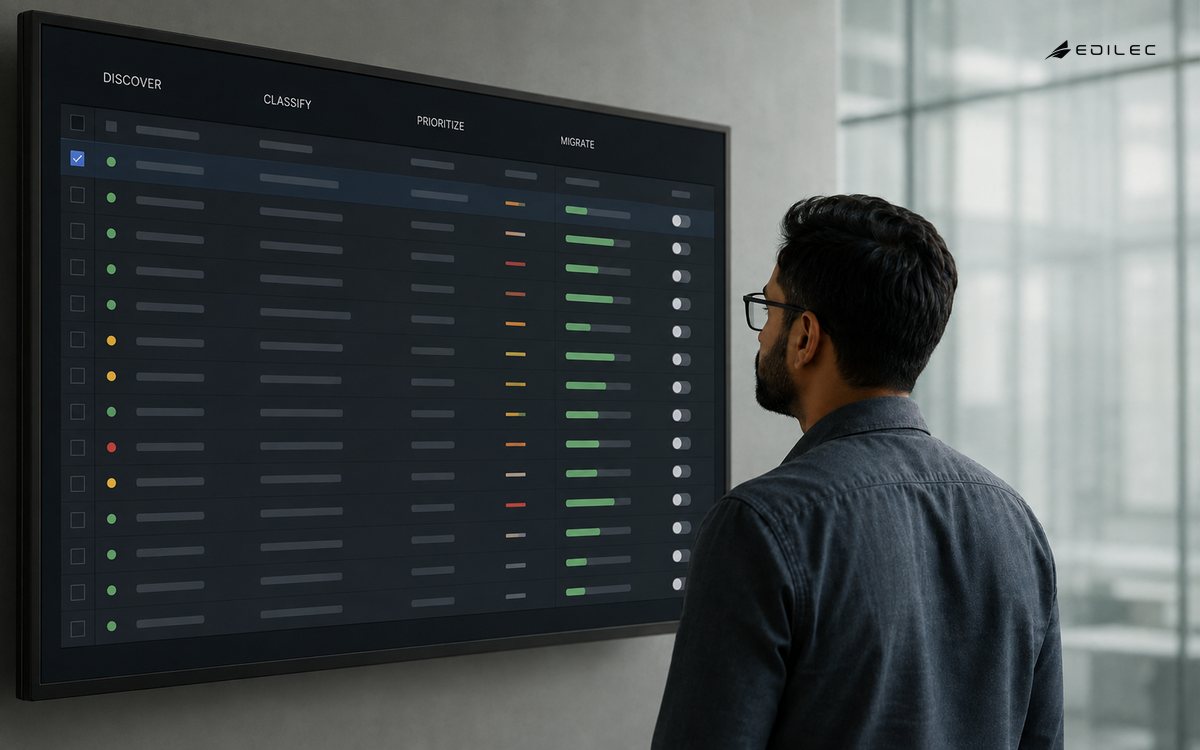
Rehearse issuance, rotation, revocation, backup, restore, incident investigation and downgrade prevention. Confirm algorithm negotiation does not silently fall back outside policy. Validate observability without exposing key material. Keep a rollback route and preserve classical protection required during transition. A laboratory algorithm test is not migration evidence until the integrated protocol and operating team succeed.
6. Migrate in waves and build crypto agility
For each wave, freeze dependencies, update policy and trust stores, deploy through canaries, observe compatibility and performance, then expand. Coordinate certificate and key lifecycles to avoid stranded clients. Record configured versions and acceptance evidence. Retire vulnerable algorithms only after required parties have migrated; leaving indefinite fallback enabled preserves the original exposure.
Crypto agility means the organization can identify, change and verify cryptography without redesigning every application. Centralize policy where sensible, use maintained libraries and interfaces, expose algorithm and certificate metadata, automate inventory updates, and test replacement procedures. It is not frequent algorithm churn. Review NIST and sector guidance, validations, supplier updates and cryptanalytic developments through an accountable process.
Applied example and assurance notes
Cryptographic discovery should combine network observation, certificate inventories, source and binary analysis, configuration scanning, HSM and PKI records, cloud service settings, procurement data and owner interviews. Each method has blind spots. Passive traffic will miss dormant recovery paths; code scans may miss provider-managed TLS; certificate lists may miss signing libraries. Reconcile findings around business services and record confidence so unknowns become planned work rather than false completeness.
A pilot certificate path can reveal ecosystem limits. Issue a test credential using the intended post-quantum profile, validate through clients, gateways, inspection, logging and revocation, then measure message size and latency. Test mixed-version peers and downgrade behavior. The pilot must not weaken production trust while experimenting. Preserve configurations and failure results for supplier conversations and migration-wave acceptance.
Program reporting should separate inventory coverage, products with credible roadmaps, successful interoperable pilots, migrated services and retired vulnerable fallback. Counting systems “quantum ready” based on a questionnaire obscures the work remaining. Report high-priority exceptions with data lifetime, supplier dependency, interim control and decision date. This gives executives a portfolio they can fund and challenge without pretending algorithm deployment alone completes transformation.
- Record the accountable owner and the decision the evidence supports.
- Test a normal journey, a denied path and a realistic failure.
- Keep assumptions, versions and unresolved risks visible.
- Require acceptance evidence before expanding scope or authority.
- Review operating outcomes and close corrective actions.
Before approval, the quantum-readiness owner should convene PKI, identity, applications, networks, product security, procurement and suppliers for a scenario review. Walk through ordinary use, a denied request, one unavailable dependency, a partial change and recovery. For each step, identify the authoritative record, person with decision rights, expected signal, time limit and safe alternative. Challenge inventory blind spots, protocol incompatibility, downgrade and stranded hardware. Record assumptions that could change after launch and assign each one a trigger for reassessment. The review is successful when participants can explain not only the preferred path but also how they recognize an unsafe state, who can stop progress, and how users continue while the issue is resolved. Preserve the dependency record, interoperable pilot and retired fallback with the configured release rather than in a detached presentation.
For Quantum-Safe Transformation Checklist: Inventory, Prioritization and PQC Migration, conduct a review thirty days after release or completion. Compare actual demand, quality, exceptions, incidents, cost and user effort with the baseline. Separate design defects from training gaps and changed operating context. Sample complete cases because averages can conceal a rare path carrying most consequence. Confirm that temporary access, duplicate infrastructure, transitional policy and manual workarounds have closed or have an owner and expiry. Reforecast the next period and publish decisions to people who operate or depend on the capability. At each material change, refresh cases, assumptions and risk treatment; assurance is a maintained operating practice, not a certificate inherited from the first release.
Quantum-Safe Transformation Checklist: Inventory, Prioritization and PQC Migration also needs a concise evidence index that a new reviewer can navigate without oral history. Link the current boundary, named owners, architecture or workflow, decisions, tests, exceptions, operating signals and closure records. Mark superseded artifacts instead of silently replacing them, and protect sensitive material by role. During a review, select one claim from the summary and trace it to its source and observed result. If that trace is slow or ambiguous, improve the index before scale. Good evidence reduces repeated discovery, supports accountable challenge and makes future migration or retirement materially easier.
Key takeaways
- Start with governance and a living cryptographic inventory, not a quantum-date prediction.
- Prioritize secrecy lifetime, authenticity lifetime, exposure and replacement lead time together.
- Require supplier evidence at the product, protocol and operational levels.
- Pilot full paths for size, performance, interoperability, downgrade and recovery.
- Remove vulnerable fallback deliberately and preserve crypto-agile ownership after migration.
Frequently asked questions
Which NIST standards are final?
FIPS 203 specifies ML-KEM for key encapsulation. FIPS 204 specifies ML-DSA and FIPS 205 specifies SLH-DSA for digital signatures. Use cases and protocol profiles still matter; do not substitute one function for another.
Should organizations migrate everything immediately?
They should begin inventory, prioritization, supplier engagement and supported pilots now. Production sequence should follow risk, standards, product maturity and interoperability, with urgent attention to long-lived sensitive data and long-lifecycle systems.
Does PQC replace symmetric cryptography?
The main quantum threat addressed here is to current public-key systems. Symmetric algorithms have different quantum considerations and key-strength guidance. Inventory both, but do not assume the same migration action applies.
Conclusion
Quantum-safe transformation is disciplined cryptographic modernization. Discover dependencies, prioritize enduring risk, demand supplier evidence, test complete paths and migrate through controlled waves. The lasting outcome is not merely new algorithms but an organization able to see and change cryptography as standards, products and threats evolve.