A SaaS MVP development implementation plan is a decision system, not a compressed wish list. It should identify the smallest production workflow that lets a real customer obtain value, lets the team observe what happened, and lets operators recover when the workflow fails. The plan must connect product assumptions to architecture, security, delivery, support and spending. A demo can omit those concerns; a paid service cannot. Start with the decision the MVP must inform, such as whether a defined customer segment repeatedly completes and pays for a specific outcome.
This guide focuses on scope, cost, risk and delivery. Teams that need a pre-start audit can use the implementation readiness checklist, while unresolved buyer questions are covered in the implementation plan FAQ. The broader SaaS product development delivery plan is useful when the work is already beyond MVP validation. Together, these pages separate evidence-gathering scope from long-term platform scope.
Define the outcome and investment boundary
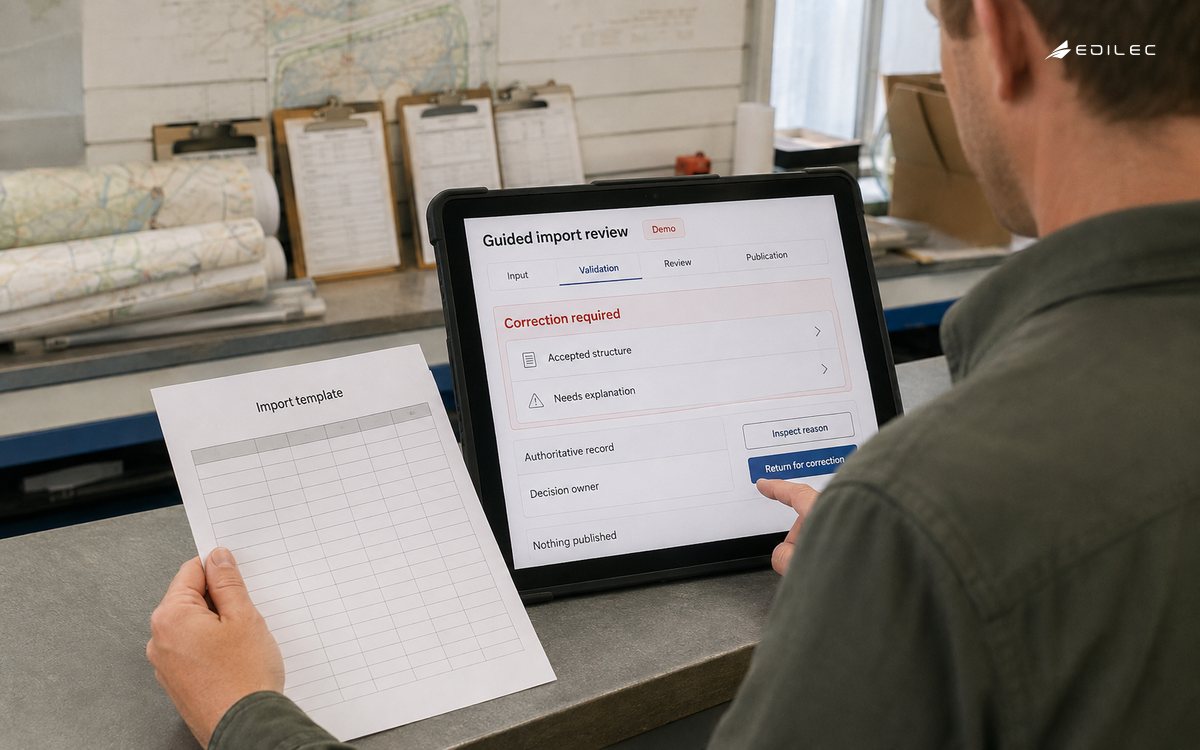
Write a one-sentence outcome containing the user, trigger, completed state and measurable evidence. For example: an invited operations manager imports a valid file, resolves validation issues, publishes the result and can explain every rejected row. This is stronger than “build an analytics portal” because it exposes identity, data, error handling, audit and support needs. Establish a baseline and a target, but also a stop condition. If the intended cohort does not adopt the workflow after usability problems are fixed, the next decision may be to change the proposition rather than add features.
Define financial and calendar boundaries as ranges with assumptions. Cost is driven by uncertainty, integration depth, data migration, assurance needs, design complexity and production ownership more than by screen count. Separate the discovery budget, build budget, provider fees and post-launch operating capacity. Reserve contingency for identified uncertainty rather than applying an unexplained percentage. The sponsor should know which evidence releases the next tranche of funding and which finding causes scope to be reduced, redesigned or stopped.
| Planning question | Evidence to prepare | Decision enabled |
|---|---|---|
| Is the problem worth solving? | Observed workflow, baseline delay, frequency and affected role | Proceed, reframe or stop |
| Is the first release coherent? | One end-to-end journey with exception and support paths | Include or defer a capability |
| Can the team operate it? | Ownership, access, telemetry, recovery and supplier map | Choose architecture and service level |
| Is more investment justified? | Adoption, completion, quality, cost and customer evidence | Fund the next product slice |
Scope a complete thin slice
Map the workflow from entry to durable outcome. Include authentication, tenant selection, permissions, validation, state transitions, notifications, billing or entitlement checks, administrative support and deletion. Mark the authoritative record at every state. The MVP may support one role, one channel and one integration, but that narrow path must be internally consistent. Features can be deferred; integrity cannot. Record exclusions in acceptance language, such as “no self-service plan changes in release one,” so they do not quietly reappear as assumptions during testing.
Prioritize by learning and consequence
Rank work on two dimensions: how much it reduces the central product uncertainty and how severe failure would be. A guided import may be essential for learning; tenant isolation is essential because failure is consequential. Decorative customization may score low on both. For every candidate item, ask what decision becomes impossible without it. Then identify the smallest implementation that preserves trustworthy evidence. Use prototypes for interaction uncertainty, technical spikes for integration uncertainty and production code only when behavior must be observed under real constraints.
Choose production architecture and controls
Prefer an architecture the current team can understand, deploy and recover. A modular application with managed data, identity, queueing and observability services is often enough. Define tenant boundaries and enforce authorization on the server for every protected operation. Keep configuration outside code, use short-lived workload identities where available and make builds traceable to reviewed source. The Twelve-Factor principles remain useful for configuration, dependencies, disposability and environment parity, but they do not replace a threat model, data design or recovery plan.
Use NIST SSDF to turn secure development into work items and OWASP ASVS 5.0.0 to select verifiable application controls. Classify data, minimize collection and document retention before schema decisions become expensive. Include keyboard operation, visible focus, labels, errors and status updates using WCAG 2.2 as the reference. Add a bounded support interface with search, event history and safe correction actions. Direct database edits are not an acceptable routine because they bypass validation, authorization and evidence.
Build a transparent MVP cost model
Estimate by workstream and uncertainty, not by a single feature total. Discovery covers workflow and evidence design. Product delivery covers interaction, domain logic and accessibility. Platform work covers environments, deployment, telemetry and recovery. Assurance covers security, testing and privacy. Transition covers documentation, training and launch support. Show the assumed team composition and elapsed range because adding people does not linearly shorten work with tightly coupled decisions. Include taxes, provider minimums, data transfer and support coverage where they materially affect ownership cost.
| Cost area | Typical inclusions | Common hidden driver |
|---|---|---|
| Discovery and design | Workflow, prototype, data and acceptance decisions | Unavailable users or conflicting record ownership |
| Product build | Customer path, admin path, APIs and accessibility | Exception states and changing business rules |
| Platform and assurance | CI/CD, identity, monitoring, security and recovery | Environment parity and compliance evidence |
| Integrations and migration | Contracts, mapping, retries, reconciliation and cutover | Poor source data or provider limits |
| Operations | Support, incident response, updates and cloud spend | Unowned alerts and manual corrections |
Deliver through evidence gates
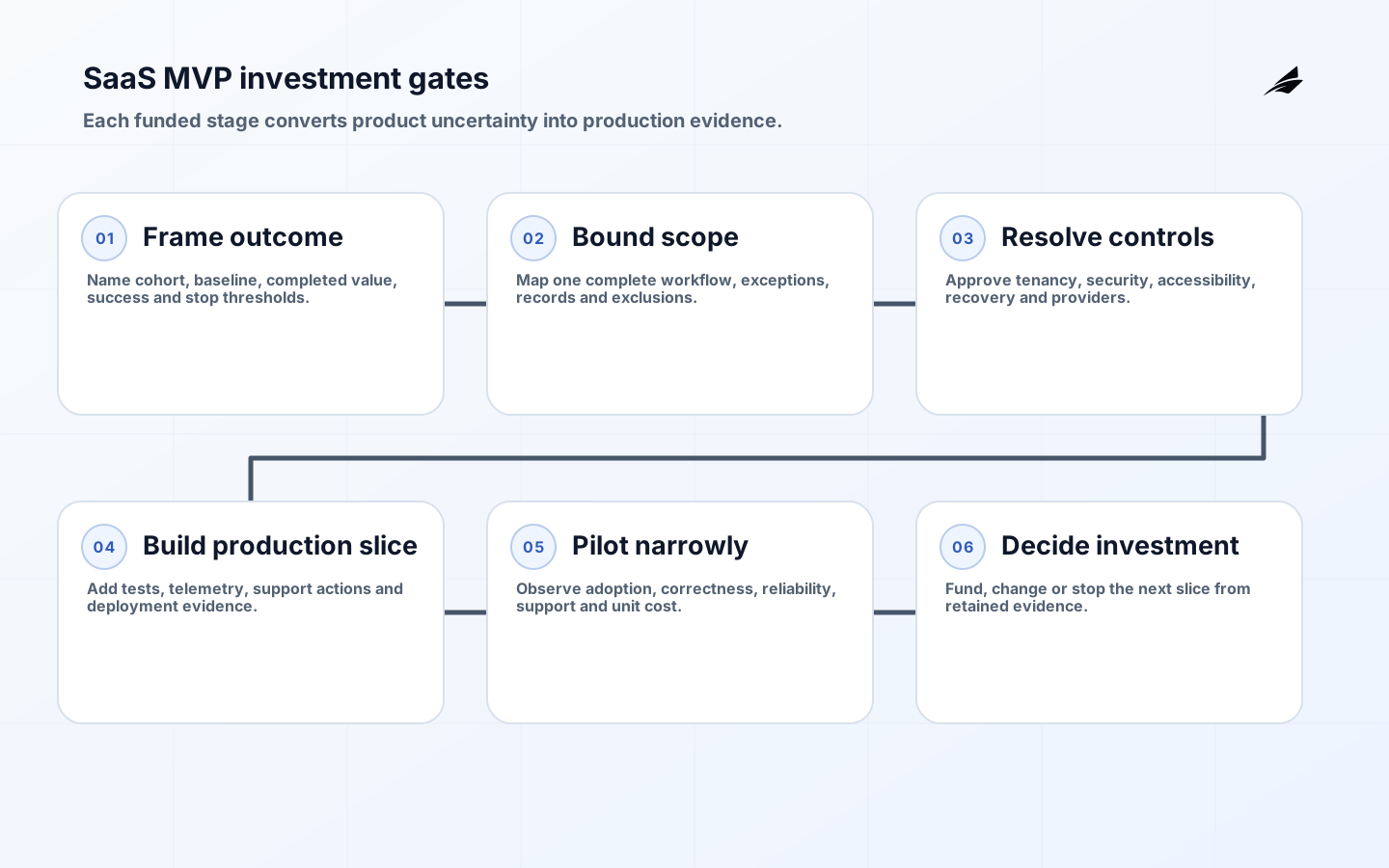
- Frame the outcome, cohort, baseline, success measure and stop condition.
- Map the complete workflow, records, permissions, exceptions and explicit exclusions.
- Resolve architecture, provider, security, privacy and recovery decisions that could invalidate the plan.
- Build one production slice with automated tests, telemetry, support actions and deployment controls.
- Release to a bounded cohort, observe behavior and correct reliability or usability barriers.
- Compare evidence with the investment threshold and fund, change or stop the next slice.
Each gate needs a named approver and retained evidence. Discovery ends with decisions, not a presentation. Build completion means the release candidate can be deployed from versioned configuration and operated through documented controls. Pilot completion means representative users have exercised both the normal path and recovery paths. DORA’s current five software delivery metrics can help a team improve throughput and instability over time, but an MVP also needs product measures such as activation, repeated completion and support demand. Do not turn metrics into cross-team targets detached from service context.
Manage the risks that change the plan
| Risk | Early control | Trigger for action |
|---|---|---|
| False product signal | Recruit the intended cohort and preserve baseline evidence | Use is driven only by staff intervention |
| Integration failure | Contract tests, timeouts, idempotency and visible retries | Errors or reconciliation breaks exceed threshold |
| Tenant or access defect | Server-side authorization and negative permission tests | Any cross-tenant or excessive access result |
| Fragile release | Automated deployment, migration rehearsal and rollback criteria | Candidate cannot be restored within target |
| Runaway cost | Budgets, usage attribution and unit-cost review | Forecast exceeds approved range without added value |
Write commercial acceptance around evidence
Attach payment milestones to accepted evidence rather than elapsed weeks or subjective completion percentages. Discovery acceptance can require the approved workflow, assumptions, architecture decisions and estimate. Build acceptance can require deployable source, tests, operating controls and resolved severity thresholds. Pilot acceptance can require observed cohort results and a reviewed risk register. Define customer responsibilities for access, decisions, test data and user recruitment so vendor delay and customer delay are distinguishable. Preserve a change log that shows cost, schedule, risk and excluded scope for every approved change.
Key takeaways
- Fund a testable customer outcome, not a shortened long-term roadmap.
- Narrow roles and integrations while keeping the chosen workflow complete.
- Make security, accessibility, support and recovery part of production scope.
- Show cost by workstream, assumption and operating consequence.
- Release through evidence gates and let observed behavior control further investment.
Frequently asked questions
How long should SaaS MVP development take?
There is no responsible universal duration. A narrow workflow with one integration and modest assurance can be delivered faster than a regulated, migration-heavy product. Ask for an elapsed range tied to discovery decisions, integration access, test data, review turnaround and pilot recruitment. A plan that states these dependencies is more useful than an aggressive date with no acceptance model.
What should an MVP estimate include?
It should include discovery, product and admin experience, engineering, integrations, data work, accessibility, security, test automation, environments, deployment, observability, recovery, documentation and launch support. Recurring provider and operating costs should be separate. Ask which assumptions would cause a change request and which risks are covered by contingency.
Is technical debt acceptable in an MVP?
Deliberate limitations can be acceptable when they are documented, observable and do not corrupt evidence or create unsafe behavior. Manual review may replace automation for low volume. Missing authorization, recovery or data integrity is not a useful shortcut. Record debt with an owner, consequence and threshold for repayment so a successful pilot does not quietly turn temporary behavior into critical infrastructure.
Conclusion
A credible SaaS MVP development implementation plan makes uncertainty visible and buys evidence in controlled stages. Define one valuable outcome, build the smallest complete production path, price the real work and protect customer trust with proportionate controls. The strongest plan does not promise certainty before discovery. It defines how product, technical and operating evidence will produce the next decision while the cost of changing direction is still manageable.