How CTOs Should Think About Release Notes
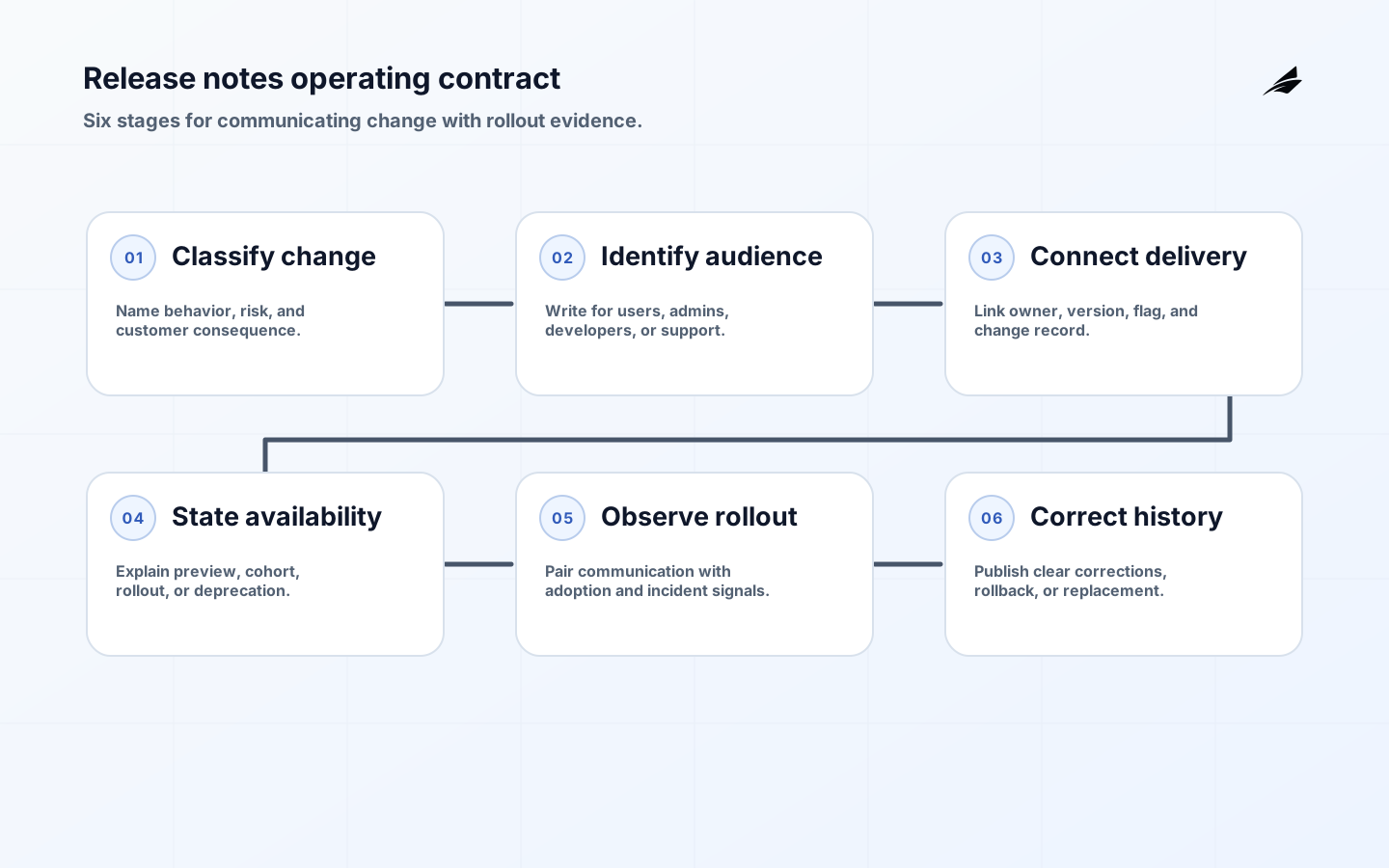
Release notes are part of the operating contract between a product team and the people who depend on its behavior. They help a customer decide whether to adopt a change, an administrator decide whether to prepare users, support decide what language to use, and engineering decide whether the rollout is complete. A commit list cannot do all of that. A strong release note connects a change to its audience, impact, availability, action, limitation, and owner. This guide treats release notes as a governed product surface rather than a last-minute summary assembled after deployment.
Define the change that needs communication
Start with the customer or operator decision that the change may alter. A new endpoint may need no public note, while a small default change can require preparation from every administrator. Classify changes by behavior, audience, risk, availability, and required action. Keep implementation details when they help a technical reader operate safely, but remove internal ticket language that does not tell the reader what to do. Keep a Changelog offers a useful discipline around categories and readable history; adapt the categories to the product’s audience and support model.

| Change question | Decision | Evidence |
|---|---|---|
| What changed? | Customer-visible behavior or contract | Before/after example |
| Who is affected? | Roles, plans, regions, or integrations | Audience and eligibility |
| When does it apply? | Release, cohort, flag, or migration state | Availability and effective time |
| What must readers do? | Action, preparation, or no action | Step, owner, and support route |
Connect notes to the delivery system
A release note should be traceable to a change record, code or configuration version, rollout state, and verification result. GitHub’s automatically generated release notes documentation shows how labels and merged changes can provide a starting collection. Automation should gather candidates, not decide audience or impact. Give each note a responsible owner and a status such as draft, approved, published, superseded, or corrected. Link the note to a feature flag, migration, deprecation date, or support article when a reader needs more context.
Write for the reader’s next decision
A CTO should expect different readers to need different levels of detail. An end user needs changed behavior and a clear benefit or limitation. An administrator needs rollout scope, permissions, migration, and preparation. A developer needs compatibility, schema, deprecation, and observability details. Support needs symptoms, affected cohorts, and the first safe response. Use a short opening summary followed by a structured detail section when the audiences diverge. Avoid promising universal availability when a feature is phased, and label known gaps rather than implying the rollout is complete.
| Reader | Useful detail | Common failure |
|---|---|---|
| End user | Behavior, benefit, limitation | Internal implementation jargon |
| Administrator | Scope, timing, preparation | No migration or permission note |
| Developer | Compatibility, API, deprecation | No version or example |
| Support | Symptoms, cohort, recovery | No owner or escalation path |
Govern the note like a change
Use a lightweight review based on consequence. A copy change may need a product owner; a permission, billing, data, or availability change deserves engineering and operations review; a security-sensitive change needs the appropriate security owner. NIST SSDF emphasizes repeatable practices and root-cause learning around software changes. Apply that thinking to release communication: verify examples, check links, confirm dates, and record corrections. Do not let a generated note publish from a merge event if the change can surprise customers or create an obligation.
Make rollout state visible
A note should tell readers whether a change is in preview, limited rollout, generally available, deprecated, or withdrawn. If a feature flag controls eligibility, explain who can see it and how support should identify the state. Connect rollout observation to the note: adoption, errors, support contacts, conversion, latency, or incident signals may determine whether the team expands, pauses, or corrects the change. OpenTelemetry offers a shared way to connect traces, metrics, and logs; the release process should connect those signals to an owner and a decision rather than publishing charts without interpretation.
Treat corrections and deprecations as first-class notes
Readers need to know when a previous note was incomplete or wrong. Preserve the original publication, add a correction with date and reason, and tell the affected audience what action changes. For deprecations, give a replacement, timeline, compatibility boundary, and a way to identify remaining use. If a rollout is rolled back, explain what users may see during the transition and where support should route reports. A quiet edit can be tempting, but it removes the history needed by teams investigating a customer impact months later.
Measure whether notes change outcomes
Track readership only as a starting signal. More useful measures include support contacts about a change, avoidable migration failures, adoption among intended cohorts, time to complete required preparation, corrected-note frequency, and incidents where the note was missing or misleading. Sample notes with a reader from product, support, engineering, and operations. Ask each person what action they would take and what remains unclear. A note is effective when readers can make the right decision with less back-and-forth, not when it contains a high word count.
Make release-note review a delivery checkpoint
At planning time, identify the changes that may alter a customer decision even if the code change looks small. Defaults, permissions, data retention, billing, integrations, and deprecations deserve early communication planning. Add the intended audience and action to the change record so the writer does not have to infer them after deployment. This also exposes changes that need a migration or support preparation.
At release time, compare the note with the deployed behavior in a representative environment. Check examples, screenshots or terminology used in the product, availability state, rollout cohort, and links. Ask a reader outside the implementation team to describe what they would do next. If they cannot, the note is not ready regardless of whether the feature has shipped.
After release, connect the note to observed signals. If support receives questions from an audience the note did not name, update the communication and the rollout playbook. If adoption is low, do not assume the feature lacks value until the note, access, and setup path have been checked. A release note can reveal a product discovery or onboarding problem.
Keep corrections visible and useful. State what was wrong, which readers were affected, what they should do now, and when the correction applies. Preserve the old text for traceability, but make the current action prominent. This practice builds confidence because readers see that the team can acknowledge and repair communication as part of operating the product.
A useful executive review asks whether a release note changes a customer’s preparation, trust, or ability to recover. If it does, the note should be planned with the change rather than written from a final diff. That timing lets the team clarify compatibility, training, support coverage, and rollout evidence before customers meet the new behavior.
Keep the note’s lifecycle aligned with the feature’s lifecycle. When a flag expands, a deprecation date moves, or a rollback occurs, update the communication with the same ownership and traceability as the delivery record. Readers should not have to infer current availability from an old announcement.
Keep the release-note source close to the change record but keep the published language close to the reader. The delivery system can provide versions, labels, links, and owners; product and support should add the behavior, audience, preparation, limitation, and recovery. That division makes generation efficient without allowing internal metadata to become customer communication by accident.
A release-note archive is also an operational memory. It helps support interpret an old customer report, helps engineering identify the rollout that changed a state, and helps leadership see whether communication debt is accumulating. Preserve dates, audiences, corrections, and availability state so the archive remains useful after the current release has faded from attention.
Before publication, ask whether a reader can tell the difference between availability and eligibility. A feature may be live but limited by plan, role, region, flag, or migration state. Naming that boundary prevents support from treating a valid limitation as a defect and prevents customers from assuming a promise the product has not made.
Key takeaways
- Treat release notes as a customer and operator contract connected to rollout evidence.
- Classify audience, impact, availability, action, and owner before writing prose.
- Use automation to collect candidate changes, then apply human review to behavior and consequence.
- Make preview, phased rollout, deprecation, rollback, and correction states visible.
- For related operating context, See tenant isolation, self-serve onboarding, and SaaS reliability.
Frequently asked questions
What should release notes communicate?
They should tell the intended reader what changed, who is affected, when the change applies, what action is required, what remains limited, and where to ask for help. A technical detail belongs when it changes a reader’s decision or helps safe operation. A commit identifier by itself rarely does.
Can release notes be generated automatically?
Automation is excellent for collecting merged changes, labels, versions, and links. It is less reliable at judging customer impact, rollout scope, or clear language. Require an owner to verify the behavior, audience, availability, and action before publication, especially for access, data, billing, or compatibility changes.
How should a CTO measure release notes?
Measure whether readers understand and act on a change. Use support questions, migration failures, adoption, incident signals, required-preparation completion, and corrected-note rate. Sample a few notes with people outside engineering and ask them to describe their next step; misunderstanding found early is a useful operating signal.
Conclusion: communicate the operating change
Release notes are strongest when they make a behavior change actionable and traceable. Give them an owner, connect them to rollout state, write for the reader’s next decision, and preserve corrections and deprecations as part of the history. That approach helps a CTO scale delivery without making customers or internal teams reconstruct change from commits, incidents, and hearsay.
Ownership is clearer when how ctos should think about release notes separates the promise from the mechanism. Use release notes support evidence to decide whether the workflow is ready.
Before widening how ctos should think about release notes, run a small rehearsal with normal, denied, delayed, and corrected cases. Treat release notes exceptions as evidence for the next decision.
The measurement plan for how ctos should think about release notes should pair an outcome with a reason to investigate it. Reconcile release notes changes against the original record.
This decision also connects to How Operations Leaders Should Think About Tenant Isolation, how IT managers should think About Self-serve Onboarding, How CTOs Should Think About SaaS Reliability in Production. Review those boundaries together when how ctos should think about release notes shares identity, data, billing, or support evidence with another workflow.
Evidence for “How CTOs Should Think About Release Notes” is grounded in Automatically generated release notes, Keep a Changelog 1.1.0, Secure Software Development Framework (SSDF) Version 1.1, OpenTelemetry Observability Primer; each source informs a specific decision, test, or operating trade-off described in this guide.