SEO-ready website development means building page templates and release controls that let people and search engines discover, render, understand and navigate useful content. It does not guarantee rankings. Search performance also depends on demand, competition, reputation and content quality. Development controls the technical foundation: status codes, links, rendering, canonical signals, structured markup, accessibility, performance and migration behavior.
This implementation FAQ answers questions product, content and engineering teams face before launch. For project planning, see the search-ready website scope and delivery plan, implementation readiness checklist and SEO-ready development guide. Search-engine behavior changes, so verify important decisions against current official documentation and observed crawl evidence.
How should rendering be designed for search?
Return meaningful HTML for each indexable URL, including primary content, title, headings and links. Server rendering, static generation and client rendering can all work, but relying on late browser execution adds failure modes and delays diagnosis. Test the raw response and rendered DOM. Ensure essential CSS, JavaScript and images are crawlable; Google notes that blocked resources can prevent it from understanding a page as a user sees it.
Use real anchor links with stable destinations for navigation. Infinite scroll and interactive filters need crawlable paginated or category URLs when their contents should be discovered. Do not require clicks, search forms or session state to reach important pages. Return each page's actual content rather than a universal shell with client-only errors. Monitor render failures and resource blocking after deployment, especially when CDN, consent or bot controls change.
How do crawling and indexing controls differ?
robots.txt communicates crawler access rules under the Robots Exclusion Protocol; it is not an authorization mechanism and does not reliably remove a URL already known to search engines. Use authentication for private content. Use a supported noindex directive on a crawlable response when a public page should not be indexed. If crawling is blocked, a crawler may never see the directive. Return 404 or 410 for content that no longer exists.
A sitemap lists canonical URLs the site wants discovered and may include accurate modification times. It does not override noindex, redirects, errors or conflicting canonicals. Generate sitemaps from the same authoritative page inventory as routing, exclude noncanonical and blocked URLs, split large sets appropriately and monitor processing. Internal links remain essential because they communicate site structure and help users as well as crawlers.
| Mechanism | Use it for | Do not use it for | Release check |
|---|---|---|---|
| robots.txt | Manage crawler access | Protect secrets or guarantee deindexing | Parser test and target path review |
| meta/X-Robots noindex | Exclude crawlable public content from index | Block crawling | Rendered directive inspection |
| rel=canonical | Signal preferred duplicate URL | Redirect users or merge different pages | Self and duplicate consistency |
| sitemap | Publish canonical discovery inventory | Force indexing | Only 200, indexable URLs included |
| HTTP status | Describe resource outcome | Hide soft errors behind 200 | Template-level status tests |
What makes canonical signals coherent?
Choose one durable URL for each distinct page and align redirects, internal links, sitemap entries, hreflang and rel=canonical with it. A self-referencing canonical can reinforce intent. Use redirects when an old URL has permanently moved and users should follow it. Canonical is a signal for duplicate or substantially similar content, not a way to collapse unrelated pages. Search engines may select another URL when signals conflict.
Define query-parameter policy before filters, sorting, campaigns and internal search create combinations. Decide which states deserve unique indexable pages with useful content and which should canonicalize, redirect or remain unlinked. Avoid generating calendar or faceted paths with effectively infinite spaces. For international pages, use stable locale URLs, accurate language-region annotations and reciprocal hreflang relationships while retaining a valid canonical in the same language set.
How should templates support content and structured data?
Each page should have a clear purpose, unique descriptive title, one useful primary heading and logical subheadings. Templates need fields for concise summaries, meaningful image alternatives, publication or update facts where relevant and editorial internal links. Do not generate pages merely to cover keyword combinations. Google frames SEO as helping search engines understand content and users decide whether to visit; useful information remains the reason an indexable page should exist.
Add structured data only when the visible page and entity meet the documented feature requirements. Generate it from the same record used to render the page, escape values safely and validate syntax and eligibility. It can improve machine understanding but does not guarantee a rich result. Keep organization, product, article, breadcrumb or other identifiers stable. Remove stale markup when visible content or eligibility changes rather than leaving contradictory machine-only claims.
Do performance and accessibility affect SEO readiness?
They are part of a usable website and should be release requirements independent of rankings. Core Web Vitals currently cover loading, interaction responsiveness and visual stability through LCP, INP and CLS. Measure real-user field data at the 75th percentile and diagnose with laboratory tools. Optimize server response, image delivery, fonts, JavaScript work, caching and layout dimensions, but do not remove necessary content to chase a score.
Use WCAG 2.2 as the accessibility reference: semantic structure, keyboard operation, visible focus, labels, alternatives, contrast, reflow, status and error handling improve access and often make content easier to navigate and parse. Automated checks are incomplete, so include keyboard and assistive-technology review. Avoid overlays that claim instant compliance. Performance and accessibility defects frequently live in shared components, making template-level fixes more valuable than page-by-page patches.
| Quality area | Template acceptance | Field evidence | Owner |
|---|---|---|---|
| Discoverability | Linked from intended hierarchy | Crawler and internal-link reports | Information architecture |
| Indexability | 200 status and coherent directives | Index coverage and inspection | Technical SEO |
| Content | Unique purpose, title and headings | Query and engagement review | Editorial |
| Performance | Budget passes representative pages | LCP, INP and CLS distributions | Engineering |
| Accessibility | Keyboard and WCAG checks pass | User testing and issue trend | Product/design |
| Structured data | Visible facts match valid markup | Enhancement reports | Content engineering |
How should a redesign or migration protect search signals?
Crawl and export the current site before change. Inventory indexable URLs, titles, canonicals, internal links, structured data, traffic, backlinks and status. Map every valuable old URL to the most relevant new destination; avoid sending everything to the home page. Preserve content and internal-link context unless change is intentional. Test redirect chains, parameters, host variants, protocols and trailing-slash rules in staging without exposing staging to indexing.
At cutover, remove temporary blocking, publish production canonicals and sitemaps, verify certificates and test representative routes. Keep old redirects for as long as users and external links need them. Monitor server logs, crawl errors, selected canonicals, index coverage, structured-data issues and search outcomes by template. Traffic can fluctuate while systems recrawl, but technical regressions should be investigated immediately rather than dismissed as a normal migration effect.
What is a reliable SEO release sequence?
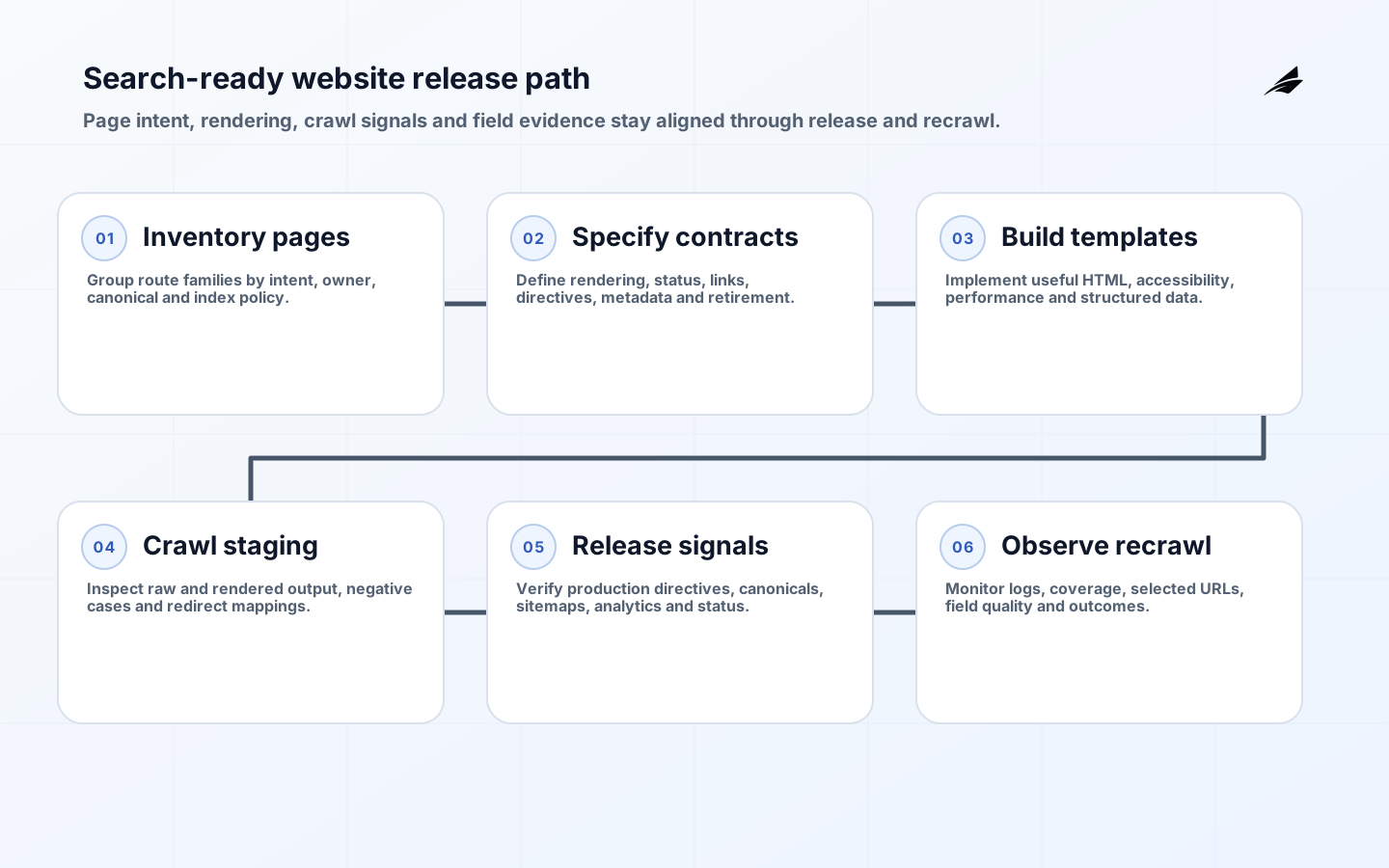
- Inventory page types, intent, canonical URLs and index policy.
- Specify rendering, statuses, links, directives, metadata and structured-data contracts.
- Implement shared templates with accessibility and performance budgets.
- Crawl staging and test raw HTML, rendered output and negative cases.
- Release with redirects, production directives, sitemaps and analytics verified.
- Observe recrawl and field outcomes; fix template regressions before expanding.

What should teams measure after launch?
Separate technical coverage from search outcomes. Technical indicators include successful crawl, status distribution, indexability, canonical consistency, sitemap validity, render errors, structured-data eligibility, field performance and accessibility defects. Outcome indicators include qualified impressions, clicks, landing-page engagement and conversions aligned to page purpose. Segment by template, directory, locale, device and release so aggregate growth does not hide a broken route family.
Record annotation dates for releases, migrations, content changes and incidents. Compare several evidence sources: application logs show requests, Search Console shows Google's processing, analytics shows user sessions and business systems show outcomes. None is complete alone. Avoid daily reactions to noisy ranking positions. Investigate material, sustained changes against known releases, demand and seasonality, then test a corrective hypothesis.
Key takeaways
- Render meaningful, linked HTML at stable canonical URLs.
- Use robots, noindex, canonical, sitemap and status codes for their distinct purposes.
- Build content, structured data, accessibility and performance into shared templates.
- Treat migrations as URL and evidence transitions, not only visual redesigns.
- Measure technical coverage separately from qualified organic outcomes.
More frequently asked questions
Is JavaScript bad for SEO?
No. JavaScript can create excellent experiences, but essential content and links must be reliably rendered and resources accessible. Test the complete rendering path and avoid making discovery depend on user interaction or fragile client state.
Does submitting a sitemap guarantee indexing?
No. A sitemap supports discovery and canonical hints. A URL still needs a successful, indexable response and useful content, and search engines decide whether and how it is indexed.
How quickly will development changes affect search?
It varies by crawl frequency, site size, change type and search-engine processing. Google notes that effects can take from hours to months. Verify technical release immediately, then assess search outcomes over an appropriate period.
Govern new page types after launch. Require every route family to declare user intent, owner, canonical pattern, index policy, internal-link source, content minimum, retirement behavior and monitoring. Review low-value or duplicate growth before it consumes crawl and editorial attention. This prevents a sound launch from degrading as campaigns, filters and integrations add URLs outside the original architecture.
Conclusion
An SEO-ready website makes technical intent explicit and testable. Build crawlable HTML, coherent URLs and directives, useful templates, accessible interaction and measured performance; then release with migration and monitoring discipline. That foundation cannot promise rankings, but it prevents avoidable engineering choices from hiding valuable content or degrading the people who find it.