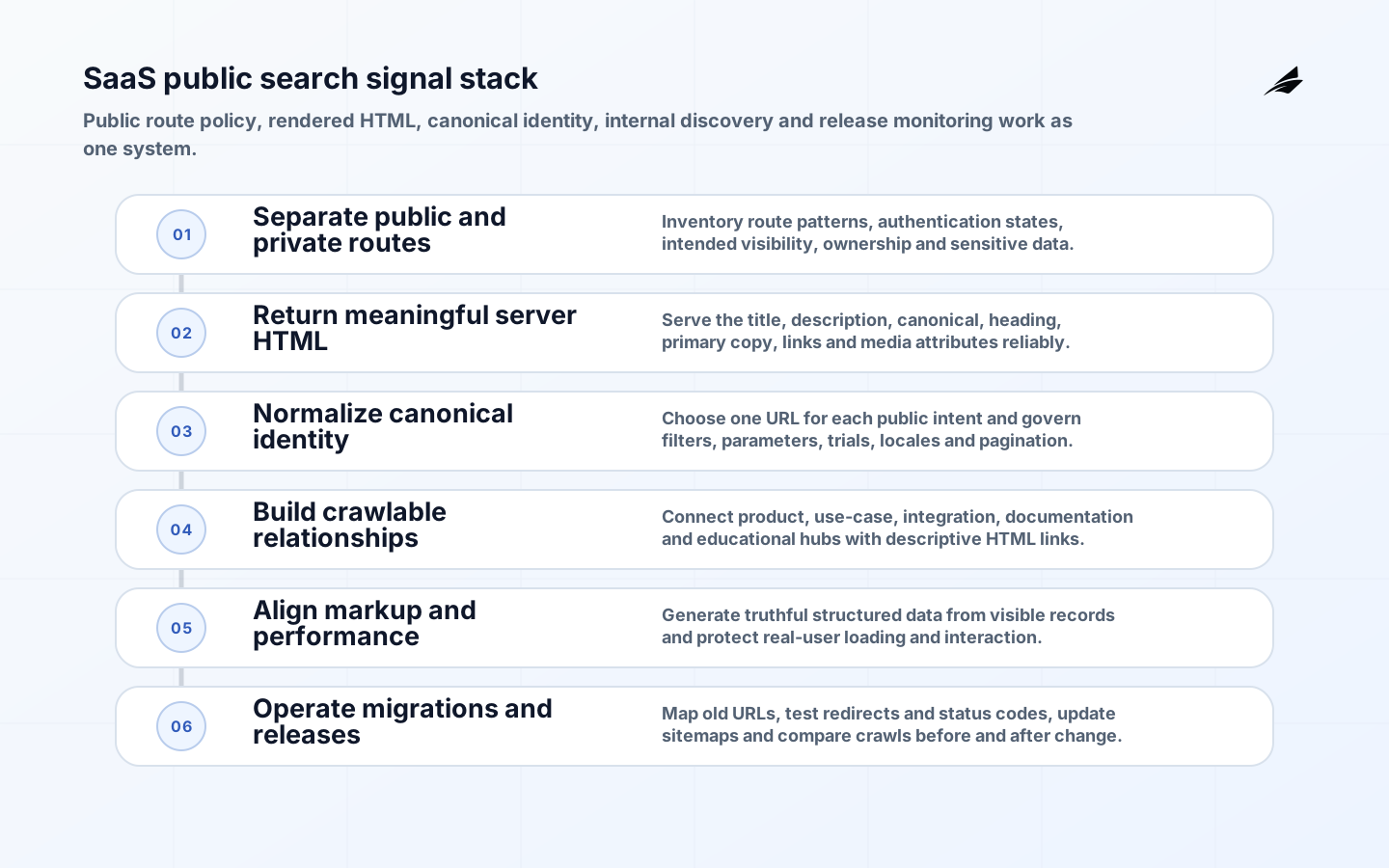
Technical SEO services for SaaS companies must distinguish the public acquisition site from the authenticated product. Pricing, feature, integration, use-case, documentation, comparison, status, and help content may need discovery; tenant dashboards, searches, invitations, exports, and private records must not. The engineering work aligns routing, rendering, canonical signals, release processes, and measurement with that boundary. It is not a hidden-keyword exercise. The primary planning lens is technical SEO services for SaaS companies, with decisions expressed in language that product users and operating teams can verify.
Nearby planning resources include Technical SEO Services for SaaS Companies: Scope, Cost, Risks and Delivery Plan, Technical SEO Services for SaaS Companies Implementation Checklist, Technical SEO Services for Small Business: Scope, Cost and Delivery Plan, Technical SEO Services for Small Business Implementation Checklist. Those pages provide companion scope and checklist views; this article develops the technical and operating evidence for the topic here.
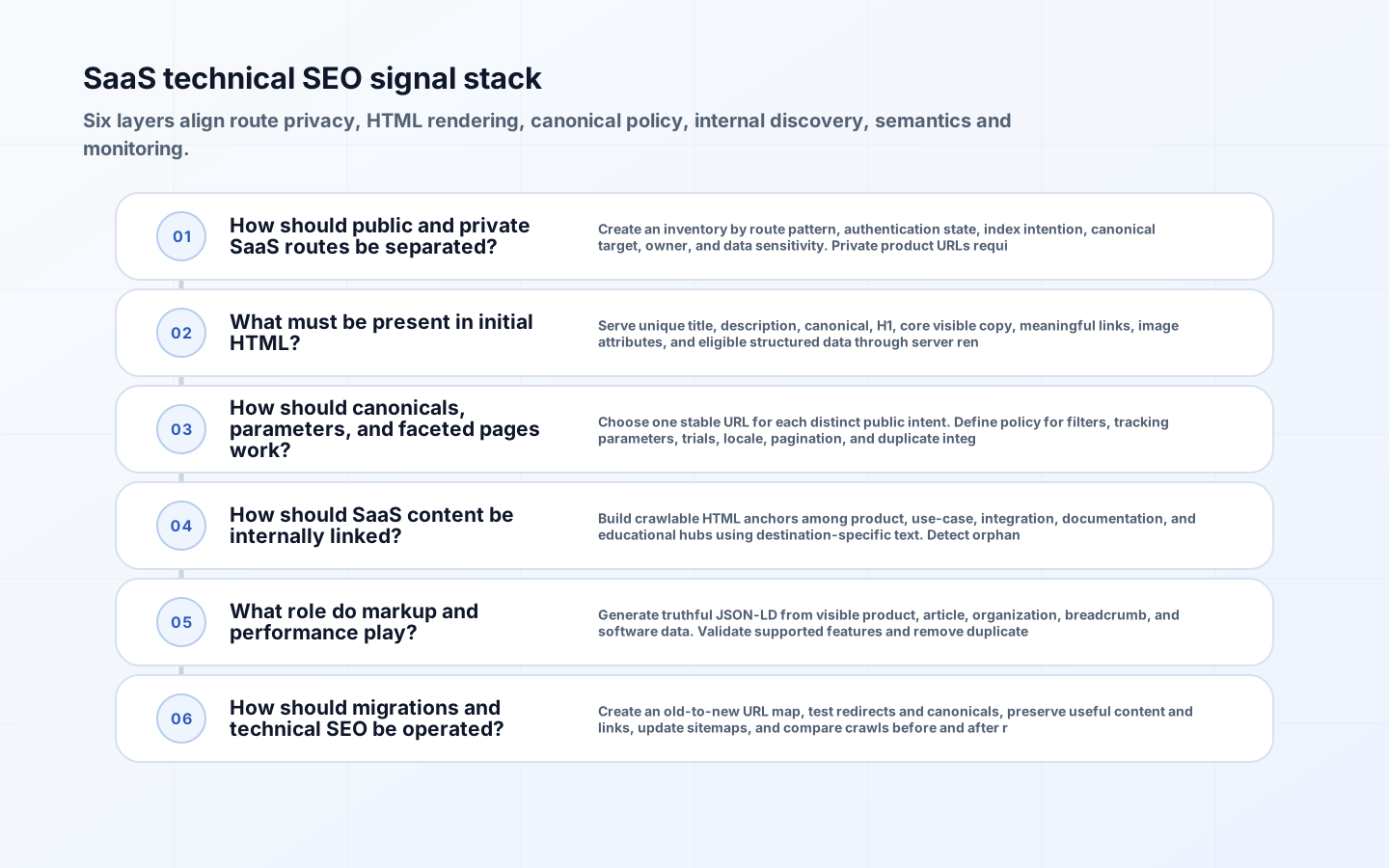
How should public and private SaaS routes be separated?
Create an inventory by route pattern, authentication state, index intention, canonical target, owner, and data sensitivity. Private product URLs require real access control; robots.txt is not authorization.
Ensure logged-out responses do not reveal tenant names or data in HTML, metadata, structured data, error messages, or social previews. Return meaningful status codes for removed and unauthorized content. Single-page applications often return a 200 shell for private, missing, and public routes, making errors and accidental exposure difficult to detect.
What must be present in initial HTML?
Serve unique title, description, canonical, H1, core visible copy, meaningful links, image attributes, and eligible structured data through server rendering or static generation where practical.
Compare raw response HTML with the hydrated DOM. Use progressive enhancement and ensure navigation and primary content survive optional-script failure. Google can render JavaScript, but rendering queues and script faults add uncertainty, and other crawlers may execute less.
| Decision area | Required decision | Acceptance evidence |
|---|---|---|
| How should public and private SaaS routes be separated? | Create an inventory by route pattern, authentication state, index intention, canonical target, owner, and data sensitivity. Private product URLs require real access control; robots.txt is not authorization. | Ensure logged-out responses do not reveal tenant names or data in HTML, metadata, structured data, error messages, or social previews. Return meaningful status codes for removed and unauthorized content. |
| What must be present in initial HTML? | Serve unique title, description, canonical, H1, core visible copy, meaningful links, image attributes, and eligible structured data through server rendering or static generation where practical. | Compare raw response HTML with the hydrated DOM. Use progressive enhancement and ensure navigation and primary content survive optional-script failure. |
| How should canonicals, parameters, and faceted pages work? | Choose one stable URL for each distinct public intent. Define policy for filters, tracking parameters, trials, locale, pagination, and duplicate integration or feature combinations. | Align redirects, rel=canonical, internal links, hreflang, sitemap entries, and structured-data identifiers. Do not canonicalize useful distinct pages to a broad parent merely because copy is weak. |
How should canonicals, parameters, and faceted pages work?

Choose one stable URL for each distinct public intent. Define policy for filters, tracking parameters, trials, locale, pagination, and duplicate integration or feature combinations.
Align redirects, rel=canonical, internal links, hreflang, sitemap entries, and structured-data identifiers. Do not canonicalize useful distinct pages to a broad parent merely because copy is weak. Conflicting signals and uncontrolled URL combinations consume crawling and can cause the wrong version to be selected.
How should SaaS content be internally linked?
Build crawlable HTML anchors among product, use-case, integration, documentation, and educational hubs using destination-specific text. Detect orphan pages on every release.
Keep important pages within sensible paths from navigation or contextual hubs. Provide URL-based pagination for archives rather than browser-only infinite scroll. A generated sitemap can reveal URLs, but it cannot replace navigable site relationships or rescue pages isolated from context.
| Control area | Failure to prevent | Production proof |
|---|---|---|
| How should SaaS content be internally linked? | A generated sitemap can reveal URLs, but it cannot replace navigable site relationships or rescue pages isolated from context. | Keep important pages within sensible paths from navigation or contextual hubs. Provide URL-based pagination for archives rather than browser-only infinite scroll. |
| What role do markup and performance play? | Rich-result eligibility and fast laboratory scores do not compensate for incorrect product claims, broken mobile controls, or unstable real-user pages. | Measure Core Web Vitals by template with field data. Budget scripts, consent tools, chat, analytics, fonts, and media; reserve image dimensions and prioritize the true largest element. |
| How should migrations and technical SEO be operated? | A migration can appear visually complete while thousands of legacy URLs loop, redirect to home, or lose their internal authority. | Monitor server logs, indexing reports, sitemap counts, rendered samples, templates, Core Web Vitals, and conversion paths. Automate checks for blank HTML, noindex, canonical drift, redirect chains, and broken links. |
What role do markup and performance play?
Generate truthful JSON-LD from visible product, article, organization, breadcrumb, and software data. Validate supported features and remove duplicate plugin output.
Measure Core Web Vitals by template with field data. Budget scripts, consent tools, chat, analytics, fonts, and media; reserve image dimensions and prioritize the true largest element. Rich-result eligibility and fast laboratory scores do not compensate for incorrect product claims, broken mobile controls, or unstable real-user pages.
How should migrations and technical SEO be operated?
Create an old-to-new URL map, test redirects and canonicals, preserve useful content and links, update sitemaps, and compare crawls before and after release.
Monitor server logs, indexing reports, sitemap counts, rendered samples, templates, Core Web Vitals, and conversion paths. Automate checks for blank HTML, noindex, canonical drift, redirect chains, and broken links. A migration can appear visually complete while thousands of legacy URLs loop, redirect to home, or lose their internal authority.
What a SaaS technical audit should deliver
A useful audit produces a route inventory, canonical policy, public/private boundary, raw and rendered HTML samples, status-code matrix, crawl graph, orphan list, sitemap comparison, structured-data findings, template performance profile, and prioritized engineering tickets with acceptance tests. Each finding should name affected patterns and business consequence instead of offering a generic score.
Verify recommendations in a production-like environment. Request logged-in and logged-out variants, block JavaScript, follow redirects, crawl pagination, vary parameters and locale, inspect image URLs, and simulate a deleted integration page. The service is complete when fixes are regression-tested in delivery pipelines and monitored after release, not when a spreadsheet of issues is handed over.
Taken together, the decision for technical SEO services for SaaS companies must connect how should public and private saas routes be separated?, what must be present in initial html?, how should canonicals, parameters, and faceted pages work?, how should saas content be internally linked?, what role do markup and performance play?, how should migrations and technical seo be operated?. The release review should show which owner accepts each decision, where its source evidence is stored, which threshold blocks production, and how a failed dependency or incorrect result is contained. It should also explain how changes to data, policy, integrations, identities, customer scope, or software versions trigger renewed testing. That linkage matters because controls assessed independently can still conflict in operation: a secure interface may carry stale data, a reliable service may enforce the wrong authority, and a useful workflow may become uneconomic when review or support demand rises. Record these dependencies as maintained product artifacts, not one-time project notes, so later operators can distinguish an approved constraint from an accidental behavior.
The control chain starts with how should public and private saas routes be separated?: Create an inventory by route pattern, authentication state, index intention, canonical target, owner, and data sensitivity. Private product URLs require real access control; robots.txt is not authorization. Evidence must explicitly guard against Single-page applications often return a 200 shell for private, missing, and public routes, making errors and accidental exposure difficult to detect. Next, what must be present in initial html?: Serve unique title, description, canonical, H1, core visible copy, meaningful links, image attributes, and eligible structured data through server rendering or static generation where practical. Evidence must explicitly guard against Google can render JavaScript, but rendering queues and script faults add uncertainty, and other crawlers may execute less. Next, how should canonicals, parameters, and faceted pages work?: Choose one stable URL for each distinct public intent. Define policy for filters, tracking parameters, trials, locale, pagination, and duplicate integration or feature combinations. Evidence must explicitly guard against Conflicting signals and uncontrolled URL combinations consume crawling and can cause the wrong version to be selected. Next, how should saas content be internally linked?: Build crawlable HTML anchors among product, use-case, integration, documentation, and educational hubs using destination-specific text. Detect orphan pages on every release. Evidence must explicitly guard against A generated sitemap can reveal URLs, but it cannot replace navigable site relationships or rescue pages isolated from context. Next, what role do markup and performance play?: Generate truthful JSON-LD from visible product, article, organization, breadcrumb, and software data. Validate supported features and remove duplicate plugin output. Evidence must explicitly guard against Rich-result eligibility and fast laboratory scores do not compensate for incorrect product claims, broken mobile controls, or unstable real-user pages. Next, how should migrations and technical seo be operated?: Create an old-to-new URL map, test redirects and canonicals, preserve useful content and links, update sitemaps, and compare crawls before and after release. Evidence must explicitly guard against A migration can appear visually complete while thousands of legacy URLs loop, redirect to home, or lose their internal authority. Reading these checks as one chain prevents a local pass from hiding an end-to-end failure. The accountable owners should review the chain after any material incident or change and record whether the original assumptions, thresholds, and fallback remain valid.
Implementation takeaways
- Protect private SaaS routes with access control, not robots.txt.
- Return core public content and canonical signals in initial HTML.
- Govern parameters and facets through one documented URL policy.
- Use crawlable internal architecture in addition to sitemaps.
- Make technical checks part of release and production monitoring.
Frequently asked questions
| Question | Answer |
|---|---|
| Should an authenticated app be indexed? | Usually no. Publicly useful pages should be designed separately; private tenant content needs authentication and appropriate index controls. |
| Is server rendering mandatory? | No, but it provides reliable initial content. Client rendering must be tested for crawler access, metadata, statuses, links, and failures. |
| Can every integration have a page? | Only when each page provides useful, accurate, distinct information and is maintained when integrations change. |
| How often should a SaaS site be crawled? | On material releases and on a scheduled basis appropriate to publishing volume, with automated template checks in CI. |
Conclusion
SaaS technical SEO is an engineering discipline around public information architecture and dependable delivery. The best work reduces uncertainty: one intended URL, meaningful server response, accessible content, crawlable relationships, and measurable template behavior.
Because SaaS sites change with product releases, integrations, pricing, and documentation, a one-time audit decays quickly. Durable improvement comes from route governance, automated tests, log and indexing observation, and shared ownership among content, product, and engineering.