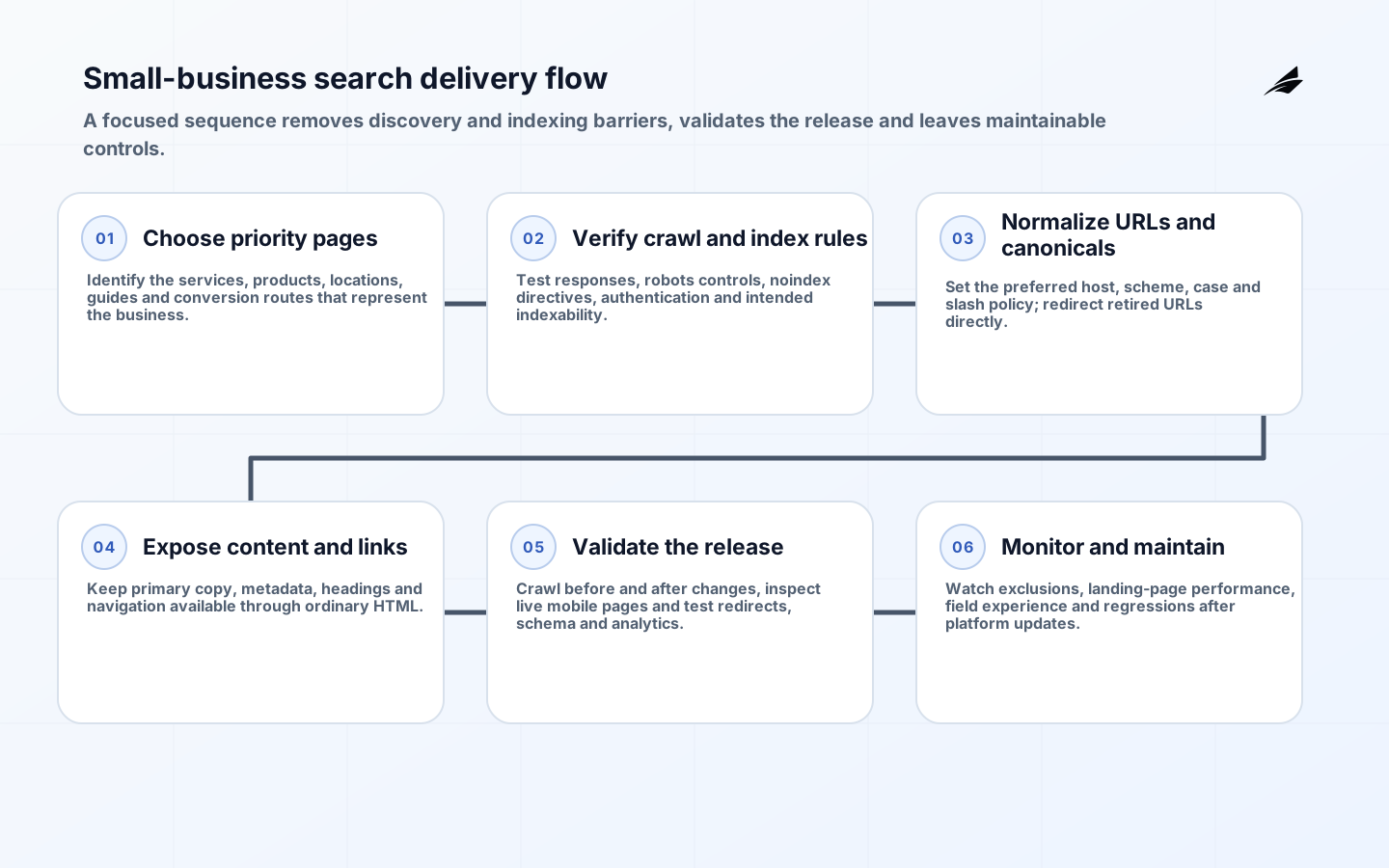
Technical SEO services help search engines reach, render, understand, and index the pages a small business wants customers to find. They also make the website easier to maintain by fixing duplicate URLs, broken navigation, slow templates, redirect chains, incorrect metadata, and launch mistakes. Technical work cannot guarantee rankings, and it cannot compensate for an unclear offer or thin content, but it removes avoidable barriers between useful pages and search systems.
For a small site, the right engagement is focused. It should identify the few issues that materially affect discovery or user experience, implement them safely, and leave a monitoring routine the owner can sustain. It may sit alongside web development and SEO and growth services, especially when template changes are required.
1. Define the business and website scope
Start with the pages that represent the business: services, products, locations, important guides, and conversion routes. Record the platform, domain variants, analytics, Search Console access, recent redesigns, URL changes, and known traffic changes. A forty-page service website has different needs from a store with thousands of products and filters.
Set an outcome such as restoring indexable service pages after a migration, consolidating duplicate location URLs, making product categories crawlable, or improving a slow mobile template. Ranking for a broad phrase is not a technical acceptance criterion. Use observable checks: response status, canonical consistency, rendered content, internal links, structured data validity, and search coverage.
| Site type | Priority areas | Common risk | Useful first outcome |
|---|---|---|---|
| Local service site | Service and location architecture, contact details, mobile UX | Near-duplicate city pages and inconsistent business data | One useful page per real service-location intent |
| Small ecommerce store | Categories, products, variants, pagination and merchant data | Filters create duplicate URLs or products become unreachable | Crawlable categories and canonical product URLs |
| SaaS or professional firm | Service pages, documentation, articles and JavaScript rendering | Important copy or links appear only after client interaction | Meaningful HTML and crawlable navigation |
| Publisher or resource site | Taxonomy, archives, internal links and freshness | Orphaned articles and weak duplicate tags | Clear topic hubs and consolidated archives |
2. Verify crawl access and index eligibility
Inspect server responses, robots.txt, robots meta tags, authentication, and canonical tags. A page intended for search should normally return a successful response, expose meaningful content, be internally linked, and avoid a noindex directive. A robots.txt block is not a canonicalization method; it can prevent a crawler from seeing the directive or content needed to understand the URL.
Google's crawling and indexing documentation distinguishes discovery, crawling, rendering, and indexing. Diagnose the failing stage. A URL absent from the index may be undiscovered, blocked, redirected, duplicated, low value, rendered incorrectly, or simply not selected. Do not respond by adding hidden keywords or creating thousands of nearly identical pages.
| Finding | How to verify | Typical correction | Regression check |
|---|---|---|---|
| Blocked important page | robots.txt test and live URL inspection | Remove unintended block while protecting private areas | Automated check of priority URL rules |
| Noindex on template | Rendered head and HTTP headers | Correct template or environment setting | Sample indexable pages after every release |
| Soft 404 | Response, visible content and Search Console | Return a real 404 or provide substantive matching content | Monitor low-content success responses |
| Redirect chain | Crawl from internal link to final URL | Link directly and consolidate redirect rules | Test old and current URL sets |
| Orphan page | Internal link graph and navigation review | Add contextual links from a relevant hub | Scheduled orphan report |
3. Consolidate URLs, canonicals and redirects
Choose one preferred scheme, host, trailing-slash policy, and case policy. Redirect deprecated URLs directly to the closest genuine replacement. Use a self-referencing canonical on indexable pages where the platform supports it, and ensure internal links and sitemaps use the same preferred URL. Google's canonical guidance describes redirects and rel=canonical as strong signals and sitemap inclusion as weaker.
Do not canonicalize unrelated pages to a popular service page. Canonicals consolidate duplicate or very similar content; they are not a shortcut for weak pages. Preserve old URLs during a redesign, map them before launch, and test query parameters, uppercase variants, HTTP, www, staging hosts, and accidental duplicate routes.
4. Make important pages discoverable through navigation and sitemaps
Search crawlers and people both benefit from ordinary HTML links. Link services from the main service hub, locations from a useful coverage page, products from categories, and articles from relevant guides. Anchor text should describe the destination naturally. Avoid navigation that depends entirely on search boxes, hover behavior, or button-only JavaScript.
Generate an XML sitemap containing canonical, indexable URLs and accurate last-modified values when content materially changes. Google states that sitemap submission is a hint, not a guarantee, in its sitemap documentation. A sitemap does not repair broken internal links or low-value pages; it helps discovery and monitoring.
5. Check rendered content and structured data
If the site uses JavaScript, compare the initial HTML with the rendered page. Google can render JavaScript, but its JavaScript SEO guidance notes that server-side or pre-rendering remains useful for users and crawlers, and not every bot runs JavaScript. Titles, descriptions, headings, primary copy, canonical tags, and crawlable links should be dependable.
Add structured data only for content that is visible and supported by the page. Use the most specific applicable type, stable identifiers, valid URLs, and correct organization or product facts. Validation removes syntax errors but does not guarantee a search feature. Do not mark up fabricated reviews, services that are not offered, or FAQ text hidden solely for search.
6. Improve performance and mobile usability
Measure representative page templates on real devices and field data where available. Optimize oversized images, render-blocking resources, unused scripts, font loading, caching, server response, and layout shifts. Protect the primary content and conversion path from third-party widgets. Performance work should improve a user's task, not chase a laboratory score at the expense of functionality.
Test keyboard navigation, focus, labels, contrast, headings, form errors, zoom, and screen-reader output. Accessibility and search are different disciplines, but clear structure and usable interfaces benefit both. W3C recommends WCAG 2.2 as the current conformance target.
7. Use a focused delivery plan

| Phase | Output | Typical effort driver |
|---|---|---|
| Baseline | Priority URL set, crawl, index and performance evidence | Site size, platform access and history |
| Diagnosis | Root causes ranked by impact, confidence and effort | Template complexity and duplicate URL patterns |
| Implementation | Reviewed code, content-system and server changes | Developer availability and platform constraints |
| Validation | Pre-release tests, production crawl and live inspection | Number of templates and migration risk |
| Monitoring | Dashboard, alerts and owner checklist | Release frequency and site change rate |
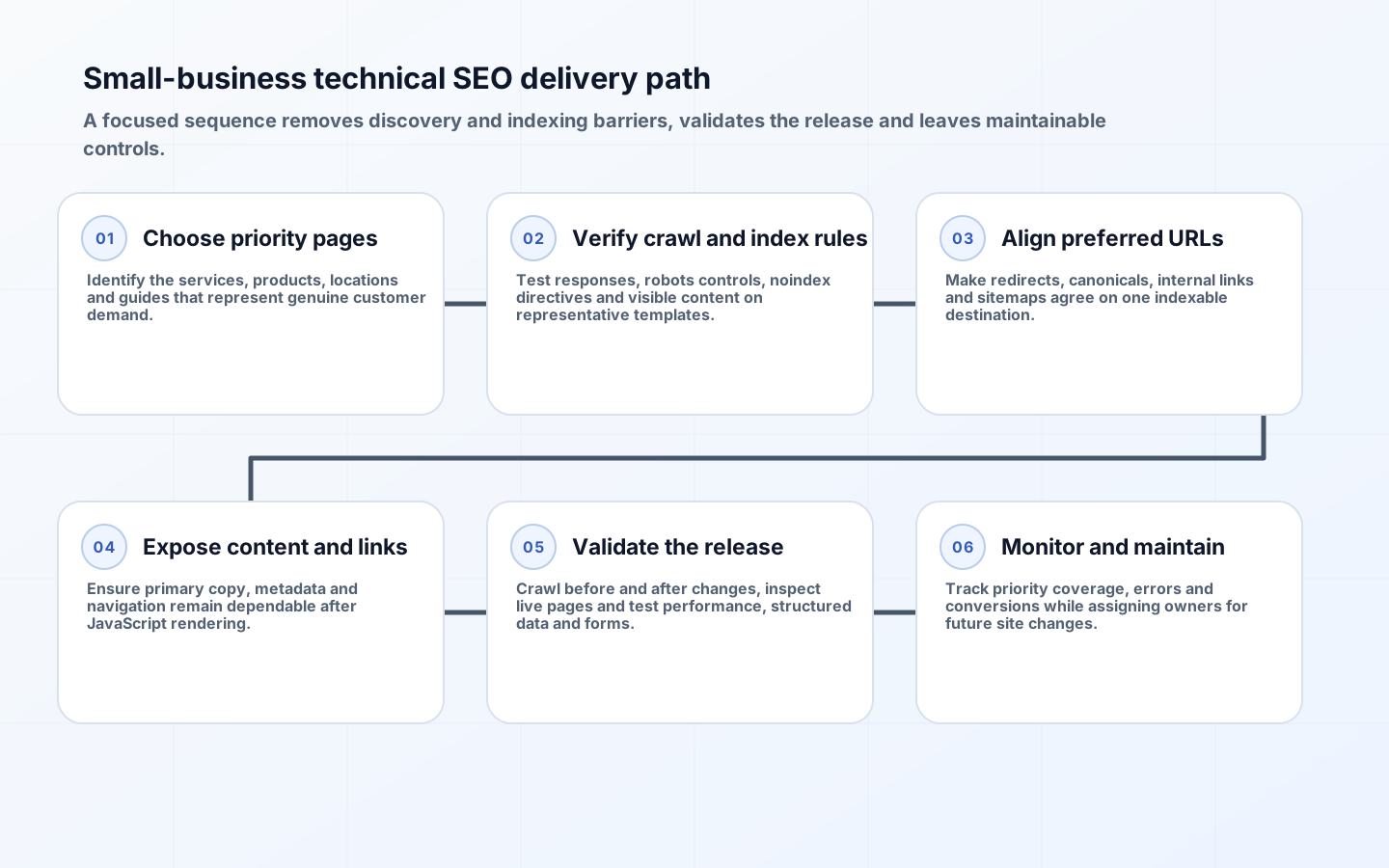
A small-business engagement may take several weeks for audit and implementation, while ecommerce or migration work can require months. Price depends on page and template count, platform constraints, history, analytics access, international or location variants, implementation responsibility, and monitoring. Ask for assumptions and outputs rather than selecting only by the lowest audit price.
8. Control migration and maintenance risks
The most damaging technical SEO incidents often happen during routine changes: a staging noindex reaches production, redirects are omitted, navigation is replaced, a canonical points to the wrong host, or JavaScript hides content. Maintain a pre-release checklist for domains, status codes, directives, canonicals, sitemaps, structured data, analytics, and priority journeys. Crawl before and after major releases.
Assign ownership. The business owner decides which pages matter; the editor maintains factual content; the developer protects templates and responses; and someone reviews search coverage after releases. Technical SEO is a maintenance practice, not a one-time plugin setting.
Key takeaways
- Prioritize real service, product and location pages before expanding URL count.
- Diagnose discovery, crawling, rendering, indexing and quality separately.
- Align redirects, canonicals, internal links and sitemaps on one preferred URL.
- Keep important content and links available in reliable rendered HTML.
- Measure performance and accessibility on representative templates.
- Protect technical signals with release checks and named ownership.
Frequently asked questions
How much do technical SEO services cost?
There is no responsible universal figure. Cost depends on site size, templates, platform, history, implementation access, migration risk, ecommerce or location complexity, and whether the provider only reports findings or also fixes and validates them. A scoped discovery should produce a range and assumptions.
How quickly will technical SEO changes affect search?
Users benefit immediately from many fixes, while crawling and indexing changes depend on discovery, site demand, content quality, and search-system processing. Monitor priority URLs over weeks and longer trends over months. Avoid guarantees of a particular position or date.
Can a free crawler replace a technical SEO specialist?
A crawler is useful evidence, but it cannot determine business priority, rendered behavior, server configuration, migration history, or whether a page genuinely serves an audience. Small sites can use free tools for monitoring, while diagnosis and implementation still require judgment.
Reporting should be short enough to use. Maintain a priority URL set and review search impressions, clicks, index status, conversions, response errors, page experience, and recent releases. Annotate redesigns, domain changes, and major content updates. Do not treat every week-to-week movement as a technical fault. Investigate sustained changes by page group and query intent, then verify with live-page and server evidence before changing the site.
When selecting a provider, ask for an example finding expressed as evidence, impact, recommendation, owner, test, and rollback. Confirm who will implement changes and whether the quoted work includes production validation. Avoid providers that promise positions, prescribe bulk location pages without real value, or use proprietary scores as the final objective.
Content and technical work should meet at the page template. Give each important page one clear purpose, descriptive title, useful heading, substantive visible copy, appropriate media, and contextual links. Remove or consolidate pages that exist only because a generator can create them. Search engines do not need a hidden keyword block; customers need accurate pages that load, work, and answer the reason for the visit.
Conclusion
Small-business technical SEO should be precise and maintainable. Make valuable pages crawlable, canonical, linked, fast, accessible, and measurable; then protect those properties through routine releases. That work creates a sound foundation for useful content and promotion without promising shortcuts that search systems do not offer.