Technical SEO services for small business should make a useful website easy to retrieve, render and understand. They cannot guarantee first position or compensate for an undifferentiated offer. The work is engineering and publishing hygiene: correct status codes, canonical URLs, crawlable content, coherent internal links, useful metadata and reliable mobile pages.
Small sites usually do not need an enormous audit. They need a prioritized diagnosis tied to business pages, leads and local visibility. This FAQ explains which problems matter, how to evaluate a provider and what evidence should exist after a repair.
What does technical SEO include?
Typical scope includes crawling and indexing, URL and canonical policy, robots directives, sitemaps, redirects, JavaScript rendering, page templates, structured data, internal links, performance and migration. It may also cover image and video discovery. Content strategy and local profile management are related services but should not be hidden inside an undefined technical package.
Google's SEO Starter Guide says there is no secret that automatically ranks a site first. A provider should explain how each change helps users or search systems and what it cannot promise. Ask for a direct inventory of affected URLs and templates rather than a score alone.
| Finding | Business effect | Priority evidence | Typical action |
|---|---|---|---|
| Important page blocked or noindexed | Page cannot be served from the index | Inspection and HTML directive | Correct access and directive |
| Redirect or 404 on main service | Lost users and link signals | Status and link map | Direct redirect or restore |
| Duplicate canonical pages | Unclear preferred URL | Canonical cluster | Consolidate signals |
| Slow unstable mobile page | Poor usability and conversion | Field and lab data | Reduce blocking work and shifts |
| Invalid markup | Misrepresented page facts | Markup against visible content | Fix or remove schema |
Why is a page crawled but not indexed?
Crawling means a search engine requested the URL; indexing is a separate decision. Check status, canonical, noindex, rendering, duplication, internal links and whether the page offers distinct value. A sitemap entry requests discovery but does not guarantee crawling or indexing. Publishing more near-duplicate pages usually makes diagnosis harder.

Inspect representative URLs and the template that created them. Compare rendered content with what a visitor sees. Review server logs if available. Consolidate repeated location or service combinations that cannot answer a distinct need. Strengthen useful pages with specific services, evidence and clear navigation rather than hidden keyword text.
How should canonical URLs and redirects work?
Choose one HTTPS hostname, URL style and final address for every page. Internal links, sitemap entries and canonical elements should point to it. Google describes redirects and rel=canonical as stronger signals than sitemap inclusion. Avoid conflicting signals, redirect chains and canonicals that point to unrelated content.
Use permanent redirects when an old page has a genuine replacement. Return 404 or 410 when it does not. Do not redirect every removed URL to the home page. During migrations, map old to new pages, update internal links and monitor errors until crawlers converge.
Does a small website need an XML sitemap?
A small, well-linked site can be discovered without one, but an automatically maintained sitemap is still useful. Include only canonical, indexable final URLs. Use absolute HTTPS addresses and truthful modification dates. Remove drafts, redirects, errors and parameter duplicates.
Submit the sitemap in relevant webmaster tools and monitor fetch status and discovered pages. Treat mismatch between published inventory and sitemap as a release defect. Do not refresh every lastmod on each deployment or assign arbitrary priority values expecting them to force ranking.
Which local business signals belong on the site?
Show the real business name, contact method, service area or address where appropriate, opening information and offered services. Keep those facts consistent with business listings. Create location pages only where the business has distinct, truthful information and can serve the area. Thin city-name swaps are poor user pages.
Schema.org LocalBusiness can represent a physical branch or local business, but markup must match visible facts. Use the specific subtype where accurate and stable identifiers where available. Do not invent reviews, awards, addresses or service locations. Structured data is a description, not a ranking shortcut.
How much do speed and mobile usability matter?
They matter to users and conversion even when ranking impact is not the only reason to improve them. Test representative mobile devices and connections. Reduce oversized images, unnecessary scripts, render-blocking resources and layout shifts. Reserve dimensions for images and avoid interface elements that cover content.
Use field data where sufficient and lab tools for diagnosis. Fix the shared template before optimizing isolated pages. Preserve accessibility, analytics and business functions while improving performance. A faster page that loses the contact form or readable content is not a successful optimization.
| Deliverable | Weak version | Professional version |
|---|---|---|
| Audit | Generic score export | Affected URLs, cause, impact and priority |
| Repair | Plugin setting changed | Code or configuration plus verification |
| Schema | Many types added | Accurate visible entities and validation |
| Performance | One lab screenshot | Template diagnosis and before/after tests |
| Monitoring | Monthly rank chart | Indexing, errors, leads and change record |
How should a small business choose a provider?
Ask the provider to explain one real issue in plain language and show how it will be verified. Confirm access needed, backups, deployment responsibility, subcontractors and ownership of accounts. Avoid anyone requesting hidden content, doorway pages, fabricated reviews or link schemes.
Agree on a fixed audit, implementation sprint or ongoing maintenance based on need. Define priority pages, change limits, acceptance and reporting. The business should retain its domain, analytics, Search Console, hosting and repository access. Credentials should be named and revoked at closure.
What should be measured after repairs?
Verify the technical condition first: successful status, intended canonical, indexability, rendered content, sitemap membership and valid markup. Then watch discovery and indexing over realistic crawl cycles. Search systems decide when to revisit pages, so immediate movement is not guaranteed.
Connect organic landing pages to calls, forms, bookings or sales using privacy-aware analytics. Segment branded and non-branded demand, location and service. Rankings can be diagnostic, but qualified outcomes matter more. Record site and campaign changes so performance shifts can be investigated.
What should a focused audit sequence look like?
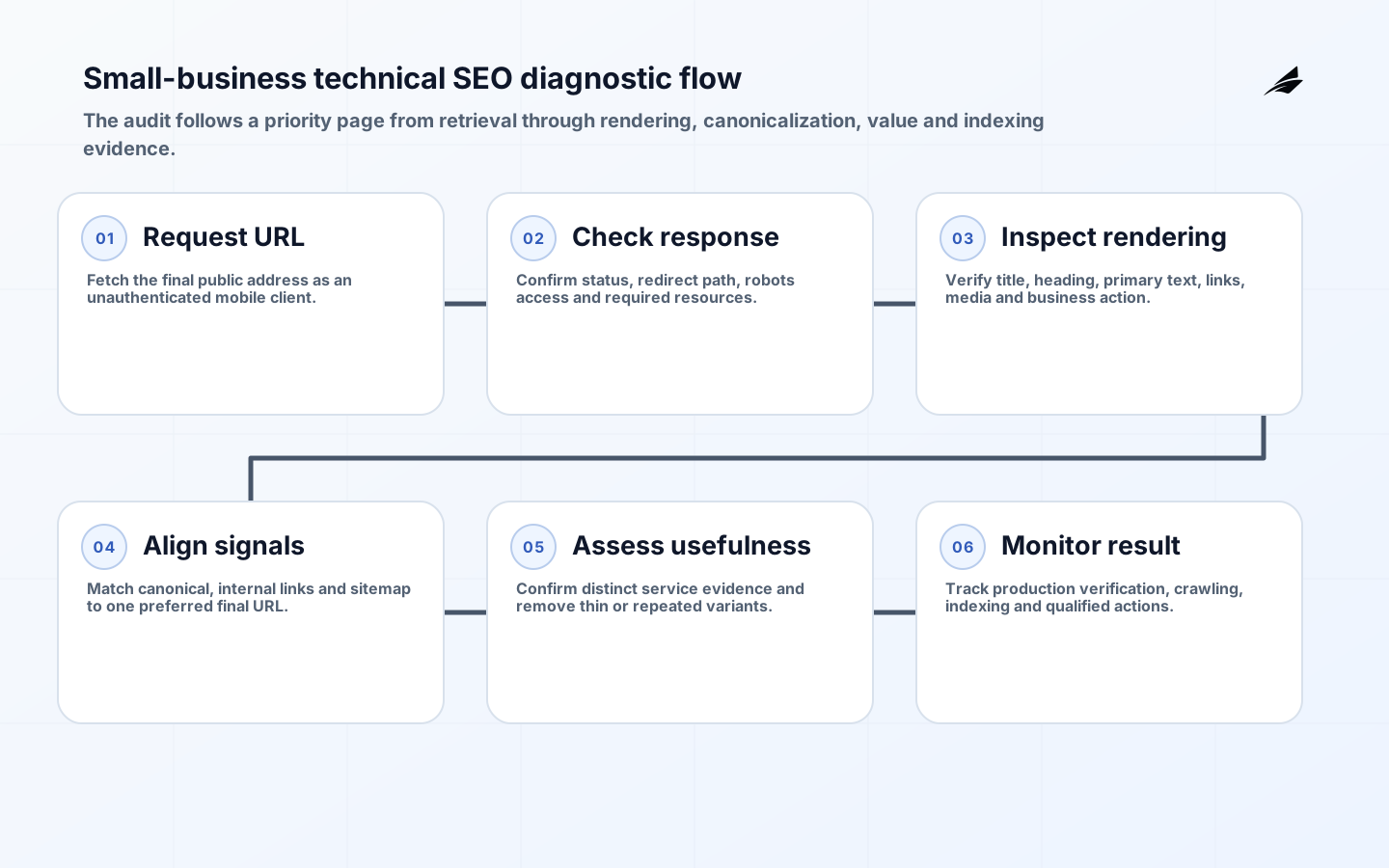
First, inventory the pages that generate or support business: home, services, products, locations, evidence and contact. Fetch them as an unauthenticated client and record final URL, status, canonical, robots directive, rendered title, primary content and links. Test forms and calls. This creates a factual baseline before running broad crawls.
Second, inspect the shared templates and publishing feeds. A canonical defect repeated across every service page deserves priority over isolated missing descriptions. Compare sitemap URLs with the canonical inventory. Review navigation and contextual links for orphaned priority pages. Check whether image and script failures prevent content or actions.
Third, sample the long tail for duplication, outdated offers and broken migrations. Group findings by root cause and business effect. Propose the smallest durable repair and verify it in staging and production. Keep before-and-after evidence. The audit should end with fixed conditions and owned next actions, not hundreds of undifferentiated warnings.
Finally, establish a maintenance trigger for platform updates, redesign, domain changes, new locations and large content imports. Recheck critical templates after each. Small organizations gain more from a repeatable release checklist than from paying for the same discovery every quarter.
Keep the final report short enough to operate. For each action, include affected templates or URLs, expected result, implementation owner, verification method and risk. Separate immediate repairs from content or business decisions. Re-test completed work in production and close findings only when the intended response is observable. This gives the owner a useful maintenance record rather than a permanent backlog exported from a crawler.
Ask the business owner to approve changes that alter public claims, location details or page consolidation. Technical specialists can identify duplication and conflicting signals, but they should not decide which service promise is true. Clear approval avoids a technically tidy site that misrepresents how the company actually operates.
Related reading
Use the Small-Business Technical SEO Delivery Plan, its Implementation Checklist, and Schema and Sitemap Optimization for hands-on verification.
Frequently asked questions
How long does technical SEO take to work? Repairs take effect when deployed, but crawling, indexing and search performance change on search-engine schedules. Measure the fixed condition first and avoid guaranteed ranking dates.
Is a plugin enough? A plugin can generate metadata and sitemaps, but it cannot decide page quality, repair hosting errors, resolve duplicate architecture or verify rendered behavior by itself.
Should a business create a page for every city? Only where each page provides distinct, accurate service information and user value. Repeated city substitutions can create thin duplication.
Can structured data guarantee rich results? No. Accurate markup can make a page eligible for supported features, but display remains a search-engine decision.
Key takeaways
- Prioritize blocked, broken and conflicting business pages before minor warnings.
- Keep canonical, redirect, sitemap and internal-link signals consistent.
- Use truthful local facts and markup that matches visible content.
- Evaluate providers through diagnosis and verified implementation evidence.
- Measure leads and customer actions after confirming technical repairs.
Conclusion
Small-business technical SEO is most effective when it removes concrete barriers between useful pages and the people seeking them. Clear URL policy, crawlable content, reliable templates, honest local information and measured repairs create a maintainable foundation. That work cannot promise a ranking, but it can ensure the website is not undermining its own visibility and customers.