End-to-end cloud services cover more than provisioning resources or moving servers. The scope runs from business justification and workload discovery through identity, landing zones, migration or modernization, reliability, security, cost allocation, daily operations and eventual exit. A credible plan defines which responsibilities stay with the organization, which belong to cloud providers and partners, and what evidence proves each workload is ready to serve users.
This guide helps technology and business leaders shape a cloud program, evaluate provider proposals and sequence delivery. It complements the end-to-end cloud implementation checklist and managed cloud services plan. Costs and timing depend on the estate, contracts, risk and operating model, so use ranges built from discovered workloads rather than generic migration prices.
Define outcomes and service boundaries
State why cloud is being adopted: reduce release lead time, improve recovery, support geographic growth, retire unsupported infrastructure, enable analytics or align cost with demand. Attach measurable outcomes and guardrails. NIST defines cloud computing through on-demand network access to a shared pool with rapid provisioning and release; those characteristics are capabilities, not guaranteed business value. Specify which capability changes the target process and how it will be measured.
Inventory the in-scope applications, data, integrations, environments, users, contracts, compliance needs and dependencies. Classify workloads by criticality, data sensitivity, lifecycle and technical condition. Record explicit exclusions and external prerequisites. Define service boundaries for platform foundation, workload engineering, migration, managed operations, security, network, data protection and user support. Each boundary needs an accountable organization and escalation path.
| Scope stream | Key deliverables | Acceptance evidence |
|---|---|---|
| Strategy and portfolio | Outcomes, workload inventory and migration waves | Approved business case and dependency map |
| Cloud foundation | Tenancy, identity, network, policy and logging | Automated controls and exception tests |
| Workload delivery | Migration or modernization with data cutover | Functional, performance and reconciliation results |
| Operations | Objectives, monitoring, backup, incident and patch routines | Game-day and restoration evidence |
| Financial management | Allocation, budgets, forecasts and optimization cadence | Traceable cost reports with accountable owners |
Choose the cloud operating model before scale
Define who owns platform capabilities and who owns workloads. A centralized team may fit a small or regulated estate; a shared model lets a platform team provide landing zones and guardrails while workload teams own applications; a decentralized model requires strong local skill and common policy. Microsoft's current Cloud Adoption Framework organizes work across strategy, plan, readiness, adoption, governance, security and management, reinforcing that production operations begin with adoption rather than after it.
Write a responsibility matrix covering identity, network, keys, operating systems, containers, application dependencies, data, backups, vulnerability response, incidents, cost and supplier management. Provider shared-responsibility statements are a starting point, not your operating model. Include primary and backup owners, required access and service hours. Ensure cloud accounts, domains, repositories and encryption control remain under appropriate customer governance, even when a partner operates them.
Build a governed landing zone as a product
Create reusable account or subscription structure, identity federation, least-privilege roles, network patterns, DNS, key and secret management, centralized logs, configuration policy, tagging and budget controls. Implement through versioned infrastructure as code with review and automated tests. Separate production, nonproduction and security administration. Provide a documented vending path so teams can obtain an approved environment without bypassing controls.
Treat the foundation as a maintained platform with users, roadmap and service objectives. Test denied configurations, emergency access, log delivery and policy exceptions. Avoid a landing zone so restrictive that teams create shadow infrastructure, or so broad that every workload can change shared network and identity. Record time-bounded exceptions with risk, owner and expiry. The landing zone should accelerate a common workload while preserving a path for justified special cases.
Plan workload waves from dependencies and risk
For each workload choose retire, retain, replace, rehost, replatform or refactor based on outcome, technical condition and economics. Do not label a migration strategy before discovering data movement, latency, identity, licensing and integration constraints. Group waves by dependency and organizational readiness rather than server count alone. Start with a representative but recoverable workload that exercises the landing zone and operating model.
Every wave needs a source baseline, target architecture, data migration method, security review, performance test, cutover plan, rollback boundary, communication and hypercare owner. Rehearse migration with production-like volume. Define how writes are controlled and reconciled during cutover. Keep the old environment until acceptance criteria and retention obligations are met, then decommission it deliberately so duplicate cost and attack surface do not persist.
| Risk | Early control | Proof before cutover |
|---|---|---|
| Hidden dependency | Traffic, configuration and owner discovery | End-to-end test across all critical integrations |
| Data loss or divergence | Migration ledger and reconciliation design | Rehearsed counts, totals and exception resolution |
| Identity failure | Federation and emergency-access test | Role matrix and recovery exercise |
| Performance regression | Representative load and latency budget | Target test including downstream limits |
| Cost shock | Forecast, tags, budgets and unit measure | Pilot bill reconciled to expected drivers |
Engineer reliability and security per workload
Use a well-architected review to make tradeoffs explicit. The AWS Well-Architected Framework covers operational excellence, security, reliability, performance efficiency, cost optimization and sustainability; Google publishes a comparable cloud framework. Apply provider-neutral questions first, then service-specific controls. Architecture reviews should produce owned improvements and tests, not merely a score.
Set service objectives from business impact, then design redundancy, backup, restore, capacity and incident response. Encrypt data in transit and at rest, use workload identities, centralize security signals and patch owned layers. Test zone or dependency failure, expired certificates, lost credentials and restoration. Multi-region or multicloud designs add failure modes and cost; choose them only when recovery objectives and concentration risk justify the operating burden.
Model total cost and commercial exposure
Estimate implementation and recurring cost separately. Include discovery, foundation, migration engineering, data transfer, parallel running, licenses, support plans, observability, security tooling, backup, staff training and decommissioning. Recurring estimates should state demand, growth, unit prices, commitments, currency and support assumptions. Run sensitivity scenarios for traffic, storage, egress, managed-service tiers and availability design. A low infrastructure estimate can be overwhelmed by unmanaged operations or data movement.
The FinOps Framework defines a collaboration among engineering, finance and business to maximize technology value and structures work around Inform, Optimize and Operate. Establish allocation and ownership before spend grows. Track cost by product, environment and business unit; define unit economics such as cost per transaction or active account. Use budgets and anomaly alerts, review commitments against stable demand and avoid optimization that undermines reliability or delivery speed.
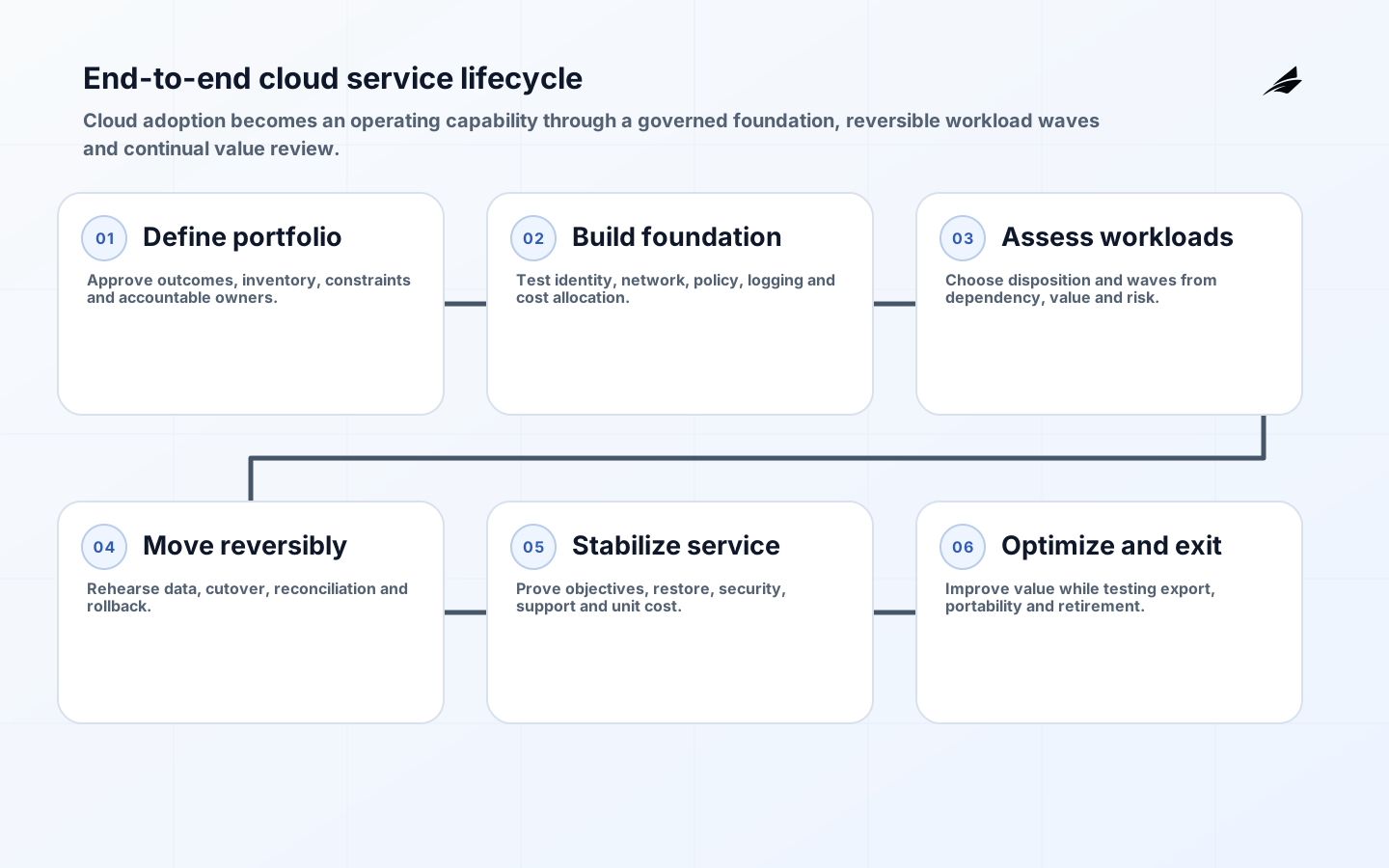
Deliver through a six-stage cloud service lifecycle
- Approve outcomes, portfolio scope, constraints, baseline and operating owners.
- Build and test the landing zone, responsibility model and cost allocation.
- Assess workloads and sequence waves by dependency, value and reversibility.
- Migrate or modernize with rehearsed data, cutover and rollback controls.
- Stabilize service objectives, security, support and financial operations.
- Optimize continuously and retain tested portability and exit evidence.

Operate, improve and prepare for exit
Create a service catalog, objectives, alerts, runbooks, incident roles, maintenance cadence, capacity review and patch process. Instrument user outcomes and cloud control health. Review restoration, emergency access and supplier escalation regularly. Feed incident and cost findings into platform and workload backlogs. The related cloud services FAQ can support governance discussions as ownership and sourcing evolve.
Exit readiness does not require avoiding useful managed services. It requires knowing what is portable, what must be rebuilt, how data can be exported, how long transition takes and which contract terms apply. Maintain current architecture, dependency and data inventories. Test a representative data export and restoration outside the primary service. Review concentration risk, provider deprecation notices and skills annually, then fund mitigations proportionate to business impact.
Measure the program as a portfolio, not only as completed migrations. Track outcome movement, workload risk retired, lead time, change failure, restoration results, policy exceptions, unit cost and decommissioned source spend. Review benefits with the business owner and costs with finance at each wave. Stop or redesign a pattern that repeatedly misses its value case. This keeps migration throughput from becoming the goal and gives later waves evidence from actual cloud operation rather than assumptions made during the initial business case.
Key takeaways
- Scope cloud services across strategy, foundation, workloads, operations, cost and exit.
- Assign platform and workload responsibilities before adoption expands.
- Treat the landing zone as a tested, maintained internal product.
- Sequence migration waves by dependency and rehearse data and rollback controls.
- Manage reliability, security and financial value continuously after cutover.
Frequently asked questions
How should cloud service cost be estimated?
Use discovered workload demand, target architecture and current provider prices, then add engineering, migration, tooling, support, training, parallel running and decommissioning. State assumptions and sensitivity ranges. Validate with a representative pilot bill before committing large waves.
Is multicloud necessary for resilience?
Not automatically. Multiple providers can reduce some concentration risks but increase identity, data, networking, testing and operating complexity. First use appropriate zones, regions, backups and exit plans. Adopt multicloud for specific, evidenced requirements and rehearse the failover or portability claim.
What should remain in-house with managed cloud services?
The organization should retain accountable product and service owners, risk acceptance, data governance, architecture direction, financial control and supplier oversight. A provider can execute operations, but customer leadership must understand service health, approve consequential changes and preserve access and exit capability.
Conclusion
End-to-end cloud delivery aligns a governed platform, well-understood workloads and an accountable operating model. Start from measurable outcomes, build the foundation as a product, move workloads through reversible waves and manage cost and reliability as continuing disciplines. Cloud value appears after teams can operate and improve services safely, not at the moment the old server is switched off.