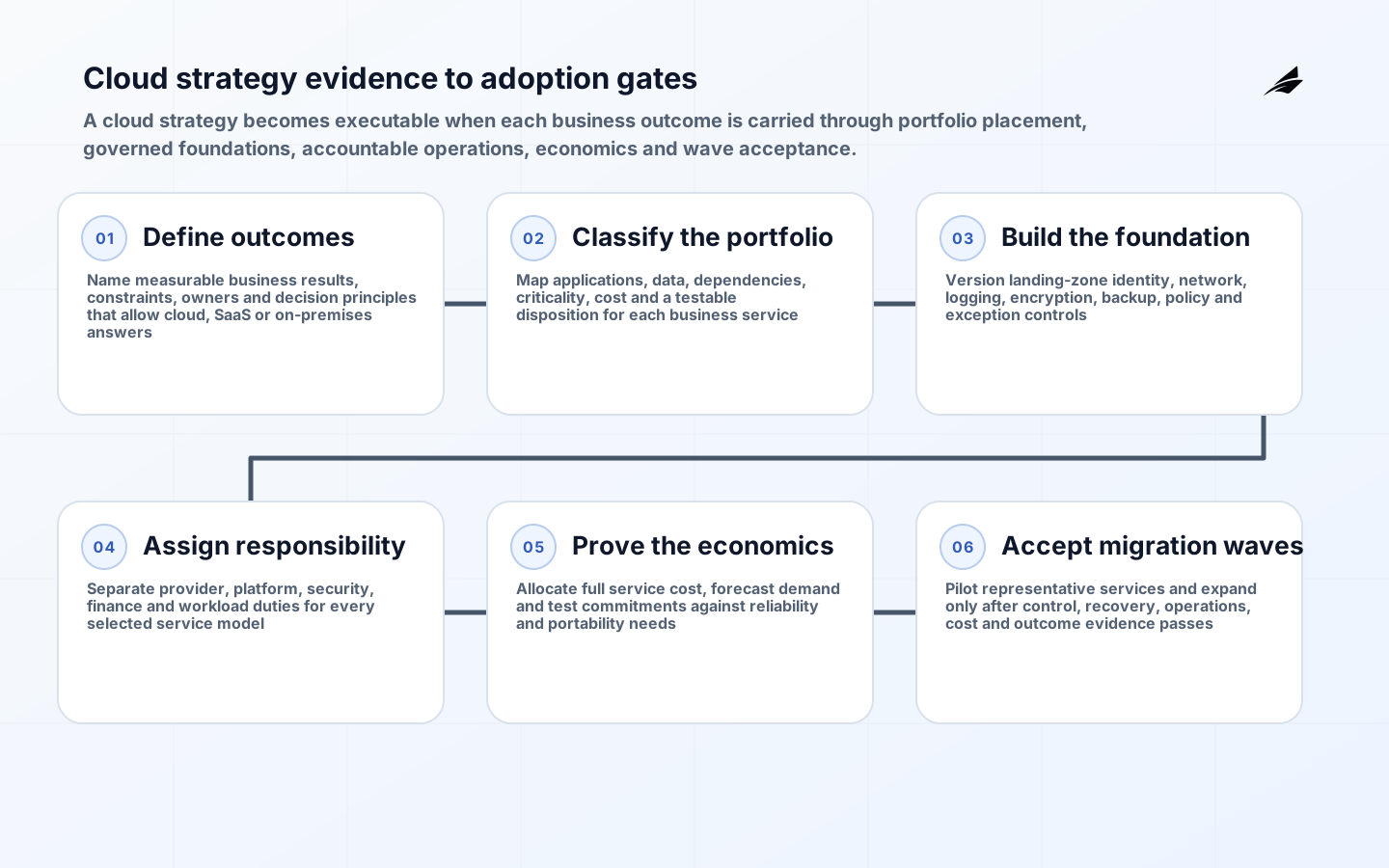
A cloud strategy is a set of decisions about business outcomes, workload placement, governance, security, finance and operating responsibility. It is not a mandate to move every system or a slide naming preferred providers. This cloud strategy implementation checklist turns consulting work into evidence a delivery team can use: an application portfolio, placement criteria, target controls, operating model, migration waves, cost accountability and measurable outcomes. It also records when remaining on premises or using a managed SaaS product is the better decision.
NIST defines cloud computing through on-demand self-service, broad network access, resource pooling, rapid elasticity and measured service. Those characteristics create speed and scale only when teams can manage identity, networks, data, reliability and spend. Provider adoption frameworks organize the change across business, people, governance, platform, security and operations. A useful strategy adapts those perspectives to the organization's constraints rather than copying a framework diagram and calling it a roadmap.
Use the companion cloud strategy scope guide, cloud strategy FAQ, and cloud consulting implementation guide to connect executive decisions with workload delivery.
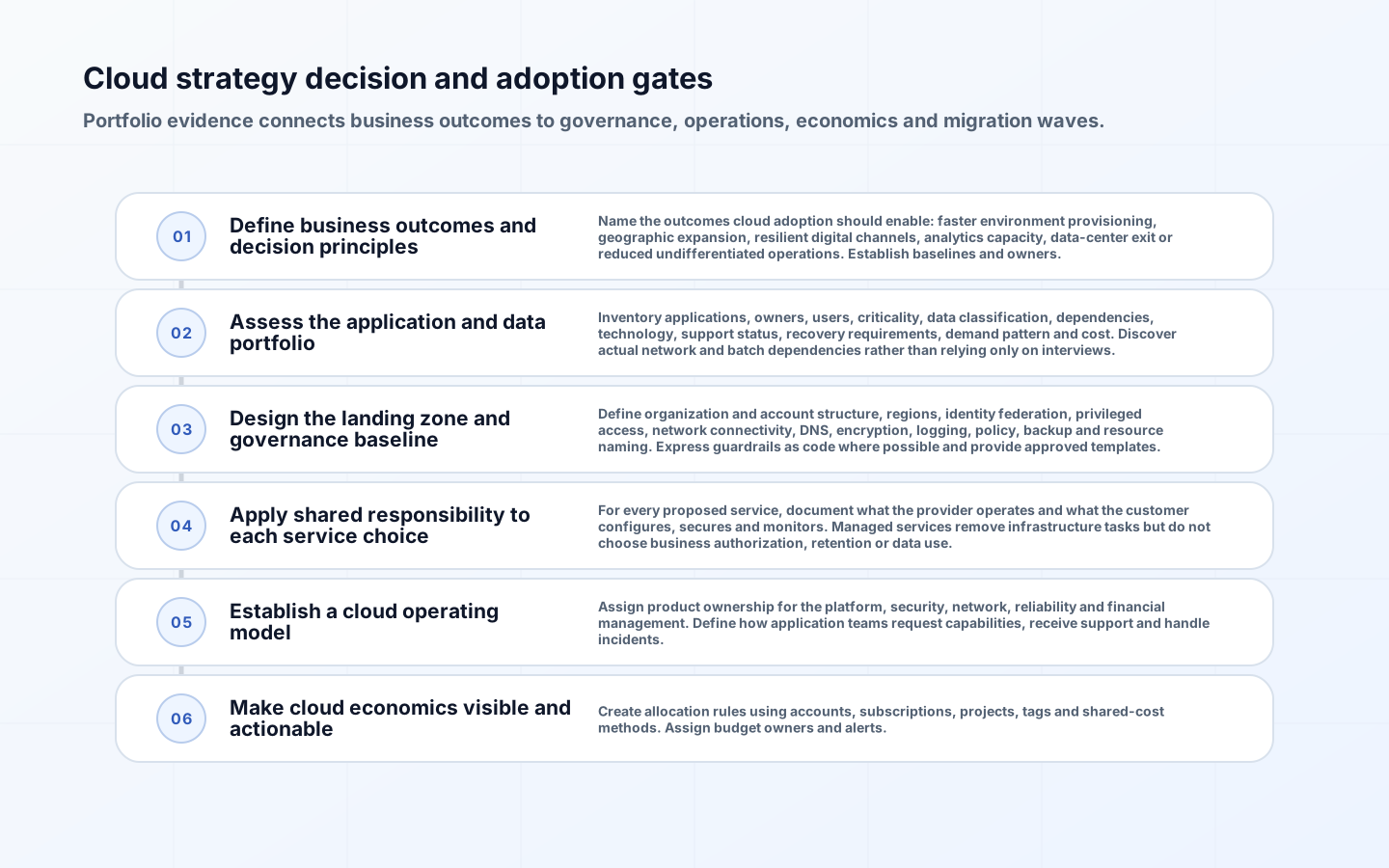
Define business outcomes and decision principles
Name the outcomes cloud adoption should enable: faster environment provisioning, geographic expansion, resilient digital channels, analytics capacity, data-center exit or reduced undifferentiated operations. Establish baselines and owners. Avoid generic objectives such as agility without a measurable decision or lead time. Define constraints including data residency, contractual commitments, latency, equipment dependencies, existing licenses, skills and exit dates.
Write placement principles that permit different answers. A new elastic web service may favor public cloud; a low-latency plant workload may remain local; a commodity function may move to SaaS. Include reversibility and concentration risk. Principles should help teams decide when evidence is incomplete, and exceptions should be recorded with owner, duration and compensating controls.
| Outcome | Baseline | Decision evidence |
|---|---|---|
| Faster delivery | Environment and release lead time | Automated governed platform path |
| Resilience | Current recovery time and loss tolerance | Tested multi-zone or recovery design |
| Data-center exit | Contract and hardware milestones | Wave plan covers every dependency |
| Cost transparency | Unallocated spend and unit cost | Ownership tags and product allocation |
Assess the application and data portfolio
Inventory applications, owners, users, criticality, data classification, dependencies, technology, support status, recovery requirements, demand pattern and cost. Discover actual network and batch dependencies rather than relying only on interviews. Group applications into business services because migrating one technical component without its identity, data or integration dependencies often creates latency and operational fragmentation.
Choose an initial disposition such as retire, retain, replace with SaaS, rehost, replatform or refactor. Treat it as a hypothesis to validate. Record the reason, expected benefit, migration complexity and blocker. Prioritize systems where value and readiness coincide, not merely the easiest servers. A first wave should exercise the target platform and operating model while remaining recoverable.
Design the landing zone and governance baseline
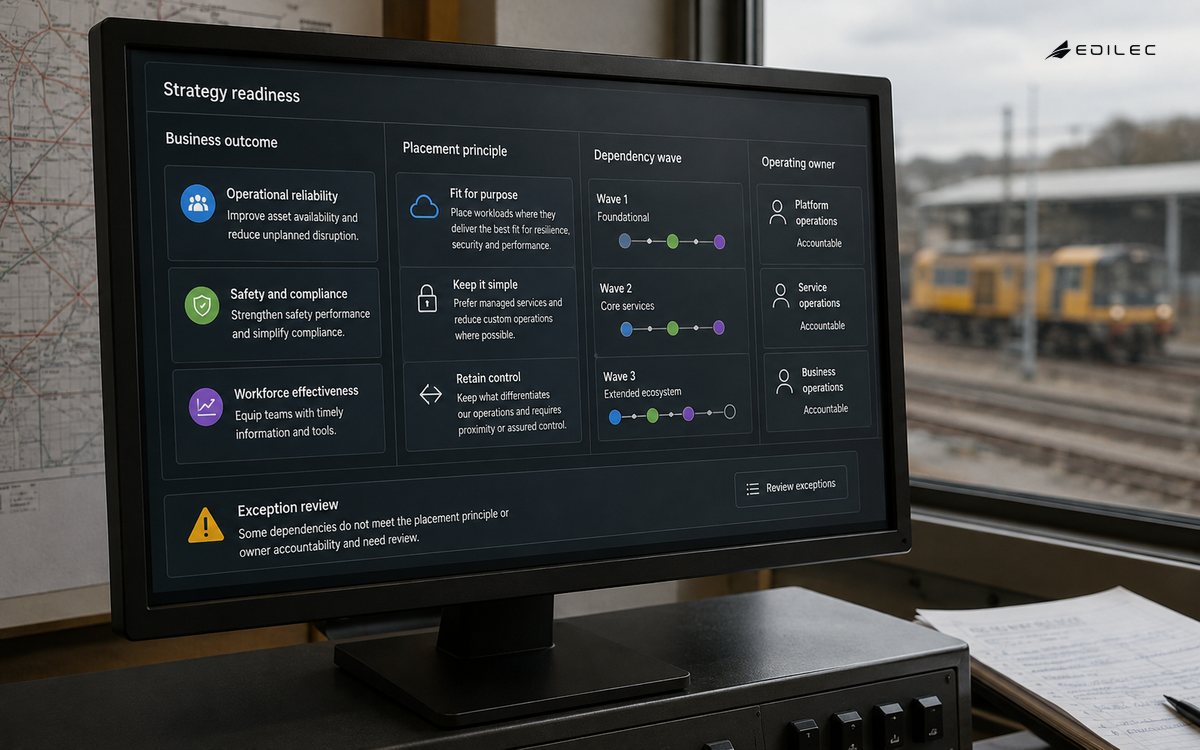
Define organization and account structure, regions, identity federation, privileged access, network connectivity, DNS, encryption, logging, policy, backup and resource naming. Express guardrails as code where possible and provide approved templates. A landing zone is a maintained product, not a one-time set of accounts. Version it, test changes and publish a service catalog that teams can consume without opening security tickets for ordinary work.
Create an exception process with risk owner and expiry. Separate policy that must be enforced centrally from standards product teams can implement. Ensure logs flow to an independently protected location and that emergency access is tested. Map controls to regulatory and contractual obligations using evidence produced by platform automation. Governance that only reviews documents after deployment cannot keep pace with cloud change.
| Capability | Platform baseline | Evidence |
|---|---|---|
| Identity | Federation, MFA and bounded roles | Access and emergency-access tests |
| Network | Approved ingress, egress and private connectivity | Flow review and route tests |
| Data protection | Key, backup and classification policies | Restore and access evidence |
| Policy | Automated preventive and detective controls | Exception register and compliance results |
Apply shared responsibility to each service choice
For every proposed service, document what the provider operates and what the customer configures, secures and monitors. Managed services remove infrastructure tasks but do not choose business authorization, retention or data use. Define threat models, secrets handling, vulnerability management, tenant configuration, incident roles and provider escalation. Require architecture review for internet exposure, cross-account access and high-consequence data flows.
Assess provider concentration and regional dependencies. Record which identities, control planes, keys and data exports are needed during an outage or exit. Contract review should cover incident notification, audit reports, sub-processors, data location, deletion and support. The Cloud Controls Matrix can help organize control questions, but evidence must match the selected services and deployment.
Establish a cloud operating model
Assign product ownership for the platform, security, network, reliability and financial management. Define how application teams request capabilities, receive support and handle incidents. A central team should build paved paths and guardrails, not become a manual approval queue. Product teams retain responsibility for application behavior, data and service objectives. Document escalation between provider, platform and application owners.
Build skills through paired delivery and real operations. Training without access to a governed platform does not change behavior. Define on-call coverage, observability standards, patch and dependency ownership, backup testing and capacity practices. Track platform adoption, provisioning lead time, policy exceptions and support demand. The operating model must exist before a large migration wave or the cloud estate will reproduce old bottlenecks at higher speed.
Make cloud economics visible and actionable
Create allocation rules using accounts, subscriptions, projects, tags and shared-cost methods. Assign budget owners and alerts. Measure unit cost such as cost per customer, transaction or environment alongside total spend. FinOps is a collaboration among engineering, finance and business teams; it is not a monthly exercise in deleting resources without understanding demand or reliability.
Model commitments only after usage becomes stable. Include support, network transfer, observability, security, backups, licensing and engineering operations in forecasts. Establish anomaly response and rightsizing cadence. Avoid comparing a cloud bill with hardware purchase price alone; compare complete service cost and the value of elasticity, managed operations and faster change. Require economic review at architecture and product planning, not only after invoices arrive.
| Cost control | Owner action | Risk |
|---|---|---|
| Allocation | Map spend to product and environment | Unowned shared services |
| Forecast | Connect demand and roadmap to spend | Budget based only on last month |
| Optimization | Rightsize and schedule with service objectives | Savings reduce resilience |
| Commitment | Buy discounts for stable usage | Lock-in before demand is known |
Plan migration waves and acceptance gates
Sequence foundation, pilot, repeatable migrations and high-criticality waves. For each workload, define target architecture, data movement, testing, cutover, rollback, communications and decommissioning. Rehearse with production-shaped data and load. Do not declare success when a server starts in cloud; validate customer journeys, security, backup, observability, cost and support ownership.
Use wave retrospectives to improve templates and estimates. Track unresolved dependency, exception and decommission debt. Stop expansion when the landing zone or support model cannot absorb demand. Retire source environments only after data retention, audit and rollback windows are satisfied. Benefits often depend on completing decommissioning, not on running duplicate estates indefinitely.
Measure adoption and revisit the strategy
Use a balanced scorecard: delivery lead time, platform adoption, reliability, recovery, security findings, cost allocation, unit economics, migration progress, decommissioning and team capability. Compare with the baseline and explain tradeoffs. A lower bill paired with slower recovery may not be improvement. Review by business service because aggregate cloud statistics can hide one critical workload's risk.
Revisit strategy when providers, regulations, product demand or organizational capabilities change. Keep principles stable where possible but update portfolio and roadmap evidence. Publish decisions and exceptions so teams do not repeat the same debate. Cloud strategy is an operating cadence that guides investment, not a document frozen after executive approval.
Key takeaways
- Tie cloud adoption to measurable business outcomes and explicit placement principles.
- Assess dependencies and data before selecting workload dispositions.
- Deliver a governed landing zone and operating model before scaling migrations.
- Apply shared responsibility and exit planning to each service choice.
- Connect engineering, finance and product decisions through unit economics and wave evidence.
Frequently asked questions
Should the strategy require multiple cloud providers?
Only when a specific regulatory, resilience, commercial or capability need justifies the added platform and skills cost. Portability claims should be tested at the data, identity and operational levels.
Which workloads should move first?
Choose a bounded service with real value, manageable dependencies and a team able to operate the target platform. The first wave should test the platform and governance, not avoid them.
Will cloud always reduce cost?
No. Cloud changes cost structure and can improve elasticity and managed operations, but poor architecture, idle capacity, transfer and duplicated estates can increase spend.
Who owns cloud strategy after consulting ends?
Executive sponsors own outcomes, a platform product owner maintains common capabilities, and product teams own workload behavior. Finance, security and operations participate in an ongoing governance cadence.
Conclusion
Cloud strategy becomes useful when it changes real placement, platform, migration and operating decisions. A strong implementation connects business outcomes to governed foundations, shared responsibility, accountable economics and evidence from each wave. That gives teams freedom within clear boundaries and prevents a provider migration from being mistaken for organizational transformation.