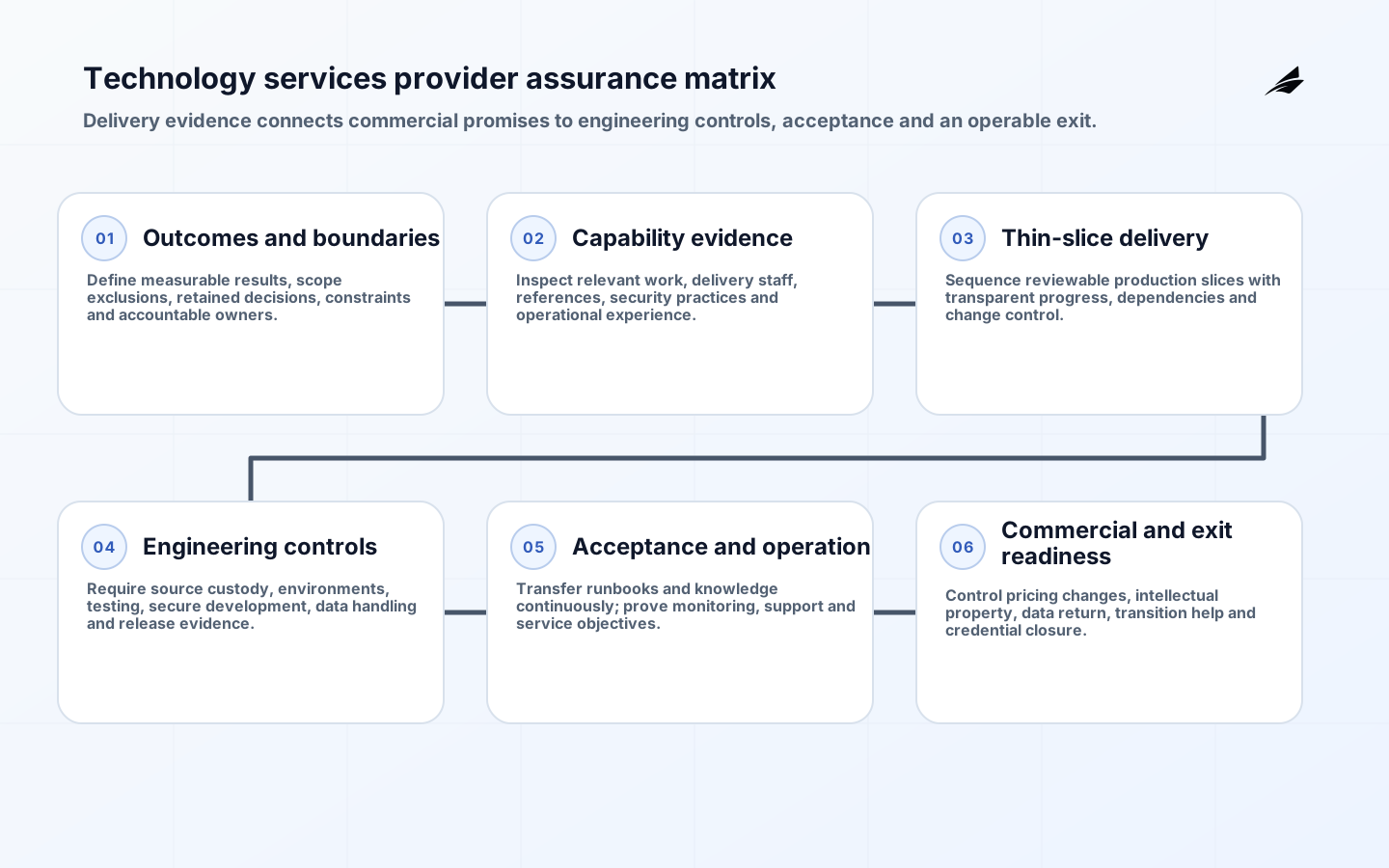
Hiring a technology services company does not transfer the need for clear product, security and operating decisions. A provider can supply engineering capacity, specialist knowledge and managed operations, but the engagement succeeds only when both sides share an explicit outcome, system boundary, decision model and evidence standard. This implementation checklist helps a buyer turn a proposal into a delivery system that can be inspected, accepted and operated after the first release.
Use it after comparing scope, cost and risk in the technology services company delivery guide and before finalizing the questions in the technology services company FAQ. If delivery will be based in India, the custom software company implementation checklist adds location-specific commercial context, but the same ownership and engineering controls still apply.
Define outcomes, boundaries and retained decisions
State the user or operating outcome before listing technologies. Examples include reducing the time to onboard a customer, replacing a fragile integration, meeting a recovery objective or giving an operations team one trustworthy queue. Attach baseline evidence and a measurable target. Then define what is outside scope, which assumptions must be validated and which customer dependencies can block progress.
Create a decision-rights matrix. The customer should retain product priority, risk acceptance, production authorization and policy decisions unless a specific delegation is documented. The provider may own technical design within approved constraints, delivery planning and operational actions. Name who resolves conflicts and how quickly. An escalation path is useful only when the decision maker and the evidence packet are clear.
| Area | Customer decision | Provider responsibility | Evidence |
|---|---|---|---|
| Product | Outcome, priority and acceptance | Discovery, options and delivery plan | Backlog linked to measurable outcome. |
| Architecture | Constraints and material risk acceptance | Design, tradeoffs and implementation | Decision records and tested contracts. |
| Security | Risk tolerance and control requirements | Secure implementation and evidence | Threat model, test results and remediation. |
| Release | Production authorization policy | Build, verification and deployment | Immutable artifact and release record. |
| Operations | Service objectives and escalation | Monitoring, response and improvement | Telemetry, runbooks, incidents and reviews. |
Evaluate delivery capability with evidence
Ask a prospective provider to walk through a comparable delivery from problem definition to operation without exposing another customer's confidential information. Look for how assumptions were tested, architecture decisions recorded, security requirements verified, releases controlled and incidents learned from. A polished capability deck is not a substitute for artifacts and accountable practitioners.
Review staffing as a system, not a list of resumes. Identify the engagement lead, product analyst, architect, engineers, quality owner, security contact and operations owner. Clarify allocation, time zones, substitution, onboarding and knowledge continuity. Interview the people expected to start. If critical knowledge rests with one specialist, require pairing and documentation before that person becomes a delivery bottleneck.
Build a delivery model around thin, operable slices
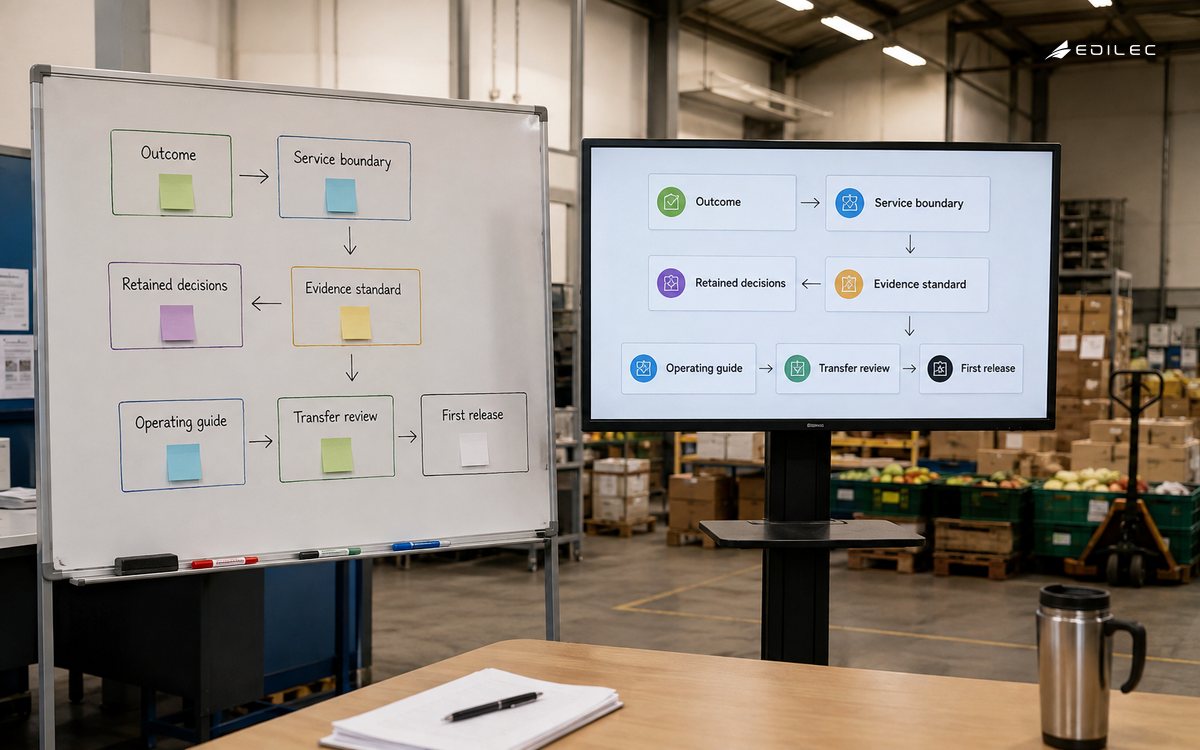
Plan the first slice to cross the real architecture: user interaction, business rule, data write, authorization, integration, telemetry and recovery. A collection of disconnected screens creates impressive demonstrations while postponing the difficult work. Keep work small enough to review and deploy, but complete enough to test a real outcome. Make acceptance criteria observable rather than subjective.
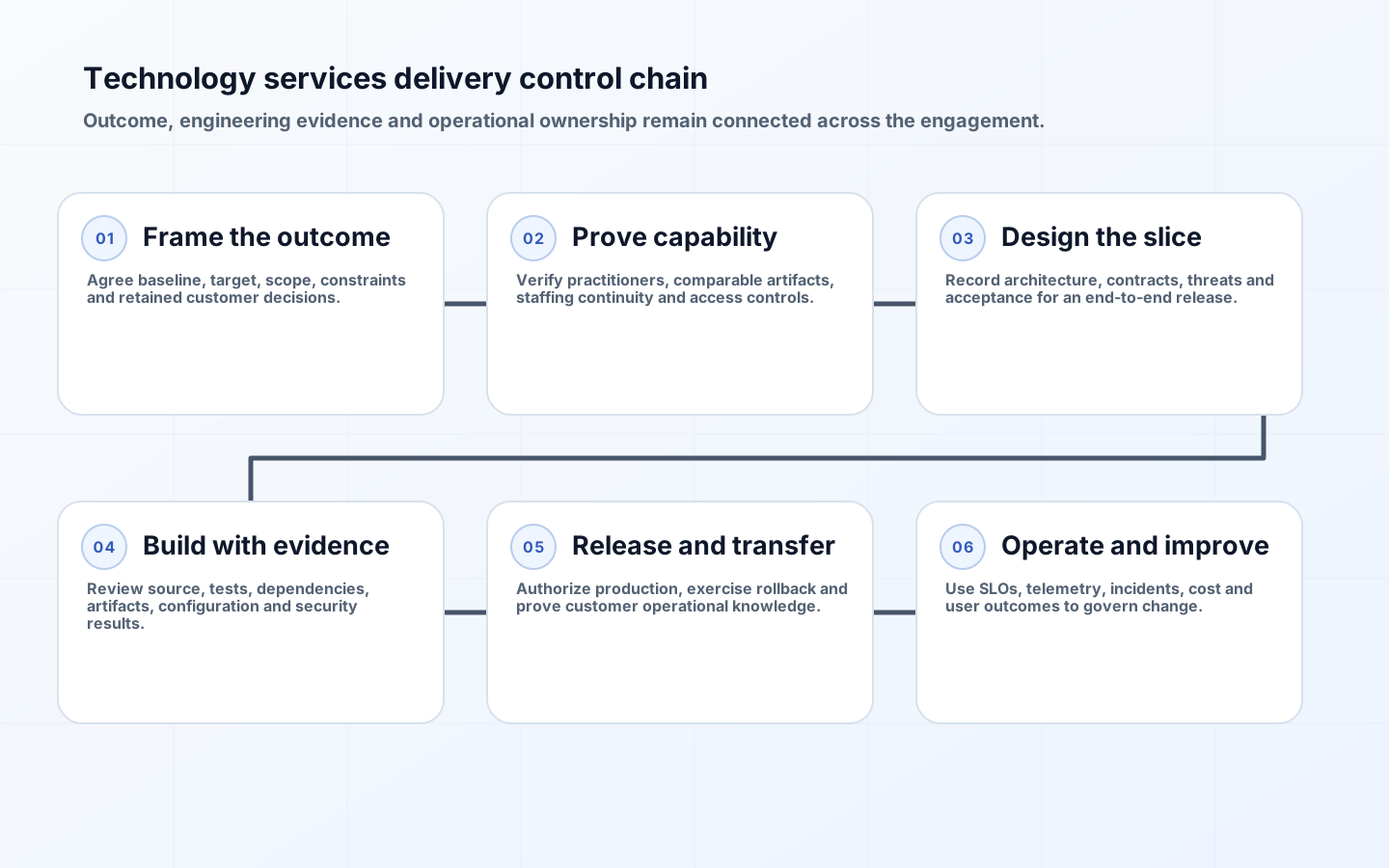
Use a shared backlog with visible assumptions, dependencies, defects and accepted risks. Demonstrations should use working software and representative data. Record architecture decisions, API contracts and operational changes beside the code. Track forecast changes with reasons instead of rewarding teams for preserving an obsolete plan. The goal is reliable learning and delivery, not maximum ticket movement.
Set engineering and security requirements before coding
Require version control, peer review, automated tests, dependency management, secret handling, protected build pipelines and reproducible releases. The NIST Secure Software Development Framework provides a common vocabulary for preparing the organization, protecting software, producing well-secured releases and responding to vulnerabilities. Select practices according to system risk and make evidence part of normal delivery.
Threat-model trust boundaries, identities, administrative actions and sensitive data. Use the OWASP ASVS to define testable application-security requirements at an appropriate level. Clarify who owns vulnerability triage, remediation deadlines, coordinated disclosure and support after launch. The contract should not make security testing an optional final-week activity.
| Delivery gate | Minimum evidence | Do not accept |
|---|---|---|
| Design | Context diagram, data classification and decisions | Architecture represented only by a vendor logo slide. |
| Build | Reviewed code, automated checks and dependency inventory | Untracked source or secrets in configuration. |
| Verification | Risk-based functional, security and recovery tests | A pass/fail statement without results or scope. |
| Release | Signed artifact, approvals, migration and rollback plan | Manual production changes with no reconstruction path. |
| Operate | SLOs, dashboards, alerts, runbooks and named owners | Monitoring promised after launch. |
Prepare environments, access and representative data
Provide access through named identities, least-privilege roles and managed devices or approved development environments. Separate customer and provider administration. Define how credentials are issued, reviewed and revoked. Do not share production exports through personal storage. Use synthetic or de-identified test data where possible and document approved exceptions when realistic sensitive data is necessary.
Make environment creation repeatable and configuration reviewable. Development, test and production may differ in capacity, but material security, integration and runtime behavior should remain comparable. Track schema changes, feature flags and infrastructure code with the release. A provider should be able to explain what changed in production without relying on one engineer's terminal history.
Accept the system and transfer knowledge continuously
Acceptance should include outcome, function, performance, security, accessibility where relevant, data migration, observability and recovery. Test failure paths and operator tasks. Define which defects block release and who accepts residual risk. Keep a trace from requirement to test result and release version, especially for regulated or high-impact controls.
Treat knowledge transfer as a delivery stream from the first iteration. Customer engineers and operators should review decisions, pair on critical components, run deployments and exercise recovery. Documentation must cover why the system is designed this way, not only where files live. Verify that a different qualified person can operate the service before declaring transition complete.
Operate against service objectives and improvement evidence
Define service-level objectives around user outcomes and dependency behavior. Instrument request paths with logs, metrics and traces; the OpenTelemetry observability guidance explains how telemetry signals make distributed behavior inspectable. Alerts should identify customer impact and route to a named owner with a runbook. Test backup restoration and rollback rather than reporting that they are configured.
Review delivery flow, defects, incidents, security findings, cost and user outcomes together. The NIST CSF 2.0 places governance alongside identify, protect, detect, respond and recover; use that perspective to connect supplier performance with enterprise risk. Improvement actions need owners, dates and a way to confirm that the underlying outcome changed.
Control commercial change and prepare a usable exit
A delivery engagement changes as evidence replaces assumptions. Define how the parties estimate, approve and record a scope change without turning every clarification into a commercial dispute. The change record should state the triggering fact, affected outcome, architecture or control consequence, cost, schedule, options and decision owner. Track consumption against outcome milestones as well as hours. For managed services, separate baseline demand, included change, exceptional work and pass-through cloud or licence costs. Forecast ranges should show assumptions such as team allocation, environment readiness and customer review time. This makes a delay caused by unavailable data distinguishable from a provider delivery problem and gives leadership a basis for an informed tradeoff.
Design exit while the relationship is healthy. Maintain current repositories, architecture decisions, data dictionaries, infrastructure definitions, deployment procedures, dependency inventories, runbooks and service contacts in locations the customer can access. Define export formats and verify that a restored environment can be built from transferred artifacts. The exit plan should cover pending work, production credentials, customer data, third-party accounts, domain and certificate control, subcontractors, knowledge sessions, deletion evidence and post-transition support. Rehearse a limited transition, such as having a customer engineer release a small change and diagnose a staged incident. Exit readiness is not a signal of distrust; it reduces concentration risk and usually improves day-to-day documentation and shared ownership.
Key takeaways
- Buy an accountable delivery system, not an undifferentiated block of hours.
- Keep outcome, architecture, security, release and operating decisions explicit.
- Require working evidence at design, build, verification, release and operations gates.
- Transfer knowledge throughout delivery and test that the customer can operate the service.
- Use incidents and service evidence to improve both the system and the engagement.
Frequently asked questions
Which pricing model is best for technology services?
No model is universally best. Fixed price suits a stable, testable scope; time and materials suits discovery and evolving work; a managed-service fee suits an established operating boundary. Hybrid arrangements can separate discovery, delivery and operations. In every model, make assumptions, acceptance, change control and retained customer decisions explicit.
What should the contract say about intellectual property and exit?
Define ownership and licences for source code, configuration, documentation, third-party components, reusable provider tools and generated assets. Require access to repositories and build instructions throughout delivery. Exit terms should cover data return, credential revocation, knowledge transfer, transition assistance and deletion evidence, not only source-code delivery.
Conclusion
A technology services company creates lasting value when its delivery is transparent, secure and operable. Define outcomes and decision rights, verify capability, deliver thin end-to-end slices, require engineering evidence and build customer ownership from the start. That approach makes the engagement easier to govern and the resulting system easier to trust.