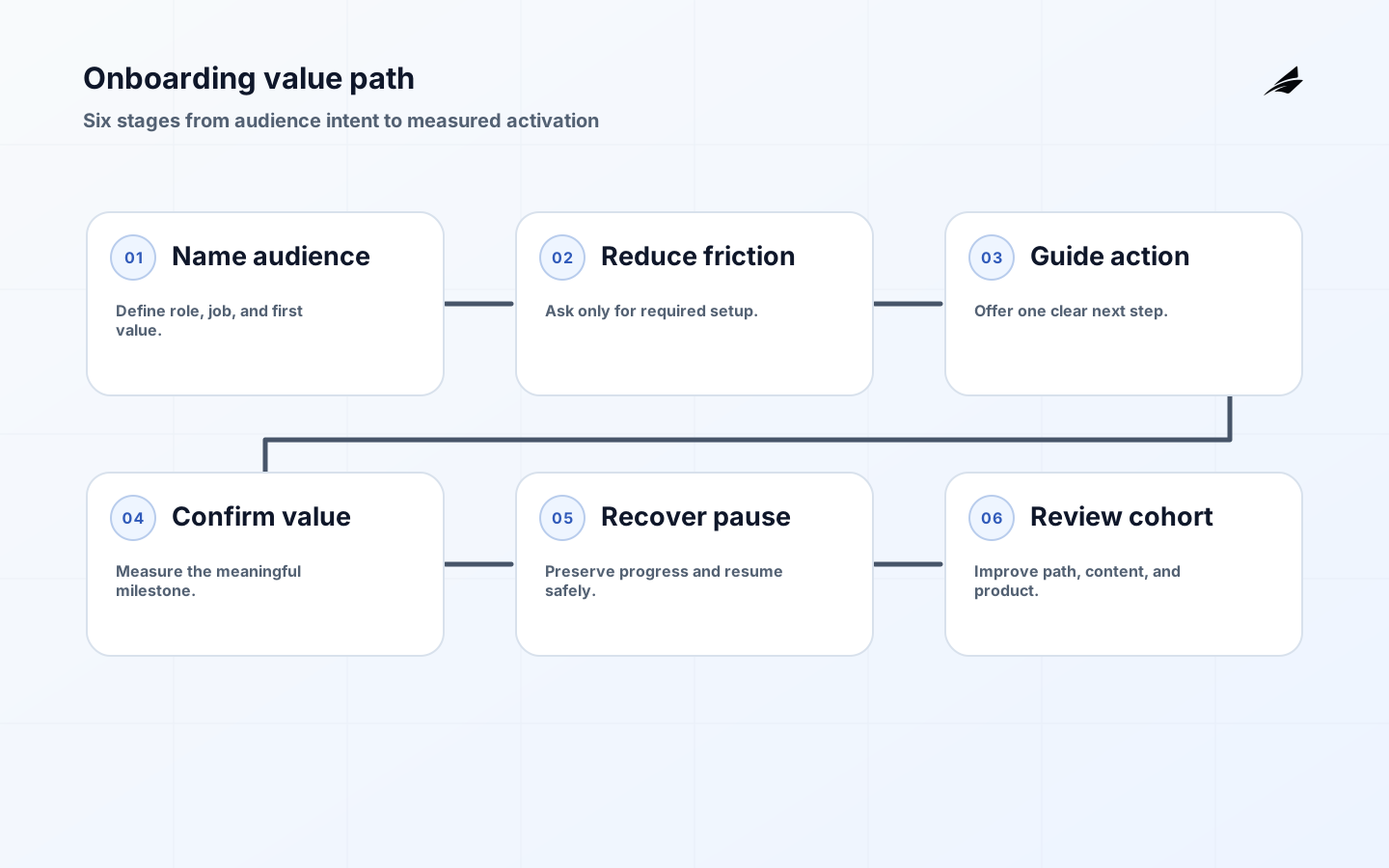
Onboarding flows are product journeys, not a sequence of welcome screens. A strong flow helps a defined user reach a useful outcome with the least necessary setup, then gives the team evidence about where people succeed or stall. Amplitude describes onboarding funnels as meaningful event sequences, while Intercom recommends setting a goal, defining an audience, and sending context-aware guidance. Start with the product behavior and operating state, not the messaging tool. Edilec's self-serve onboarding buyer and CTO guide adds decision context for teams choosing an approach.
Define the first value moment
A signup is an acquisition event, not proof of activation. Define the action that shows the user has begun to receive value: a workspace invites a teammate, a finance user reconciles a report, or a support lead resolves a case with the product. The action should be observable and connected to a real job. Avoid using a vague screen view as the activation event. Different segments may have different value moments, so record audience, role, plan, and use case without creating an unmanageable set of flows.
Remove friction before adding guidance
A checklist cannot repair an unavailable integration, unclear permission, slow import, or form that asks for information the user does not yet have. Map the journey from account creation to first value and mark each required input, dependency, error, and decision. Defer optional settings, use sensible defaults, and let a user see progress without losing work. Guidance should answer why a step matters and what success looks like. If the product can infer completion from tracked events, do not make the user manually check a box that only repeats system state.
| Journey stage | User question | Product responsibility |
|---|---|---|
| Orient | Is this product for my job? | Set expectation and show the first useful path. |
| Set up | What must I provide now? | Ask only for required context and preserve progress. |
| Act | What should I do next? | Offer one clear action with feedback. |
| Value | Did the product help? | Confirm the meaningful outcome. |
| Return | Why should I come back? | Make the next recurring job visible. |
Segment by job, not by vanity attributes
A founder, workspace administrator, analyst, and frontline user may enter the same product with different goals. Segment when the next action, permission, vocabulary, or support need truly differs. Intercom's series guidance uses entry rules and behavior to select messages; the useful principle is to avoid sending every user the same sequence. Keep segments understandable, document who owns them, and provide a default path for unknown users. A flow that depends on perfect profile data should still have a safe generic experience when those attributes are missing.
Instrument milestones and failure states
Define events for started, completed, skipped, blocked, retried, and abandoned steps. Include stable account or workspace identity, flow version, segment, device, and relevant error class while respecting privacy. Amplitude's onboarding view supports funnels built from selected events and breakdowns; use that model to compare paths without inventing a new dashboard for every question. Track time to value and retention after activation, not only click-through. A high checklist completion rate can hide a weak product if users finish the tour but never perform the job that matters.
Design recovery for incomplete journeys
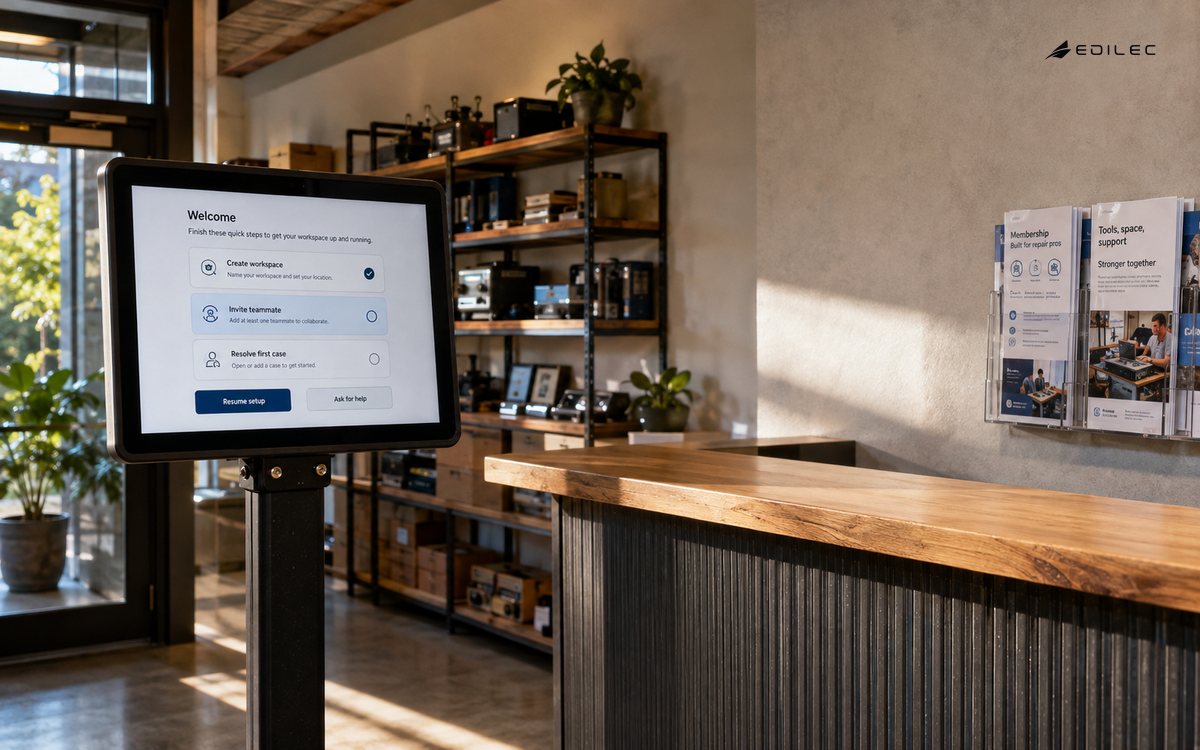
Users stop onboarding for many reasons: they are busy, need an administrator, hit an import error, or are unsure what the product will do next. Preserve the current state and give a clear resume path. A reminder should name the unfinished value, not merely say that tasks are pending. Offer a help article, support route, or safe sample when it reduces uncertainty. Stop reminders after completion, a defined number of attempts, or a meaningful change in status. Do not keep nudging a user who has already reached value through a different route.
- Define activation as a meaningful product outcome, not a signup or tour completion.
- Ask for the smallest required context and defer optional configuration.
- Segment flows only when the next decision or job differs.
- Instrument milestone, error, skip, and recovery events with a flow version.
- Let users pause, resume, or choose a safe alternative without losing progress.
Example: onboarding a new analytics workspace
A new analytics workspace has three first-value paths: connect a data source, answer a product question, and share a chart. The flow asks for the team role, offers a sample dataset when production access is not ready, and measures the first saved analysis rather than the number of setup screens completed. If data ingestion fails, the user sees the error class, expected wait, and support route. A series message returns only to users who have not created a saved analysis after a reasonable interval. Product reviews activation and retention by role and source type before adding more guidance.
| Signal | What it reveals | Action |
|---|---|---|
| Started | Entry volume by segment. | Check acquisition and eligibility. |
| Blocked | Dependency or permission friction. | Fix product path or explain requirement. |
| Completed | Milestone reached. | Advance or stop the flow. |
| Time to value | Speed of first useful result. | Remove delay and unnecessary steps. |
| Retained | Value survived the first session. | Improve the recurring job, not just the tour. |
Review the flow as a product surface
Sample sessions and event paths by segment. Compare users who receive guidance with those who do not, but do not assume a message caused improvement without a sensible comparison. Review accessibility, localization, mobile layout, permission boundaries, and the behavior of a user who completes steps out of order. Treat the onboarding flow as code and content: version it, test it, and retire stale instructions when the product changes. Support questions are product evidence; bring them into the next flow review.
Key takeaways
FAQ: Onboarding flows questions
FAQ: Is activation the same as onboarding completion?
No. Activation is the point at which a user reaches a meaningful value moment. A user may activate without completing every checklist item, while a user may complete guidance without using the product meaningfully.
FAQ: Are onboarding checklists always helpful?
Only when each step supports a real goal and completion can be understood. A checklist that creates busywork or repeats what the product already knows can add friction rather than remove it.
FAQ: What is the most useful onboarding metric?
Use the metric that reflects the defined value moment, then pair it with time to value, drop-off, support, and retention. A single completion percentage cannot explain a journey.
Treat onboarding content as a product dependency
A flow can fail even when the interface is correct if its copy, help article, sample data, or support route describes an older product. Version onboarding content with the behavior it explains and review screenshots, field names, permission language, and completion rules during release planning. Keep a fallback for a user whose plan, role, or data source does not match the main example. A well-written instruction that points to an unavailable permission is still a broken onboarding step. Content owners and engineers should share a small contract for the event that marks completion and the message shown when the event cannot occur.
Onboarding is also a trust boundary. Ask only for information the product needs, explain why it is requested, and do not use a checklist to coax users into unnecessary permissions. If a connection involves sensitive data, show the scope and allow the user to stop. For B2B products, distinguish the person setting up a workspace from the people who will use it later. The first operator may need to invite teammates, configure access, and leave a clear handoff. Measuring the entire team reaching the intended job is more meaningful than measuring whether one administrator clicked every step.
A practical review cadence combines event data, session sampling, support questions, and a fresh-user walkthrough. Look for steps completed out of order, errors that force a restart, messages sent after activation, and segments that never see the right next action. Fix the product path before adding another tooltip. When a flow improves, preserve the old cohort definition and flow version so the measurement remains interpretable.
Do not confuse onboarding completion with the end of the customer relationship. After the first value moment, help the user repeat the job, invite the people who need to participate, and understand the next useful capability. A flow can hand off to product education, support, or an account owner, but the handoff should be intentional and measurable. Record whether a user reached value alone, with help, or after an operator intervention. Those paths reveal whether the product is self-serve enough for its intended audience and where a service layer is genuinely valuable.
Finally, make the first value moment visible in the interface and in the event model. A user should know what success looks like, and the team should be able to distinguish a completed job from a preparatory click. If the value requires another person, a data import, or an approval, show that dependency and give the user a way to invite or request help. This prevents the flow from promising instant activation when the real product journey is collaborative. Review those dependencies with support and customer success so the onboarding experience matches the service customers will actually receive.
A flow is complete only when its next ownership is clear. If activation hands a user to a recurring workflow, a teammate, or support, show that handoff and measure whether it succeeds. Otherwise the flow may optimize a first session while leaving the customer without a durable path.
A practical example for onboarding flows for saas product engineering is a required input is absent at the moment of action. Explain onboarding flows pending and denied states before expansion.
Ownership is clearer when onboarding flows for saas product engineering separates the promise from the mechanism. Review onboarding flows evidence with product, engineering, and support for a practical guide.
Before widening onboarding flows for saas product engineering, run a small rehearsal with normal, denied, delayed, and corrected cases.
The measurement plan for onboarding flows for SaaS product engineering should pair an outcome with a reason to investigate it. Review the scope for onboarding flows during normal handling.
For Onboarding Flows, Product Analytics onboarding view defines scope; Create an effective onboarding Series supports the control; Design your Checklist clarifies evidence; Creating a great product onboarding experience guides recovery.
Teams adopting onboarding flows for SaaS product engineering should compare a completed setup with a denied or incomplete setup. Review the control during a release check, then have an operator explain the resulting account and tenant state.
The review discipline for onboarding flows for SaaS product engineering is simple but specific: name the protected outcome, set an owner, preserve the reason behind each exception, and measure the cost of correction. Review the evidence for onboarding flows during a delayed handoff. Review the ownership for onboarding flows during a customer explanation.
A concrete operating test for onboarding flows for SaaS product engineering is to rehearse the workflow during a recovery drill. Review the control for onboarding flows at the tenant boundary and confirm that the recovery path remains clear.
Conclusion
Onboarding flows work when they help a known user reach a meaningful outcome and give the team evidence about the path. Define the value moment, reduce product friction, segment carefully, instrument failure as well as success, and make recovery respectful. Edilec's in-app guidance planning guide can extend the interaction design, while the admin consoles practical guide helps when setup requires an operator. Good onboarding is the first reliable use of the product, not a tour before it.
Evidence for “Onboarding Flows for SaaS Product Engineering” is grounded in Product Analytics onboarding view, Create an effective onboarding Series, Design your Checklist, WAI-ARIA Authoring Practices Guide; each source informs a specific decision, test, or operating trade-off described in this guide.