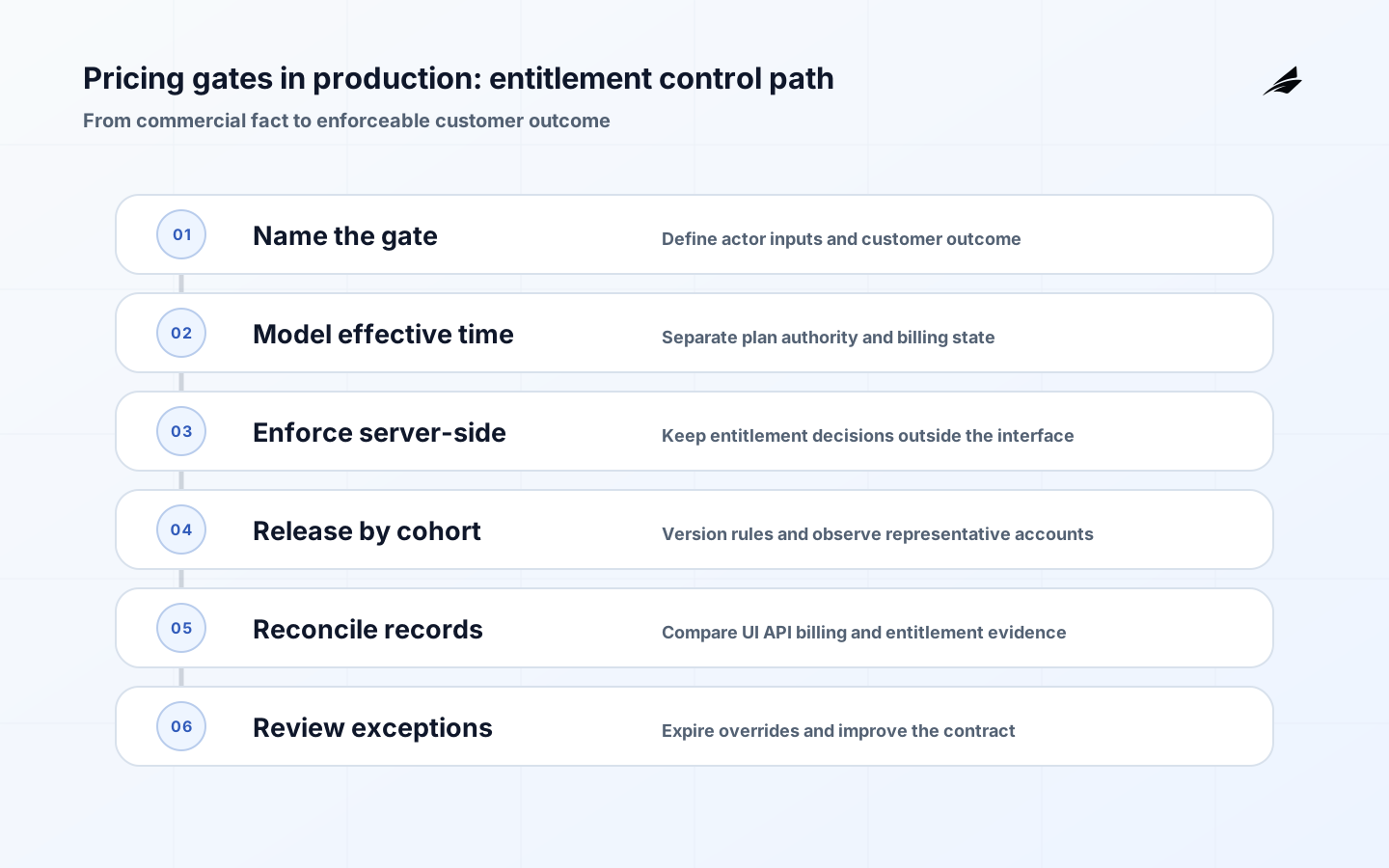
Pricing gates change character when they reach production. The protected operation must enforce the commercial promise from current entitlement facts, not from a screen-level hint. Teams need to define plan, capability, limit, account, effective date, and decision reason, decide which facts are authoritative, and make the same decision wherever a customer invokes a paid feature, reaches a limit, changes a plan, or a billing event updates access. OpenFeature introduction helps separate evaluation from delivery, while the OWASP Authorization Cheat Sheet keeps the protected action's boundary explicit. In production, test billing evidence against the user action and retain the resulting control evidence.
Key takeaways
- Treat pricing gates as a customer-facing contract, not a background implementation detail.
- Document trusted inputs and authoritative state before selecting components or screens.
- Model retries, delayed events, and partial work as explicit states.
- Enforce the decision consistently across requests, jobs, and administrative tools.
- Retain evidence that lets an operator explain a material outcome without reconstructing it from memory.
- Use exception reviews to test whether the model matches real customer work.
Production pricing gates — Start with the decision boundary
Begin with a decision statement that names the affected account or workspace, qualifying plan and usage facts, the condition that blocks progress, and the owner of an exception. Inventory catalog version, subscription status, entitlement, consumption, grace rule, and override as separate facts with effective times. Reconcile the commercial evidence with the protected workflow outcome before treating a gate as complete. A disputed result should show the customer-safe reason, the state version, and the next action an operator may take.
| Decision area | Question to settle | Evidence worth retaining |
|---|---|---|
| Scope | Which ${t.unit} are inside this decision? | Stable identifiers and the resolved context. |
| Authority | Which service or record may change the fact? | Source, version, effective time, and actor. |
| Failure posture | What happens when required information is late or missing? | Reason code, customer state, and named owner. |
| Review | How will a team know the rule stopped matching reality? | Sampled outcomes, exceptions, and operating signals. |
Production pricing gates — Design state and transitions deliberately
Model catalog version, subscription status, entitlement, consumption, grace rule, and override with stable IDs and effective times. The protected operation should use the authoritative state, while customer messaging should explain which fact controlled the result. Test a plan change during active work, a late cancellation, and an approved exception so state precedence is visible. Keep the audit record independent of whichever interface displayed the decision.
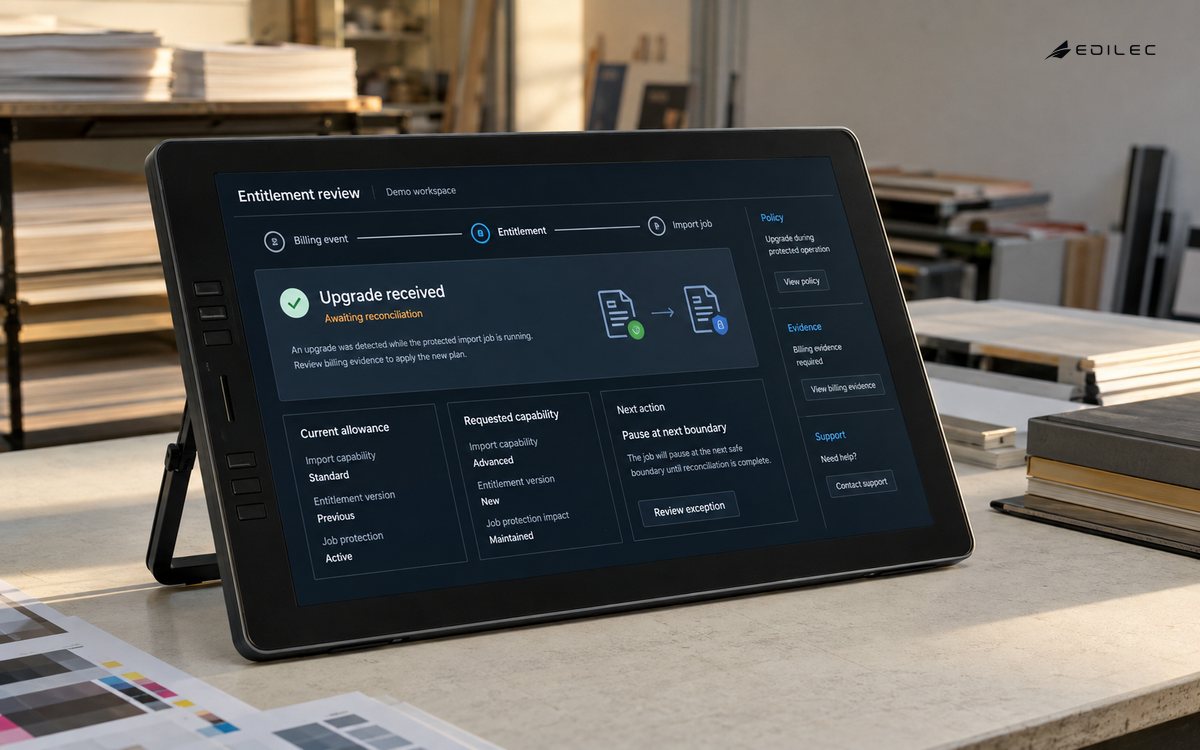
A customer upgrades while a usage-intensive job is running. The protected operation must read an authoritative entitlement at the right boundary, explain whether the job continues under the prior limit, and avoid making the browser redirect the only evidence of purchase. Reconcile the job decision with the billing event and entitlement version, then show support whether the outcome is pending, allowed, denied, or repairable. This example makes the commercial boundary testable before more paths are added.
Production pricing gates — Build the production path
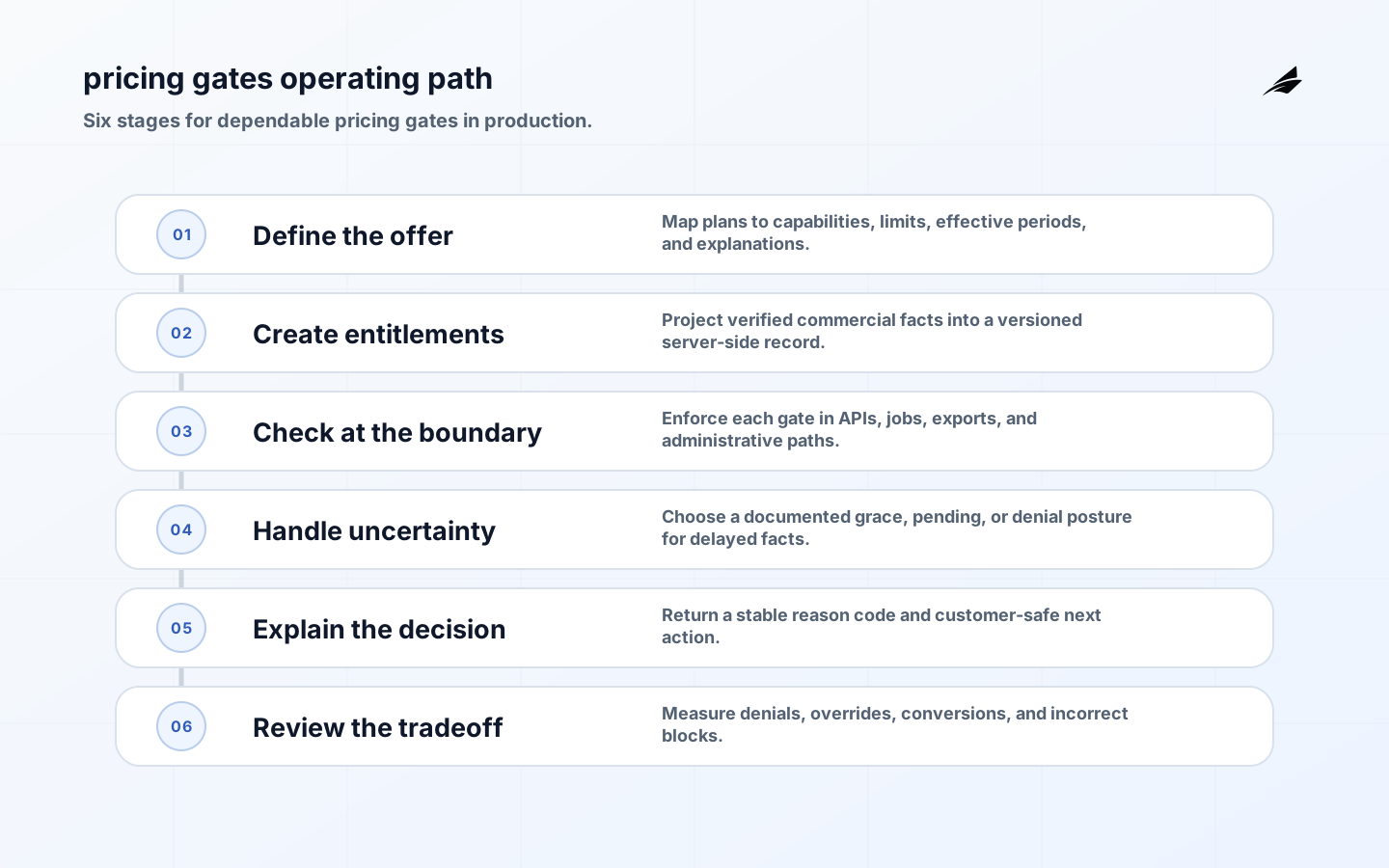
Implement pricing gates at the operation where the product effect occurs. Apply the OWASP ASVS 5.0.0 requirements to verify that protected boundary. A practical production pricing gates review connects billing evidence to an owner, an observable state, and a recovery action. Use override authority to keep decisions traceable when conditions change in the field. In production, test billing evidence against the user action and record the resulting control evidence.
| Failure mode | Design response | Customer-safe result |
|---|---|---|
| Repeated request | Use a stable operation or event identifier and an idempotent transition. | One explainable result, not duplicate work. |
| Late dependency | Record the request and expose a pending state with a review time. | Progress is visible without a false completion. |
| Invalid scope | Resolve trusted context and authorize at the protected operation. | The request is denied without leaking another customer’s information. |
| Partial completion | Record completed work and route compensation or repair to an owner. | The next safe action is clear to the customer and operator. |
Production pricing gates — Operate with evidence, not assumptions
A practical production pricing gates review connects override authority to an owner, an observable state, and a recovery action. For pricing gates, use RFC 9110 HTTP Semantics as a reference for request behavior, then retain a compact record of input identity, relevant state version, policy or configuration version, decision reason, actor or service, correlation ID, and final result. Review revenue impact and entitlement state together so decisions stay traceable when conditions change in the field. The important operational signals are denial reasons, event-to-entitlement delay, limit-calculation errors, override age, conversion after gate exposure, and false-denial support contacts.
Review normal, denied, pending, and manually corrected outcomes on a regular rhythm. A reviewer should sample the input facts, policy version, customer explanation, and repair record together. Escalate recurring false denials, stale overrides, and unexplained entitlement drift to the owner who can change the boundary rather than asking support to absorb the discrepancy.
Production pricing gates — Release in a way that preserves learning
Release pricing gates to a narrow cohort with a reversible rule. Define entry criteria, stop conditions, support ownership, and the evidence required before each expansion. Compare billing events with protected-action outcomes, inspect the difficult cases, and keep the previous rule available until the cohort proves that normal, delayed, denied, and repaired paths remain explainable.
Frequently asked questions
Do we need a new platform before improving pricing gates? Usually not. Start by making the entitlement authority, effective time, exception owner, and customer-safe explanation explicit at the protected action.
How much audit detail is enough for pricing gates? Keep the facts, policy version, actor, reason, customer result, and repair trail needed to reconstruct a disputed outcome without guessing.
What should trigger a redesign of pricing gates? Repeated false denials, unexplained entitlement drift, unbounded overrides, or a customer result that cannot be traced to durable commercial facts are clear signals.
Production pricing gates — Prove the control before scaling
Pricing gates require a clear boundary between explaining an offer and enforcing a restriction. The interface may preview a plan or estimate a limit, but the protected server operation must make the final decision from current entitlement and usage facts. When an action is blocked, return a reason that is stable enough for support to investigate and for customers to understand. A generic permission error obscures commercial state and invites unsafe manual workarounds.
Consider a team that upgrades from a 10,000-record plan while an import job is already processing its 9,800th record. The gate should identify the account, read the effective entitlement version, and decide whether the remaining work is covered without charging twice or silently changing the plan boundary. If the billing event arrives after the job begins, retain the pending decision and show the operator whether to pause, continue under the prior allowance, or request an approved exception. That choice needs a reason code and a correlation ID linking the checkout event, entitlement change, job, and customer message.
Recovery should be designed around the customer-visible consequence. If a stale cache denies a paid export, first stop new denials from that cache, then compare affected decisions with the authoritative entitlement history. Replay only idempotent corrections, preserve the original denial record, and notify support which customers may need a retry or credit. Finance can then reconcile any usage or invoice effect from the same evidence. This sequence turns a pricing incident into a bounded repair rather than an informal database edit, and it gives the team a concrete test for whether the gate is safe to scale.
Conclusion
Pricing gates become dependable when their boundary, state, authority, and recovery path are explicit. A final production review should reconcile one ordinary decision, one late billing event, and one approved repair against the evidence retained at the protected action. The team can then decide whether the gate is ready for a wider cohort.
In production, a pricing gate is an entitlement and billing boundary at the protected action. Separate catalog language from runtime authority, model effective time and state precedence, and keep late webhook delivery or scoped repair from rewriting history. The server must enforce the result for APIs, jobs, exports, and administrative actions; a client-side label may explain but must not decide. Review ordinary grants, denials, pending states, retries, and corrections with product, engineering, support, and finance. A trustworthy gate gives each outcome a policy version, source facts, customer-safe explanation, and auditable repair path.
Related reading: Related guide 1, Related guide 2, Related guide 3.
Keep customer messaging aligned with the server decision. If an entitlement is pending, the product should explain the next safe step rather than implying that a refresh will fix it. Support should be able to trace the message to the same policy version, billing fact, and exception record used by the protected operation.
Use a reconciliation exercise before widening the gate. Select one ordinary grant, one denial caused by a stale fact, one pending result caused by a delayed event, and one approved repair. For each case, record the catalog and entitlement versions, effective time, usage snapshot, policy decision, customer-facing explanation, and support action. Compare the record produced by the protected operation with billing history, entitlement state, and any message shown in the product. If those records disagree, pause expansion and assign the discrepancy to an owner who can correct the boundary. Keep commercial vocabulary stable across checkout, APIs, background jobs, exports, and administrative tools so a customer does not receive different answers from different paths. A temporary exception should have an actor, scope, reason, start time, expiry, and review outcome, and the system should remove it when its purpose ends. The review is successful when a responder can explain the result, reproduce it from retained facts, and choose a bounded repair without changing primary history. That evidence gives product and finance a shared basis for deciding whether the next cohort is safe. It also gives support a concrete explanation for a customer who sees a delayed entitlement, a denial, or a correction after payment. Keep the cohort decision reversible, and record why expansion was approved, paused, or rejected during every later operational review.