Pricing gates is an operating decision, not a screen-level choice. For engineering teams, the question is whether an account may use a capability under current commercial terms, entitlements, and exceptions. A dependable design stays explainable when data arrives late, a request retries, an administrator changes a rule, or a customer asks why an outcome occurred. For pricing gates for growing teams, make plan eligibility explicit before the workflow reaches its next decision point. Stripe Entitlements Stripe Subscription Webhooks This guide turns those principles into a practical design that product, engineering, operations, and support can review together.
Growing-team pricing gates — Define the pricing gates decision before selecting tools
Write a short decision contract. Name the subject, protected outcome, authority, effective time, policy version, allowed result, denied result, and behavior when a required fact is unknown. Here, the authority is a durable entitlement record derived from verified subscription facts and evaluated by the service protecting the capability. Relevant inputs include account or workspace identity, plan and entitlement version, effective time, verified billing event, policy version, and exception record. This reveals disagreements early: one group may decide for a person while another decides for a workspace, or one uses processing time while another uses source-event time. Give the rule an accountable owner and retain a reason code for consequential outcomes.
| Decision element | Concrete choice | Evidence to retain |
|---|---|---|
| Outcome | whether an account may use a capability under current commercial terms, entitlements, and exceptions | Subject, resource, action, and correlation identifier. |
| Authority | a durable entitlement record derived from verified subscription facts and evaluated by the service protecting the capability | Source record, version, and effective time. |
| Uncertain input | Choose deny, pending, or review deliberately. | Reason code, owner, and next action. |
| Repair path | Use a narrow auditable correction route. | Actor, approval, original state, and result. |
Growing-team pricing gates — Model pricing gates state, time, and ownership
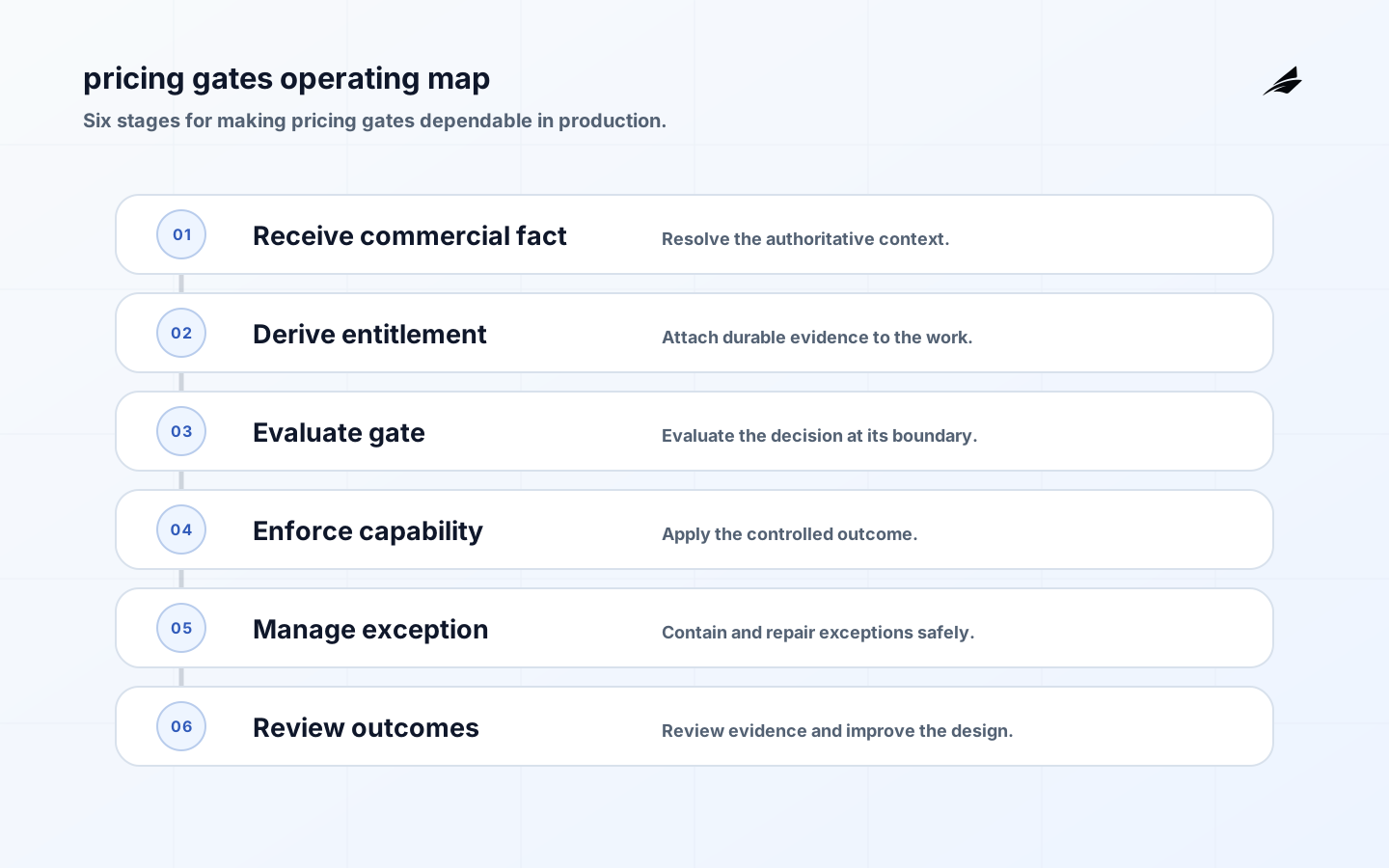
Make lifecycle state explicit rather than inferring it from whichever field changed last. A workable set is unknown, eligible, trialing, active, grace, restricted, overridden, and expired. Store transition source, actor where relevant, event time, processing time, idempotency or correlation identifier, and policy version. Decide ordering rules: stale facts must not overwrite newer facts, while duplicate delivery must be harmless. These details turn product language into test cases for normal flow, late input, retry, reversal, and manual intervention.
Growing-team pricing gates — Build the pricing gates path around durable facts
Separate the commercial catalog from the runtime decision. Marketing names and regional prices belong to a catalog; a gate needs a compact answer about whether a workspace may act now and why. Entitlements map commercial products to features. Use a stable entitlement key, effective interval, and reason code, then enforce the result on the server near the protected action.
- Create one authoritative record for whether an account may use a capability under current commercial terms, entitlements, and exceptions.
- Persist source, version, event time, processing time, and correlation context.
- Make duplicate delivery and safe retries normal behavior.
- Route urgent corrections through a bounded repair action instead of editing primary records by hand.
- Make each reader-facing result traceable to its input facts and policy version.
Growing-team pricing gates — Put security and recovery controls at the pricing gates boundary
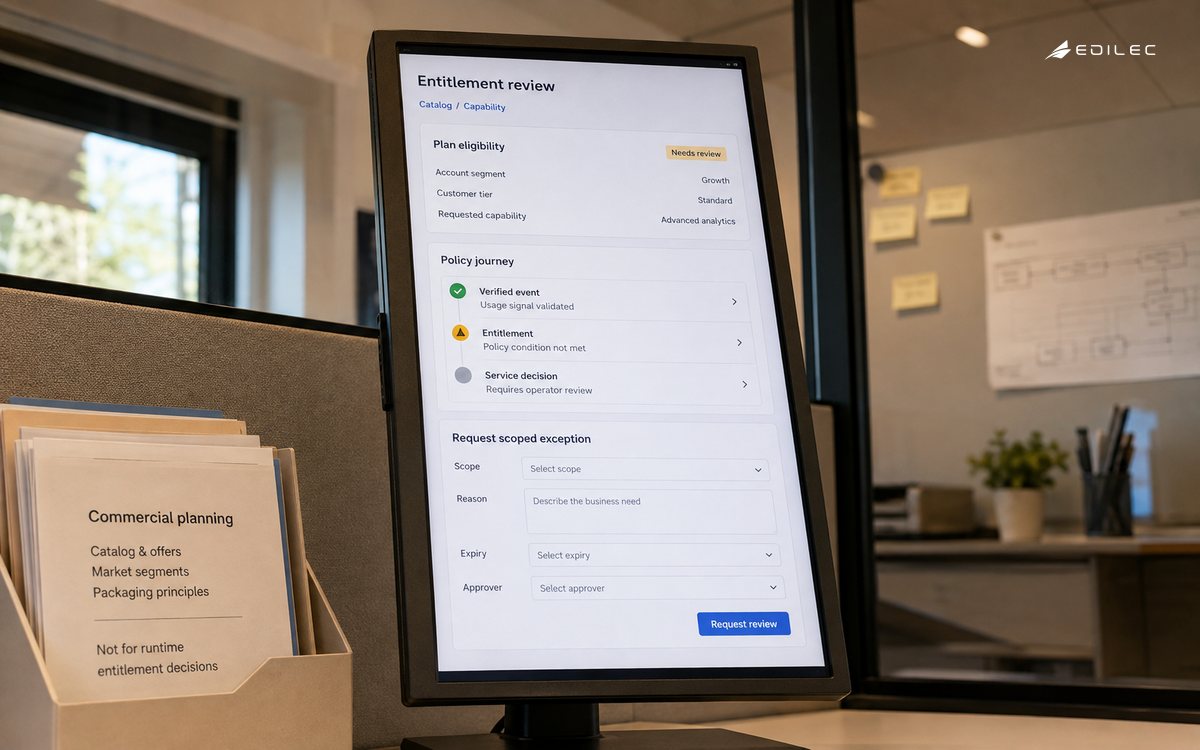
Verify billing events, make updates idempotent, and prevent older events from rolling state backwards. Operator overrides should be scoped, expiring, attributable, and reviewable. Treat a gate change as consequential production change and test upgrade, downgrade, grace, cancellation, retry, and repair paths. A practical pricing gates for growing teams review connects metered usage to an owner, an observable state, and a recovery action. OWASP Authorization Cheat Sheet NIST Secure Software Development Framework The goal is a bounded, observable response to unexpected input. Decide who can inspect records, who can alter a decision, which actions require approval, and how long exceptional access lasts. Keep customer-facing explanations separate from sensitive diagnostics while preserving a correlation identifier for authorized investigation.
| Control | Failure it limits | Operational proof |
|---|---|---|
| Input validation and idempotency | Retries, malformed input, and replayed requests. | Rejected-input count and duplicate-safe tests. |
| Scoped authorization | An actor reaches a record or action outside the intended boundary. | Decision log with subject, target, and version. |
| Auditable repair | An urgent correction becomes an invisible permanent change. | Approval, expiry, reason, and before-and-after state. |
| Reconciliation or review | Two sources drift without notice. | Scheduled comparison and owned exception queue. |
Growing-team pricing gates — Measure whether pricing gates remains trustworthy
Choose measures that reveal decision quality, not just traffic. Watch entitlement propagation delay, denied-access explanations, stale overrides, evaluation failures, and rollback time. Pair outcome measures with evidence-quality measures: records carrying a policy version, exceptions with an owner, and the age of unresolved anomalies. Build reporting around questions someone can act on, such as which changes lack verified input or which customer-visible results cannot be traced to durable facts. Alerting must reach a team with authority to repair the condition.
Growing-team pricing gates — Make tradeoffs explicit as pricing gates grows
Start with the narrowest model that can explain outcomes and be repaired safely. Centralize policy only when independent implementations are already producing divergent results; a clear contract and shared tests may otherwise be enough. Keep the model extensible for future roles, plans, meters, or segments without inventing every future state. Use growth-stage controls to keep pricing gates for growing teams decisions traceable when conditions change in the field. A Field Guide to Subscription Access Control for Growing Teams A Field Guide to Self-serve Onboarding for Growing Teams Customer Feedback Loops Checklist for Reliable Digital Operations
Growing-team pricing gates — Run a entitlement review before widening scope
A scheduled entitlement review keeps pricing gates connected to live operating evidence instead of assumptions made during implementation. Ask reviewers to exercise upgrade, downgrade, grace, cancellation, retry, override, and late-event ordering against server actions. Use a small sample of ordinary cases and a small sample of intentionally difficult cases; the point is to test whether the decision contract still holds as dependencies, roles, and data volume change. Bring product, engineering, and the team handling exceptions to the same review. Each should be able to identify input facts, policy version, customer impact, and repair path without translating between separate systems.
The review should end with an explainable allow or deny result with policy version, effective time, source fact, and exception expiry. Turn recurring findings into owned work: a missing field becomes a contract change, an unclear exception becomes a runbook improvement, and a risky manual step becomes a controlled workflow candidate. This practice matters before wider rollout, a major permission or commercial change, a migration, or a new integration. It gives pricing gates regular contact with the people who must explain and operate it, rather than waiting for a customer escalation to expose ambiguity.
Key takeaways for pricing gates
- State the decision and authority before choosing a vendor or interface.
- Persist time, version, and reason so difficult outcomes can be explained.
- Treat “a client-side check becomes the only gate or a late cancellation revokes a newer entitlement” as a planned test case.
- Protect the boundary with scoped permissions and an auditable repair path.
- Measure unresolved anomalies and evidence quality alongside product outcomes.
Frequently asked questions about pricing gates
For pricing gates, What is the biggest growth risk? Divergent interpretations of plan, entitlement, payment, and effective time across services. How should overrides work? Scope the actor, account, reason, start, expiry, permitted action, and approver, then remove the override automatically. Which operational signals matter most? Review denials, grants, entitlement drift, webhook lag, duplicate grants, overrides, reconciliation, and customer impact.
Conclusion: build pricing gates as an operable decision system
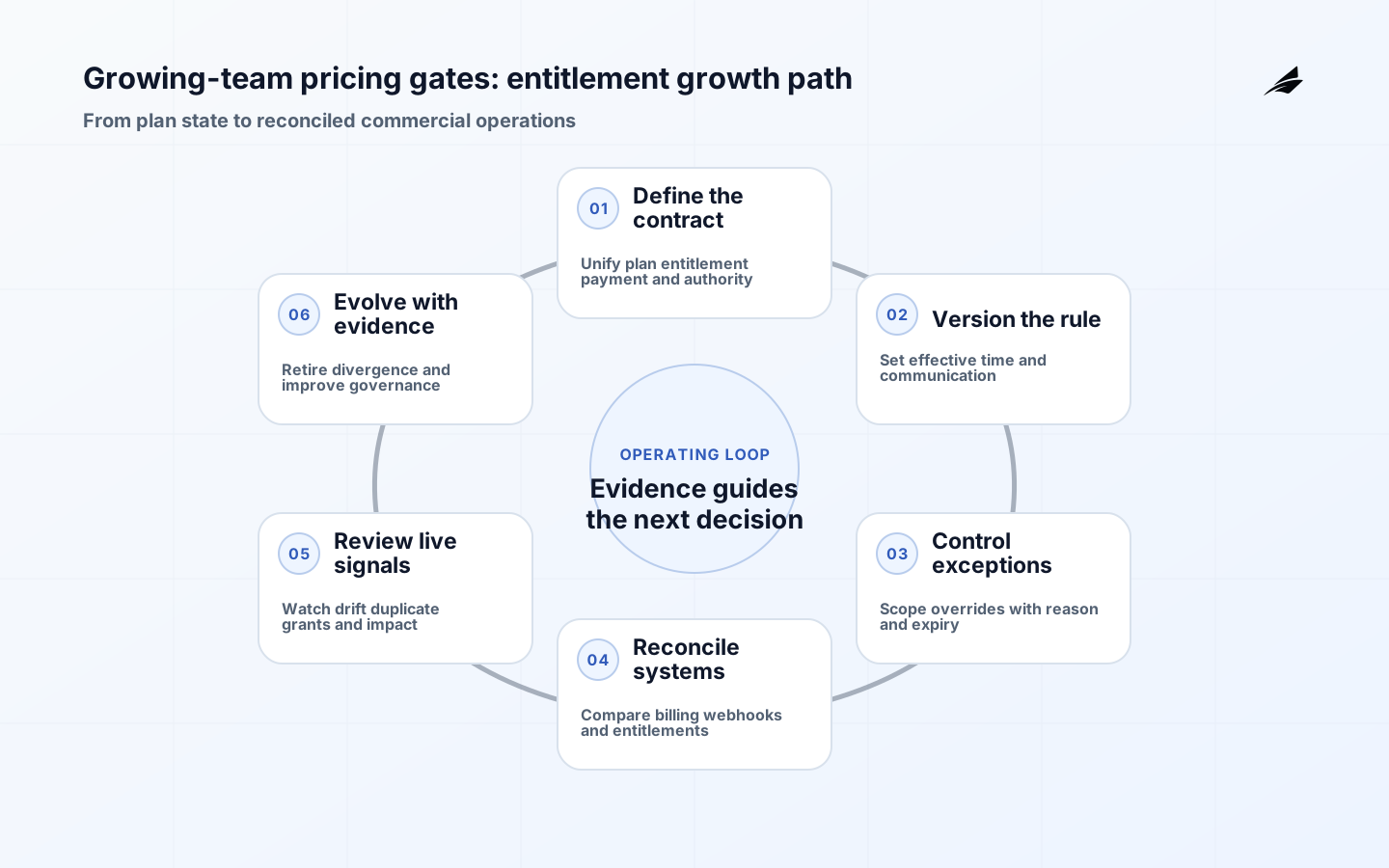
The durable version of pricing gates is not the one with the most configuration. The pricing gates for growing teams design is stronger when plan eligibility is checked alongside the affected workflow outcome. Establish authority, model state changes, enforce the boundary, and keep recovery evidence close to the decision. For pricing gates for growing teams, make exception handling explicit before the workflow reaches its next decision point. Before the next expansion, inspect one ordinary result and one disputed result from pricing gates. In pricing gates for growing teams, test metered usage against the user action and record the resulting control evidence. A practical pricing gates for growing teams review connects growth-stage controls to an owner, an observable state, and a recovery action.
Growing teams need one reconciliation story for plan state, billing events, entitlements, customer-visible access, and scoped overrides. Keep the commercial catalog separate from the runtime decision and store policy version, effective time, source event, reason, and expiry with each material result. A repair action should be narrow, attributable, and automatically expiring rather than becoming a second entitlement system. Review divergence by cause—provider delay, duplicate delivery, expired override, manual correction, or rule defect—and route it to an owner who can fix the boundary. Growth is safe when support can explain an outcome and engineering can reproduce it from durable records.
Related reading: Related guide 1, Related guide 2, Related guide 3.
As plans and regions multiply, review entitlement divergence by customer impact rather than by raw event count alone. A small number of denied actions may matter more than thousands of harmless retries. Pair the anomaly with its owner, expiry, support burden, and corrective action so growth decisions remain tied to accountable commercial operations.