Firmware updates are a lifecycle capability, not a file-transfer feature. A reliable program must know which device is eligible, what hardware and software it runs, which package is approved, how authenticity is verified, when it may reboot, how success is observed, and what happens if power or connectivity fails midway. NIST SP 800-193 frames firmware resiliency around protection, detection, and recovery. That is a useful starting point for connected products and operational deployments alike. Plan the update path before the first field rollout, because a device that cannot be identified, scheduled, verified, or recovered is expensive to operate even when the initial firmware works perfectly.
Firmware fleet readiness — Inventory before you update
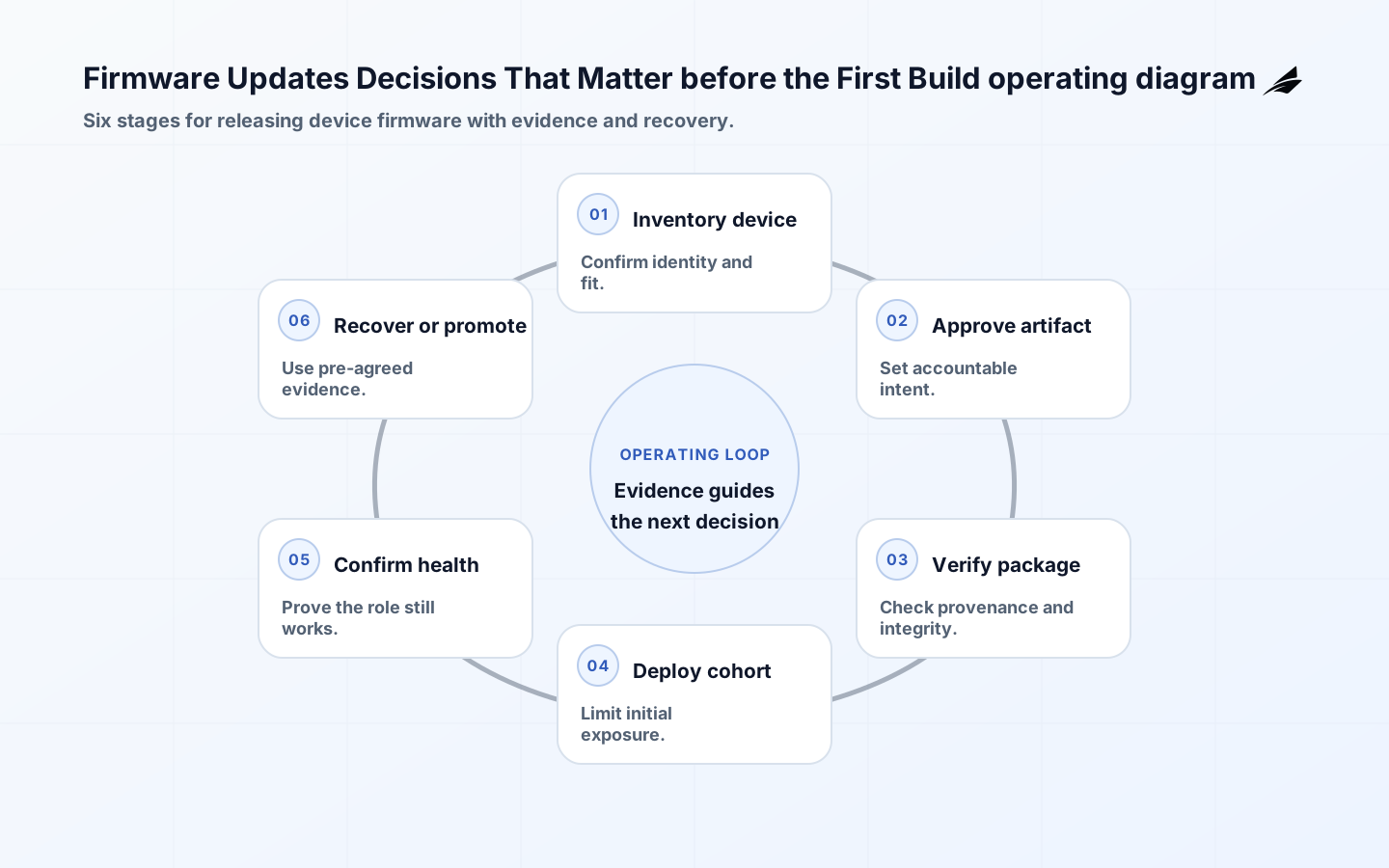
Maintain a trustworthy inventory of device identity, model, hardware revision, bootloader capability, current firmware, configuration schema, site, owner, connectivity class, and service state. The inventory should distinguish a device that is absent from one that is present but stale, quarantined, or intentionally pinned to a version. It is also the basis for targeting a rollout safely. NISTIR 8259A lists software update as a core IoT capability and places it alongside identification, configuration, access control, and cybersecurity state awareness. Those capabilities work together: an update controller cannot make a responsible choice if device identity or current state is only a best guess.
| Release decision | Required evidence | Why it matters |
|---|---|---|
| Eligibility | Model, hardware revision, free space, power and connectivity | Avoid installing an incompatible package. |
| Authorization | Approved package, rollout group, maintenance window | Tie change to accountable intent. |
| Authenticity | Signature or verified provenance | Prevent unauthorized code delivery. |
| Outcome | Installed version, reboot result, health checks | Distinguish delivery from a successful update. |
Firmware fleet readiness — Build a release and recovery path
A package should be versioned, immutable, compatible with an explicit device set, and accompanied by release notes that describe behavior, migration steps, known limitations, and rollback conditions. Verify integrity and authenticity before installation using the mechanisms supported by the device architecture. Plan for interrupted downloads, lost power, a failed boot, an incompatible configuration, and a device that never checks in afterward. Recovery may mean a dual-image fallback, a protected recovery image, a local service procedure, or a replacement unit. What matters is that the team has tested the path for the actual hardware. NIST SP 800-82 cautions that OT changes must account for reliability and safety; timing and restoration matter as much as the patch itself.

Firmware fleet readiness — Roll out in observable cohorts
Use cohorts that reflect real risk: internal devices, a representative pilot site, a small production group, then progressively broader groups. Avoid grouping only by percentage when hardware revision, network conditions, process criticality, or operating schedule differ. Define halt criteria before release, such as boot failures, abnormal error rate, lost telemetry, repeated rollback, or a process impact. Keep the previous approved version available until confidence is earned, and pause automatically when evidence is incomplete. CISA's ICS recommended practices are helpful context for patch management and incident response. An orderly rollout creates time to learn; a fleet-wide push compresses every unknown into one difficult recovery event.
| Cohort | Purpose | Promotion evidence |
|---|---|---|
| Lab and integration | Prove package and interfaces | Expected behavior under normal and failure tests. |
| Pilot | Exercise representative conditions | Health, telemetry, and operator feedback remain acceptable. |
| Limited production | Detect scale and site differences | No defined halt criterion is triggered. |
| Broad rollout | Complete the planned release | Inventory and health outcomes reconcile with targets. |
Firmware fleet readiness — Protect the update service
The update service can change a large fleet, so its identities, signing keys, approval path, audit records, and administrative access deserve proportionate protection. Separate package creation, release approval, and production deployment duties when the risk warrants it. Log who approved a release, which artifact was targeted, which devices acted, and what result was reported. Use short-lived or scoped credentials where practical, and have a documented process for key rotation and compromised-key response. A supply-chain statement is only meaningful when the operational controls can show which artifact moved through which approval and which devices installed it. This also makes post-incident scope assessment much faster.
Firmware fleet readiness — Run firmware updates as operations
Treat firmware updates as a recurring operating process with owners in product, security, support, and field operations. Track coverage by device class, deferred devices and their reason, time since last supported version, failure modes, rollback use, and manual recovery effort. Communicate changes to people who depend on device behavior, including service teams and customers where appropriate. Link this work to device provisioning practices, because the same identity, ownership, and inventory controls needed at enrollment make later lifecycle changes safer. A good program makes both action and exception visible rather than reporting only a reassuring aggregate update percentage.
Firmware fleet readiness — Prepare for exceptions and end of life
A mature update program makes room for devices that cannot follow the ordinary path. Some are disconnected for long periods, run hardware that lacks the required space, support only a supervised maintenance procedure, or are beyond the vendor's supported lifetime. Record the reason, operational consequence, compensating control, owner, and review date for each exception. Do not hide a deferred device inside a fleet-wide completion percentage. For devices reaching end of life, decide whether to isolate them further, replace them, remove unnecessary functions, or accept a documented residual risk for a defined period. Test recovery supplies and field instructions before a broad rollout: a dual-bank design is only useful if the device actually selects the known-good image under the failures likely at that site. Finally, plan communication as part of technical delivery. An operator who knows an update window, expected restart behavior, fallback path, and escalation contact is much less likely to create an unsafe workaround when a device behaves differently after release.
Firmware fleet readiness — Verify the system around the device
A device can boot a new image and still fail its operational purpose. Include post-update checks for network registration, sensor reading, protocol interoperability, local storage, time synchronization, configuration migration, and the expected behavior of connected applications. Where a device controls or influences a physical process, coordinate the health checks with the responsible operations team and perform them inside an approved window. Collect baseline signals before the rollout so an increase in reconnects, error codes, power use, or data gaps is detectable. Also test the administrative path: confirm that inventory, logs, remote support, and monitoring recognize the new version correctly. A release that changes a data format may need downstream consumers to be compatible before any device updates. Treat those dependencies as a release train with explicit readiness evidence. This broader verification turns a firmware update from an endpoint event into a controlled change to the system that depends on that endpoint.
Key takeaways
- Keep an inventory that establishes device identity, compatibility, ownership, and current state.
- Verify approved artifacts and define recovery before sending the first production update.
- Use representative, observable rollout cohorts with pre-agreed halt criteria.
- Record successful installation through version and role-specific health evidence.
- Protect signing, approval, deployment, and audit paths as high-consequence services.
Frequently asked questions
Can every device update automatically? Not necessarily. Safety, connectivity, hardware design, and maintenance windows may require a supervised or local procedure. What is rollback? It is a tested restoration path to a known compatible state, not merely keeping an old file in storage. How quickly should critical patches be deployed? Set risk-based timelines that account for exploitability, exposure, process consequence, available mitigations, and the ability to test safely. What should happen to devices that never report back? Mark them explicitly as unknown or failed, investigate by site and owner, and avoid counting them as compliant.
A release readiness review should be able to point to the target inventory, approved artifact, compatible dependencies, tested recovery method, rollout owner, halt criteria, and communication plan. Missing evidence is a reason to defer or narrow the cohort, not a reason to assume that a routine update will behave routinely in the field. Include a clear decision record for deferred devices and a date to revisit them, so operational risk does not disappear into an unexamined exception list. Confirm that spare parts, recovery tools, and field contacts are available for the chosen rollout window.
Conclusion
Dependable firmware updates combine trusted identity, verified artifacts, careful rollout, clear evidence, and real recovery. Build the operational path early and it becomes a way to improve a fleet safely; bolt it on later and every release becomes a search for missing information.
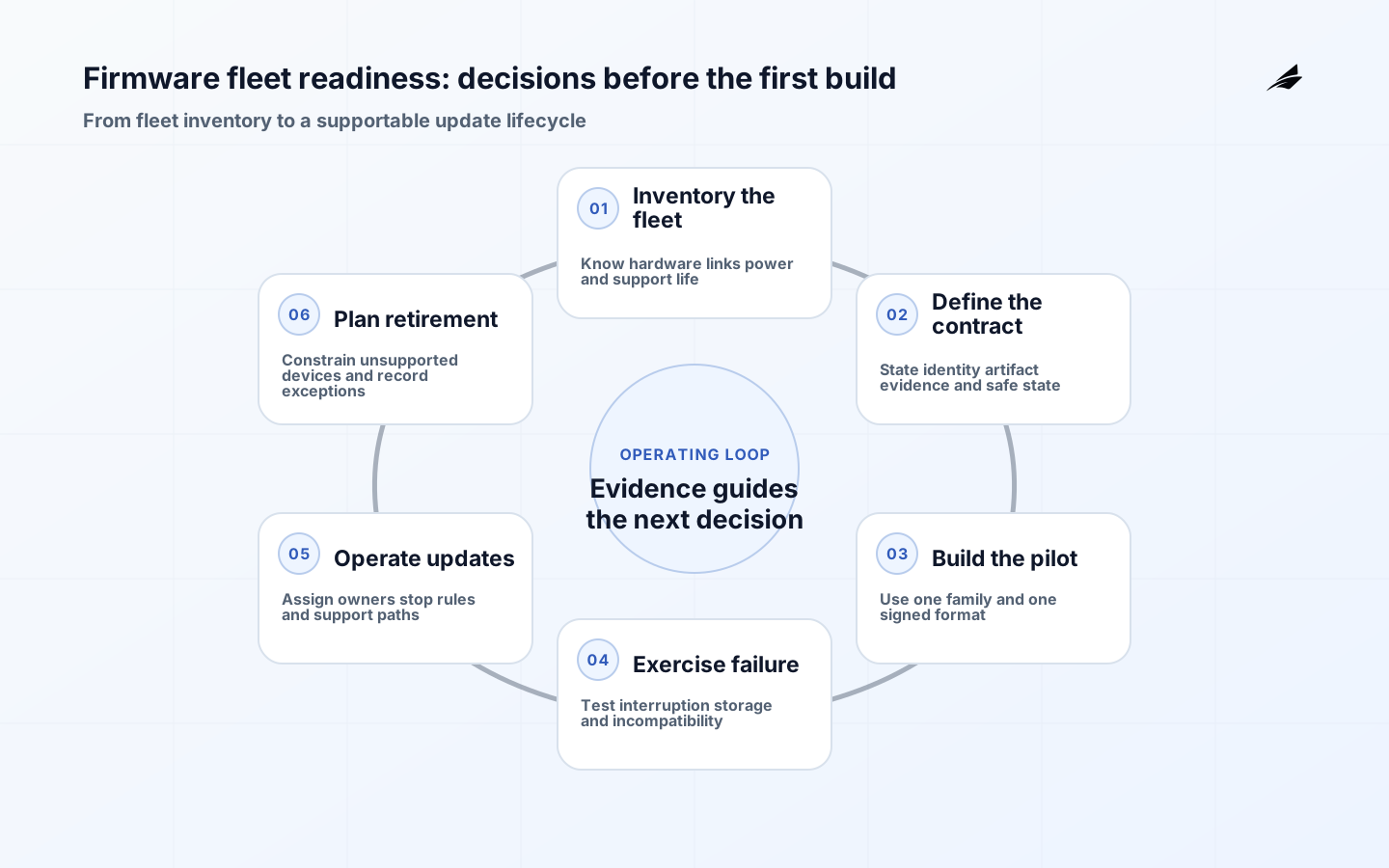
Before the first firmware build, describe the fleet in terms of compatibility, power, storage, connectivity, boot mode, maintenance access, support life, and safe state. Decide what happens when a device is offline for weeks, loses power during installation, lacks dual-bank storage, or cannot accept the approved artifact. The pilot should contain enough real variation to expose those assumptions without creating an uncontrolled blast radius. Name the artifact signer, approval owner, halt rule, field procedure, and retirement boundary. A release contract is ready only when operators can stop the campaign, explain the current state, and resume or retire the device with fresh evidence.
Related reading: Related guide 1, Related guide 2, Related guide 3.
Include procurement and support in the first readiness review. They often know which hardware variants, maintenance windows, connectivity gaps, and end-of-life constraints will defeat a purely technical pilot. Capturing those facts early prevents an update service from promising coverage that the fleet cannot safely deliver.
Before approving a pilot, compare the target hardware matrix with actual field inventory, including power, storage, connectivity, and support-life exceptions. Record each unsupported device, its compensating control, and the owner who decides whether it remains in service.