Edge Computing for Connected Systems: a Practical Guide is for operations leaders responsible for sites with intermittent connectivity or time-sensitive control who need edge computing for connected systems to support an operating decision, not merely a technical diagram. The practical objective is to place a bounded piece of processing near the physical process without creating an unmanaged second platform. That requires a shared account of what the system may do, what evidence it produces, and who decides when the normal path no longer holds.
The first useful question is not which product to buy. It is which real-world consequence the connected workflow must protect: a delayed field task, a misleading operator view, an unauthorized command, a lost record, or an avoidable outage. Making that consequence concrete keeps edge computing tied to safety, service, and accountable work.
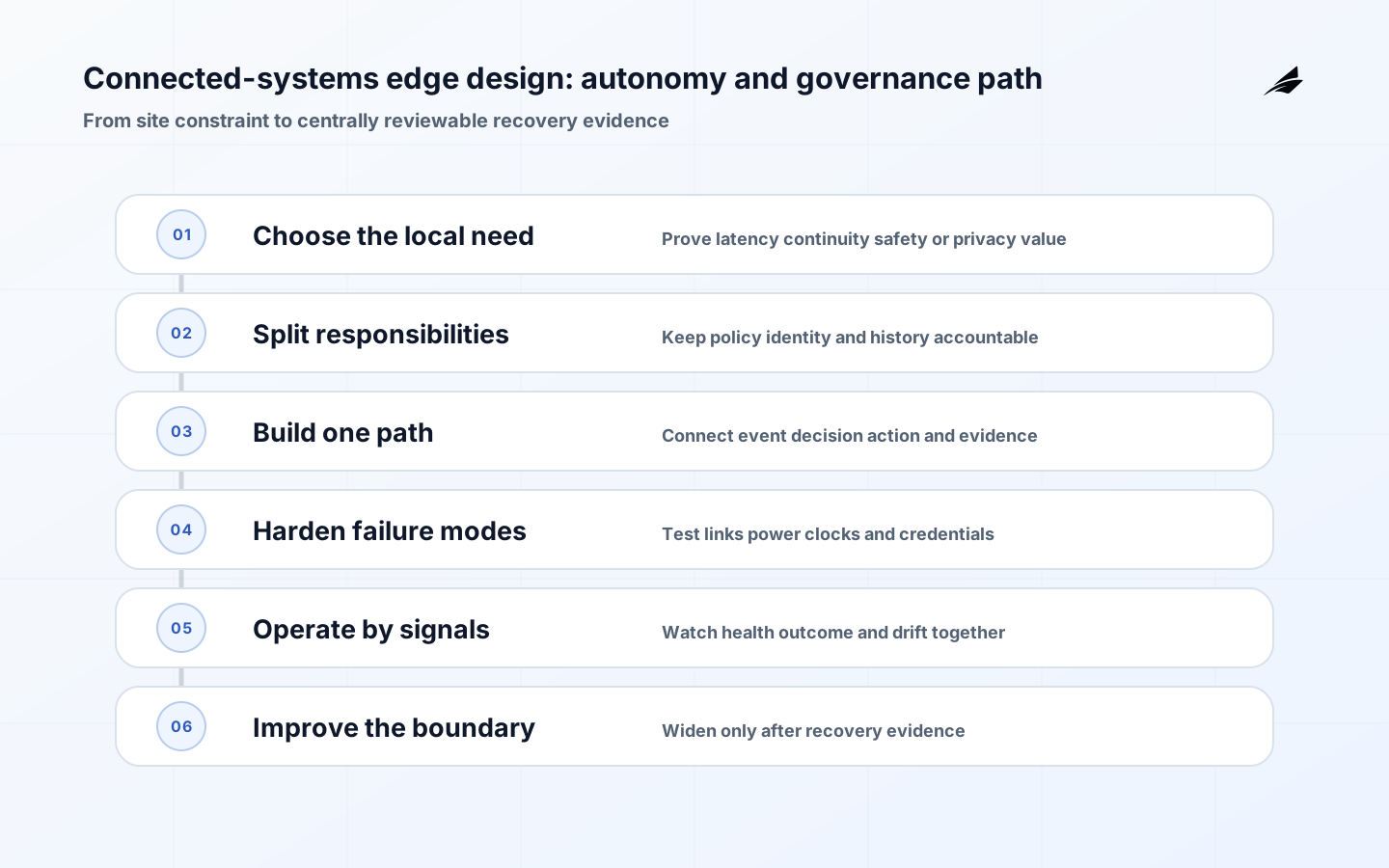
Connected-systems edge design — Set the decision boundary for edge computing
Define the promise in plain language before implementation. For this topic, the promise is to place a bounded piece of processing near the physical process without creating an unmanaged second platform. Name the reader of the outcome, the authoritative record, the acceptable delay, the person allowed to override the rule, and the point at which the workflow must stop for review. A boundary is valuable because it excludes attractive but unowned work from the first release.

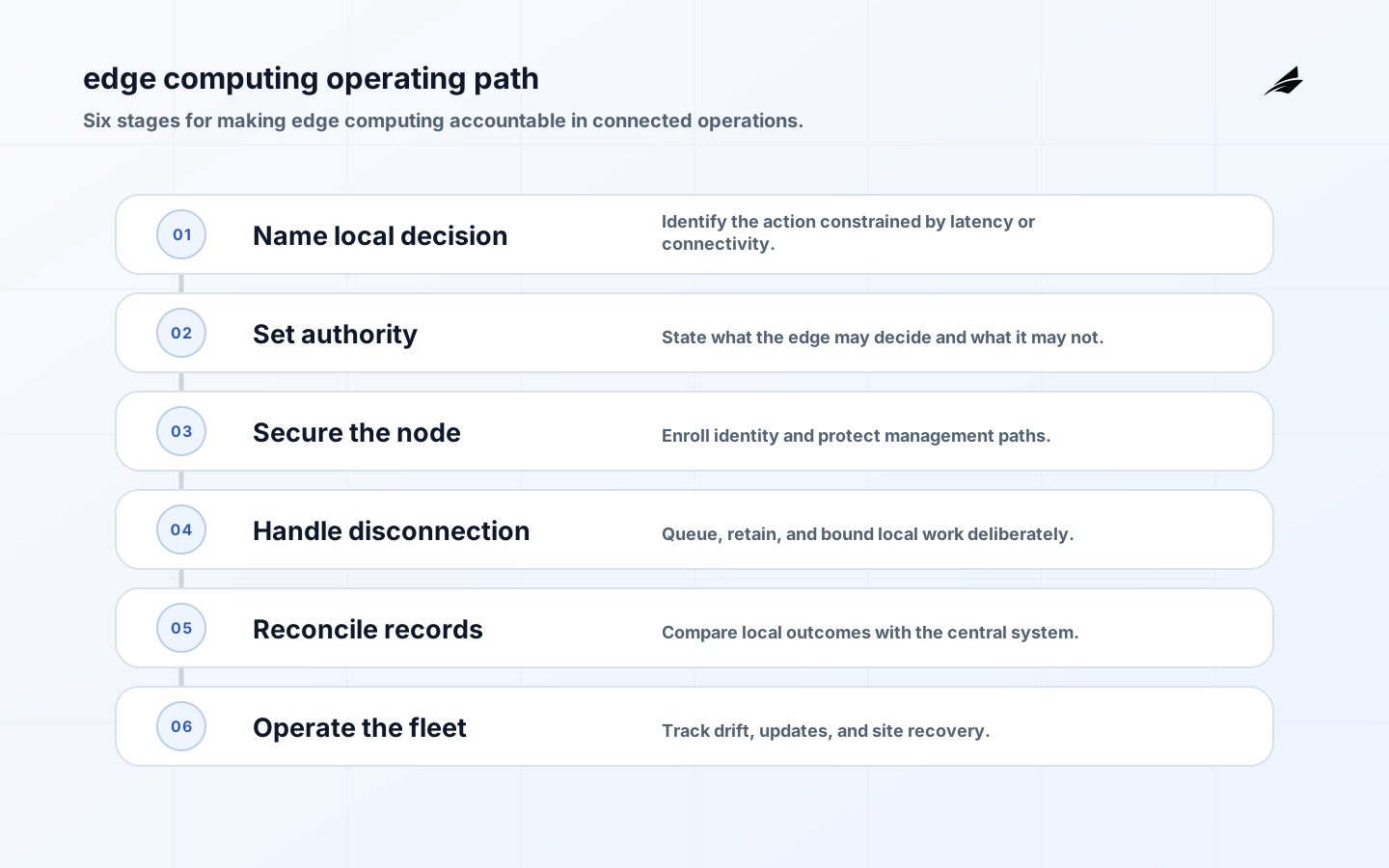
Build the inventory around local decision, latency limit, retained data, cloud dependency, update path, device identity, and site support responsibility. This is more than documentation. It lets an engineer, operator, or reviewer reconstruct why a particular behavior was allowed, rejected, or escalated. In connected operations, small omissions become expensive when an incident occurs outside the people and network conditions assumed during a demonstration.
| Question | Decision to record | Evidence to retain |
|---|---|---|
| What outcome is protected? | place a bounded piece of processing near the physical process without creating an unmanaged second platform | A concrete scenario and acceptance condition. |
| What changes the risk? | which action genuinely requires local execution | A named threshold and accountable owner. |
| What constrains the system? | bounded local authority, authenticated management, and a written reconciliation rule | A reviewable rule and its effective period. |
| What proves the result? | an outage drill showing the physical process, local state, and later central record agree | A trace, test, or observed operating record. |
Connected-systems edge design — Design an operating model, not an isolated component
A workable edge computing model uses a local runtime for time-bounded work, an explicit store-and-forward boundary, and a central service that governs identity, configuration, updates, and reconciliation. Draw the trust and responsibility boundaries before the technology choices harden. The diagram should show where inputs become trusted, which state is authoritative, where a person can intervene, and how a later investigator finds the same context without relying on private knowledge.
A local result is evidence of edge work, not permanent central authority. Preserve its identity, timestamp, retention state, and reconciliation status before a later service relies on it.
| Boundary | Good default | Question to challenge |
|---|---|---|
| Authority | Keep the accountable record and decision rule explicit. | Which component may make or reverse this decision? |
| Change | Use named approvals and a visible rollback or isolation path. | Can this change be explained during a busy operating period? |
| Exception | Make failure states visible to the responsible role. | Who sees this first, and what can that person safely do? |
| History | Retain the records needed to explain material outcomes. | Can the team reconstruct the path after a delayed report? |
Connected-systems edge design — Implement one complete, observable path
For the first delivery, choose one local decision with a measurable latency or availability need; document what continues during a cloud outage; then simulate reconnection and conflicting state before rollout. Treat the chosen slice as a learning instrument: include the normal path, a realistic degraded case, the visible status a user receives, and the support action that follows. A narrow path with evidence is more useful than a broad integration whose behavior can only be guessed from infrastructure health.
For edge computing, local queues, configuration versions, protected management channels, and bounded decision rights should be visible across the fleet rather than trapped at a site.
- Write the user-facing outcome beside the failure condition that would stop the workflow.
- Record local decision, latency limit, retained data, cloud dependency, update path, device identity, and site support responsibility for the first production path.
- Exercise an interrupted or degraded case before expanding scope.
- Show each affected operator the current state and the safest next action.
- Document the approval, correction, and communication path for a material exception.
Connected-systems edge design — Design the failure path before scale
The failure case to make tangible is this: the edge node quietly becomes the authoritative system, credentials are copied between sites, retained data grows without a policy, or an outage produces actions that cannot be reconciled. Treat it as a product and operations scenario, not solely a technical edge case. Specify what becomes visible, what is automatically contained, what may continue, and who decides when normal operation can resume. That work prevents a reassuring green status from hiding a process that is no longer safe or complete.
Edge recovery means comparing local outcomes with central records after a disconnect, resolving authority conflicts, and learning whether the local boundary was too broad.
Connected-systems edge design — Operate edge computing from evidence
Track offline duration, local queue age, reconciliation conflicts, configuration drift, resource headroom, and recovery time after a site restart. Establish a baseline before the first material change and annotate releases, maintenance, supplier changes, and unusual operating conditions. Metrics become useful when they connect technical behavior to a defined owner and a real consequence, rather than encouraging a team to optimize a graph that nobody uses to decide anything.
Inspect disconnected-site cases as well as fleet averages. One gateway with a growing queue or failed reconciliation can matter more than an apparently healthy median.
| Signal | What it may indicate | Useful response |
|---|---|---|
| Unexpected change | Drift, misuse, or an unrecorded operational dependency. | Check ownership, recent changes, and the affected process. |
| Delayed outcome | Capacity pressure, a disconnected dependency, or an unclear handoff. | Trace the first delayed record and verify the recovery path. |
| Repeated exception | A missing rule context or misaligned workflow can make a correct-looking result unsafe. | Improve the decision rule before automating around it. |
| Missing evidence | A blind spot in instrumentation or ownership. | Restore the record before declaring the condition resolved. |
Connected-systems edge design — Use standards as decision support
For connected-system edge architecture, ITU-T X.1648, Edge Computing Data Security frames the data-security boundary, NIST SP 800-82 Rev. 3, Guide to Operational Technology Security keeps physical-process consequences in scope, AWS secure edge computing and connectivity guidance informs cloud-to-site connectivity choices, and NISTIR 8259A, IoT Device Cybersecurity Capability Core Baseline supports lifecycle thinking. Use those sources to test placement, local authority, and recovery evidence against the actual connected-system decision; local safety, legal, device, and ownership constraints still determine the control.
Here, the standards material is most useful for placing identity, access control, data protection, and traceability around a physically distributed runtime.
Connected-systems edge design — Related connected-operations reading
These adjacent guides help connect edge computing to architecture, field behavior, and operational ownership: IoT guide 0008, IoT guide 0003, IoT guide 0177. Read them as complementary decision aids; the right implementation still begins with observing the specific workflow and constraints in front of the team.
Key takeaways for edge computing
- Edge computing is a commitment to place a bounded piece of processing near the physical process without creating an unmanaged second platform, not a configuration exercise.
- Pilot one accountable path that records real state, an exception, and a recovery decision.
- Keep authority, identity, freshness, and change history visible at the operating boundary.
- Expand only after field evidence shows the promise holds in normal and degraded conditions.
Connected-systems edge design — edge computing FAQ
Connected-systems edge design — When is edge computing justified?
Use it when safety, latency, bandwidth, privacy, or outage tolerance requires local work and that need can be measured against an alternative.
Connected-systems edge design — What must stay central?
Keep fleet policy, identity lifecycle, release control, and cross-site reporting governed centrally unless a documented local exception is necessary.
Connected-systems edge design — How should outages be tested?
Disconnect a representative site, observe the intended local behavior, restore connectivity, and reconcile actual records rather than only checking a simulator.
Conclusion: make edge computing accountable before expanding it
The durable test for edge computing for connected systems is straightforward. Can the team show the promised outcome, identify the authoritative record, recognize a known failure, and explain the next safe action to the person affected? Begin with that accountable slice, keep the evidence close to the work, and widen adoption only when the operating behavior earns trust.
An edge design for connected systems should make the local-versus-central split explicit. The site may validate a signal, apply an expiring policy, and protect a time-sensitive outcome, while central services retain identity authority, fleet policy, release approval, and durable cross-site history. Test link loss, power loss, clock drift, stale configuration, and a gateway replacement with the hardware and operating team that will own the consequence. The first pilot should have one asset class, one decision, one measurable outcome, and a disablement path. Expand only when the local record, policy version, safe state, and reconciliation order are visible to the people who support the site.
Related reading: Related guide 1, Related guide 2, Related guide 3.
Document the boundary as a runbook that a site operator can use during a link outage. It should identify the last trusted policy, local storage limit, manual fallback, escalation route, and reconciliation order. The runbook is part of the architecture because it determines whether a disconnected system remains safe and understandable.