A Field Guide to Inventory Systems for Growing Teams
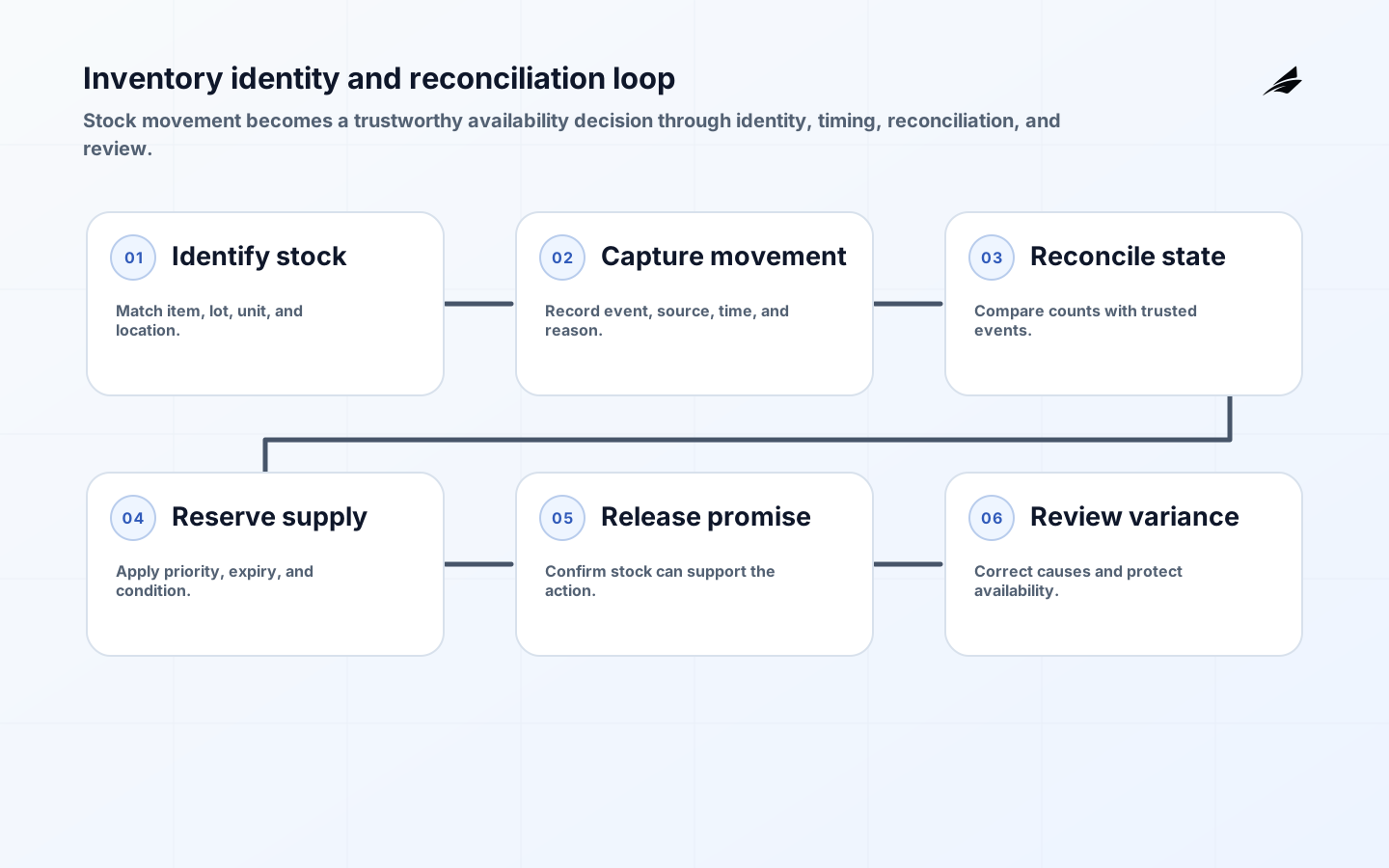
Inventory systems design starts with a precise promise about what stock is available, where, and when. Inventory systems answer a deceptively hard question: what can the operation safely promise right now? The answer depends on item identity, unit of measure, movement timing, location, condition, reservations, and corrections. A balance that looks precise can still be wrong if a scan is duplicated or a late receipt is treated as available stock. This guide follows one stock item from movement capture to allocation and variance review. For neighbouring control patterns, use the semantic layers guide, the procurement guide, and the connected operations playbook.
Define availability as a promise

Decide what “available” means for the operation: physically counted, quality released, unreserved, pickable, or expected by a cut-off. Each state supports a different promise. Name the location, item, lot or serial scope, unit, and time boundary. If the business sells against available-to-promise stock, say whether inbound supply and safety stock are included.
A useful boundary also names what must stop. A damaged item, unknown lot, duplicate movement, or stale cycle count should not silently inflate the promise. The GS1 General Specifications provide a foundation for consistent identification, but local teams still define condition, ownership, and allocation policy.
Make item identity boring and durable
Use stable item, location, lot, and serial identifiers rather than relying on descriptions or bar-code text that can change. Define conversion rules for cases, pieces, weight, and volume, and retain the source of each conversion. The record should distinguish an item master correction from a physical movement. When a device or scanner contributes evidence, record its identity and software context.
Do not merge records because names look similar. Route possible matches to a steward with the source references and business impact. An identity error is often harder to repair than a missing scan because it can contaminate reservations, replenishment, and reporting at the same time.
Capture movement as events
A stock balance is easier to audit when it is derived from movement events with who, what, when, where, and why. The GS1 EPCIS 2.0 model is a useful reference for event concepts such as object, time, location, and business context. Use event time for physical activity and processing time for when the system learned it. Keep receipts, picks, transfers, adjustments, and returns distinguishable.
Design for replay without creating a second movement. Give each source event a durable key and define how corrections reference the original. A delayed scanner upload should be visible as late evidence, not rewritten to appear contemporaneous. This distinction is essential when a manager asks why an item was promised before the system received a receipt.
Reconcile physical and digital states
Reconciliation should compare a system balance with a count, scan, ledger, or independent movement source at a meaningful boundary. Define tolerance by item class and consequence; a small unit variance may be tolerable for bulk materials and unacceptable for serialized equipment. Preserve the count method, counter, timestamp, and adjustment authority.
A variance queue needs context: affected item and location, last trusted state, suspected cause, open reservations, and safe action. Do not let an adjustment both fix the balance and erase the reason. The ISO 9001:2015 quality management reference is useful for thinking about controlled evidence and improvement, while the actual tolerance belongs to the operation.
Separate reservation from release
A reservation expresses intent; a release changes what the operation may do. Make the transition explicit and idempotent. Check available quantity, quality status, location, competing reservations, and expiry before release. If a pick fails, return the reservation to a reviewable state rather than leaving availability overstated.
Define priority and fairness rules before urgent requests arrive. A manager should know why one order received stock, which reservation was displaced, and who may override the policy. Keep the reservation decision beside the movement evidence so a later correction does not make the original promise impossible to explain.
Use connected equipment with a trust boundary
Scanners, gateways, scales, conveyors, and sensors can improve timeliness, but they add identity, calibration, connectivity, and lifecycle dependencies. Register the equipment that can write stock evidence, restrict its action scope, and make offline behavior explicit. The NIST IoT device cybersecurity baseline is a useful starting point for device identity and lifecycle questions.
A device event should not be trusted merely because it arrived through a known network. Check sequence, plausible location, clock quality, and duplicate keys. When equipment is offline, show what has been observed, what is pending, and which promises are protected until reconciliation completes.
Design correction and recovery
The most expensive inventory defects often come from manual fixes with no durable reason. Give adjustments, reversals, and merges a named authority, effective time, explanation, and link to the original event. Separate a transient ingestion failure from a physical variance, master-data defect, and suspected loss. Each path needs different evidence and escalation.
Test a late receipt, duplicate scan, wrong location, unit conversion error, partial transfer, and rejected pick. For each case, decide whether the system holds, compensates, or replays. A recovery operation should be safe to retry and should not create a new balance that cannot be reconciled to events.
Pilot one location and item family
Choose a site with an accountable operations lead and a manageable item family. Baseline count accuracy, reconciliation time, reservation failures, stockout surprises, and manual adjustment volume. Run the new event path beside the existing process, then compare decisions at the same cut-off. Ask a supervisor to recover an intentionally broken movement.
Expand only when the receiving and dispatch teams can interpret the state without tribal knowledge. The pilot should prove that item identity, unit conversion, location scope, reservation expiry, and variance ownership survive an ordinary shift and a disrupted connection.
Review inventory promises after launch
Track the signals that change action: stale movement age, unexplained variance, reservation expiry, negative availability, adjustment rate, and time to trusted recovery. Segment by site, item class, source device, and process so a global average does not hide a bad lane. Retire a signal only when its owner can name the replacement control.
Use review meetings to change a rule, training step, device configuration, or master-data process. Adding dashboards will not fix a stock promise that has no clear cut-off or authority. Keep the evidence of the decision alongside the inventory contract so future teams can understand why the policy exists.
| State | Meaning | Evidence needed |
|---|---|---|
| Counted | Observed at a named time and location | Count method, counter, timestamp |
| Released | Fit for the intended operation | Quality state and release authority |
| Reserved | Held for a defined demand | Demand reference, quantity, expiry |
| Available | Can be promised under policy | Reconciled balance and cut-off |
Key takeaways
- Define availability, condition, unit, and cut-off before selecting a platform.
- Use stable item and location identity, then capture movements as replayable events.
- Separate reservations, releases, counts, and adjustments.
- Make offline, duplicate, late, and wrong-location cases visible.
- Treat reconciliation evidence as part of the stock promise.
| Signal | Why it matters | Owner action |
|---|---|---|
| Late movement | Availability may use stale evidence | Protect promise and reconcile source |
| Unit variance | Conversion or item master may be wrong | Check source and conversion authority |
| Expired reservation | Stock may be hidden from valid demand | Release or renew under policy |
| Adjustment burst | Physical or process defect may be growing | Review cause, not only balance |
Frequently asked questions
Is inventory availability the same as the physical count? Not always. Availability may exclude damaged, reserved, quarantined, or safety-stock units and may depend on a policy cut-off.
How should late scans be handled? Keep their physical event time, record processing time separately, and apply a defined correction or restatement policy rather than pretending the scan arrived earlier.
What is a useful first inventory pilot? One location and item family with real receiving, picking, transfers, a cycle count, and at least one deliberately delayed or duplicated movement.
Use the variance queue as a learning instrument. Group discrepancies by location, item class, source device, shift, and correction reason. A repeated negative balance may point to a scan sequence problem, an unrecorded consumption path, or an ownership gap at the handoff. Review the physical process with the data rather than blaming the last operator. The best correction reduces future variance and leaves the current balance explainable.
Inventory teams also need a clear distinction between expected and observed supply. An advance shipment notice, purchase order, transfer request, and received count can all be true while supporting different promises. Keep the state vocabulary close to the workflow and require a cut-off rule for available-to-promise decisions. If inbound supply is included, show its confidence, expected time, and owner. If it is not, make the exclusion visible so planners do not infer a promise from a future event.
Unit conversions deserve their own ownership. Decide which system defines the conversion, how rounding works, and whether a conversion can change after a transaction is posted. Store the unit used by the source event and the unit used by the availability calculation. When a supervisor corrects a conversion, show which reservations, picks, and reports may be affected. A small correction can be safe when its scope is explicit; a silent conversion change can invalidate an entire replenishment decision.
Set the cut-off where availability is calculated and show it next to the promise. A planner can then distinguish observed stock, expected inbound supply, and a balance waiting for reconciliation. This small piece of context prevents a precise-looking number from being treated as a guarantee outside the time window it supports.
Conclusion
Inventory confidence comes from linked identity, movement, reservation, and reconciliation evidence. Choose one site and item family, make late or duplicate events observable, and improve the policy that produces repeated variance rather than hiding the adjustment.