A Field Guide to ERP Integration for Growing Teams
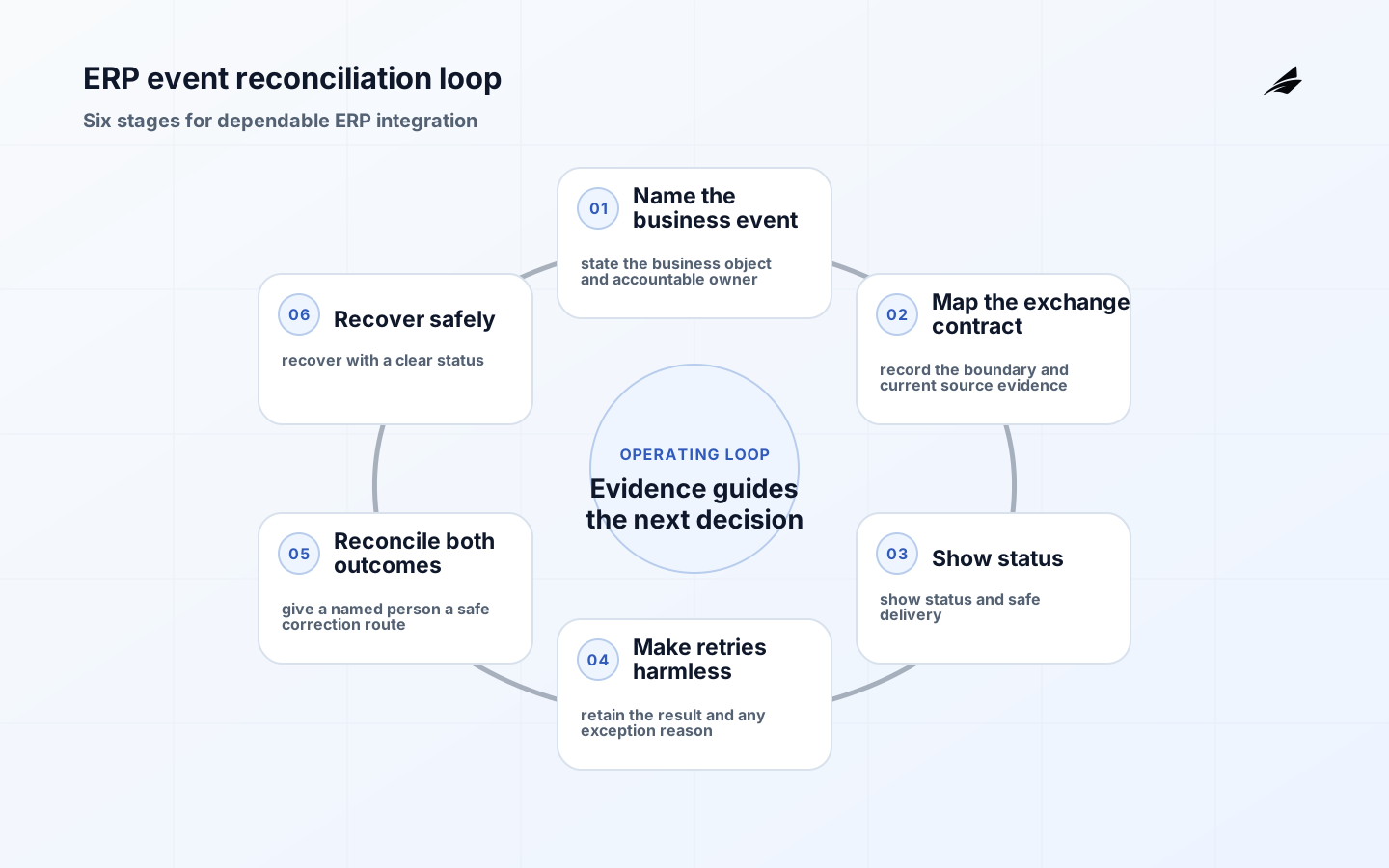
ERP integration explains how a team can make ERP integration dependable before the work becomes difficult to reverse. ERP integration uses a decision with a named owner, bounded action, visible state, and inspectable evidence.
Define the ERP integration decision
ERP integration is ready for a controlled release when the team can state what is authoritative, which context permits action, what must be retained, and how an exception reaches a responsible person. ERP integration uses a provisional state when evidence is incomplete; ERP integration never turns an unanswered question into a silent default.
A Field Guide to ERP Integration for Growing Teams
- For ERP integration, frame one consequential business object and one accountable owner.
- For ERP integration, capture business events at the boundary where a request becomes an approved operational action.
- For ERP integration, test the recovery messages route with missing, late, duplicate, denied, and corrected inputs.
- For ERP integration, review downstream impact before a change reaches a reader, customer, employee, supplier, or device.
- For ERP integration, approve a bounded correction with a named resolver, deadline, and retained reason.
- For ERP integration, verify the released result against the promised measure and record what remains uncertain.
Controls and evidence for ERP integration
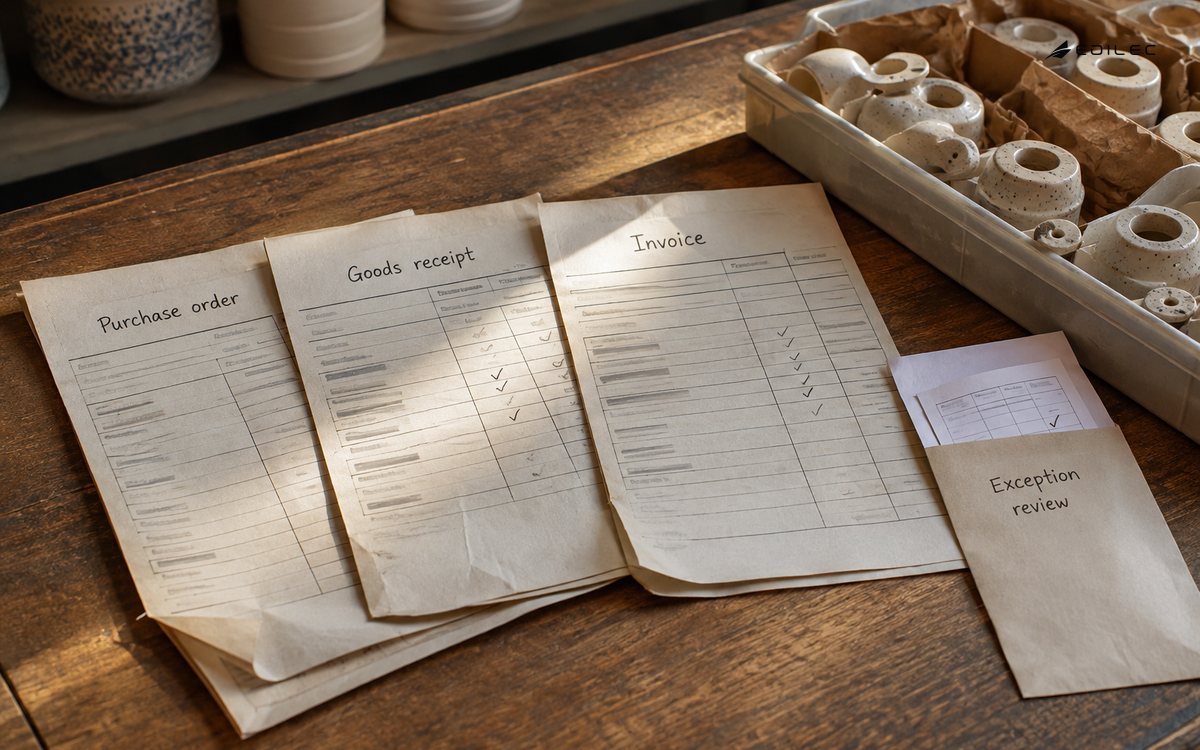
An ERP integration needs a durable contract for every business event that can change financial or operational state. Define the producer, consumer, event name, authoritative fields, business effective time, correlation identifier, acknowledgement, retry behavior, and reconciliation owner. Keep transport time distinct from the time at which an invoice, order, receipt, or payment becomes effective in the system of record. Record provenance for the source assertion, transformation, and resulting state so an operator can trace a discrepancy without relying on an informal message history. OASIS UBL 2.3 supplies reusable vocabulary for common business documents, while W3C PROV-DM provides a model for describing entities, activities, and agents. Apply access and audit controls at the boundary, and send incomplete or conflicting events to an explicit exception state rather than silently selecting a value.
| Decision point | Evidence to retain | Owner response |
|---|---|---|
| Normal case | The input, rule, actor, timestamp, and outcome for a business event. | Confirm the result and publish its status. |
| Exception | The failed check, affected scope, safe options, deadline, and disposition. | Route the case to the integration owner without overwriting history. |
| Change | The previous behavior, new definition, approval, effective time, and rollback point. | Reconcile the affected records before expanding scope. |
Test ERP integration before rollout
- For ERP integration, trace one case from intake through the final decision and observable outcome.
- For ERP integration, replay a normal case and an exception case while preserving business events and the responsible actor.
- For ERP integration, ask an operator outside the build team to explain the recovery messages route without private context.
- For ERP integration, measure completion quality, exception age, recovery time, and evidence completeness by owner.
- For ERP integration, check that a correction reaches every affected consumer without rewriting the original event.
- For ERP integration, record the next review date, escalation route, and condition for safely expanding scope.
Test reconciliation as a business behavior, not only as a transport check. Use a normal event, a missing required field, a duplicate, an out-of-order delivery, a late event with an earlier effective time, a rejected authorization, and a downstream acknowledgement that never arrives. Verify that the destination applies each event once, preserves the correlation identifier, records the source and transformation, and exposes the resulting state to the reconciliation owner. A failed test should leave a recoverable pending or exception state with enough context to decide whether to retry, repair the source, or issue a compensating event. Compare source and destination records after each recovery exercise, including totals and status transitions that matter to the workflow. Review data-quality findings separately from transport errors so the team can address malformed business content instead of masking it with retries.
Implementation notes for ERP integration
Implement a canonical event envelope before adding broad ERP coverage. It should identify the event type, producer, business object, correlation ID, schema version, event time, business effective time, and source record, while leaving domain-specific fields to a versioned payload. Validate required fields and authorization at ingestion, then persist the accepted event and its processing result so retries remain idempotent. Keep state transitions explicit: received, validated, applied, rejected, pending, or reconciled should have defined meanings and owners. When a transformation changes a value or maps one document vocabulary to another, record the activity and source-to-result relationship rather than presenting the destination value as original. UBL 2.3 can guide document semantics, and PROV-DM can guide provenance. A narrow envelope with durable identifiers makes schema evolution and downstream reconciliation easier to govern.
Design recovery around business state, not just message delivery. Transient failures may be retried with backoff, but malformed content, authorization failures, and a missing source record need an explicit exception path. Persist the original event, processing attempts, error category, and current owner; avoid editing the event to make a failed exchange appear successful. Idempotency keys should prevent a replay from posting a second invoice, shipment, or payment. When an applied change must be undone, use a documented compensating event or reconciliation action with its own approval and provenance, rather than deleting the original history. The recovery owner needs a queue, deadline, safe actions, and a way to verify both systems after resolution. W3C PROV-DM is a useful reference for connecting the original entity, processing activity, responsible agent, and resulting record across that recovery trail.
Treat ERP integration as an operating capability with measurable ownership. Track rejected and pending events, reconciliation age, duplicate suppression, acknowledgement failures, correction volume, and data-quality issues by source and destination. Define each measure's population, system of record, owner, and review cadence so a dashboard does not conceal a growing exception queue. Limit operator permissions to the actions required for investigation, replay, correction, or approval, and retain an audit trail for each intervention. The W3C Data Quality Vocabulary offers a useful vocabulary for describing quality measurements and assessments; NIST SP 800-53 provides a control reference for access, audit, configuration, and system integrity. A release should include a pause procedure, replay or compensation runbook, source and destination reconciliation, and a named decision about whether to continue, constrain, or retire the flow.
| Operational question | Evidence to retain | Owner response |
|---|---|---|
| What proves ERP integration is ready? | For ERP integration, a dated business events decision record connects the input, rule, actor, result, and review. | Confirm the evidence before widening scope. |
| What happens when ERP integration is uncertain? | For ERP integration, the system marks the state, limits the action, names the resolver, and preserves prior context. | Route the exception without erasing history. |
| How is ERP integration corrected? | For ERP integration, the correction names the changed fact, affected readers, approval, effective time, and verification result. | Reconcile consumers and close the case. |
| Which measure protects ERP integration? | For ERP integration, track completion quality, exception age, recovery time, and evidence completeness by owner. | Review the trend with the accountable operator. |
| What should be rehearsed for ERP integration? | For ERP integration, test normal completion, missing data, duplicate input, denied access, delayed dependency, and reversal. | Record the scenario outcome and remaining risk. |
| When may ERP integration expand? | For ERP integration, expand only after representative normal and exceptional cases pass with a usable correction route. | Approve the next bounded use explicitly. |
Make cutover evidence explicit
An ERP integration handoff needs more than a successful end-to-end test. Retain the field and code mappings, record-authority decisions, idempotency keys, retry and replay rules, reconciliation queries, rejected-message queue, operational owner, and the exact rollback boundary. During cutover, compare counts and financial or inventory totals at agreed checkpoints rather than waiting for a user to discover a mismatch. Preserve the source range and transformation version behind each comparison. When a correction is required, operators should be able to identify the affected records, replay only the safe scope, and show why the destination now agrees with the authoritative system.
Key takeaways for ERP integration
For ERP integration, keep the owner, authoritative state, permitted action, evidence boundary, and recovery route visible. For ERP integration, pause the normal path when proof is missing and show how a corrected result reaches each affected reader.
ERP integration FAQ
For ERP integration, what should a team settle first? ERP integration teams should start with the accountable owner, authoritative state, permitted action, evidence boundary, and recovery route. For ERP integration, ask which operator can pause the normal path, what proof they need, and how correction reaches each affected reader.
A dependable ERP integration operating rule
For ERP integration, keep the first release narrow, measurable, and owned. For ERP integration, a result earns its next use only when it can be explained, challenged, corrected, and reviewed by the right person.
For ERP integration, consult these official references for the operating choices in this guide: OASIS Universal Business Language 2.3; W3C PROV-DM; W3C Data Quality Vocabulary; NIST SP 800-53 Rev. 5. ERP integration related guide 1; ERP integration related guide 2; ERP integration related guide 3