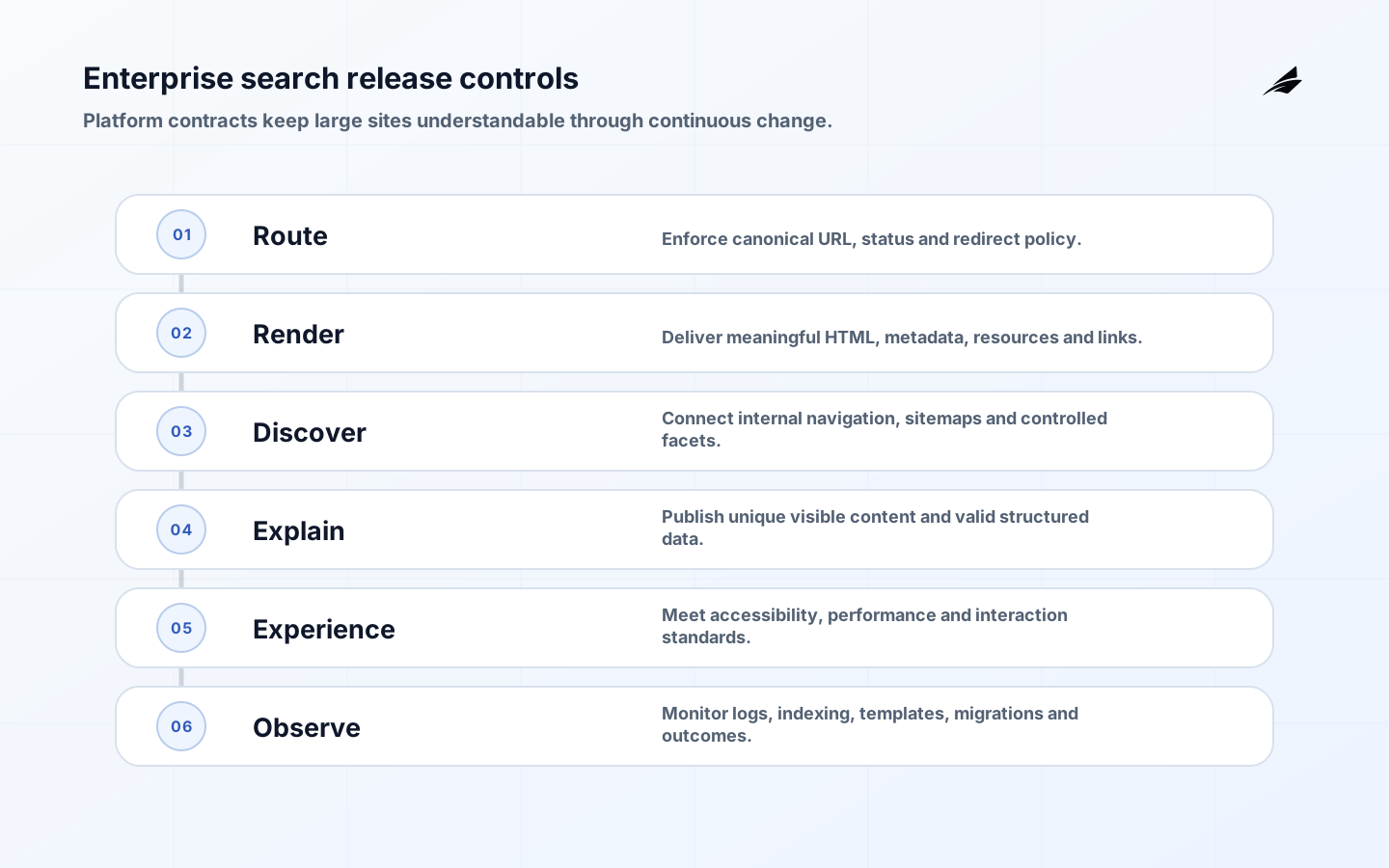
Enterprise search readiness is an architecture and governance property, not a final launch task. Large sites combine content platforms, product data, JavaScript applications, regional rules, experiments, authentication, media, analytics and legacy URLs. Each system can create crawlable variants, inconsistent metadata or delayed rendering. The goal is to make every valuable page available at one stable canonical URL with useful visible content, coherent internal links and predictable status behavior. Teams then need release controls and telemetry that detect when templates, routing or data feeds break that contract at scale.
This FAQ complements the enterprise search-ready development guide and enterprise implementation checklist. It focuses on engineering and operating decisions rather than ranking promises. Search engines choose what to crawl, index and show; an enterprise can improve eligibility, clarity and efficiency but cannot guarantee inclusion or position. The most durable program gives platform teams enforceable defaults, product teams useful exceptions and operations a way to trace a problem from search report to rendered page and source system.
Should enterprise pages be server-rendered?
Server rendering or static generation is often a dependable default for important public content because the initial response contains meaning and links. It is not the only valid approach. Google documents a crawl, render and index process for JavaScript applications and uses an evergreen Chromium renderer. The engineering requirement is that crawlers receive a successful, accessible response and that rendering produces the same meaningful page users receive. Do not require a click, scroll, consent callback or unsupported browser storage operation before essential content appears.
Test the delivered system, not a framework claim. Inspect initial HTML and rendered DOM, blocked resources, console and network errors, status codes, canonical tags, titles, robots directives and links. Use real route examples from every template and locale. Hydration should not replace correct server metadata with placeholders. If client rendering is necessary, monitor rendering failures and keep dependencies fast and available. Dynamic rendering that serves materially different content to crawlers and users creates maintenance and trust problems; prefer one architecture that works for both.
How should canonical URLs and variants be governed?
Define a URL policy covering case, trailing slash, protocol, hostname, locale, product identifiers, pagination, filters, tracking parameters and retired paths. Enforce normalization at routing and linking layers. Every indexable page should self-canonicalize unless a deliberate consolidation rule applies. Internal links and sitemaps should use the canonical URL. Redirect only when a user-facing equivalent exists and avoid chains. Canonical is a signal, not a command; conflicting content, redirects, links or sitemap entries can lead a search engine to select a different representative.
Faceted navigation requires an explicit inventory of valuable combinations. Allow a curated filter page only when it serves distinct demand with stable content, inventory and links. Prevent unbounded combinations, sort orders, session parameters and empty states from creating crawlable space. A robots rule can reduce crawling but does not consolidate signals and may prevent inspection of a canonical. Use routing, links, canonical policy and noindex where appropriate, then verify results in logs and indexing reports. Preserve useful filtered views for users even when they are not separate search pages.
| URL class | Default treatment | Exception evidence |
|---|---|---|
| Canonical content | Indexable, self-canonical and internally linked | Unique purpose and complete visible content |
| Tracking or sort variant | Normalize or canonicalize; avoid persistent links | None unless it changes user meaning |
| Curated facet | Stable indexable URL with distinct content | Demand, inventory and maintained internal links |
| Expired content | Keep, replace or return a true missing status | Redirect only to a close equivalent |
When does crawl budget become an engineering concern?
Google's crawl-budget guidance is aimed mainly at very large or rapidly changing sites. Many enterprises should first fix discovery, duplication, status codes and rendering. Crawl efficiency becomes material when millions of URLs, faceted spaces, rapidly changing inventory or heavy responses delay discovery and refresh. Analyze server logs by verified crawler, URL class, status, response time and change frequency. Compare crawl activity with canonical inventory and sitemap publication. A high request count is not success if it concentrates on duplicate parameters while important pages remain orphaned.
Improve efficiency by eliminating infinite spaces, returning fast accurate statuses, updating internal links, consolidating duplicates and keeping sitemaps fresh. Split sitemaps by meaningful content type or operational owner when that helps diagnosis, not to manipulate priority. lastmod should reflect significant page changes and be trustworthy. Do not churn timestamps on every build. Keep servers reliable under crawler load; a capacity incident can reduce crawl rate. Coordinate search architecture with caching, content delivery and rate-limit rules so legitimate crawlers are not unintentionally challenged.
How should metadata and structured data be managed?
Treat titles, descriptions, headings, canonical tags, robots directives, language annotations and structured data as template outputs with schemas and tests. Give content owners controlled fields and useful defaults while preventing duplicate titles or invalid canonical URLs. Structured data must represent visible page content and follow the relevant feature's guidelines. Build it from authoritative product, organization or editorial data rather than a separate manually maintained blob. Validate syntax in CI and sample rendered pages after release, because valid JSON-LD can still be semantically wrong.
For international sites, select URL structures and language/region rules deliberately. Each localized page should have a self-canonical and reciprocal hreflang relationships where used, including an appropriate fallback when needed. Do not automatically redirect every visitor or crawler by inferred location in a way that hides alternatives. Localization requires translated navigation, metadata and main content, not only a changed currency. Keep market-specific legal and product differences visible. Test language discovery from a neutral location and preserve user choice.
How do performance and accessibility fit the program?
Core Web Vitals measure real loading, interaction and visual stability through LCP, INP and CLS. Monitor field data by template, device and region, then use lab traces to diagnose. Enterprise tag stacks, consent managers, personalization and experimentation can dominate performance, so assign budgets and owners to third-party code. Reserve image and advertisement space, optimize critical media, reduce main-thread work and cache stable assets. Performance reviews should consider business interaction and accessibility; a page can meet a numeric threshold while remaining difficult to use.
Use semantic structure, keyboard operation, labels, focus, contrast and media alternatives across shared components. Accessibility defects often reveal unclear state and brittle interaction that also affects rendering and conversion. Test navigation, search, filters, forms, consent, carousels and error states. Do not hide essential content inside inaccessible widgets. Include accessibility and performance in the component definition of done so thousands of pages improve through one platform fix rather than repeated page edits.
What makes a large-site migration safe?
Inventory current canonical URLs, traffic, links, index status, templates and dependencies. Map each valuable old URL to an equivalent new URL; do not redirect everything to a home or category page. Preserve content and internal-link meaning where possible. Test mappings for loops and chains, stage the new routing, and block the staging host from public indexing without blocking resources needed for testing. Generate new sitemaps, update canonicals and links, retain redirects long enough for users and systems, and plan rollback for routing or rendering failures.
Release in bounded sections when architecture permits. Establish dashboards for successful pages, errors, redirect targets, canonical differences, sitemap processing, crawler requests, organic landing pages and conversions. Compare by page class rather than only total traffic. Investigate whether a decline follows an intended consolidation, discovery failure, content change, rendering error or demand shift. Avoid changing platform, domain, information architecture and content simultaneously unless necessary; combined changes make diagnosis and rollback much harder.
| Release control | Automated check | Production evidence |
|---|---|---|
| Route | Status, redirect depth and canonical format | Logs show canonical URLs served reliably |
| Template | Unique metadata, headings, links and schema validity | Rendered samples match visible content |
| Discovery | Internal-link and sitemap coverage | Important pages are crawled and indexed as expected |
| Experience | Performance and accessibility budgets | Field data and task completion remain healthy |
| Migration | One-to-one mapping and no loops | Old URLs reach relevant destinations without chains |
Who should own enterprise search readiness?
Use a federated model. A platform team owns routing, rendering, metadata APIs, sitemap infrastructure, components and observability. Content and product teams own page purpose, accuracy and maintenance. Search specialists define policy, diagnose evidence and advise prioritization. Analytics owns trustworthy outcome measurement; legal, privacy and accessibility teams contribute relevant controls. Name an incident path for widespread noindex, canonical, redirect or rendering failures. Search defects can affect revenue without producing a conventional application outage, so monitoring must make them visible.

Maintain standards as code where possible: URL linters, rendered-page tests, schema validation, link crawls and template budgets. Pair them with sampled human review because automated checks cannot judge whether a page is useful or misleading. Review exceptions and retire obsolete ones. Give executives a compact view of canonical inventory, discovered and indexed coverage, major errors, experience and qualified outcomes. Avoid reporting millions of impressions without page quality or conversion context. The operating objective is a site that remains understandable through continuous product change.
Key takeaways
- Test delivered HTML and rendering rather than relying on framework assumptions.
- Govern canonical URLs across routing, links, sitemaps and metadata.
- Control faceted spaces before they become an unbounded crawl surface.
- Make metadata, structured data, performance and accessibility platform capabilities.
- Release migrations with inventories, mappings, telemetry and rollback.
Frequently asked questions
Is prerendering a complete solution?
No. It can solve initial content delivery, but URLs, canonicals, internal links, statuses, data freshness and page usefulness still require governance. Test parity between rendered output and user experience and monitor failures in the rendering pipeline.
Can sitemaps replace internal links?
No. Sitemaps aid discovery and diagnosis, while internal links communicate site structure and let users navigate. Important pages should normally have both. An orphan URL in a sitemap may be crawled but remains weakly integrated into the site.
How quickly do migration changes appear?
Timing varies by site and URL class. Search systems need to recrawl and process signals, which may take days to months. Watch technical evidence and page-class trends, keep redirects stable and avoid repeated reactive changes before the new state is understood.
Conclusion
Enterprise search readiness emerges from consistent platform contracts and visible ownership. Deliver meaningful HTML, control URL spaces, test metadata and structured data, protect performance and migrate with evidence. When these controls are part of normal engineering, teams can change the site quickly without repeatedly sacrificing discovery, accessibility or the ability to diagnose what search systems receive.