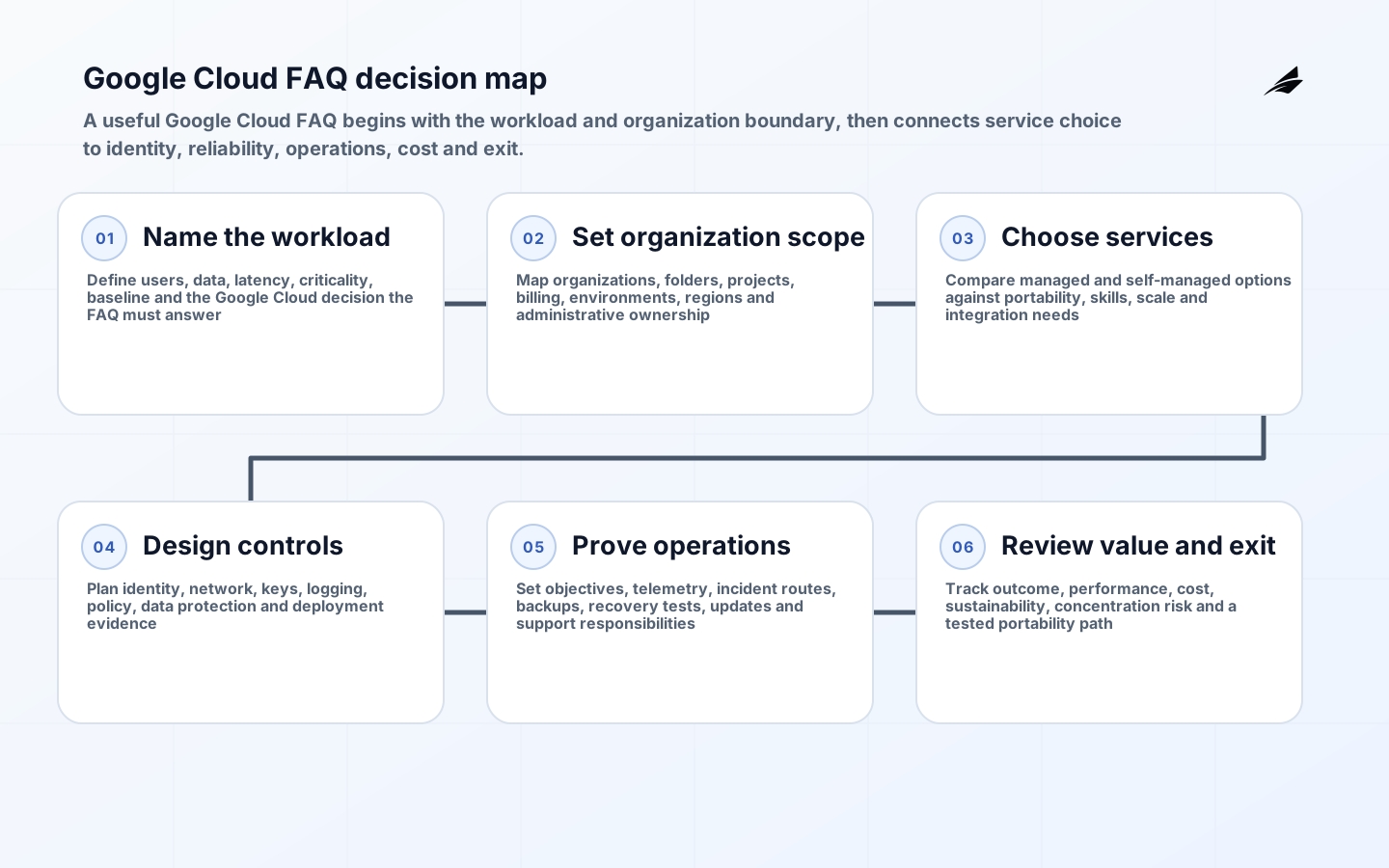
This Google Cloud services FAQ addresses the decisions that matter after a product catalog stops being useful. Google Cloud offers infrastructure, managed platforms, data, analytics, AI, security and operations services, but the right combination depends on workload behavior, control requirements and team capability. A design should minimize undifferentiated operations without surrendering necessary portability, security or recovery. Start with user transactions, data obligations, dependencies and service objectives, then select products and organization controls that can be tested and operated by named owners.
Use the answers with Edilec's Google Cloud scope and delivery plan and Google Cloud implementation checklist. Google's Well-Architected Framework organizes guidance around operations, security and compliance, reliability, cost, performance and sustainability. Review those concerns together because optimizing one dimension in isolation can increase risk elsewhere; a cheaper single-zone design, for example, may not satisfy recovery requirements.
Which Google Cloud service model fits a workload?
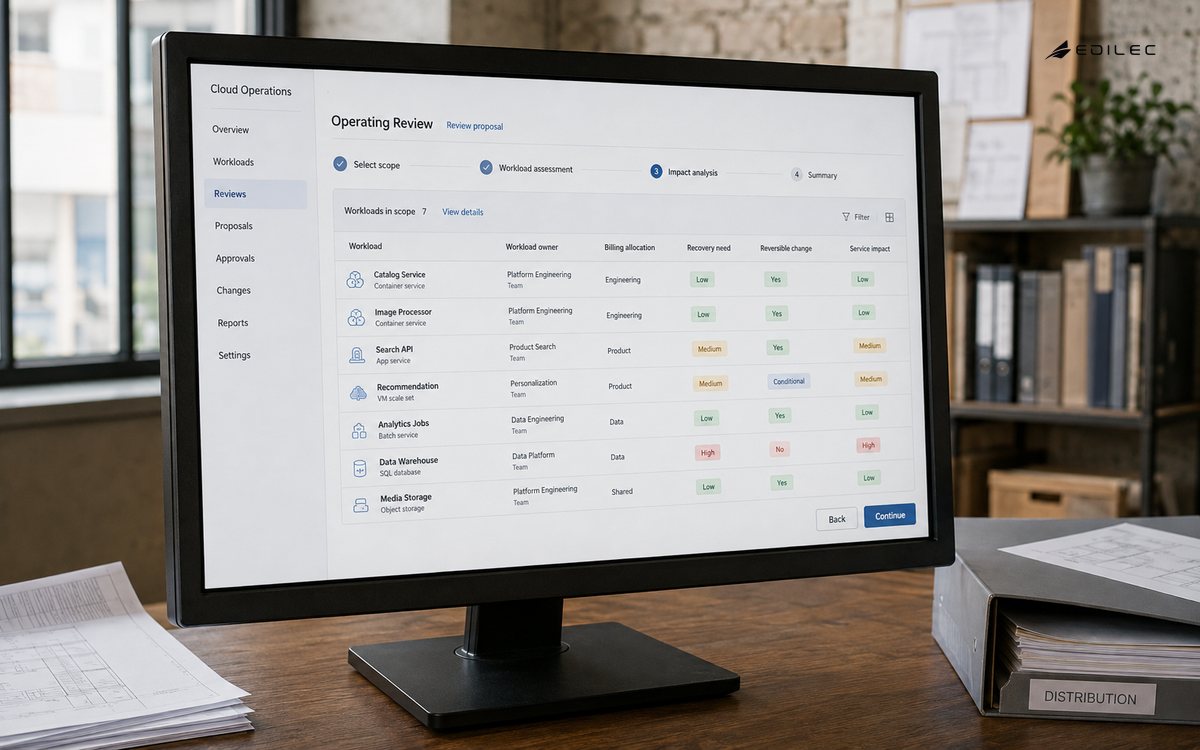
Choose the highest-level managed service that meets required control, compatibility, latency and operating constraints. Software as a service can remove application ownership; managed databases and serverless compute reduce platform work; Kubernetes provides orchestration and extensibility; virtual machines retain operating-system control. More control means more patching, capacity, observability and recovery responsibility. Do not select GKE solely because containers are available or Cloud Run solely because it scales to zero. Document the capability needed, alternatives rejected, lock-in implications, skills and exit route.
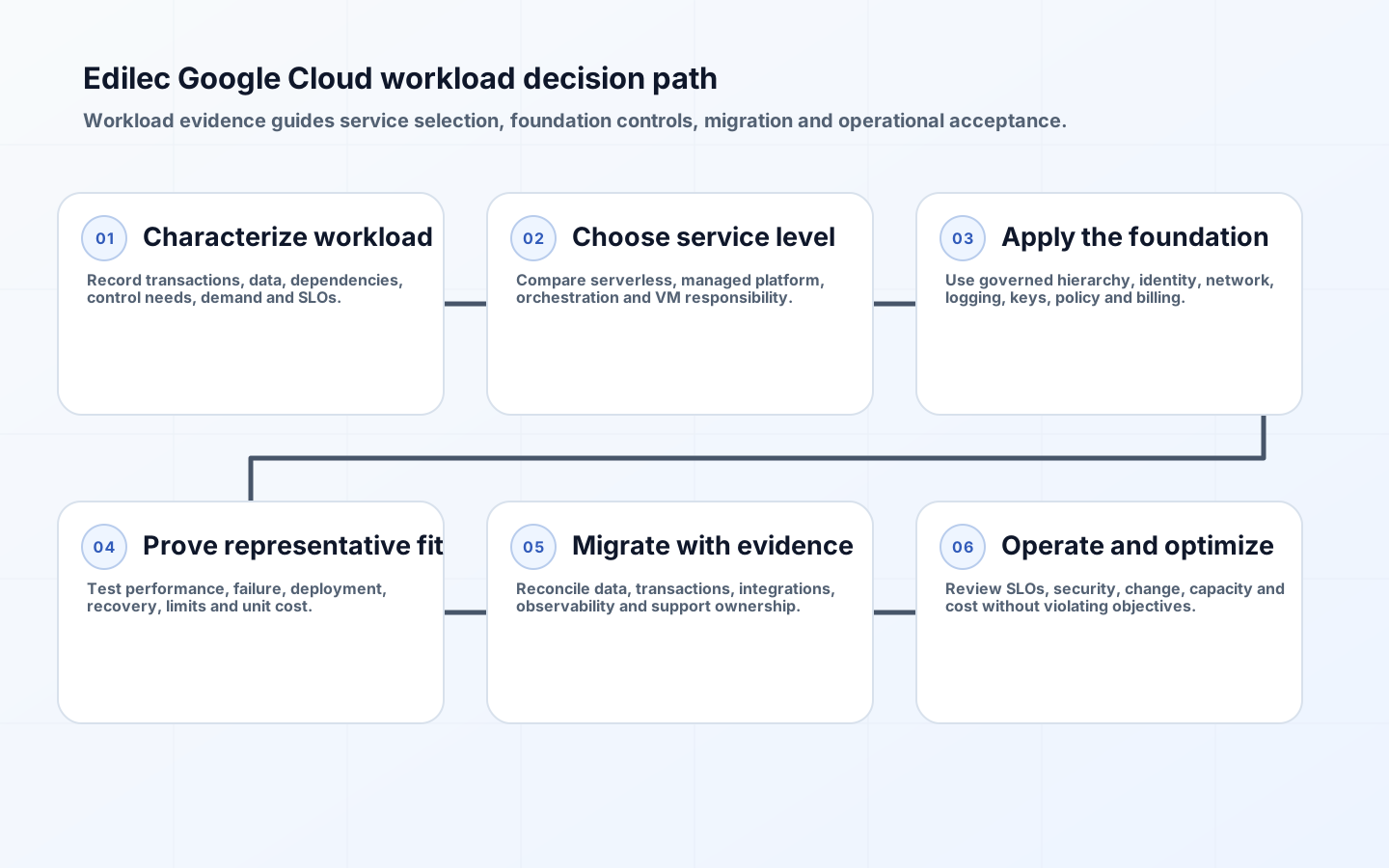
Google's compute selection guide compares Cloud Run, GKE, Compute Engine, Batch and specialist options by infrastructure management and workload need. Validate choices with a representative test that covers startup, sustained and peak load, networking, storage, deployment, failure and cost. A mixed architecture is legitimate when boundaries are clear. Standardize a small set of supported patterns so teams gain speed from known identity, networking, deployment and observability rather than creating a unique stack for each application.
| Workload need | Likely starting point | Team still owns | Decision warning |
|---|---|---|---|
| Stateless request or job | Cloud Run | Container, app security, data, SLO and spend | Check cold behavior, limits and downstream connections. |
| Container orchestration | GKE | Workload config, policy, upgrades by mode and reliability | Do not adopt Kubernetes without an operating need. |
| OS or appliance control | Compute Engine | Guest patching, images, scaling and recovery | VM familiarity can preserve avoidable toil. |
| Managed relational data | Cloud SQL, AlloyDB or Spanner after requirements analysis | Schema, access, queries, backup objectives and cost | Database choice follows consistency, scale and portability. |
| Analytics platform | BigQuery and governed ingestion | Data quality, classification, access and consumption | Cheap storage does not prevent expensive or unsafe queries. |
What belongs in a Google Cloud landing zone?
A landing zone establishes organization and billing resources, folder and project hierarchy, identity federation, groups, network patterns, DNS, logging, security controls, key management, deployment automation and cost allocation. Google's landing-zone guidance describes a modular foundation that grows with adoption. It is not a one-time network project. Treat foundation configuration as versioned code, test organization policies and maintain an exception process with owner, reason, scope and expiry. Separate production, non-production and security duties according to risk.
Design hierarchy around policy and ownership, not an organizational chart that changes quarterly. Projects provide important administrative, billing and quota boundaries, but excessive fragmentation can complicate operations. Centralize shared capabilities only when ownership and failure impact are understood. Decide how Shared VPC, service projects, private access, egress, hybrid connectivity and service perimeters support actual flows. Export audit and service logs to a protected monitoring boundary with retention and access appropriate to investigations. Test that responders can query the evidence during a compromised-project scenario.
How should identity, security and data be governed?
Federate workforce identity from an authoritative directory, use groups rather than direct grants, and prefer workload identities to long-lived service-account keys. Grant predefined or carefully governed custom roles at the narrowest maintainable scope. Separate deployer, runtime and administrator identities. Enable policy and audit signals before workloads arrive. Emergency access should be strongly protected, monitored and exercised. Security Command Center and other tools can aggregate findings, but a finding still needs asset context, risk priority, remediation ownership and validation.
Classify data and map collection, replication, backup, analytics, support and deletion. Choose region or multi-region placement from user latency, resilience, legal and cost requirements. Encryption by default does not settle key ownership, access or data-exfiltration risk. Apply VPC Service Controls where the threat model and supported services justify them, while testing operational paths. Use Secret Manager for managed secrets, avoid secrets in images or variables that leak to logs, and plan rotation. Data products need owners, quality rules, lineage and access reviews beyond infrastructure controls.
What is a practical Google Cloud migration path?
Google's migration framework describes assess, plan, deploy and optimize phases. Assessment should discover assets, dependencies, performance, licenses, data, risk and costs from technical evidence. Choose rehost, replatform, refactor, replace, retain or retire by workload. Build the foundation and operating capability before moving critical services. Sequence waves to learn from representative but recoverable workloads, avoiding a first wave so trivial that it proves little or so critical that the organization cannot tolerate learning.
For every wave, define data transfer, synchronization, cutover, reconciliation, rollback or forward recovery, user communication and legacy disposition. Benchmark latency and throughput before and after. Validate identity, DNS, certificates, scheduled work, integrations, logging, backup and support ownership. A VM booting in Google Cloud is not migration acceptance. Limit dual running because it increases cost and inconsistency, but do not remove the source until transaction and recovery evidence is complete. Record modernization opportunities separately so migration urgency does not force unnecessary redesign.
| Gate | Evidence | Owner decision | Failure action |
|---|---|---|---|
| Foundation ready | Policies, identity, network, logs, keys and billing tests pass. | Platform and security owners approve onboarding. | Block workload deployment and remediate the control. |
| Wave ready | Dependencies, runbook, data plan and baseline are verified. | Application owner approves cutover tolerance. | Reschedule rather than improvise missing prerequisites. |
| Technical cutover | Transactions, data and integrations reconcile. | Migration lead declares technical completion. | Roll back or execute documented forward recovery. |
| Operational acceptance | SLOs, alerts, backup, runbook and support exercise pass. | Service owner accepts production ownership. | Keep heightened support and close capability gaps. |
| Optimization | Stable demand, cost allocation and reliability evidence exist. | Product owner approves trade-offs. | Reject savings that violate service objectives. |
How are Google Cloud workloads operated reliably?
Define SLIs from user behavior, then set SLOs and error-budget actions. Instrument applications, dependencies and platform signals with correlated traces, metrics and structured logs. Alerts should indicate actionable user impact or control failure. Establish incident severity, command, communications and learning review. Design availability across zones or regions only to the level justified by objectives, and test dependency behavior. Backups need restoration exercises, immutable or isolated protection where appropriate, and clear responsibility for application-consistent recovery.
Version infrastructure and policy, use reviewed pipelines and detect drift. Apply maintenance, image and dependency updates through a routine path that can also handle urgent security change. Track lead time, change failure and recovery, not deployment count alone. Maintain quota and capacity forecasts for critical services. Provider status is one input during incidents, not a substitute for application telemetry. The cloud DevOps implementation checklist provides a broader review of delivery and operations practices that should remain consistent across providers.
How should Google Cloud cost be controlled?
Create billing accounts, projects and labels that support ownership and allocation. Export detailed billing data, define budgets and anomaly response, and review unit cost with product outcomes. Include network egress, logs, snapshots, idle addresses, licenses and support. Rightsize from sustained evidence, schedule non-production resources and remove abandoned assets only after confirming retention and recovery needs. Commitments and reservations exchange flexibility for discount, so buy them against stable demand and an explicit portability horizon rather than a forecast designed to justify the purchase.
Cost optimization is an engineering and product decision. Autoscaling limits, data lifecycle, query design, storage classes, architecture and service selection all affect reliability and performance. Require proposals to state expected saving, workload evidence, implementation effort, service impact and reversibility. A cost dashboard without decision ownership will not control spend. Give teams timely allocation and guardrails while maintaining central standards for shared costs, negotiated pricing and financial reporting. Track forecast accuracy and unallocated spend as governance signals.
Google Cloud services takeaways
- Select managed services from workload control, compatibility and operating needs, not product popularity.
- Build the organization, identity, network, logging, security and billing foundation as tested code.
- Treat migration acceptance as verified transactions, data, integrations, recovery and support ownership.
- Use least-privileged federated and workload identities instead of direct grants and long-lived keys.
- Define user-centered SLOs, actionable alerts and exercised recovery before broad production adoption.
- Control cost through allocation, unit economics and explicit engineering trade-offs.
Frequently asked questions
Is Google Cloud cheaper than on-premises or another provider? There is no universal answer. Compare a specific workload's consumption, licenses, network, support, resilience, security tooling, migration, staffing and exit costs against a consistent service objective. Pricing changes, so validate current official calculators and contract terms during procurement.
Should every container run on GKE? No. Kubernetes is valuable for orchestration, policy and ecosystem needs, but it also creates operational responsibility. Stateless services and jobs may fit Cloud Run; workloads requiring OS control may fit Compute Engine. Use a documented decision and supported platform patterns.
Does a landing zone ever finish? The initial foundation has an acceptance point, but the landing zone is a product that evolves with services, threats, policies and organization needs. Version it, test it, publish supported patterns and manage exceptions throughout adoption.
Conclusion
Google Cloud creates leverage when teams pair appropriate managed services with a governed foundation and disciplined operations. Workload-based selection, controlled identity and data, evidence-led migration, reliable delivery and explainable cost provide a platform that can grow without losing accountability. These FAQ answers should become architecture decisions and acceptance tests, not remain abstract guidance.