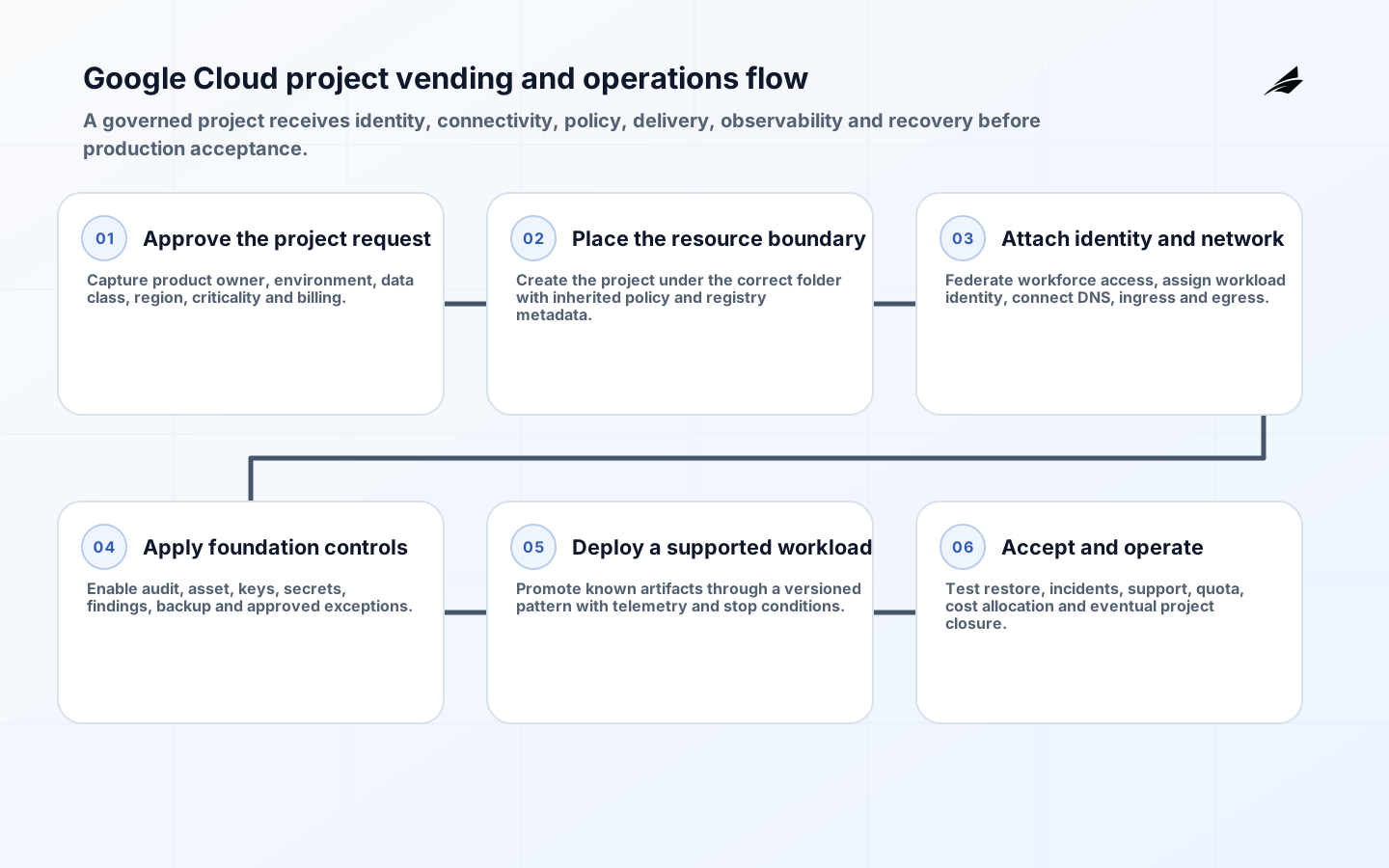
A Google Cloud services implementation checklist establishes how projects are created, identities obtain access, networks connect, policies apply, workloads deploy and operators recover service. Selecting Compute Engine, GKE, Cloud Run or BigQuery is one decision. The durable work is the foundation and operating model that make those services safe and repeatable.
This guide covers hierarchy, landing zones, IAM, networking, security, delivery, observability, recovery, cost and workload onboarding. Pair it with the Google Cloud services scope and delivery plan and Google Cloud services FAQ.
Define outcomes, owners and inventory
State whether the implementation enables provisioning speed, analytics, resilience, exit or regulated service. Baseline lead time, reliability, recovery, cost attribution and gaps. Inventory organization nodes, projects, billing, identities, networks, DNS, tools and contracts. Establish domain and administrative ownership before creating more projects.
Name owners for organization policy, folders, project vending, IAM, networking, security, billing, workloads and incidents. The provider responsibility model does not divide internal duties. Define supported, reviewed and prohibited services. Record exceptions with rationale and expiry.
| Area | Decision | Evidence |
|---|---|---|
| Hierarchy | Folders and projects. | Inheritance test. |
| Identity | Workforce and workloads. | Least-privilege test. |
| Network | Ingress, egress, hybrid and DNS. | Failure test. |
| Evidence | Audit and asset retention. | Protected routed events. |
| Billing | Product allocation. | Export reconciliation. |
Design organization, folders and projects
Use the organization as top governance boundary, folders for genuinely shared policy and projects for workload, quota, billing and lifecycle separation. Avoid copying a department chart that will change. Separate production, nonproduction, network, security and shared services when isolation requires it.
Document inheritance and stage high-level policy changes. Organization Policy can prevent unsafe settings but can also block recovery. Maintain a registry with owner, product, environment, data class, criticality, billing and foundation version. Automate project creation through validated approved inputs.
Implement workforce and workload identity
Federate workforce access and use groups for roles. Grant predefined roles narrowly and avoid broad basic roles. Separate organization, billing, security and workload administration. Use time-bound privilege and protected emergency accounts. Test with ordinary personas rather than administrators.
Prefer workload identity and service-account impersonation over downloaded keys. Restrict key creation and trust changes. Give workloads dedicated identities, owner and lifecycle. Monitor policy changes and unusual token use. Constrain issuer, subject and audience for external federation.
Build network and security foundations
Choose Shared VPC, standalone VPC and hybrid patterns according to isolation and ownership. Plan ranges, routes, firewalls, private access, egress, load balancing and DNS before scale. Central networks need service objectives and consumer interfaces. Test route and resolution behavior under failure.

Define key ownership, secrets, certificates, audit logging, asset inventory and findings. Decide where logs aggregate and how tenants access only their evidence. Protect sinks. Constrain region or public exposure where justified and maintain controlled exceptions.
| Workload gate | Question | Evidence |
|---|---|---|
| Architecture | Service matches state and traffic. | Load or compatibility result. |
| Security | Identity, data and supply controls. | Access and adversarial tests. |
| Reliability | Recovery is defined. | Restore exercise. |
| Delivery | Artifact and promotion trace. | Pipeline record. |
| Operations | Responders can diagnose. | Synthetic incident. |
| Cost | Spend is bounded. | Forecast and unit dashboard. |
Choose services through requirements
Compare compute choices using traffic, runtime, scaling, network, state, portability, skill and operational responsibility. Cloud Run simplifies many stateless services; GKE offers flexibility with greater platform duty; Compute Engine supports operating-system control. Managed data services change consistency, backup, quota and cost.
Package approved patterns with infrastructure code, deployment, identity, telemetry, backup and policy. Expose important inputs such as region, data class, recovery and scaling. Version modules, test upgrades and publish deprecation paths. A golden path should reduce effort without concealing architecture.
Secure software delivery
Store infrastructure and application definitions in version control. Build reviewed source, scan dependencies and images, attest artifacts where required and promote known digests. Separate deployment from runtime identity. Protect triggers and substitutions. Record source, build, artifact, configuration and target project.
Use progressive rollout with indicators and stop conditions. Rehearse rollback and identify database or message changes requiring forward repair. Keep secrets outside source and logs. Restrict pipeline, registry and policy modification because compromise there can bypass workload controls.
Implement observability and recovery
Define indicators for customer journeys and dependencies, then collect metrics, logs and traces with service, environment, region and version. Alert on actionable impact. Use synthetic journeys from useful locations and connect dashboards to runbooks and ownership.
Set recovery point and time by service. Configure backup, retention and replication, protect deletion authority and test isolated restoration with identity, keys and configuration. Exercise zone or region impairment, bad release, quota, DNS and credentials. Record actual recovery and reconciliation.
Establish FinOps and operating review
Export detailed billing to a protected analytics project and map labels and projects to accountable products. Configure budgets and anomaly routing, remembering budgets do not automatically stop spend. Review commitments after demand stabilizes. Watch egress, logging, idle environments and high-cardinality telemetry.
Track quotas and request increases early. Monthly review covers provisioning failures, policy exceptions, IAM drift, network incidents, backup evidence, objectives, cost variance and backlog. Map provider notices to inventory. Keep foundation modules current rather than treating a landing zone as finished.
Onboard workloads in controlled waves
Pilot with a workload that exercises identity, connectivity, delivery, telemetry and recovery. Verify project vending, inheritance, billing and support. Capture workarounds and decide whether they belong in the platform or with the consumer. Then onboard different workload classes.
For existing projects, assess placement, IAM, networks, keys, logs, billing and dependencies before applying controls. Stage changes. Require workload owners to operate and recover through the target model, then close legacy access and duplicate tooling.
Define provider-support handling before a production event. Record which support account may open priority cases, who can share diagnostic data, how severity is chosen and how a case enters the incident record. Test escalation with a low-risk issue. A capable team can still lose hours if the responder cannot access support or lacks commercial authority.
Control project closure as carefully as creation. Verify service owners, retention, backups, legal hold, billing, DNS, certificates, external identities and logs before deletion. Disable new writes, archive evidence and record the authorized decision. Because deletion affects many resources together, rehearse recovery periods and do not rely on a console warning as the only safeguard.
Use quota dashboards that connect limits to demand and rollout plans. API quotas, regional capacity, IP addresses and build concurrency can stop deployment while workloads appear healthy. Assign owners, alert before exhaustion and document increase lead times. Performance tests should include throttling so applications back off instead of multiplying retries.
Data-service acceptance must include export and restoration. For each managed database, object store or analytics service, document authoritative region, encryption, retention, schema ownership, backup, point-in-time recovery and portable export. Test representative data and verify application semantics after restore. Provider durability does not protect against authorized deletion or faulty writes.
Maintain a service enablement process for new Google Cloud capabilities. Evaluate data handling, identity, network exposure, logs, recovery, quota, cost and lifecycle before adding a service to the catalog. Publish an approved pattern or restrictions and review them as the provider changes. This avoids unmanaged production experimentation and blanket prohibition.
Define environment parity intentionally. Production and nonproduction may differ in scale and data, but identity, network, policy and delivery behavior should be similar enough to expose defects before release. Document deliberate differences and include them in testing. A permissive development project can conceal permissions and egress failures that appear only after production deployment.
Plan lifecycle for Terraform state, deployment metadata and bootstrap credentials. Protect state storage, control concurrent changes, retain versions and test recovery. The foundation cannot be rebuilt confidently if its own configuration source is unavailable or its initial trust depends on an undocumented administrator account.
Review managed-service regional availability and feature differences during architecture, not at cutover. A product name can exist in multiple regions while specific tiers, backup targets, accelerators or integrations do not. Record the exact capability used, approved fallback and data-movement consequence so expansion into another region does not rely on superficial catalog parity.
Treat marketplace and third-party services as part of the foundation risk inventory. Verify publisher, data path, identity, support, updates, billing and termination before deployment. Restrict procurement and installation authority, and ensure a supplier failure cannot silently disable logging, security or recovery across unrelated projects.
Google Cloud implementation takeaways
- Define outcomes before selecting services.
- Use hierarchy as deliberate governance.
- Federate people and avoid persistent service keys.
- Package network, policy, delivery and recovery.
- Test failure and least privilege.
- Operate quotas, provider change and cost continuously.
Frequently asked questions
Is a landing zone needed for a small deployment? A proportionate foundation is still needed for identity, billing, logging, network and policy.
Should every workload use Shared VPC? No. Isolation and ownership may support other patterns; document the operating tradeoff.
Are organization policies sufficient security? No. They complement identity, delivery, data, detection, response and recovery.
Conclusion
Google Cloud services become production capabilities inside a governed hierarchy with controlled identity, tested networking, reproducible delivery, observable workloads, proven recovery and transparent cost. This checklist turns provider features into a platform teams can use repeatedly, safely and with accountable ownership.