Cloud solutions empower teams when they shorten the path from an approved idea to a reliable service while preserving accountable boundaries. On-demand infrastructure alone is not empowerment. Teams also need product ownership, usable platform interfaces, secure defaults, delivery automation, observability, cost signals, support and authority to improve what they operate. Without those conditions, cloud can replace one ticket queue with a larger set of confusing choices.
This cloud solutions empowering teams FAQ explains the operating model behind effective self-service. The cloud empowerment scope guide supports planning, and the implementation checklist provides detailed tasks. The goal is not unrestricted developer freedom; it is fast, informed action within visible risk and cost boundaries.
What does an empowering cloud solution provide?
It provides reusable capabilities for identity, environments, network, data, delivery, secrets, telemetry, recovery and billing through documented interfaces. Product teams can consume those capabilities without learning every provider primitive or waiting for bespoke approval. Platform teams maintain the paved path and its controls; product teams remain responsible for service behavior, data, releases and on-call decisions. Specialists set enterprise policy and help with exceptions.
NIST’s cloud synopsis describes on-demand self-service and rapid elasticity among cloud characteristics, but organizational empowerment needs more than technical provisioning. Define which decisions teams can make, the risk thresholds requiring escalation, and what evidence replaces manual review. Publish service catalogs with support levels and lifecycle status. Remove or clearly label experimental paths that are not production-ready.
| Capability | Team self-service | Guardrail |
|---|---|---|
| Environment | Create an approved project or account | Policy inheritance, ownership and expiry |
| Identity | Request role-based access | Strong authentication, narrow grants and review |
| Delivery | Release a small change | Automated tests, provenance and rollback |
| Operations | View service and dependency health | SLO, alert ownership and protected logs |
| Cost | See and forecast attributable usage | Budget, anomaly route and commitment authority |
How should a cloud platform be treated as a product?
Give the platform a product manager, technical ownership, target users, roadmap, SLO, support model and adoption measures. Research developers’ recurring tasks and failure points. Start with a small number of high-value paths such as a web service, scheduled job or data pipeline. Test documentation and interfaces with teams that did not build them. A platform should reduce cognitive load while still exposing decisions users genuinely need.
Measure environment lead time, successful first deployment, platform adoption, support demand, failed changes, control exceptions and user satisfaction. Avoid vanity adoption created by mandates. If teams bypass the path, investigate missing capability, poor usability or incompatible risk assumptions. Deprecate old templates with migration support and dates. Version interfaces so platform improvements do not surprise every product at once.
How do guardrails preserve autonomy?
Guardrails turn stable policy into immediate feedback. Examples include allowed regions, encryption, public exposure, identity, resource ownership, logging, data protection and budget attribution. Implement preventive controls where violation creates intolerable risk and detective controls where context matters. Explain failures in language that helps users remediate. Provide an exception route with owner, rationale, compensating control and expiry.
Use the NIST Cybersecurity Framework to connect guardrails to governance, protection, detection, response and recovery outcomes. A scanner finding is not the whole control. Validate deployment permissions, break-glass, log review, incident authority and recovery. Keep policy code versioned and tested. Roll out material rules in visibility mode first where risk allows, assess impact, then enforce with support ready.
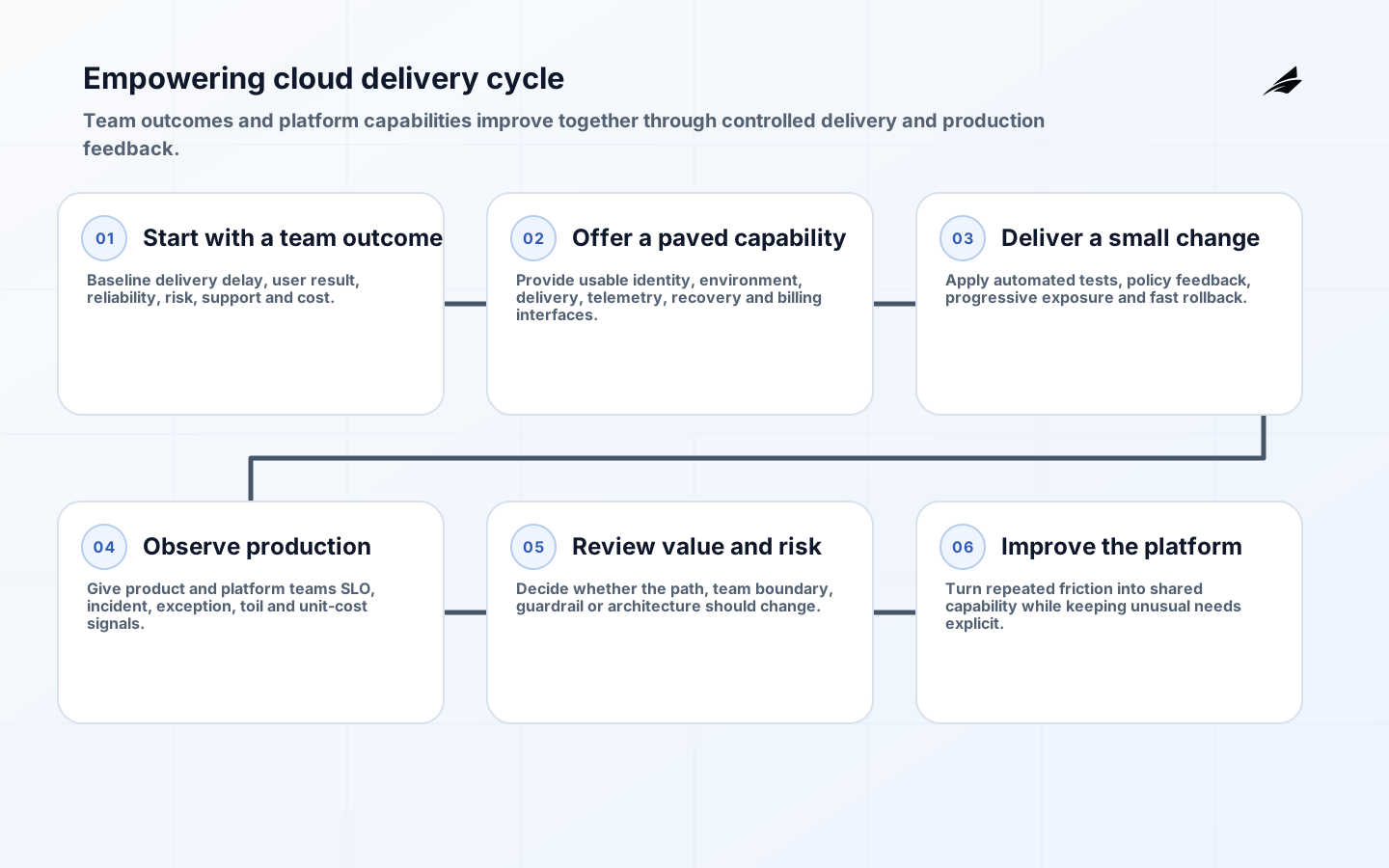
Use a six-stage empowering cloud cycle
The cycle begins with a team outcome, offers a paved capability, delivers a small change, observes production, reviews value and risk, and improves the platform. Product and platform backlogs stay connected: repeated local exceptions may indicate a missing shared capability, while one unusual workload may remain a documented exception. Scale patterns only after a representative team proves deployment, operation and recovery.

Small changes and fast feedback align with DORA’s continuous delivery guidance. Automate build, infrastructure, policy and verification while retaining human decisions for material risk. Use progressive exposure and rollback. Teams gain autonomy when they can see whether a release is healthy and reverse it quickly, not when they can create resources with no operational context.
How do teams own reliability without being abandoned?
Define service ownership, on-call scope, escalation and shared platform responsibility. Set indicators around user transactions and realistic objectives using Google SRE guidance on SLOs. Use error budgets to decide whether to release, stabilize or improve the platform. Central operations can provide expertise and coordination, but product teams need production visibility and a voice in reliability priorities.
Design runbooks around decisions and verification. Exercise dependency failure, overloaded capacity, bad deployment, identity outage and data restore. Blameless learning does not mean absence of accountability; it means examining system conditions and improving them. Track operational toil and automate frequent, understood work. Do not push every platform alert to application teams; route signals to the owner who can act.
How does cost visibility support empowerment?
Give teams timely cost and usage attributed to the products and environments they control. The FinOps Framework emphasizes collaboration and business value. Provide estimates in templates, budgets, anomaly alerts, unit-cost dashboards and access to optimization recommendations. Finance supplies planning and rate expertise; engineering explains architecture and demand; product owners decide value.
Set authority for commitments, high-cost services and exceptions. Teams should be able to stop idle development resources, tune retention and right-size within safe boundaries. Larger architectural or pricing commitments require broader review because they affect resilience and future flexibility. Measure cost per transaction, customer or environment beside SLOs. A lower bill is not empowering if it results from suppressed demand or fragile service.
| Outcome metric | What it reveals | Anti-pattern |
|---|---|---|
| Provisioning lead time | Friction from approved demand to usable environment | Counting resources created |
| Deployment success | Whether the path supports safe change | Deployment frequency without value |
| SLO and error budget | User reliability and decision capacity | Infrastructure uptime alone |
| Exception age | Mismatch between policy and legitimate need | Hiding exceptions in manual work |
| Unit cost | Value and demand relative to spend | Total bill without product context |
Which skills and organizational changes are required?
Develop product management, software delivery, infrastructure as code, cloud security, observability, incident response and FinOps skills. Use pairing and real service exercises rather than certification counts alone. Create communities of practice and office hours, but keep accountable teams clear. Managers must fund platform work and reliability instead of measuring only feature output. Procurement and risk functions should help design reusable paths early.
Clarify team boundaries using concrete interactions: platform provides capability and support; security defines outcomes and threat expertise; finance provides allocation and planning; product owns the service. Avoid a platform team becoming the new centralized operations queue. Review team load, on-call sustainability and dependency delays. Empowerment without capacity becomes pressure disguised as autonomy.
How should organizations roll out empowered self-service?
Choose an early product team with a real need, representative architecture and willingness to collaborate. Baseline its current lead time, errors, tickets and cost. Co-design the path, migrate one service, exercise failure and capture friction. Improve the platform before inviting more teams. Offer migration help and publish service maturity. Do not force critical workloads onto an unproven path to create adoption numbers.
Set production acceptance around demonstrated operations: deploy, observe, respond, restore, review access and explain cost. Gather qualitative feedback and telemetry. Publish known limitations and roadmap. Retire duplicate manual processes once the platform proves their replacement, otherwise teams carry both. Maintain an executive forum for cross-cutting funding and risk, while day-to-day product decisions stay close to teams.
What risks can cloud empowerment introduce?
Unbounded self-service can increase public exposure, privilege, spend, data sprawl and unsupported technology. Excessive standardization can block legitimate innovation and drive shadow systems. Reduce both risks through clear service tiers, tested defaults, transparent policy, short feedback loops and expiring exceptions. Monitor resource ownership, public endpoints, identity drift, unallocated cost and abandoned environments.
Platform concentration creates its own blast radius. Use staged releases, compatibility tests, rollback and communication for platform changes. Protect platform administration and software supply chain. Document degraded operation if the platform control plane fails. Maintain enough product-team knowledge to operate existing services during platform incidents. Review whether central automation can modify many accounts and constrain that authority.
Cloud solutions empowering teams takeaways
- Empower teams with consumable capabilities, explicit authority and production feedback.
- Operate the cloud platform as a product with users, SLOs and a roadmap.
- Implement guardrails as understandable policy with owned exceptions.
- Combine reliability and cost signals with customer outcomes.
- Scale self-service only after representative teams can deploy, recover and govern it.
Frequently asked questions
Does empowerment mean every developer gets administrator access? No; grant the least authority needed through safe workflows. Is platform engineering the same as DevOps? It can provide shared capabilities that support DevOps practices, while service teams retain ownership. Should every team use one template? Provide a small set of supported paths and governed exceptions rather than force incompatible workloads.
How quickly should self-service provision resources? Fast enough for the workflow and risk; minutes are useful only when the result is operable. Who pays for the platform? Organizations choose allocation models, but shared investment should be visible. What proves empowerment? Teams deliver and recover valuable changes with less waiting, while security, reliability and unit cost remain within agreed boundaries.
Conclusion
Empowering cloud solutions combine team autonomy with a well-designed platform and accountable guardrails. Begin with user tasks, prove a paved path through a real service, expose reliability and cost, and improve from production evidence. The strongest outcome is not unrestricted access; it is a team that can make good decisions quickly and operate the result responsibly.