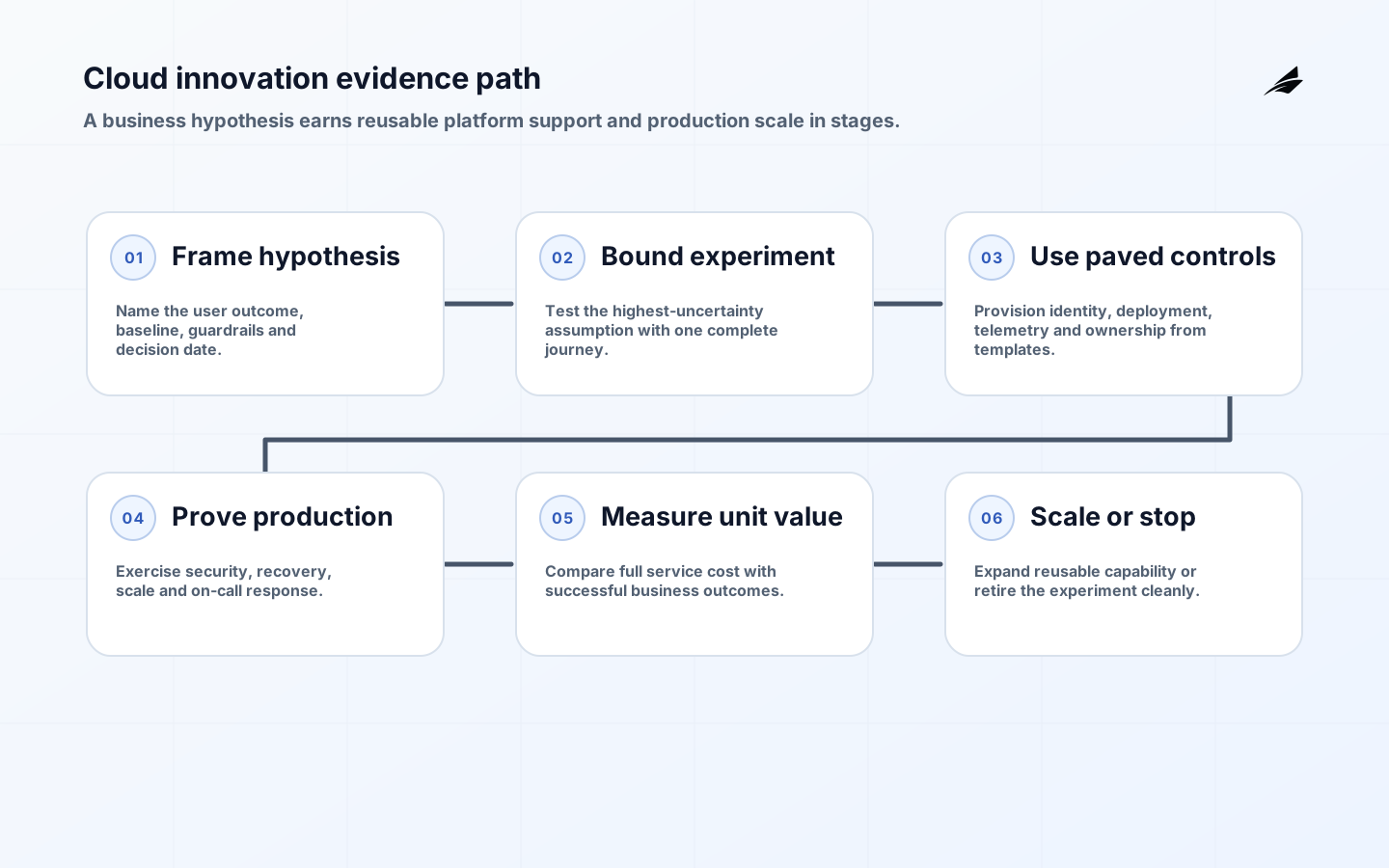
Cloud solutions for innovation create value when they shorten the path from a business hypothesis to a secure, measurable production capability. On-demand infrastructure can reduce provisioning delay, managed services can remove undifferentiated operations, and measured usage can make experiments economically visible. None of those properties decides what to build. Without a product outcome, architecture boundaries and operating ownership, cloud adoption can produce faster spending rather than faster learning.
This delivery plan helps product, engineering, finance and security leaders choose an experiment, provide the minimum reusable platform, and scale only after evidence. Teams can use the cloud innovation implementation checklist during execution and the cloud innovation FAQ for procurement and operating questions. The cloud solutions and software plan covers a broader application portfolio.
Start with an innovation thesis
Write a testable statement: for a named user, changing a specific workflow will improve a measurable outcome within a defined period. Include the present baseline, leading indicator, guardrails and decision date. For example, a distributor might test whether event-driven inventory alerts reduce manual shortage triage without increasing false replenishment. That statement guides data, architecture and evaluation choices more effectively than a goal to adopt serverless, containers or generative AI.
| Question | Weak answer | Decision-ready answer |
|---|---|---|
| Who benefits? | The business | Regional inventory planners handling constrained parts |
| What changes? | More automation | Alert, evidence and approval replace spreadsheet triage |
| How is value measured? | Faster processing | Median triage time and avoided stockout value |
| What must not worsen? | Security | No broader data access and no automatic purchase commitment |
| When do we decide? | After the pilot | At six weeks using agreed continue, change or stop thresholds |
Keep the first scope thin enough to learn but complete enough to operate. A demo that ignores identity, production data quality or failure handling tests technical possibility, not business viability. Conversely, building a multi-region platform for an unproven use case delays evidence. Mark assumptions by uncertainty and consequence; test high-uncertainty, high-consequence assumptions first.
Choose services by responsibility
NIST defines cloud computing through characteristics including on-demand self-service, broad network access, resource pooling, rapid elasticity and measured service, with service and deployment models. Use those properties to clarify responsibility. A managed database can transfer patching and replication work to the provider, but the customer still owns schema design, access, retention and application recovery. A software-as-a-service product transfers more operation, while narrowing configuration and exit options.
| Option | Use when | Responsibility retained |
|---|---|---|
| SaaS | The workflow is common and configuration is sufficient | Identity, data use, vendor oversight and process fit |
| Managed platform service | The capability is differentiating but infrastructure is not | Application design, data, resilience settings and cost |
| Containers | Portability or runtime control has demonstrated value | Images, orchestration policies and platform operations |
| Functions and event services | Demand is variable and work is bounded | Event contracts, retries, limits and observability |
| Virtual machines | Legacy constraints or specialist software require OS control | Patching, hardening, capacity and recovery |
Create a short architecture decision record for material choices. Compare fitness against latency, consistency, portability, team skill, compliance, recovery and cost behavior. Avoid multi-cloud as an abstract insurance policy: realistic portability requires common contracts, data movement, operational skill and repeated recovery tests. Use multiple providers when a quantified business or resilience requirement justifies that permanent complexity.
Provide a paved path with guardrails
An innovation team should not spend its pilot inventing accounts, networking, identity, secrets, logs and deployment from scratch. A platform team can offer versioned templates for those capabilities, documented as a paved path. The path should be self-service, observable and adaptable; mandatory exceptions need a quick risk review with an owner and expiry date. Excessive central approval recreates the provisioning delay that cloud adoption was meant to remove.
- Create isolated environments and least-privilege workload identities from infrastructure as code.
- Enable centralized identity, audit logs, secrets, encryption and approved network patterns by default.
- Publish deployment templates with automated tests, artifact provenance and rollback support.
- Attach owner, product, environment and cost-allocation metadata when resources are created.
- Offer logs, metrics, traces, alerts and service-level templates through the same path.
- Set quotas and expiration for experiments so unused resources do not become unowned production dependencies.
CISA's cloud security reference material emphasizes coordinated migration, shared services and cloud security posture. Translate that into product controls: know the provider/customer boundary, centralize only controls that benefit from consistency, and preserve workload accountability. Teams need visibility into denied deployments and policy exceptions so guardrails can improve instead of becoming mysterious obstacles.
Prove production fitness
The AWS Well-Architected Framework groups review around operational excellence, security, reliability, performance efficiency, cost optimization and sustainability. The concepts are useful beyond one provider because they force trade-offs into the open. For the pilot, define the user journey and service-level indicators, then test likely failures: expired credentials, duplicate events, provider throttling, bad deployments, region impairment and dependency timeout.
| Production proof | Test | Acceptance evidence |
|---|---|---|
| Recoverability | Restore data and redeploy from controlled artifacts | Measured recovery time and verified records |
| Elasticity | Replay realistic peak and burst demand | Latency, errors and cost remain within bounds |
| Change safety | Deploy a faulty version and exercise rollback | Service recovers without data corruption |
| Security | Review identity paths and attack representative interfaces | Critical findings closed or explicitly accepted |
| Operability | Run an incident with the on-call team | Alerts lead to diagnosis and a usable runbook |
Do not confuse provider availability with application reliability. A highly available service can still be misconfigured, called incorrectly or made a single point of dependency. Design idempotency, backpressure, timeouts and reconciliation in the application. Establish internal objectives from user needs, and decide how the team will slow feature delivery when reliability consumes the agreed error budget.
Make unit economics visible
The FinOps Framework treats technology value as a collaboration among engineering, finance and business teams. Apply it from the experiment's first day. Allocate spend to a product and environment, expose usage and forecast, and choose a business unit such as cost per processed order, active customer or verified model run. Monthly invoice totals arrive too late and mix growth with inefficiency.
Model steady, peak and failure scenarios. Include compute, storage, data transfer, observability, support plans, third-party licenses and engineering operation. Managed services can cost more per raw unit yet reduce staffing and incident cost; evaluate total responsibility rather than list price. Add budget alerts and anomaly detection, but avoid automatic shutdown of production. Experiments can expire automatically after owner notification.
Run a staged delivery plan
| Stage | Work | Gate |
|---|---|---|
| Frame | Baseline outcome, user, risks and economics | Sponsor accepts hypothesis and stop rule |
| Enable | Create account, data, identity and deployment path | Threat model and owner are recorded |
| Experiment | Build one complete journey with telemetry | Technical and usability assumptions measured |
| Pilot | Serve limited real demand with support | Outcome and guardrail thresholds met |
| Harden | Exercise recovery, security and scale | Production readiness evidence approved |
| Scale or stop | Expand, redesign or retire resources | Portfolio decision and learning captured |
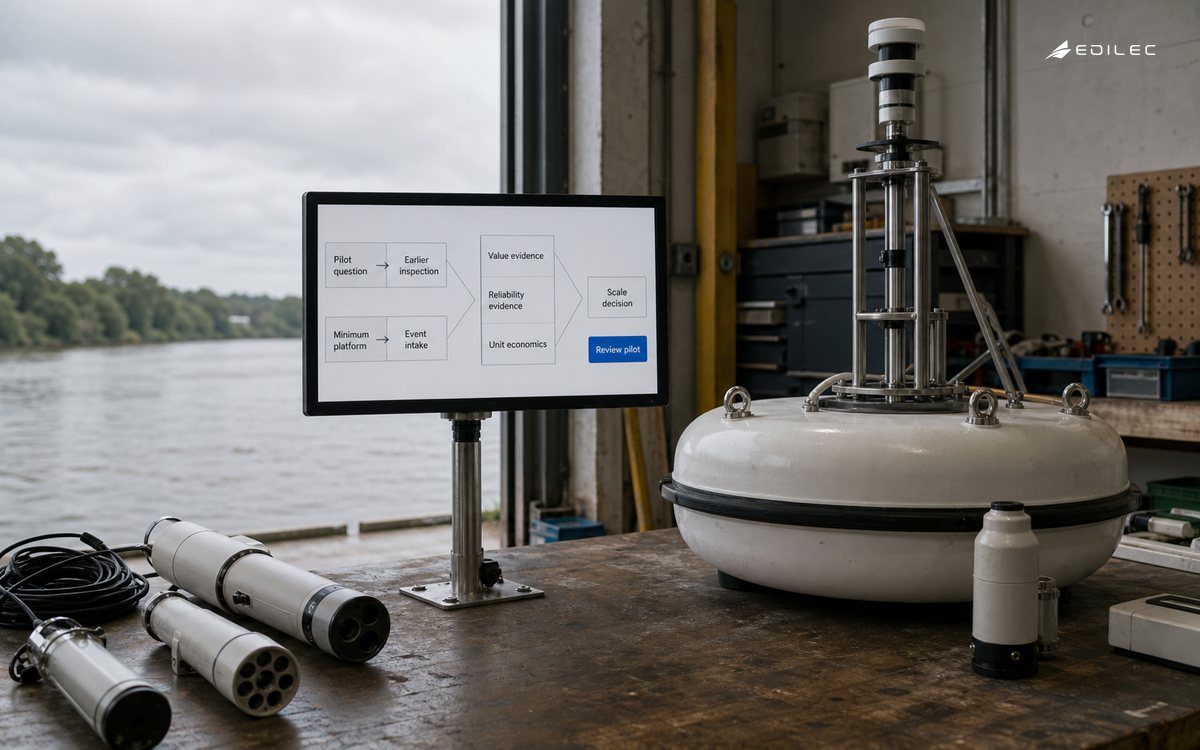
DORA's current delivery measures cover change lead time, deployment frequency, failed deployment recovery time, change fail rate and deployment rework rate. Use them for the service over time, not as individual targets or team rankings. Pair delivery flow with the product outcome and reliability. Faster releases matter when they generate safer learning; a high deployment count with no user effect is activity.
Before a successful pilot becomes a platform mandate, compare its reusable parts with the needs of two materially different workloads. Identity, deployment, logging and cost metadata often generalize well; data architecture, runtime and resilience assumptions may not. Publish a supported path and an exception process, then measure adoption, time to first production release and recurring support demand. This prevents one experiment's convenient choices from hardening into an enterprise constraint without evidence.
Keep a lightweight portfolio view of active experiments, their owners, monthly spend, decision dates and reused platform components. Review it with product, platform, security and finance leaders. Stop abandoned work, combine duplicate capability and promote only controls that have a durable operator. This makes innovation capacity visible and prevents temporary accounts, datasets or vendor trials from surviving after their business question has already been answered.
Key takeaways
- Define innovation as a measurable change in a named user's outcome.
- Select cloud services by the responsibilities the team should retain or transfer.
- Give experiments secure self-service foundations, cost ownership and an expiry path.
- Test application recovery and operability instead of relying on provider claims alone.
- Scale only when product value, reliability, security and unit economics agree.
Frequently asked questions
Should an innovation program standardize on one provider?
A primary provider can reduce platform and skill fragmentation. Preserve exit for critical data and contracts, and introduce another provider only for a specific regulatory, commercial or resilience case. Portability that is never tested is not a control.
How long should a cloud pilot run?
Long enough to observe representative demand and a complete business outcome, but with a decision date set before work begins. Many workflow pilots can produce evidence in weeks; seasonal or regulated cases may need longer. Time alone does not make a pilot credible.
Is serverless always cheaper for experiments?
No. It can remove idle capacity and operations, but request patterns, duration, data transfer, observability and provider limits shape cost. Compare the complete workload and the team's operating effort.
What happens when an experiment fails?
Record what assumption was disproved, preserve reusable code or platform improvements deliberately, export required data, remove identities and resources, and close cost allocation. A clean stop is a successful portfolio decision when it prevents larger unsupported investment.
Conclusion
Cloud can make infrastructure elastic and delivery repeatable, but disciplined learning makes it innovative. A bounded hypothesis, paved platform, production evidence and visible unit economics let teams invest gradually. The best cloud innovation program is not the one with the most services; it is the one that turns uncertainty into responsible decisions quickly.