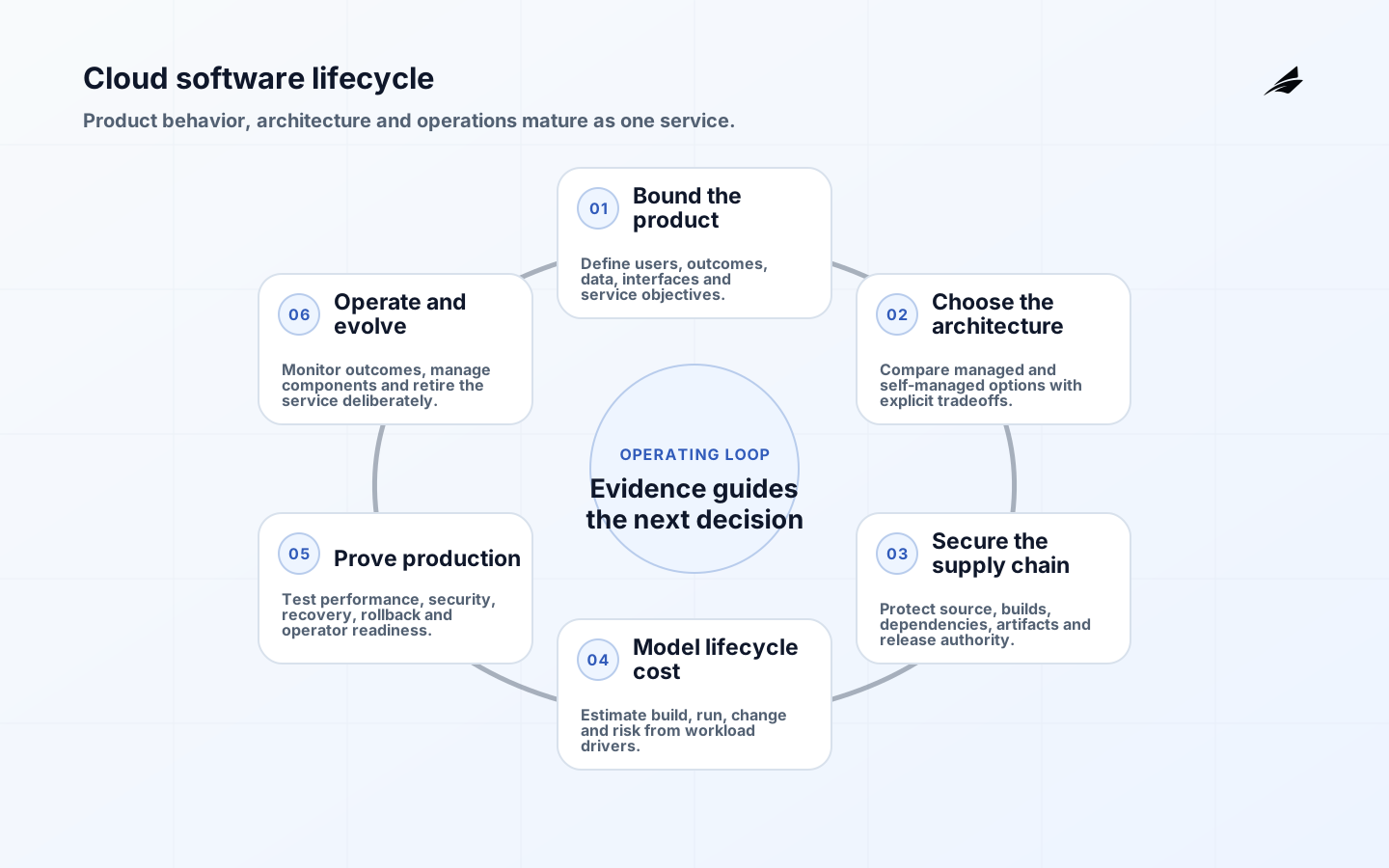
Cloud solutions and software combine application behavior with provider services, deployment automation, data, security and operations. Planning only the code understates the system; planning only infrastructure misses the user workflow and product lifecycle. A useful delivery plan defines the workload boundary, service objectives, responsibilities, cost model and evidence required for production. It also distinguishes reversible architecture choices from commitments that will be expensive to change.
For execution detail, pair this plan with Edilec's production cloud implementation checklist, cloud architecture and delivery FAQ and cloud team enablement plan. These resources keep product scope, platform design and operating readiness connected.
Define product scope and workload boundaries
Describe the user, task, business rule and outcome for the first release. List systems of record, inbound and outbound interfaces, data classifications, locations, volumes and retention. Set nonfunctional requirements for availability, recovery, latency, throughput, accessibility and support. Explicit exclusions prevent adjacent analytics, identity redesign or data cleanup from silently entering the project. Every exclusion with operational consequences needs an owner and a planned interface.
Draw a context diagram showing clients, application services, provider-managed components, third parties and trust boundaries. Name the team responsible for each runtime and data store. Clarify whether the product is new, replaces a system or coexists during transition. For replacement, define migration, reconciliation and legacy retirement. For a new service, define how identity, customer support, billing, audit and incident management integrate with established capabilities.
| Scope artifact | Question answered | Acceptance signal |
|---|---|---|
| Outcome brief | Whose task improves and how | Owner, baseline and target agreed |
| Context map | What is inside the system boundary | Interfaces and trust zones named |
| Service objectives | How well must it operate | Measures and error budgets approved |
| Data plan | What is collected, stored and deleted | Steward and retention controls assigned |
Select architecture with explicit tradeoffs
Prefer the simplest architecture that satisfies current requirements and a credible growth horizon. Compare managed and self-managed options on capability, portability, skill, recovery, cost and support. Record why each major service was selected and what would trigger reconsideration. Serverless, containers and virtual machines are operating choices, not maturity levels. A container platform is justified only when its scheduling, isolation and ecosystem benefits exceed the added control-plane and skills burden.
If Kubernetes is chosen, its production environment guidance makes clear that production needs secure multi-user access, availability and capacity planning beyond a learning cluster. Decide who operates control plane, nodes, upgrades, networking, storage, policy and add-ons. A managed cluster transfers selected tasks to a provider, but workload requests, identity bindings, disruption budgets, backup and observability remain design responsibilities.
Evaluate designs across reliability, security, performance, operational excellence, cost and sustainability. The AWS Well-Architected Framework provides structured questions for these qualities. Use provider frameworks as prompts, then retain a provider-neutral decision record. Test failure domains and quotas. Multi-zone deployment cannot protect against faulty application changes, shared credentials or a destructive data migration.
Build a secure software delivery system
Integrate security requirements into planning, repositories, build systems, reviews, testing, release and response. The NIST Secure Software Development Framework organizes practices around preparing the organization, protecting software, producing well-secured software and responding to vulnerabilities. Apply protected branches, least-privilege automation identities, dependency controls, secret management, reproducible builds, artifact signing and retained provenance according to risk.
Threat-model trust boundaries and abuse cases before implementation. Validate inputs and authorization in application code, encrypt sensitive data, separate tenants where required and make administrative actions auditable. CISA and FBI's product security bad-practices guidance reinforces manufacturer responsibility for secure outcomes. Do not ship default credentials, unsupported components or silent security-critical failures that transfer avoidable burden to customers.
Estimate build, run and change cost
Build cost includes discovery, design, engineering, testing, migration, security review, accessibility, documentation, training and release. Run cost includes provider resources, data transfer, observability, backup, support, licenses, incident response and maintenance. Change cost covers upgrades, dependency replacement, schema evolution and provider-service migration. Estimate ranges from workload drivers such as requests, active users, storage growth, retention and peak-to-average ratio. State assumptions and confidence.
Link infrastructure cost to product units and service quality. Cost per order, report or active account is more actionable than a provider total. Establish allocation metadata and budget alerts during provisioning. The FinOps Foundation's governance, policy and risk guidance treats financial and operational policy as an evolving control system. Require owners and expiry for oversized capacity, premium services and temporary environments rather than relying on periodic cleanup campaigns.
| Estimate layer | Primary drivers | Evidence after launch |
|---|---|---|
| Build | Features, interfaces, migration and assurance | Throughput, rework and accepted scope |
| Run | Traffic, data, resilience and support | Unit cost and service objectives |
| Change | Release frequency and dependency lifecycle | Upgrade effort and lead time |
| Risk | Uncertainty, outage impact and rollback | Incidents, recovery tests and reserve use |
Release through production-readiness gates
A release candidate should pass functional, integration, performance, security, recovery and operability checks in a production-shaped environment. Verify dashboards, alerts, on-call routing, runbooks, feature controls, data migration, rollback and customer communication. Test expired credentials, dependency timeout, partial region failure and restoration from backup. Record known limitations and decide whether exposure limits, manual review or a smaller cohort make residual risk acceptable.
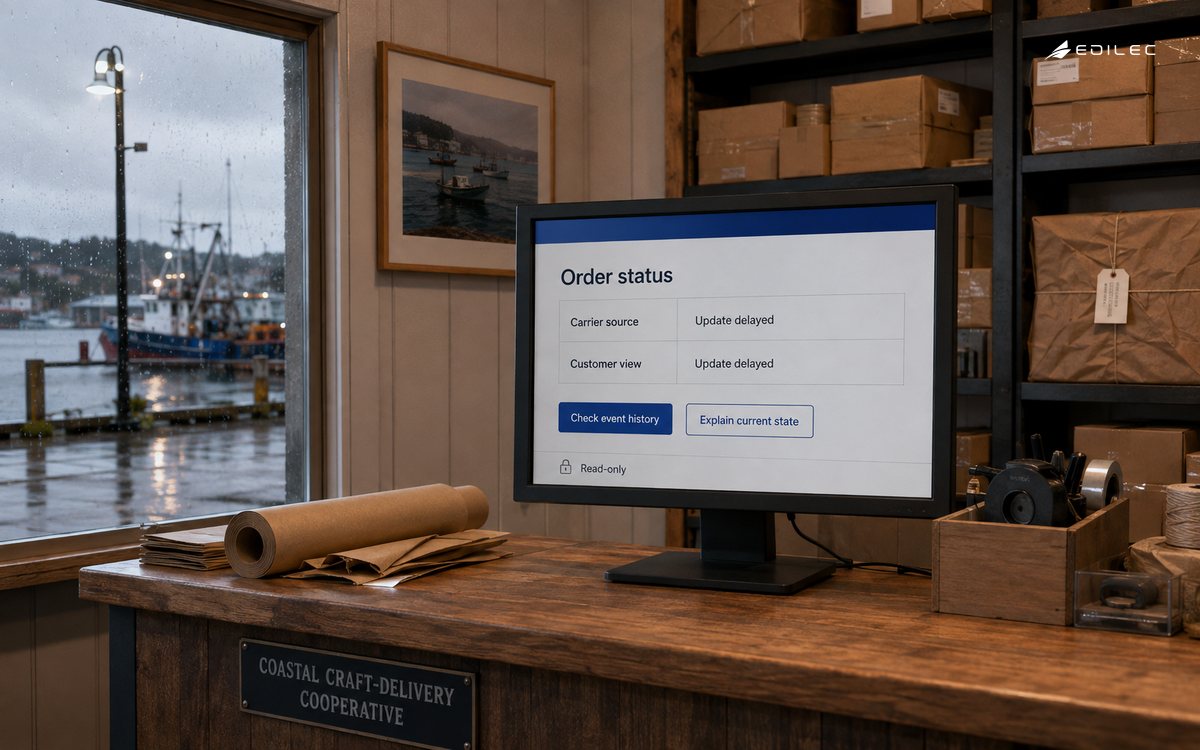
Use progressive delivery where the architecture supports it: internal users, a controlled cohort, percentage rollout and wider availability. Observe technical and product signals at every step. Rollback may be unsafe after a destructive schema or irreversible external action, so design forward-compatible database changes and compensating procedures. Assign one release authority who can pause expansion without negotiating during an incident. Preserve deployment manifests so responders know exactly what changed.
Example: design a cloud order-status service
A retailer may need an order-status service used by web, mobile and support channels. The service boundary includes authenticated read access, order-event ingestion, a customer-safe status model and links to carrier detail. It excludes order modification. Requirements define update freshness, peak reads, regional availability, retention and behavior when a carrier feed is late. A versioned contract prevents each channel from interpreting raw fulfillment states differently.
The team can select a managed database and queue after comparing recovery, scaling, skills and cost. Infrastructure code creates environments, while the pipeline runs contract, dependency, authorization and migration tests. A release rehearsal duplicates events, delays a carrier, revokes a service identity and restores the database. Product acceptance verifies that customers see an honest timestamp and support agents can distinguish delayed data from a genuinely stalled order.
Production monitoring combines API latency and errors with event age, unknown status mappings, customer refresh behavior and support contact. Unit cost is measured per active order, not per server. If a new carrier introduces states the model cannot represent, the owner follows change control instead of mapping them informally. The example demonstrates how product semantics, cloud architecture, software supply chain and daily operations form one deliverable.
For higher-impact software, add an independent readiness review covering threat model, dependency provenance, privileged paths, destructive operations and recovery assumptions. Walk one customer transaction from request through every service and datastore, then walk a failure at each external dependency. Confirm timeouts, retries and customer messaging agree. This exercise often finds hidden coupling that unit tests and normal demonstrations miss, while creating a practical shared mental model for product, engineering and support teams.
Operate, learn and retire deliberately
Monitor user outcomes alongside saturation, latency, errors, availability, security events, backup status and cost. Define service-level indicators from the user's experience and use error budgets to inform release risk. Review support contacts and workarounds because they reveal failures not visible in infrastructure metrics. Every alert needs a response action; remove noisy alerts or improve their context. Conduct blameless incident analysis and track corrective work to completion.
Maintain a component and service lifecycle register with owner, version, support date and replacement plan. Review architecture decisions when load, regulation, team skill or provider terms change. Retirement is a delivery phase: notify users, export required data, remove traffic, revoke identities, destroy resources, update inventories and verify that bills and monitoring stop. A cloud product that cannot be upgraded or retired safely is accumulating operational debt even while it meets current features.
Cloud software delivery takeaways
- Define user outcomes, system boundaries and service objectives together.
- Choose the simplest operating model that meets credible requirements.
- Treat the build and release system as security-critical infrastructure.
- Estimate build, run, change and risk costs from explicit workload drivers.
- Prove recovery and operability before expanding production exposure.
- Own component upgrades, architecture review and retirement from the start.
Frequently asked questions
Are managed cloud services always cheaper?
No. They can reduce engineering and operational responsibility, but unit prices, data transfer and service constraints may be higher. Compare total cost, required reliability, team skills and change effort. A managed service can be economical when it replaces difficult undifferentiated operations, even if its invoice line is larger.
Should new software support multiple clouds?
Only for a defined business or risk scenario. Portability requires abstraction, duplicate automation, testing and skills. Preserve data export, standard protocols and replaceable boundaries, then quantify the additional work for active-active or rapid provider migration. Avoid paying continuously for an option the organization has no plan to exercise.
Conclusion
A dependable cloud solution is a product, software supply chain and operated service at the same time. Scope all three, make architecture tradeoffs visible, secure the delivery path, model lifecycle cost and require production evidence before scale. That discipline gives teams room to evolve the software without losing control of reliability, security or spend.