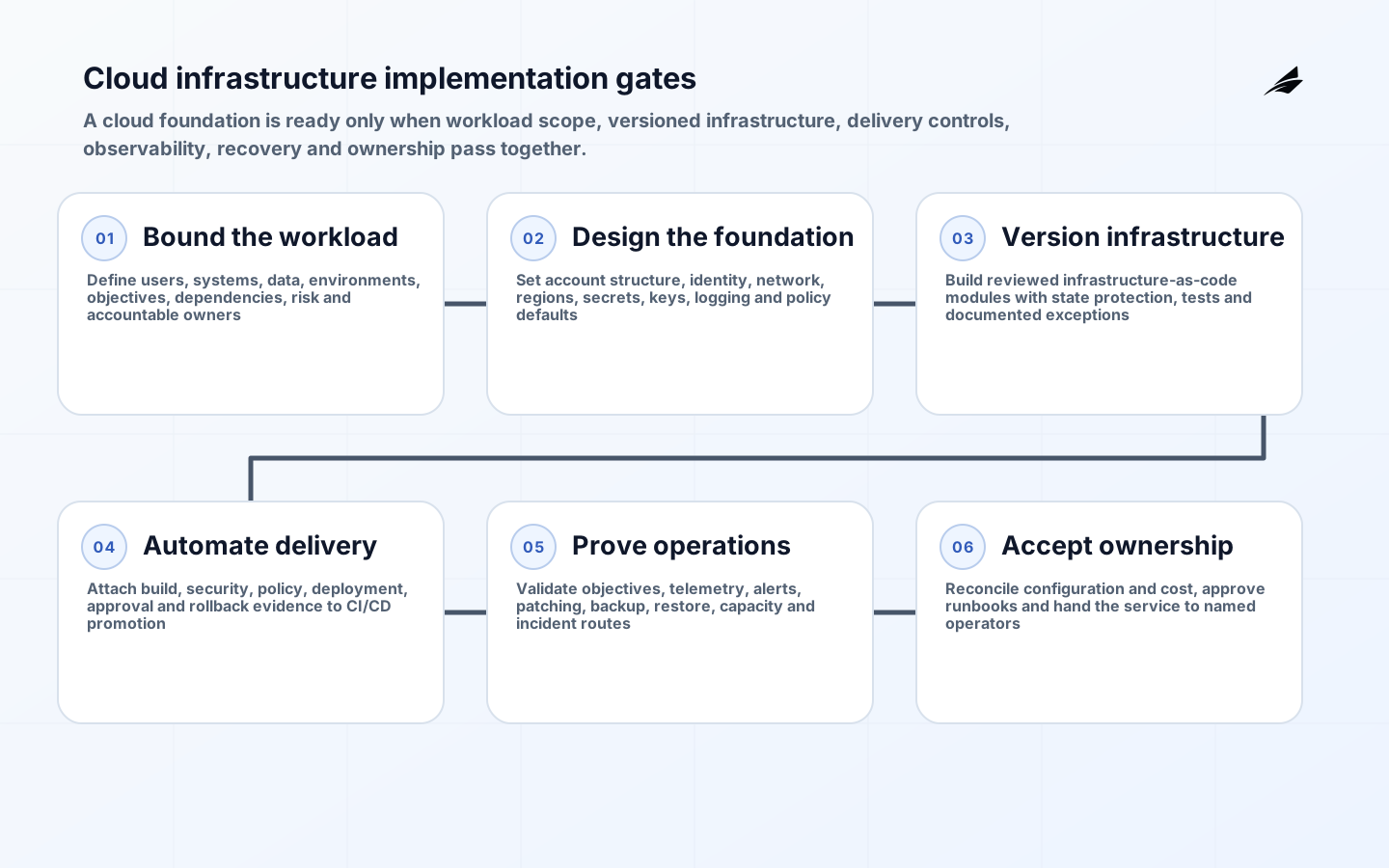
A cloud and infrastructure implementation checklist turns broad architecture intent into verifiable production capability. Cloud can provide on-demand, pooled, elastic and measured resources, characteristics formalized in NIST SP 800-145, but those characteristics do not automatically deliver secure or reliable services. Teams still need workload ownership, identity, network, data, resilience, automation, cost and support decisions. The implementation is complete only when users can depend on the workload, operators can diagnose and recover it, and owners can explain risk and spend.
Use this checklist with Edilec's cloud and infrastructure business guide and infrastructure services checklist. Start with a bounded workload portfolio and a current baseline. A landing zone built without application evidence tends to encode assumptions; an application migration without a foundation creates inconsistent identity, logging and network patterns. Deliver both as products with named owners, versioned standards and a review cadence.
Discover workloads, dependencies and business objectives
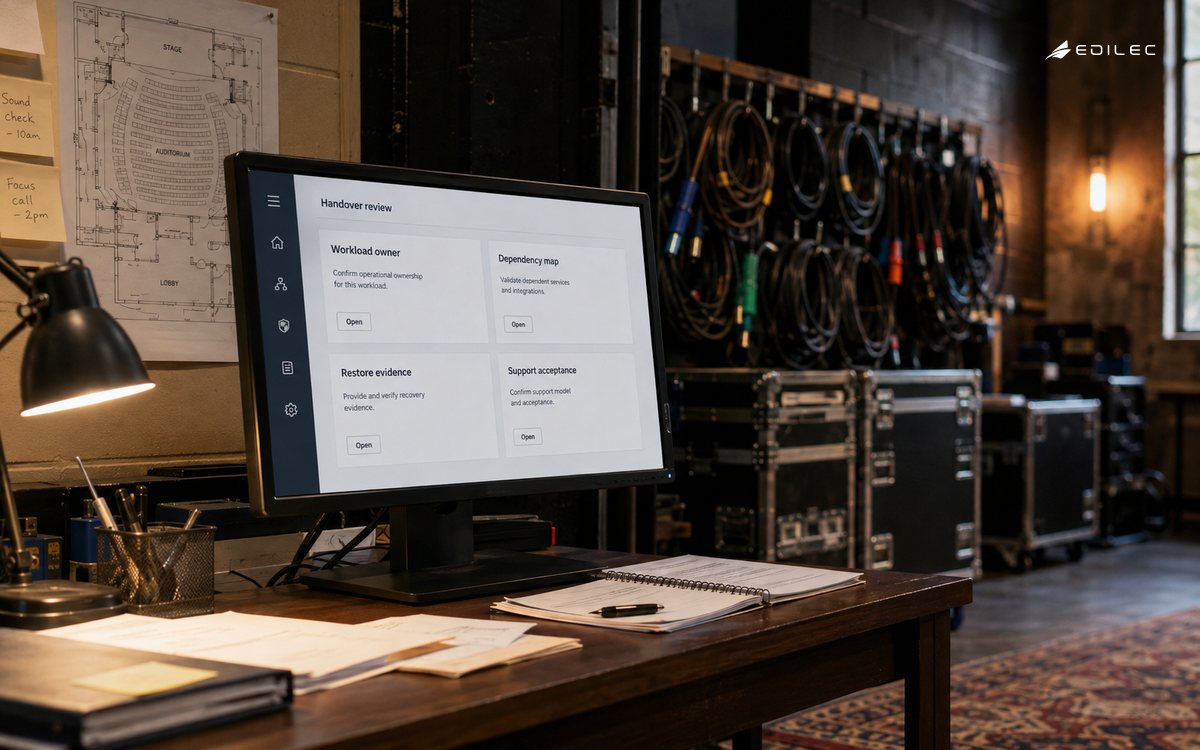
Inventory applications, databases, files, network appliances, scheduled jobs, certificates, interfaces and operational tools from technical sources. For each workload, name business and technical owners, users, critical transactions, data classification, performance baseline, recovery objectives, maintenance window, licenses and support commitments. Map dependencies in both directions. A low-utilization service may still be essential to payroll or month-end reporting. Mark unknowns visibly and assign discovery actions; do not silently convert missing ownership or undocumented traffic into assumptions.
Define why each workload is changing and which outcome will prove value. Options include resilience, faster delivery, capacity, security, datacenter exit or access to managed capabilities. Choose retain, retire, replace, rehost, replatform or refactor based on constraints and expected benefit. Establish baseline availability, latency, incidents, deployment lead time, cost and staff effort. Prioritize waves by value, complexity and learning. The first wave should be representative enough to test the platform but recoverable enough for the team to learn safely.
| Discovery item | Evidence | Decision enabled | Completion test |
|---|---|---|---|
| Ownership | Named business, technical, data and support roles | Priority and risk authority | Owners confirm responsibilities and escalation. |
| Dependencies | Observed flows, jobs, DNS, identity and vendor links | Wave and continuity design | Representative transactions match the map. |
| Data | Classification, location, lifecycle and access | Placement and protection | Data owners approve flow and retention. |
| Performance | Demand, latency, capacity and seasonality | Sizing and scaling | Load tests reproduce relevant conditions. |
| Operations | Incidents, changes, backup and support history | Target operating model | Known gaps enter an owned remediation backlog. |
Build the cloud foundation as a governed product
Establish account, subscription or project hierarchy; billing; identity federation; environment separation; network patterns; DNS; logging; key and secret services; artifact repositories; deployment pipelines; policy and cost allocation. Encode configuration and policy in version control with review and automated tests. Define a narrow exception process recording owner, reason, compensating control and expiry. Foundation teams should publish supported workload patterns and onboarding tests, not act as a ticket gate for every routine request. Version the platform and communicate changes to consumers.
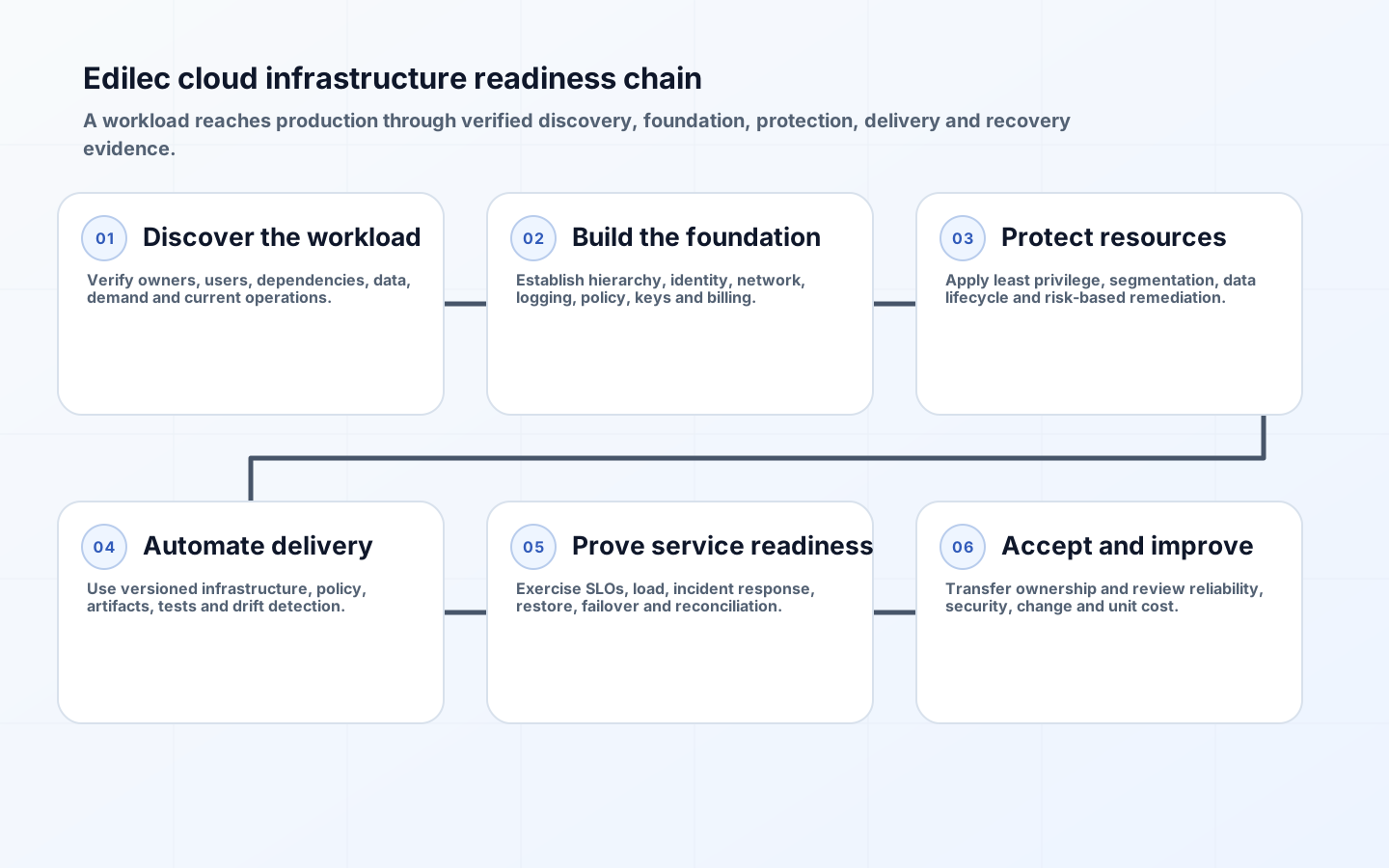
The CISA Cloud Security Technical Reference Architecture highlights shared services, secure cloud migration, posture management and zero-trust principles. Use those themes to examine how controls operate across the complete estate. Centralization can improve consistency but creates high-impact dependencies, so protect and test shared identity, DNS, connectivity, logging and deployment services. Capture their service objectives and recovery paths. A secure workload cannot compensate for a shared foundation that nobody can restore.
Implement identity, network and data protections
Use an authoritative identity source, group-based access, least privilege, strong authentication and time-bound elevation. Separate human, workload and deployment identities. Avoid long-lived keys where federation or managed identity is available. Log authentication and authorization changes to a protected destination. Emergency access needs independent credentials, monitoring and exercises. Review access by task and resource sensitivity rather than job title alone. Service accounts require owners, rotation, inactivity detection and removal when workloads retire.
Design networks from permitted application flows. Segment by trust and failure boundary, control egress, use private service access where justified and maintain DNS ownership. Encrypt traffic according to the threat model and manage certificates as expiring production dependencies. Classify data, choose placement and replication from legal, latency and recovery needs, and record backups, exports and analytics copies. Encryption does not replace authorization, minimization or deletion. Scan infrastructure and workloads, then connect findings to asset importance, exposure, remediation clocks and risk authority.
Engineer reliability, observability and recovery
Define service level indicators from user-visible transactions, freshness or processing success. Google's SLO guidance recommends starting with what users care about and working backward to measurable indicators. Set objectives and error-budget actions. Design zone, region and dependency redundancy only to the level required. Distributed architecture can add failure modes and cost, so test actual behavior under dependency timeout, capacity loss and partial network failure. Document graceful degradation where complete availability is impractical.
Collect structured logs, metrics, traces, audit events and cost signals with consistent resource context. Alerts should identify conditions that require action, and runbooks should link symptoms to diagnosis, communication and recovery. Define incident severity, command and stakeholder updates. Protect telemetry from unauthorized change and test access during incidents. Backups need retention, isolation and restoration exercises. Validate application consistency and business reconciliation, not only file recovery. Conduct learning reviews and track actions to completion without reducing complex incidents to individual error.
| Operational gate | Required evidence | Failure signal | Response |
|---|---|---|---|
| Deployment | Reviewed code, tests, provenance and recovery path | Drift or untraceable change | Block promotion and reconcile configuration. |
| Reliability | SLIs, objectives, load and failure tests | Fast error-budget burn | Reduce risky change and address the cause. |
| Recovery | Restore and failover meet business objectives | Unverified backup or missed objective | Correct design and exercise again. |
| Security | Access, configuration and vulnerability evidence | Control failure or exploitable exposure | Contain, remediate and assess impact. |
| Cost | Allocated usage, budget and unit economics | Ownerless spend or anomaly | Assign decision owner and stop waste safely. |
Automate infrastructure and software delivery
Store infrastructure, policy and application deployment definitions in repositories with protected branches, peer review and automated validation. Pin and verify dependencies, scan artifacts, sign or attest where required and separate build from deployment authority. Promote the same artifact across environments. Detect manual drift and preserve a controlled emergency path. Database and state changes need compatible rollout and recovery. Small, routine releases are safer when tests and observability are trustworthy; automation should shorten feedback, not accelerate an unclear process.
Test syntax, policy, security, integration, performance and recovery at appropriate stages. Ephemeral environments reduce idle cost but still need realistic identity and data constraints. Protect state stores and pipeline credentials. Set bounded retries and idempotency for automation. Measure lead time, deployment frequency, change failure and restoration alongside user outcomes. Excessive approvals can create batch risk, while absent review can propagate unsafe configuration. Tailor control to change risk and use evidence from automated checks to make approval faster and more consistent.
Migrate with reconciliation and operational acceptance
Create wave plans with prerequisites, data transfer, synchronization, outage, communications, validation, rollback or forward recovery and legacy disposal. Rehearse representative cutovers. Record data counts, checksums or business totals appropriate to the system, then verify transactions and downstream effects. Include DNS, certificates, queues, scheduled jobs and external partners. Keep dual running bounded because parallel systems create cost and divergence. A migration is not accepted when compute starts; it is accepted when service, data, controls, monitoring, recovery and support ownership meet their criteria.
Use a command structure for cutover with clear decision rights and timestamps. Define stop conditions before execution so schedule pressure cannot silently change risk tolerance. Observe closely after release and compare against the baseline. Transfer runbooks, dashboards, access, vendor contacts and known issues to operations through paired exercises. Remove temporary credentials, migration storage and permissive firewall rules. Retain required records and decommission legacy assets only after business and records owners approve disposition.
Establish cost and operational governance
Allocate resources through hierarchy and tags tied to owners, products and environments. Export billing detail, reconcile shared costs and define budget or anomaly actions. Track total cost, including licenses, support, network transfer, observability and staff. Rightsize from representative demand, schedule non-production, apply storage lifecycle and remove abandoned resources only after checking retention and recovery. Commitments should follow stable usage and an exit horizon. Review cost per transaction or customer outcome where a consistent unit is available.
Assign platform, service, security, data, finance and incident roles. Hold regular reviews of SLOs, incidents, changes, vulnerabilities, capacity, backup, spend and improvement backlog. The NIST Cybersecurity Framework 2.0 provides a common outcome vocabulary across govern, identify, protect, detect, respond and recover. Use it to connect technical signals to enterprise risk decisions. Define an exit plan with portable configuration, data, documentation, keys, contracts and verified access removal.
Cloud and infrastructure takeaways
- Discover ownership, dependencies, data and operating baselines before choosing migration patterns.
- Treat the cloud foundation as versioned, tested product with supported workload paths.
- Separate workforce, workload and deployment identities and minimize standing privilege.
- Set user-centered SLOs and prove restoration, failover and incident communication.
- Accept migrations only after transactions, data, controls and support ownership are verified.
- Govern cost through allocation, unit economics and named decisions rather than alerts alone.
Frequently asked questions
Should the landing zone be complete before any workload moves? The minimum secure and operable foundation must be accepted first, but the platform should evolve through controlled workload feedback. Define which capabilities are mandatory for onboarding and which can mature later without exposing the workload.
Is multi-cloud required for resilience? No. Multi-cloud can address specific concentration, portability or capability needs, but it adds identity, data, networking and operating complexity. Resilience should follow business objectives and tested dependencies, not a provider-count target.
What is the most important implementation artifact? No single document is enough. The durable result is traceability from business objective through versioned configuration, control evidence, monitoring, recovery and ownership, maintained in systems the operating team actually uses.
Conclusion
Cloud infrastructure becomes a dependable business platform when foundation and workload delivery share the same evidence. Verified discovery, governed identity and networks, observable reliability, safe automation, reconciled migration and cost ownership make elasticity useful without making operations opaque. Completing this checklist creates clear acceptance criteria and a practical basis for continuous improvement.