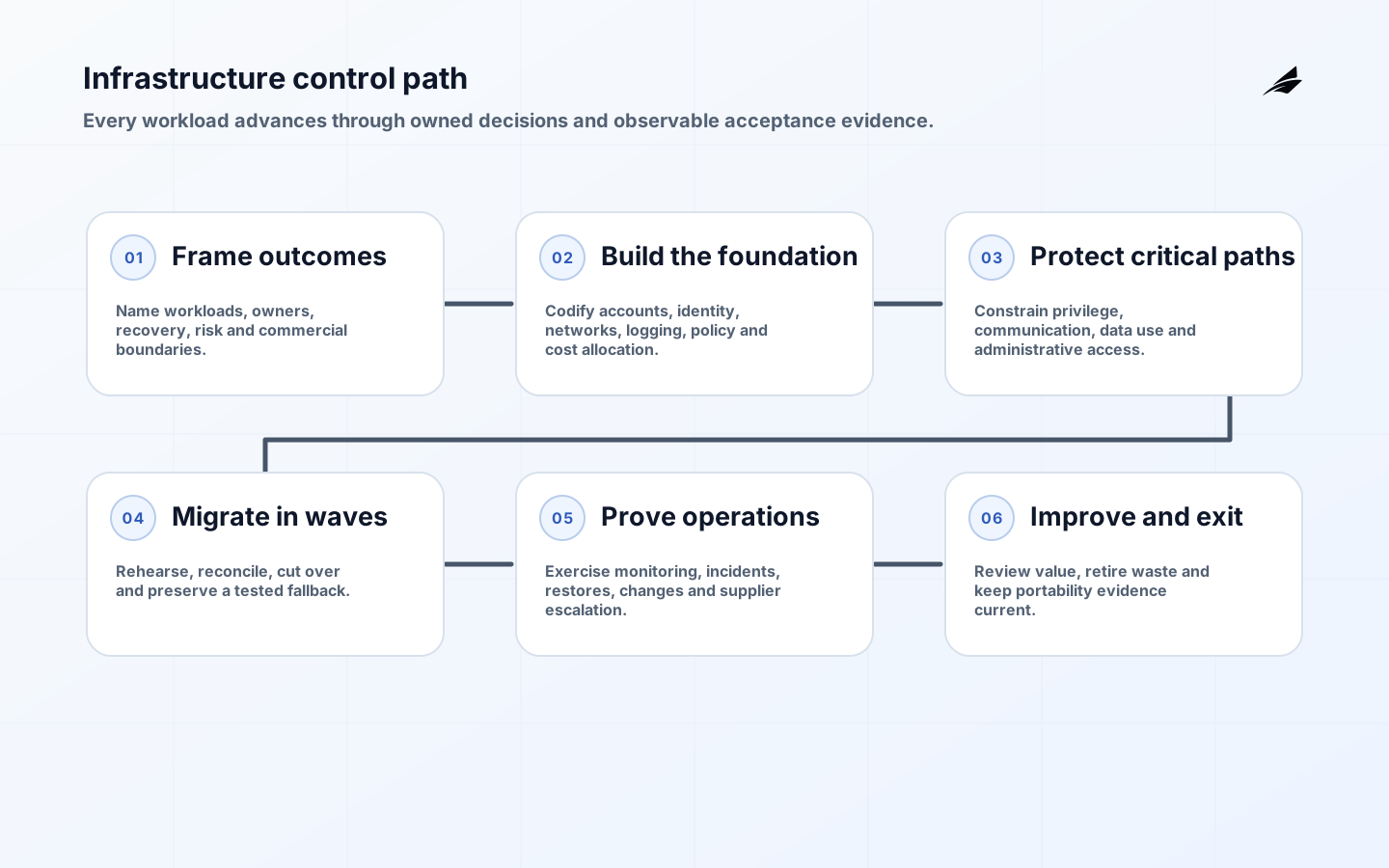
An infrastructure services and cloud implementation checklist should turn a broad technology program into a sequence of decisions, controls and acceptance evidence. It is not a shopping list of servers, subscriptions and monitoring tools. The useful unit of planning is a business workload: who depends on it, what failure means, which data it handles, how it is recovered, what it costs and who can change it. Begin with those facts, then shape the platform and service model around them.
This guide covers a new cloud foundation, a substantial modernization and the transition of an existing estate to a service provider. Teams that need a question-led companion can use the infrastructure services and cloud FAQ. The Cloud DevOps implementation checklist goes deeper on delivery automation, while the cognitive infrastructure checklist addresses data-intensive and AI workloads.
1. Define outcomes, scope and decision rights
Name the services and locations in scope, including cloud accounts, on-premises systems, network links, identity tenants, endpoints, backups, observability and third-party dependencies. For every workload, record an owner, critical users, service hours, recovery objectives, data classification and approved maintenance window. State exclusions just as clearly. A proposal that says “manage the cloud” leaves unresolved whether the provider patches operating systems, approves privileged access, owns application incidents or only monitors infrastructure.
Set measurable outcomes before selecting products. The AWS Well-Architected Framework organizes reviews across operational excellence, security, reliability, performance efficiency, cost optimization and sustainability. Those qualities are a useful completeness check, but priorities must come from the workload. A public ordering service may favor availability and latency; a monthly archive may favor integrity, retention and low cost. Record accepted trade-offs and the executive who owns each residual risk.
| Decision | Minimum record | Acceptance evidence |
|---|---|---|
| Service boundary | Included workloads, environments, hours, suppliers and exclusions | Signed responsibility matrix and asset list |
| Reliability | Availability target, RTO, RPO, maintenance and dependency assumptions | Recovery design plus test schedule |
| Security | Data classes, identity rules, logging, vulnerability and incident duties | Control mapping and named control owners |
| Commercial | Build cost, recurring run rate, growth assumptions and exit charges | Approved baseline and cost-allocation method |
| Authority | Who requests, approves, executes and reviews each material change | Workflow tested with representative changes |
2. Establish a governed cloud foundation
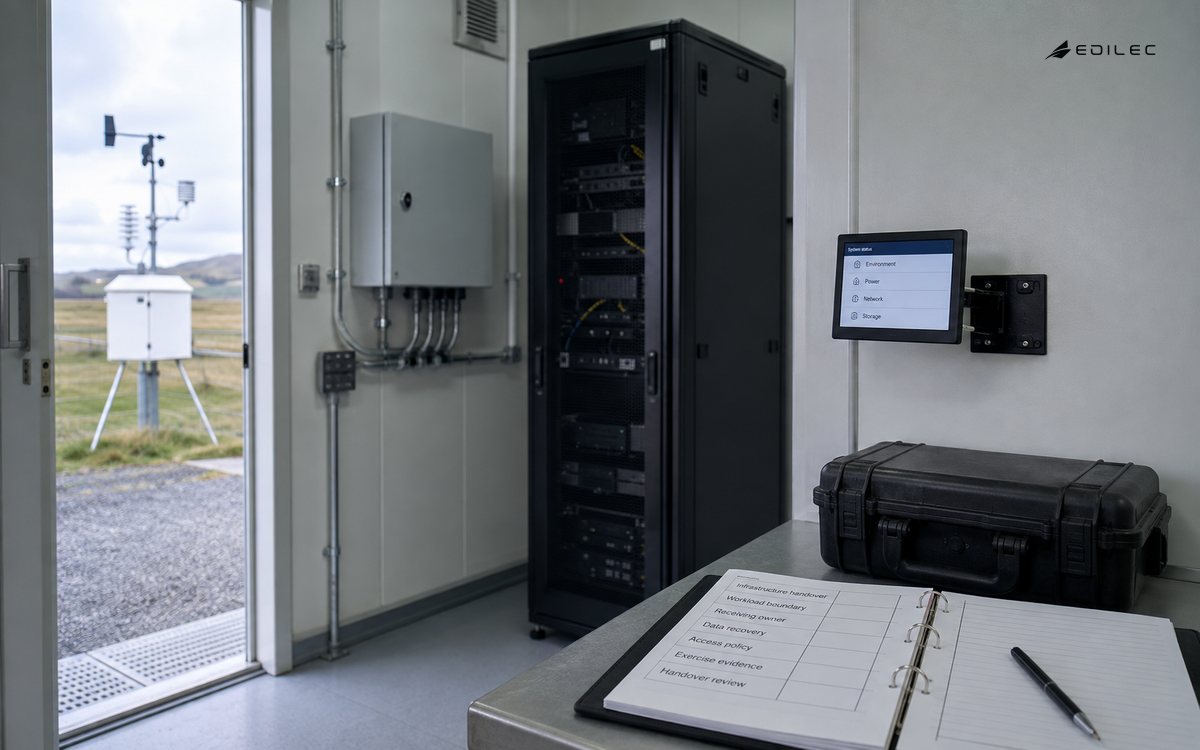
Build the account, subscription or project hierarchy before workload migration. Separate production from nonproduction, isolate high-risk workloads where justified, and create dedicated homes for shared connectivity, logging, security tooling and automation. Microsoft describes an Azure landing zone as a modular, scalable foundation spanning billing, identity, resource organization, networking, security, management, governance and platform automation. The provider-specific implementation can vary, but those design questions do not disappear.
Treat the foundation as versioned infrastructure. Provision it through reviewed code, apply policies automatically and send platform changes through the same controlled pipeline as application changes. Break-glass access needs strong authentication, a narrow membership process, immediate alerting and a regular exercise. Central audit logs should be protected from workload administrators. Tagging or labeling rules must identify owner, environment, service, data sensitivity and cost center at creation time; retrofitting ownership after spend or an incident appears is slower and less reliable.
3. Secure identity, networks and data
Federate workforce identity rather than creating permanent local users. Use role-based groups, short-lived elevation and separate administrative identities. Inventory service accounts and workload identities with an owner, purpose, credential method and review date. The NIST Cybersecurity Framework 2.0 places governance alongside identify, protect, detect, respond and recover; that matters here because technical controls fail when nobody owns policy exceptions, supplier obligations or risk acceptance.
Design network paths from required communication, not from a flat address plan. Document ingress, egress, east-west dependencies, name resolution, private service access and administrative channels. Default-deny where the operating model can support it, then verify flows through automated tests and logs. Classify data before copying it. Define encryption and key ownership, retention, residency, backup, deletion and nonproduction masking. A managed database may reduce patching effort, but the customer still decides who can query it, what leaves it and whether recovery meets the business need.
4. Migrate workloads in controlled waves
Group migrations by dependency and consequence rather than server count. A good first wave is bounded enough to recover, yet representative enough to exercise identity, network, deployment, observability, backup and support. For each wave, establish a production-shaped test environment, reconcile data, rehearse cutover, define a stop decision and preserve a fallback. Do not decommission the source merely because the new service starts; wait until users, data owners and operations accept the evidence and the retention plan permits retirement.
Acceptance should combine functional, operational and security proof. Run representative transactions at expected and peak demand. Confirm alerts reach a staffed route, dashboards answer likely diagnostic questions and support teams can locate dependencies. Restore data into an isolated environment and validate application use, not only backup-job success. NIST SP 800-34 Rev. 1 connects contingency planning to business impact, recovery strategies, testing and plan maintenance; use that lifecycle even when a cloud service advertises durable storage.
| Gate | Test example | Release rule |
|---|---|---|
| Architecture | Dependency, capacity and failure-mode review | No unresolved critical assumption without an owner |
| Security | Privilege, segmentation, secret rotation and audit-event tests | Required controls pass; exceptions are time-bound |
| Data | Counts, checksums, control totals and sampled business records | Tolerance agreed by the accountable data owner |
| Recovery | Restore application data, configuration, keys and access policy | Measured RTO and RPO meet approved objectives |
| Operations | Incident, escalation, change and supplier-contact exercise | On-call team completes the scenario from the runbook |
| Commercial | Forecast under baseline, peak and failure conditions | Owner accepts run-rate range and anomaly thresholds |
5. Transition into measurable operations
Handover is a period of shared operation, not a document delivery. Give the receiving team access to architecture decisions, repositories, inventories, dashboards, runbooks, vendor cases, known errors and open risks. Pair people through real requests and changes. Define service objectives for user-facing behavior and operational measures for patch compliance, backup restore success, alert quality, change failure, capacity and cost allocation. Ticket volume alone rewards activity; it does not show whether the service is reliable or improving.
Incident readiness must exist before launch. Current NIST incident-response guidance integrates preparation, detection, response and recovery with broader risk management. Translate that into severity criteria, communication authority, evidence preservation, supplier escalation and post-incident improvement. Exercise a compromised privileged identity, failed region, corrupted deployment and unavailable supplier contact. Close findings through the normal backlog with owners and due dates rather than storing them in a separate report.
6. Govern cost, service quality and improvement
Cloud cost needs product and engineering context. Allocate spend to accountable services, expose usage drivers, forecast changes and distinguish efficiency from simple budget reduction. The 2026 FinOps Framework treats technology value as collaboration among engineering, finance, product, procurement and leadership. Establish a monthly operating review that considers reliability, security, demand, unit cost and planned change together. A cost saving that removes required resilience is not optimization; extra resilience with no agreed business need may be waste.
Review service scope quarterly and after significant incidents or acquisitions. Retire unused resources, stale identities, abandoned snapshots and obsolete network rules. Revalidate recovery objectives as business processes change. Track whether policy exceptions are shrinking, alerts are becoming more actionable and recurring incidents are actually eliminated. Include exit readiness: configuration export, data return, credential transfer, knowledge handover, deletion evidence and commercial notice periods. A service is governable only when the customer can understand it, change it and leave it without losing control.
Keep one implementation evidence register
Create a register that follows each workload from discovery through steady state. It should link the business owner, architecture decision, data class, responsibility matrix, policy exceptions, migration wave, test results, recovery exercise, current runbook, service objectives and cost center. The register is an index to evidence, not a second document repository. Review it at every gate and make missing or stale entries visible to the person authorized to proceed.
- Record the workload and business service in terms users and finance recognize.
- Link the approved architecture and every material decision or exception.
- Attach cutover, rollback, restore, access and operational exercise results.
- Name evidence owners and dates instead of marking controls simply complete.
- Carry unresolved findings into the operating backlog with due dates.
- Use the same register for audit, service review and eventual exit planning.
Implementation takeaways
- Scope workloads, responsibilities, recovery and authority before choosing tools or migration dates.
- Create the governed account, identity, network, logging and automation foundation as versioned infrastructure.
- Move in reversible waves and require data, security, recovery, operational and commercial evidence at every gate.
- Make handover experiential through paired operation, incident exercises and real changes, not a static runbook dump.
- Review service quality, risk, cost and exit readiness together so local optimization does not damage the workload outcome.
Frequently asked questions
How long should the foundation stage take?
A bounded single-cloud foundation can often be proven in weeks, while a regulated multi-region or hybrid estate may require several increments. Time should follow decision complexity and evidence, not an arbitrary maturity label. Define a minimum viable foundation for the first wave, but do not waive identity, logging, recovery ownership or cost attribution. Add capabilities in versioned releases with explicit entry criteria.
Who owns security when a provider manages infrastructure?
Responsibility varies by service and contract. The cloud provider usually secures physical facilities and underlying platform components; the customer still owns data classification, identities, configuration, application behavior and lawful use. A managed-service partner may perform tasks, but accountability and risk acceptance remain with named customer leaders. Capture the exact division in a control-level matrix and test both parties' escalation paths.
What is the minimum go-live evidence?
Require approved architecture and responsibility records, successful representative transactions, tested access controls, observable audit events, reconciled data, a measured restore, staffed support routes, an exercised rollback, accepted residual risks and an owner-approved run-rate forecast. The set can expand for regulated or safety-critical workloads, but none of these items should be replaced by a generic readiness percentage.
Conclusion
Reliable infrastructure services emerge from explicit ownership and repeatable evidence. Define the workload outcome, establish a governed foundation, secure the paths that matter, migrate reversibly, prove operations and keep cost and risk visible after launch. When every stage has an accountable decision and an observable acceptance test, cloud implementation becomes a controlled service transition instead of an open-ended technology move.