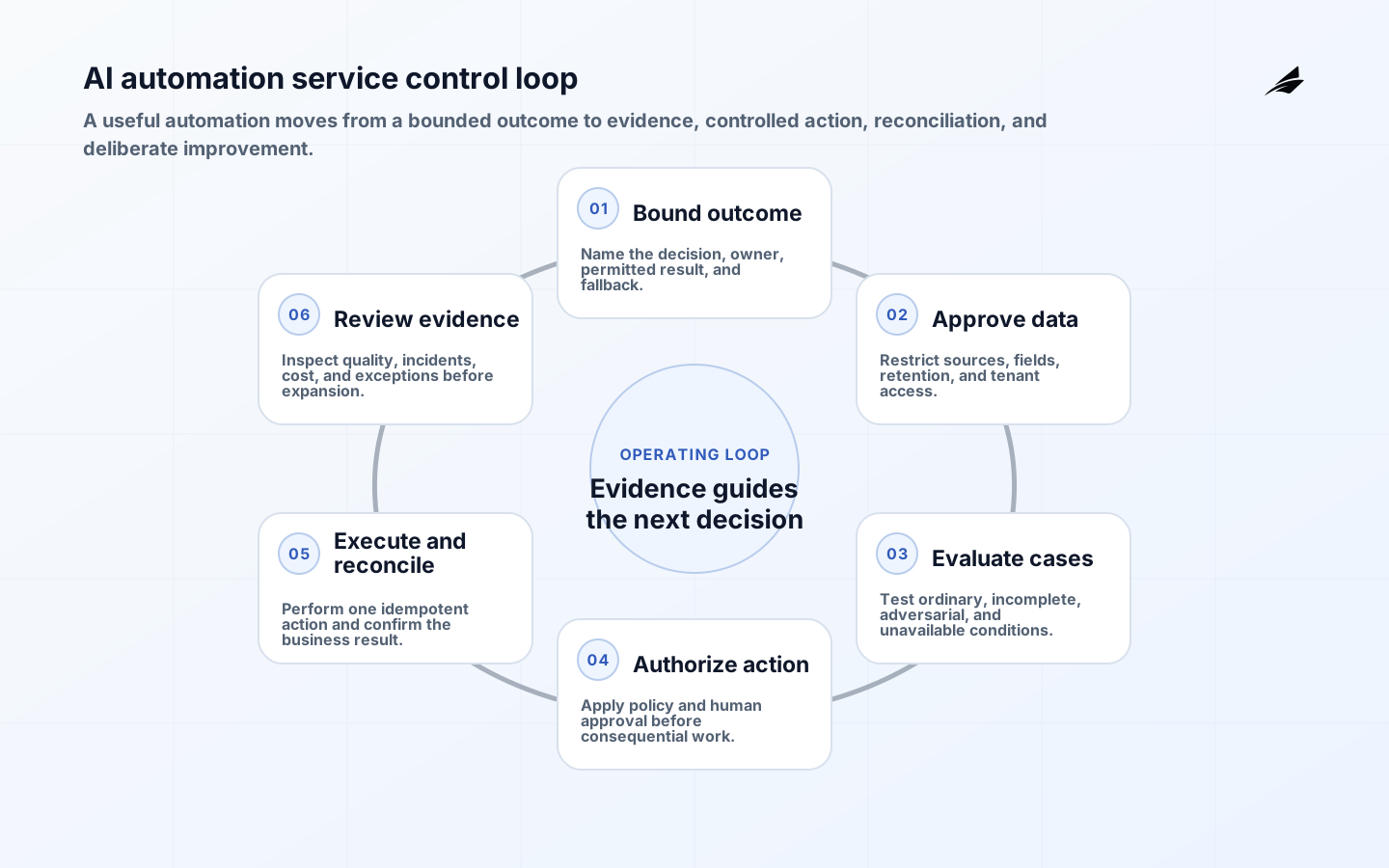
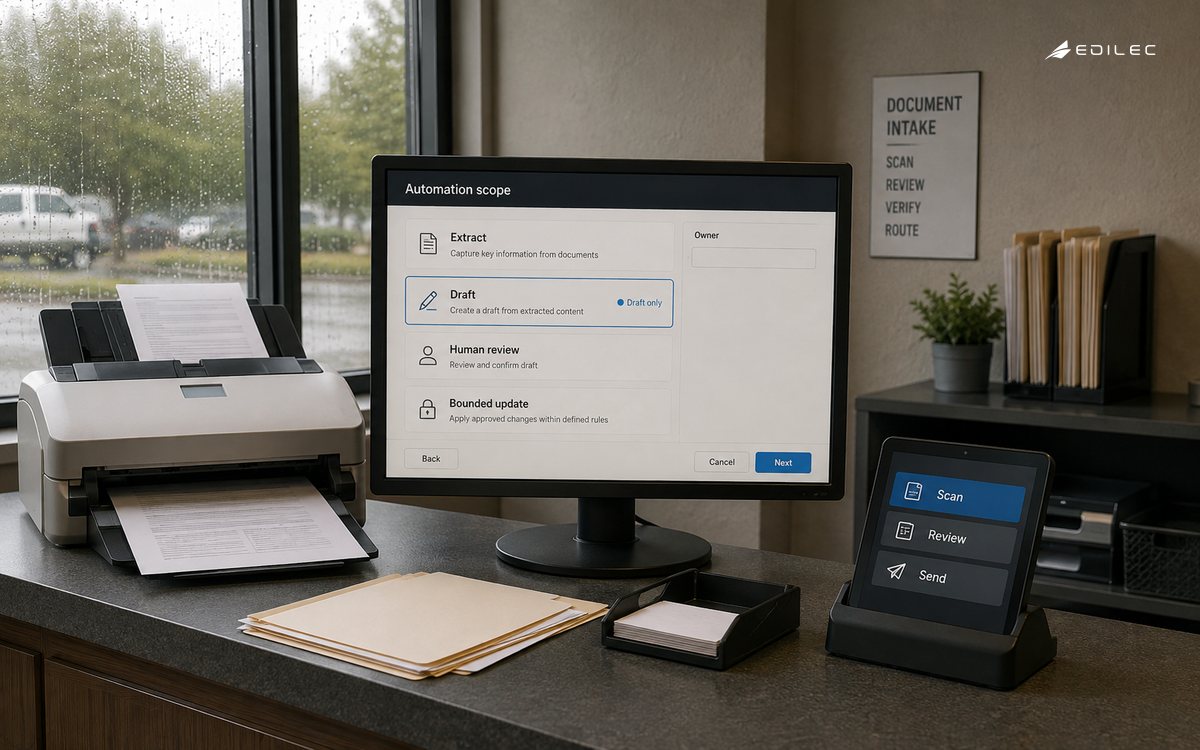
AI automation services combine software integration, data handling, and AI-assisted judgment to move work through a process. They can be useful for routing, extraction, drafting, validation, and bounded updates, but they should not be described as a substitute for process design. This FAQ focuses on decisions teams face after identifying a promising workflow: how to choose the right scope, determine when people must remain involved, assess cost, and create a support model. The practical answer depends on what the automation can change and how easily a wrong action can be detected and repaired.
What is an AI automation service?
It is a service that uses AI as one component of a workflow to assist or perform a defined step. Unlike a chat demonstration, a production automation has inputs, permissions, validation, a destination system, monitoring, and an owner. It may use a language model, rules, classification, or other methods, but the operating boundary matters more than the label. Use the NIST AI Risk Management Framework to ask who is affected, what benefit is expected, and which risks must be controlled in the particular context.
| Question | Practical answer | Decision to document |
|---|---|---|
| What can it automate? | Bounded, repeatable work where inputs, actions, and exceptions can be made explicit. | The exact action, approval rule, and system of record. |
| What should remain human? | Judgment that requires context, empathy, authority, or handling of material uncertainty. | Who decides and what evidence they need. |
| Can it use generative AI? | Possibly, when output variability is evaluated and controlled for the task. | How sources, structure, and validation constrain output. |
| Is it an agent? | Only if it can plan or use tools; that added agency needs carefully limited permissions. | Allowed tools, transaction limits, and stop conditions. |
How do we choose a first use case?
Choose a workflow with enough volume to learn from, but not so much consequence that the team cannot inspect early outcomes. There should be a real baseline: queue delays, rework, missing information, or inconsistent routing. Involve the people who process exceptions, not only sponsors who see aggregate reports. A good first use case has known source systems, a stable owner, and a manual path that can carry the work if automation is paused. Be cautious with tasks where the standard of correctness is contested or the result may affect rights, safety, or a customer commitment.
- What decision is currently delayed or inconsistent?
- What examples show routine work and the exceptions that matter?
- Can a human verify the output without recreating the entire task?
- What system records the final, authoritative outcome?
- What harm could arise from a false positive, false negative, or delayed action?
- Can the action be limited, reversed, or reconciled?
How do we make it safer?
Safety comes from a combination of design choices. Limit data to the approved purpose, enforce user and service permissions, validate structured outputs, place a review gate before consequential actions, and retain a trace that supports investigation. The OWASP LLM Top 10 calls attention to issues such as prompt injection, insecure output handling, and excessive agency that are highly relevant when external content or tools are involved. Treat content received from outside the organization as untrusted. Never give a model unrestricted credentials merely to avoid integration design work.
| Automation feature | Safer default | Reason |
|---|---|---|
| Tool access | Allow only the few operations needed for the stated workflow. | Limits the blast radius of error or manipulation. |
| Output format | Use schema validation and business rules before an update. | Prevents free-form text from becoming an unexamined command. |
| Review | Show sources, proposed change, and a meaningful option to decline. | Lets reviewers exercise judgment rather than rubber-stamp. |
| Monitoring | Track exceptions, failures, and changed source conditions. | Detects when a once-valid design no longer fits work. |
What does it cost to operate?
Operating cost includes more than model usage. Plan for integration maintenance, access reviews, secure logging, evaluation, source-data changes, user training, exception handling, and provider support. Cost can rise unexpectedly if prompts contain large documents, retries are frequent, or a service needs continuous expert review. Estimate a range rather than a single precision number, then refine it using pilot observations. Compare that range with the cost of the current end-to-end workflow, including delay and rework, while avoiding claims of savings that the evidence does not yet support.
- Which elements scale with requests, document size, or connected-tool calls?
- What proportion of cases are expected to require review or rework?
- Who owns monitoring and on-call response after launch?
- What change or migration costs arise if a model or vendor changes?
- How will training and process documentation be maintained?
- What is the cost of keeping a manual route ready for outages or rollback?
How should it be operated?
Treat it like an operational service with a named owner, a service boundary, an exception queue, and change controls. Review a small sample of completed cases as well as failures, because an automation can appear healthy while making a subtle systematic error. Compare performance before and after material changes to a model, prompt, policy, tool, or source system. The NIST Generative AI Profile can help structure scenarios for this review. Make user feedback actionable by linking it to a specific request or recurring pattern.
What evidence should exist before production?
Before production, ask for a compact assurance case rather than a confident demonstration. It should name the permitted task, users, source systems, prohibited actions, accountable owner, acceptance thresholds, and fallback. A representative evaluation set should include ordinary requests, incomplete records, conflicting instructions, malicious inputs, dependency outages, and cases that require abstention. The NIST AI RMF Core treats governance as a continuous function across mapping, measurement, and management; in an automation service, that means ownership and review criteria remain active after launch rather than ending at procurement.
Release evidence also needs operational proof. Confirm that identity and tenant boundaries are enforced before retrieval, every consequential tool call is authorized, retries are idempotent, and an operator can stop the workflow without losing the underlying case. Sample audit records should connect input, retrieved evidence, model and prompt version, reviewer decision, action, and final business outcome. Teams planning the economics can use Edilec’s AI automation ROI model, while the workflow escalation guide and human-in-the-loop failure review help turn uncertainty into an owned exception path.
Frequently asked questions
- Will automation remove jobs? That is an organizational decision, not a technical property; discuss role changes and workload openly rather than promising a predetermined outcome.
- Can we trust confidence scores? Treat them as one signal that needs task-specific calibration and review, not as a universal guarantee.
- How long will a pilot take? Long enough to encounter normal variation, collect review evidence, and rehearse support; calendar estimates depend on integration and data readiness.
- What is the biggest mistake? Expanding action authority before the team can explain and recover from routine exceptions.
Key takeaways
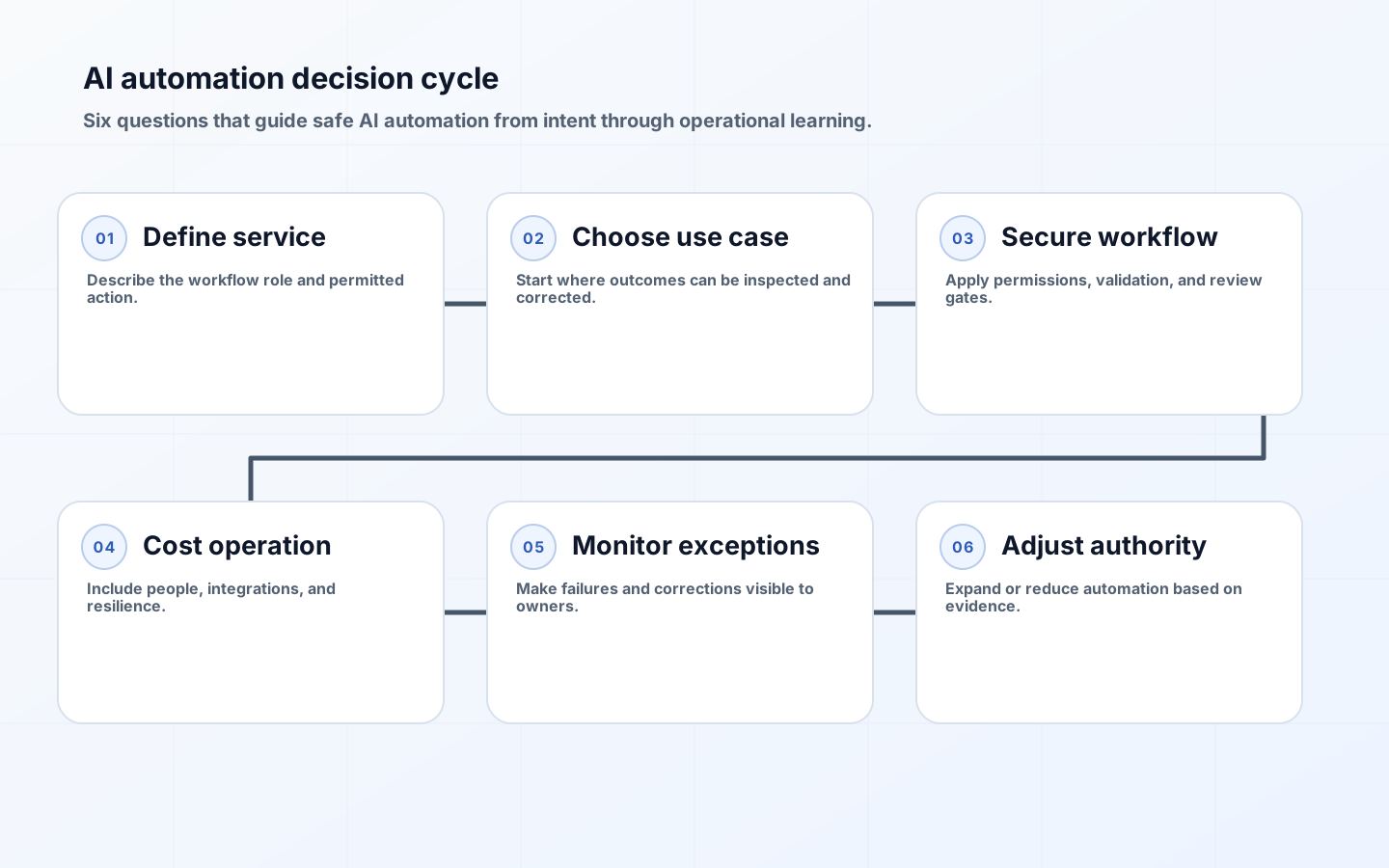
- Define automation as a controlled workflow service.
- Pick a first use case that users can inspect and correct.
- Constrain tools, data, and action authority.
- Cost the ongoing operating model, not just software access.
- Use exceptions and feedback to decide whether to expand.
Conclusion
AI automation is useful when it improves the flow of work without hiding the people and controls that make outcomes trustworthy. A constrained first service teaches more than an ambitious promise. Read AI automation ROI planning and common human-review mistakes before setting a rollout threshold.