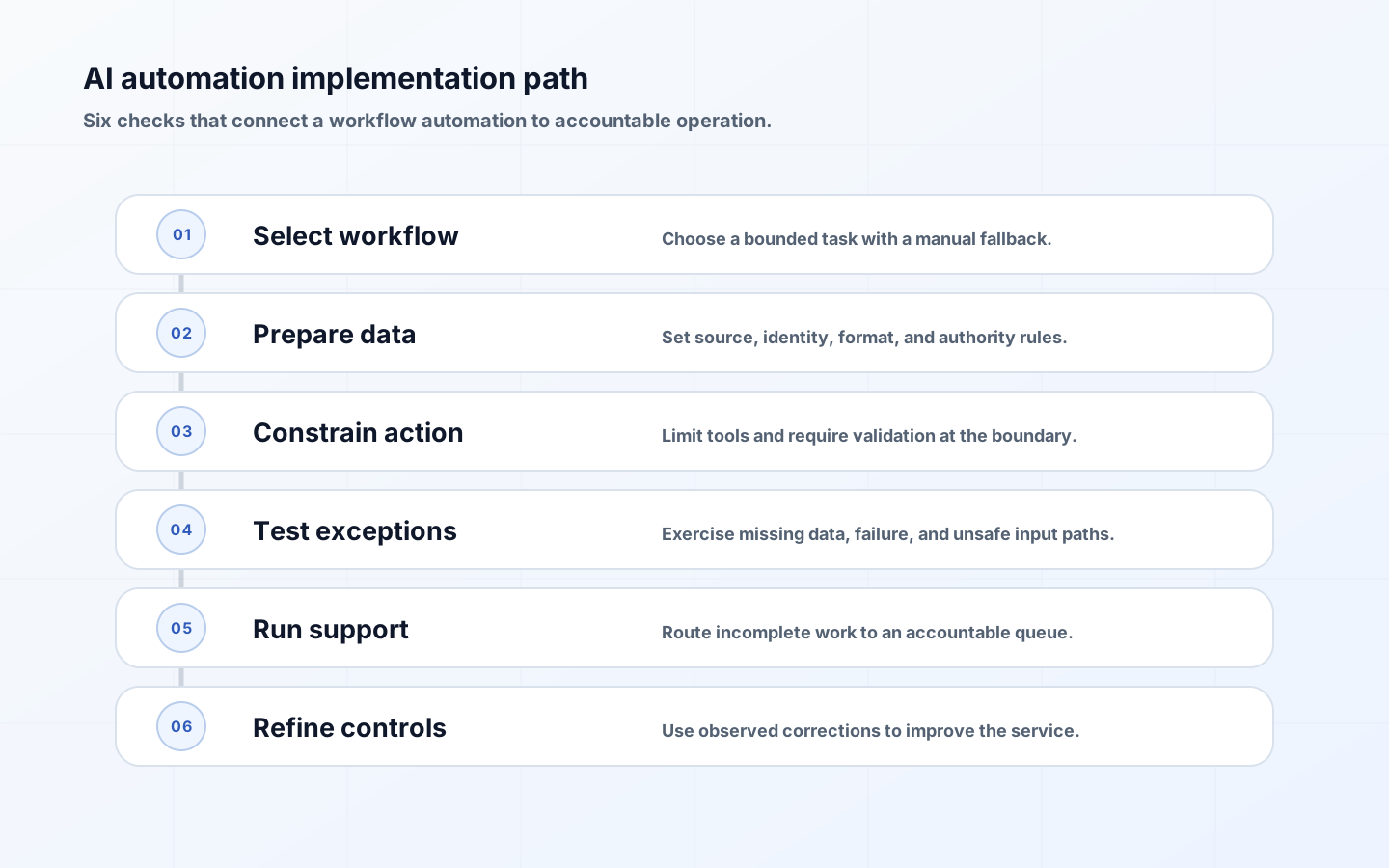
An AI automation services implementation checklist is a way to turn an attractive use case into a controlled working service. The checklist should make practical decisions visible: what enters the workflow, who owns each record, which action the service may take, and how an operator recognizes a problem. Start with a workflow where routine handling and exceptions are already understood. A service cannot make an unclear process clear merely by adding a model. The first release should be narrow enough for people to inspect and correct, yet real enough to reveal integration, access, and support work.
Choose a bounded starting point
Select a repetitive decision with an identifiable user, an authoritative system of record, and a tolerable fallback. Good candidates may include preparing a complete case for review, routing an internal request, or extracting known information from a defined form. Describe what the automation is allowed to do in a verb: draft, identify, validate, route, or update. The NIST AI Risk Management Framework supports this contextual approach by asking teams to map intended use, users, benefits, and harms before treating technical performance as the whole question.

| Checklist item | Done means | Owner |
|---|---|---|
| Workflow map | Normal path, exceptions, decision points, and handoffs are described with users. | Business process owner. |
| Authority rule | The service's permitted action and required confirmation are written down. | Business owner and risk approver. |
| Data boundary | Approved sources, prohibited fields, and permission checks are tested. | Data owner and security lead. |
| Fallback | Users know how to complete or correct work when automation is unavailable. | Operations manager. |
Prepare data and interfaces deliberately
Define a contract at every boundary. Inputs should have a known source, identity, format, and freshness expectation; outputs should be structured enough for the receiving system or reviewer to validate. Avoid pasting entire records into a prompt when a smaller, justified set of fields is sufficient. Make system permissions apply before retrieval, not after a response is composed. Design for missing and contradictory information. The most useful automation may be the one that opens an exception with the right context rather than guessing an answer that contaminates the record.
- Use stable identifiers to connect input, output, action, and final business record.
- Validate required fields and allowed values before a downstream update.
- Keep sensitive content out of diagnostics unless it is necessary and protected.
- Test source outages, stale records, duplicates, and conflicting values.
- Define idempotency or reconciliation for retried requests.
- Document which interface is authoritative when systems disagree.
Apply safeguards at the moment of action
Controls should meet the workflow where they are needed. A reviewer may need the original source, the proposed result, confidence or validation signals, and a clear choice to accept, correct, or escalate. An automated update may need a constrained tool permission, a policy rule, and an audit event. The OWASP guidance for LLM applications is especially relevant when untrusted text can influence instructions or connected tools. Keep tool access narrow and do not allow an automation to broaden its own authority through a response.
| Moment | Safeguard | Operator view |
|---|---|---|
| Request intake | Authenticate the requester and validate allowed content and source. | Clear rejection reason and route to manual handling. |
| AI processing | Use structured instructions, constrained tools, and permitted data only. | Service status and traceable request identifier. |
| Review | Present evidence needed to judge the proposal without hiding uncertainty. | Accept, edit, reject, or escalate action. |
| System update | Validate the final action and record the acting identity and version. | Confirmation or an owned reconciliation exception. |
Test the workflow, not just the model
Build a reviewed set of cases that represents ordinary work and known trouble: incomplete documents, multiple languages if relevant, obsolete policies, duplicate requests, adversarial content, and records with conflicting facts. Test the whole journey from source access to final update. Record whether reviewers can understand and safely resolve failures. The NIST Generative AI Profile offers a useful inventory of generative-AI risks, but acceptance criteria must be specific to the decision you are automating. Re-test after a material model, prompt, tool, or data change.
- Representative task cases reviewed by people who own the workflow.
- Documented failures with expected routing and recovery behavior.
- Permission and adversarial-input tests for every connected system.
- Load and timeout behavior that preserves a manual fallback.
- A change record that identifies the configuration being released.
- An operational rehearsal of pause, rollback, and incident escalation.
Operate with visible exceptions
Launch with a queue and a named owner for cases the automation cannot complete. Watch not only volume and latency but the reasons work leaves the normal path. An increase in exceptions may indicate a source change, a policy shift, a new user behavior, or a flaw in the design. Keep reviewers involved in early trend analysis so the team does not optimize a technical metric while operational quality declines. Make it easy to pause a single automation route when evidence calls for it, rather than treating shutdown as a system-wide emergency.
Frequently asked questions
- Do we need human review? Use review where the consequence, uncertainty, or legal and policy context requires informed judgment; do not call a passive click review.
- Can we automate from day one? Start with an authority level that the team can observe and reverse, then earn broader action rights.
- How should we handle edge cases? Make them first-class workflow states with an owner, not silent failures or improvised workarounds.
- What does successful launch look like? Users can complete routine work, correct exceptions, understand service limits, and reach support without guessing.
Assign authority by action, not by model confidence
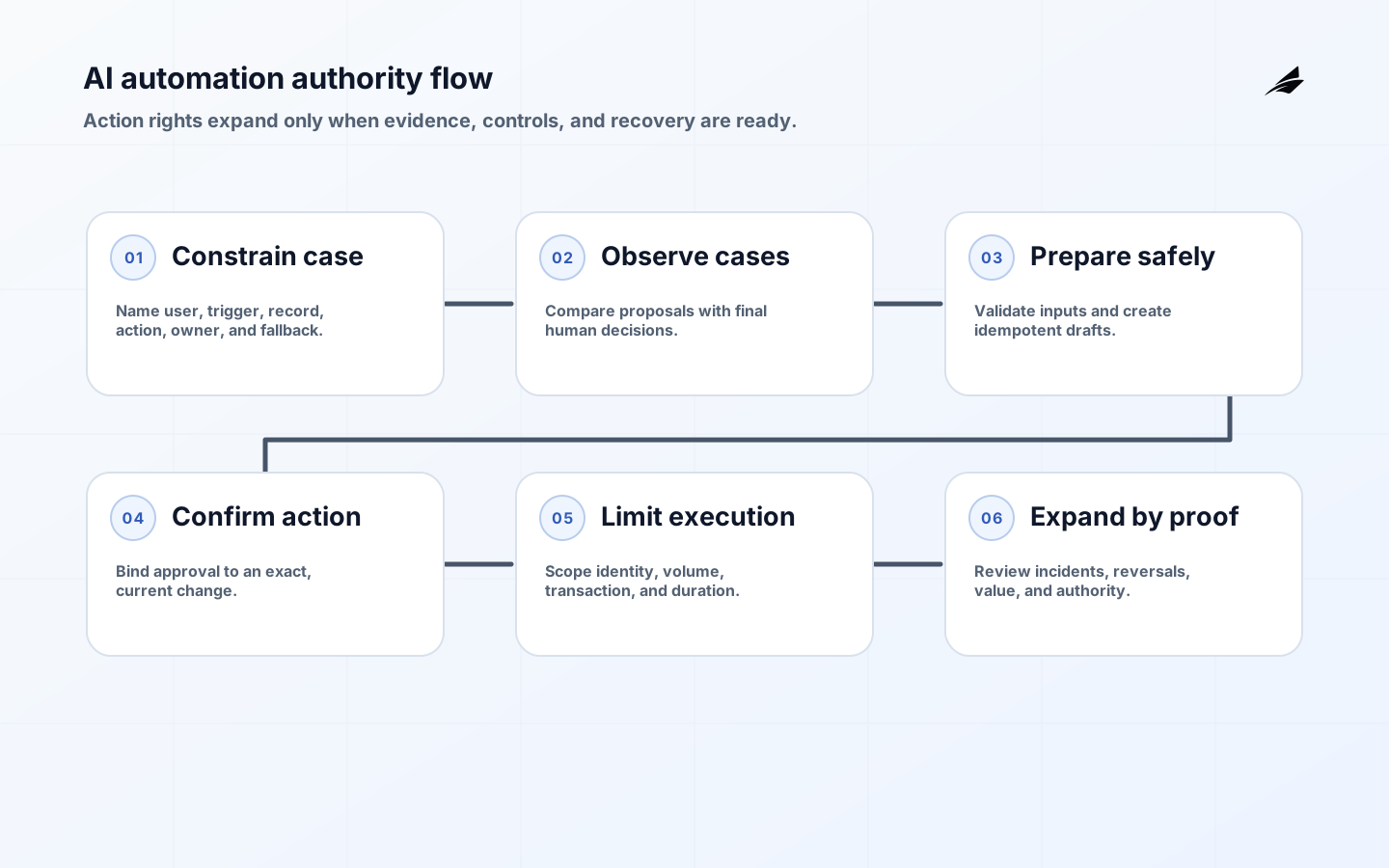
An implementation checklist should state the highest action each component may take. A classifier may label an inbound request, a retrieval service may assemble evidence, and a language model may draft a response; none of those permissions necessarily includes updating the customer record or sending the message. Define authority tiers such as observe, recommend, prepare, execute with confirmation, and execute under a reversible policy. The tier belongs to the business action, not to a vendor's confidence score. NIST's AI RMF Core calls for documented human oversight, system limits, and testing in conditions similar to deployment. Translate that guidance into enforceable service accounts, scoped API methods, transaction limits, and approval rules. A prompt that says 'ask first' is not an access control.
Create acceptance evidence for every tier. An observe-only pilot should prove that inputs are authorized, sensitive fields are minimized, and proposed actions can be matched to final human decisions. A prepare tier should additionally prove deterministic validation and idempotent draft creation. A confirmed-execution tier should demonstrate the identity of the approver, the exact proposed change, expiry of stale approvals, and protection against a second execution. Autonomous reversible action requires a tested compensating transaction, a small blast radius, and an operator who can pause the route. The management-system approach in ISO/IEC 42001 reinforces the need to establish, maintain, and continually improve organizational controls around AI. This progression gives an AI automation implementation a credible path to expand without granting broad privileges on the strength of a demo.
Key takeaways
- Define the action boundary before building the integration.
- Make data contracts and system authority explicit.
- Put safeguards beside the consequential action.
- Test exceptions, permissions, and recovery end to end.
- Run operations through a visible, owned exception queue.
Conclusion
A well-run AI automation service is defined as much by its exception handling as its routine path. This checklist keeps delivery grounded in real work, accountable authority, and recoverable actions. For further planning, see human-in-the-loop automation and agent tool permissions.