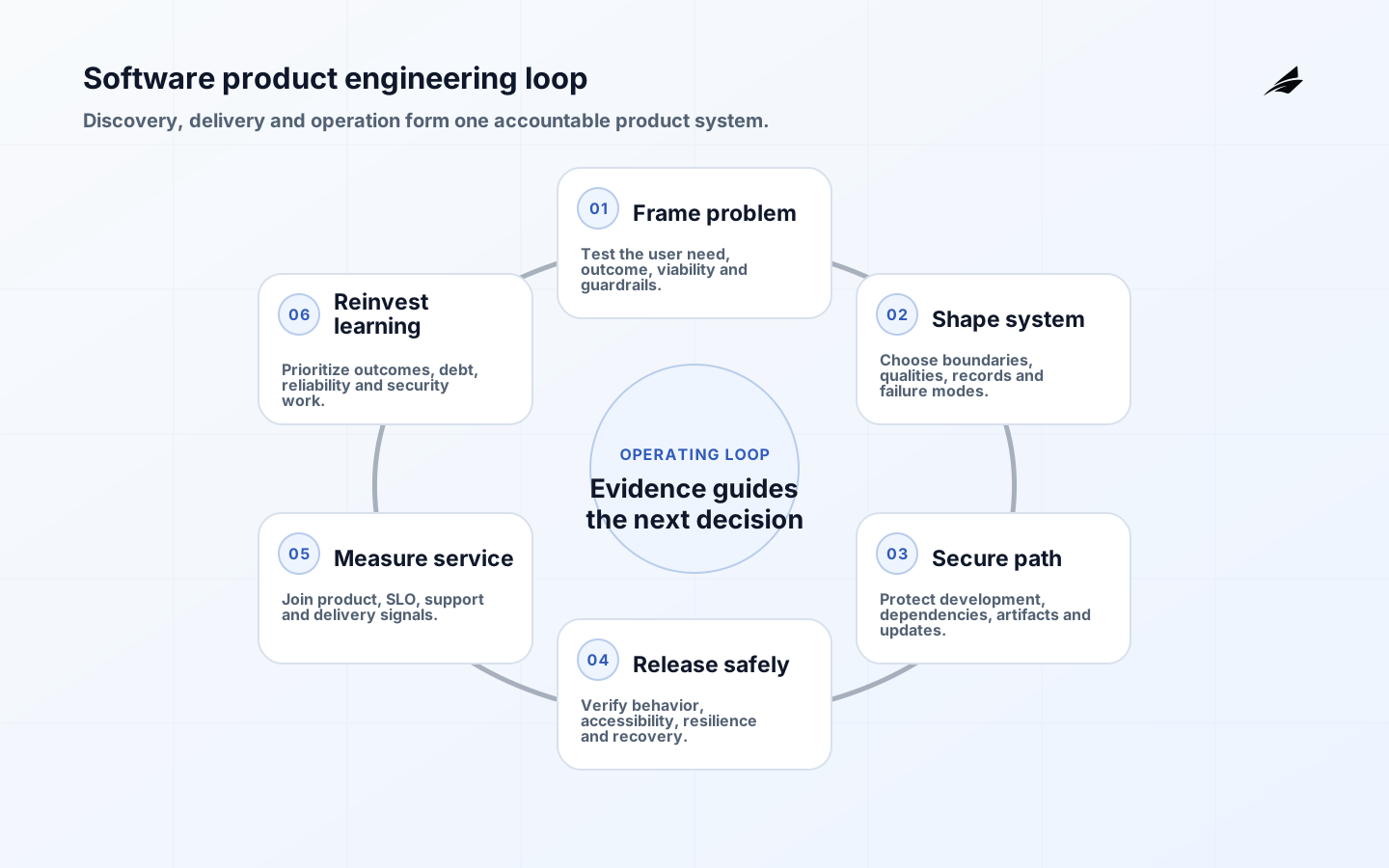
Software product engineering is the continuing discipline of discovering a valuable problem, building a usable and secure product, operating it reliably and learning what to change. This software product engineering FAQ focuses on decisions leaders and teams repeatedly face. The central distinction is that delivery does not end at deployment: code, architecture, support, security, accessibility, data and product outcomes remain one operating responsibility.
For step-by-step planning, use the software product engineering guide, the implementation checklist and the software product engineering services guide. Assurance depth should match consequence, exposure and uncertainty; the same operating principles can support products of very different scale.
What is included in software product engineering?
The scope includes product discovery, interaction and service design, architecture, application and platform engineering, data, security, quality, release, reliability, support and measurement. It also includes commercial and policy constraints that shape behavior. A product team may use internal platforms and specialist groups, but one accountable owner must connect these contributions to the user and business outcome.
A durable team contains product, design and engineering authority, with access to operations, security, data and domain expertise. Organize around a coherent product or service boundary rather than a temporary project phase. Give the team decision rights, production feedback and budget for maintenance. Separate specialist review can add independence, but throwing requirements over organizational boundaries weakens shared understanding.
| Question | Decision evidence | Good signal | Warning signal |
|---|---|---|---|
| Problem | Research, baseline and alternatives | Observed unmet need | Feature list without user evidence |
| Team | Owned boundary and decision rights | Can act from insight to operation | Many handoffs, no service owner |
| Architecture | Quality attributes and constraints | Choices trace to needs | Technology chosen before context |
| Operation | SLOs, support and improvement capacity | Learning reaches roadmap | Ownership ends at launch |
How much architecture should be decided up front?
Decide enough to control expensive and high-consequence risks: trust boundaries, systems of record, availability and recovery, data location, accessibility, regulatory constraints, integration style and major operating cost. Delay choices that are cheap to reverse until evidence improves. Record context and consequences in short architecture decision records. Revisit decisions when assumptions change rather than treating architecture as a one-time ceremony.
Prefer the simplest structure that supports independent change and clear ownership. A modular monolith can be a strong starting point; services add value when boundaries, scaling, isolation or team autonomy justify their distributed-systems cost. Define API versions, authentication, timeouts, retries, idempotency and reconciliation. Every dependency needs a designed failure mode and an owner.
Where do security and software supply-chain controls fit?
They fit in normal product work. NIST SSDF organizes practices around preparing the organization, protecting software, producing well-secured software and responding to vulnerabilities. Translate that into protected repositories and builds, security requirements, threat modeling, review, dependency controls, testing, artifact integrity and a disclosure and remediation process. Preserve evidence teams can use at release and during investigation.
CISA's secure-by-design approach places responsibility for customer security outcomes on software manufacturers. Use safe defaults, strong authentication, least privilege, useful security logs and supported updates. SLSA provides levels for software artifact supply-chain integrity; select a target based on risk and acquisition needs. Inventory dependencies and build provenance so a newly disclosed issue can be scoped quickly.
Security is not only vulnerability scanning. Test cross-user and cross-tenant authorization, malicious files, secrets exposure, administrative abuse, privacy misuse and recovery after compromise. Define severity, response authority, customer communication and supported versions before an incident. Measure time to assess exposure and fix root causes, not just the number of findings closed.
What does sufficient testing and a safe release look like?
Start from failure consequence and product uncertainty. Combine unit, component, contract, integration, journey, exploratory, performance, resilience and security testing. Use production-shaped data without exposing real sensitive records. Include accessibility throughout design and verification; WCAG 2.2 supplies testable criteria, while assistive-technology and user evaluation reveal whether critical tasks are genuinely workable.
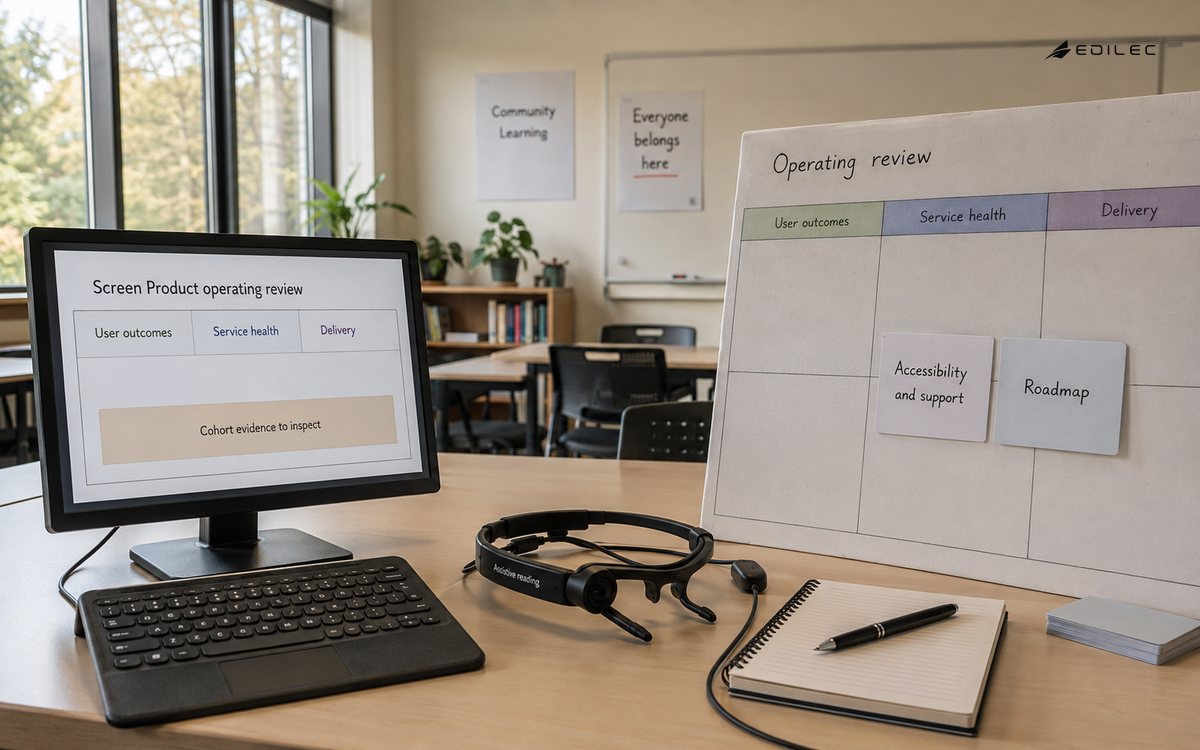
A safe release identifies the changed behavior, affected data, migration, test evidence, known risks, observability, support plan and recovery route. Progressive delivery reduces blast radius only when cohorts, metrics and pause authority are real. Test rollback or forward repair, including schema and event compatibility. A deployment that succeeds technically but causes user or data harm must still stop.
| Release concern | Evidence | Production measure | Response |
|---|---|---|---|
| Behavior | Risk-based scenarios and trace | Task failure and correction | Pause or repair |
| Reliability | Load, fault and recovery tests | SLI and error budget | Reduce exposure |
| Security | Threat and authorization tests | Abuse and vulnerability signals | Contain and remediate |
| Adoption | Usability and support readiness | Completion and contact demand | Improve journey or training |
Which software product engineering metrics matter?
Use three layers. Product outcomes show whether users achieve the intended result. Service measures show availability, latency, correctness, support and cost. Delivery measures show the team's ability to change safely. DORA's current five are change lead time, deployment frequency, failed deployment recovery time, change fail rate and deployment rework rate. They are diagnostic signals for a service, not individual productivity targets.
Review segments and trends with qualitative evidence. Activation can rise while a key cohort fails; uptime can remain high while a critical workflow is wrong. Pair telemetry with support records, research and incident learning. Define denominators and exclusions. Avoid rewarding output volume, story points or lines of code, which can distort behavior without showing customer value.
How should teams manage cost, technical debt and AI-assisted work?
Model lifecycle cost across engineering, infrastructure, licenses, support, security, compliance and change. Connect cost to demand units and product outcomes. Record technical debt as a constraint and consequence with an owner and trigger, then prioritize its effect on reliability, security and changeability. Reserve continuing capacity for upkeep instead of waiting for a rescue program.
Maintain a current service evidence pack with architecture, dependencies, data authority, SLOs, threat assumptions, supported versions, recovery results and risk decisions. Automate updates where possible and sample manually. During a supplier advisory or incident, identify affected environments and customer exposure without rebuilding inventory from source code, tickets and memory.
Use incident reviews to improve the engineering system, not only the failed component. Examine requirement ambiguity, test gaps, review conditions, deployment controls, observability and incentives. Assign improvements and verify them in a later release or exercise. Sharing reusable lessons reduces recurrence across products without requiring one architecture everywhere.
Protect capacity for dependency updates, accessibility remediation, support analysis, recovery exercises and security response. These are product work. When funding recognizes only roadmap features, essential duties become hidden queues and eventually constrain reliability and delivery speed.
Plan retirement with users, integrations, records, retention, exports, contracts, credentials and communication. Provide migration, verify deletion or archive, maintain security support through the published end date and monitor unexpected traffic. A service is not retired while hidden consumers still depend on it.
AI-assisted tools can draft code, tests and documentation, but the team remains accountable. Approve tools and data uses, protect secrets and customer information, review generated changes, verify licenses and dependencies, and test behavior. Track whether rework, defects or security findings change alongside speed. High-risk code needs the same or stronger review regardless of how it was produced.
Run a decision-focused product operating review
- Begin with user and business outcomes, then service objectives, support demand, delivery, security and cost. Examine cohorts and real cases. Decide priorities, risk treatment and experiments rather than presenting every available chart.
- If overall onboarding completion rises while assistive-technology users fail, inspect accessibility and support evidence before adding features. Reliability may appear as abandonment rather than an incident; combined product and operating evidence reveals it.
- Close with named decisions, expected movement and a review date. Keep service risks and architecture constraints beside the roadmap so urgent features do not repeatedly displace security, recovery and debt work.
- Quarterly, test whether the product boundary and ownership still fit new markets, acquisitions and platform dependencies. Update service maps, data authority, escalation and support before incidents expose fragmented accountability.
- Review unit economics without treating cost reduction as the only outcome. Identify demand that drives infrastructure and support, and ensure optimization does not weaken accessibility, security, reliability or learning.
Key takeaways
- Own discovery, delivery and operation as one product lifecycle.
- Make architecture proportional to irreversible risk and explicit quality attributes.
- Integrate SSDF, secure defaults and artifact provenance into daily work.
- Release progressively with tested data, recovery, accessibility and support paths.
- Measure product outcomes, service health and delivery performance together.
Frequently asked questions
Is an MVP allowed to have manual operations?
Yes, when the manual work is safe, disclosed, staffed and useful for learning. Define volume limits, authority and error controls. Do not hide unsustainable labor or use people to compensate for missing privacy, security or safety controls.
Is DevOps the same as product engineering?
No. DevOps practices improve collaboration and the flow from development to operation. Product engineering includes that flow plus discovery, design, commercial context and product outcomes. Both favor enduring ownership and fast feedback.
When should a product be rewritten?
When evidence shows the current structure blocks critical outcomes and incremental change cannot address the constraint economically. Compare strangling, modular extraction, platform replacement and rewrite. Preserve behavior knowledge, migrate in slices and avoid replacing working complexity with undocumented assumptions.
Maintain a current service evidence pack with architecture, dependencies, data authority, SLOs, threat assumptions, supported versions, recovery results and risk decisions. Automate updates where possible and sample them manually. During a supplier advisory or incident, the team should identify affected environments and customer exposure without rebuilding an inventory from source code, tickets and memory.
Plan retirement as engineering work. Identify users, integrations, records, retention, exports, contracts, credentials and communication. Provide a migration path, verify deletion or archive, keep security support through the published end date and monitor unexpected traffic afterward. A service is not retired while hidden consumers still depend on it.
Treat engineering capability as a product too. Maintain build systems, test environments, developer access, reusable components and documentation with owners and service expectations. Measure setup time, pipeline reliability, dependency update latency and developer support. Improvements should reduce cognitive and operational load without centralizing every decision in a distant platform team.
Conclusion
Software product engineering is a learning system with operational responsibility. Keep teams close to users and production, secure the path from source to release, measure real outcomes and invest continuously in changeability. That is how a product grows without trading away trust or reliability.