Application management services keep business applications reliable, secure, supportable and economically useful after launch. The scope can include service desk, incident response, monitoring, problem management, releases, minor enhancements, platform administration, vulnerability remediation, supplier coordination and lifecycle planning. It should not be a vague promise to “keep the lights on”; every responsibility needs a boundary, service objective, evidence and escalation path.
This application management services FAQ helps buyers and service owners define that operating contract. Use it with the transition and operations checklist, the enterprise AMS delivery plan and the enterprise implementation checklist. The right model depends on application criticality, estate complexity and internal capability.
What should application management services include?
Define scope by named applications, environments, integrations and operational capabilities. Separate incidents from service requests, problems, standard changes, projects and product improvements. State coverage hours, on-call expectations, languages, locations, data access, third-party products and out-of-scope work. Include ownership for certificates, batch jobs, queues, interfaces, schedulers, backups, restore testing, release pipelines and privileged accounts; these edge responsibilities are where contracts often fail.
Choose a service model deliberately. A staff-augmentation model supplies capacity under customer direction. A managed-capacity model owns a backlog and team outcomes. A managed-service model accepts defined service objectives and operating responsibilities. Co-managed arrangements can work well when product knowledge stays internal and an external team supplies round-the-clock operations or specialist skills, provided one accountable service owner resolves cross-team priorities.
| Work type | Typical ownership | Acceptance evidence |
|---|---|---|
| Incident and recovery | Service team with business escalation | Restored service, timeline, impact and follow-up record |
| Problem elimination | Joint product, engineering and operations | Root cause, corrective control and recurrence measure |
| Standard request | Service desk or automation | Approved catalog item, completion and audit evidence |
| Release and change | Product owner plus delivery and operations | Traceable artifact, tests, approval and recovery plan |
| Minor enhancement | Prioritized product backlog | User acceptance, telemetry and maintainability evidence |
| Lifecycle risk | Service owner and technology owner | Upgrade, replacement or retirement decision with funding |
How does an AMS transition work?
Transition should prove operational control, not merely transfer documents. Inventory the estate and dependencies; baseline demand, reliability, security findings and cost; map stakeholders and suppliers; obtain controlled access; and classify known risks. Shadow the incumbent, reverse-shadow with the incoming team, then require the new team to execute representative incidents, releases, restores and user requests under observation.
Set entry and exit criteria for each transition wave. High-risk applications should not move until monitoring, escalation, backup evidence, source and deployment access, data handling and support knowledge meet the agreed floor. Preserve an open-risk register with owners and dates instead of forcing every issue to close before takeover. Stabilization should have enhanced staffing, daily service review and a clear threshold for normal operation.
How should SLAs, SLOs and support priorities be designed?
Priority should reflect business impact and urgency using observable criteria, not the requester’s job title. Define the service clock, acknowledgement, restoration or workaround target, communication cadence and resolution path. Exclude waiting states only when responsibility is explicit and visible. Measure end-to-end user experience as well as supplier processing time; otherwise a ticket can meet its SLA while the business remains blocked.
Google SRE distinguishes an indicator, an objective and an agreement with consequences in its SLO guidance. Use a few user-relevant indicators such as successful transactions, latency, data freshness or completion correctness. Error budgets can guide the balance between reliability work and change. Do not promise 100 percent availability or use an average that hides severe tail latency and critical-user failures.
| Service measure | Useful definition | Anti-pattern |
|---|---|---|
| Availability | Fraction of eligible user transactions that succeed | Server uptime detached from user workflow |
| Restoration time | Impact start to verified business recovery | Clock stops at an untested workaround |
| Change reliability | Failed deployments and recovery duration | Counting only successful deployment jobs |
| Backlog health | Age by risk, priority and blocked reason | Total ticket count without demand mix |
| Security remediation | Risk-weighted time to mitigation and verification | Raw vulnerability count with no exposure context |
| Customer experience | Task success and repeated contact for same issue | Satisfaction score without response bias |
Who owns monitoring, incidents and problem management?
The service owner owns the observable service outcome; technical teams own instrumentation and response within their components. Collect logs, metrics and traces with privacy-safe correlation. The OpenTelemetry observability primer describes how properly instrumented systems support questions about novel failures. Every alert needs a condition, severity, action, owner and runbook; dashboards without response ownership are not controls.
Incident command should establish impact, roles, timeline, communication and recovery objective. After restoration, problem management should identify contributing technical and organizational conditions, then verify corrective actions. Avoid mandatory root-cause theater for every minor ticket, but perform proportionate learning for recurring, high-impact, security or data-integrity events. Track recurrence and action age so post-incident work does not vanish behind feature demand.
How are releases, technical debt and security handled?
Use one controlled path from versioned source to production with automated build, tests, approvals and traceable artifacts. Separate deployment from feature exposure for risky changes. Classify emergency changes narrowly and review them afterward. DORA’s delivery guides support balancing throughput and stability; use delivery measures to improve the system, not rank individuals or reward large batches.
Assign vulnerability intake, triage, mitigation, validation and disclosure responsibilities. Prioritize exploitation evidence, exposure, business impact and compensating controls. CISA’s Known Exploited Vulnerabilities Catalog is one authoritative input, not a complete inventory. Include dependency and platform updates, secrets, access reviews, security logging and end-of-support technology in the backlog. Reserve capacity for technical debt using risk and service evidence.
How should pricing, cloud cost and supplier governance work?
Common pricing models include fixed baseline plus variable demand, capacity-based teams, catalog prices and outcome-linked components. Pure per-ticket pricing can reward ticket creation and suppress automation; pure fixed price can hide demand growth. Define volume bands, complexity assumptions, project boundaries, indexation, after-hours charges, third-party pass-through and continuous-improvement expectations. Keep service credits proportionate and secondary to restoration and learning.
Cloud cost needs shared engineering, finance and business ownership. The FinOps Framework emphasizes collaboration, business value and timely accessible data. Tag or allocate cost to applications and environments, identify anomalies, forecast demand and measure unit economics where meaningful. Cost optimization must preserve service objectives and resilience; deleting spare capacity or logs without understanding their control purpose can create a larger operational loss.
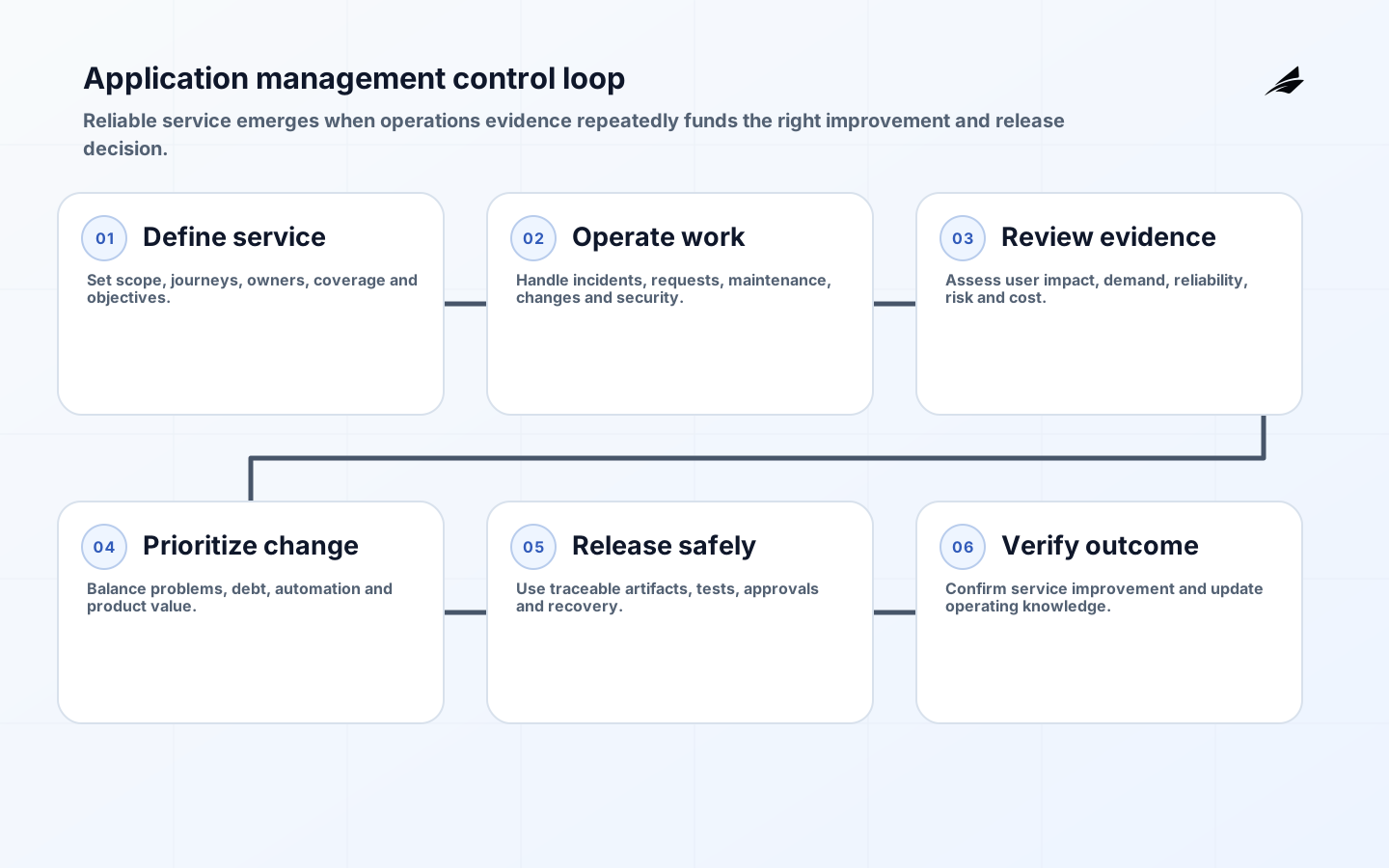
What should the application management operating cycle look like?
- Define service boundaries, critical journeys, owners, coverage and objectives.
- Transition inventory, access, knowledge, telemetry, risks and supplier contacts in waves.
- Operate incidents, requests, changes, security and routine maintenance through named controls.
- Review demand, service levels, user impact, recurring failures, risk and cost at an agreed cadence.
- Prioritize problem elimination, automation, technical debt and small product improvements together.
- Release changes with traceable evidence, gradual exposure and rehearsed recovery.
- Verify outcomes, update runbooks and feed incidents and feedback into the backlog.
- Reassess sourcing, architecture, lifecycle and exit readiness at least annually.
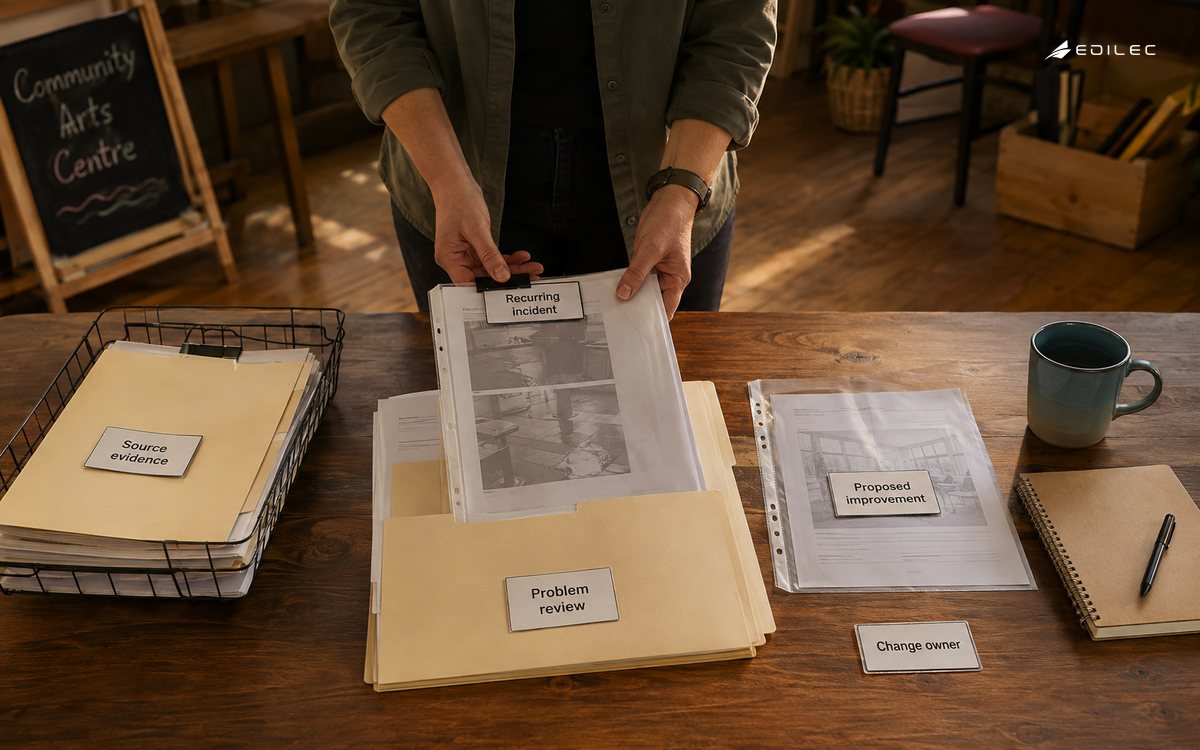
Example: turn repeated batch failure into service improvement
If a nightly invoice job fails twice a month, incident response should restore processing and verify totals, but problem work should examine dependency timing, invalid records, capacity and alert lead time. Add a business SLI for invoices completed correctly by cutoff, not merely job exit status. Quarantine bad records without blocking valid ones where rules permit, and give finance an exception queue with ownership.
The improvement release should include representative failure tests, a runbook, deployment evidence and a before-and-after measure of cutoff misses and manual effort. Review whether the fix moved delay into reconciliation or customer delivery. This example distinguishes incident, problem and enhancement work while using one service outcome to decide whether engineering effort actually improved operations.
Key takeaways
- Define AMS around named service outcomes, applications and responsibilities.
- Use transition rehearsals to prove access, recovery, release and support capability.
- Measure user-relevant reliability and incident restoration, not ticket mechanics alone.
- Manage security, technical debt, cloud cost and product improvement in one evidence-based backlog.
- Maintain transparent governance and tested exit readiness throughout the engagement.
Frequently asked questions
What is the difference between application maintenance and AMS?
Maintenance often centers on fixes, patches and small changes. AMS is broader: it includes service ownership, support, observability, incidents, releases, security, suppliers, cost and lifecycle improvement. Confirm the contract’s actual capabilities rather than relying on either label.
Should the AMS team be separate from product engineering?
Separation can clarify coverage and specialist operations, but hard handoffs create queues and lost context. Use shared service objectives, repositories, telemetry and retrospectives. Product engineers should retain operational feedback, while the service team needs authority to automate and remove recurring causes.
How do we know an AMS provider is improving the estate?
Look for fewer repeated incidents and manual requests, faster safe recovery, healthier delivery, shrinking high-risk debt, controlled cost and better user task success. Compare trends with demand and change volume. A declining ticket count is not proof if users have stopped reporting or work moved outside the service.
Conclusion
A quarterly service health check should sample a critical journey, a privileged action, a restore, a recent release and one recurring request. This small evidence set reveals whether documented controls still work together in production.
Application management services work when scope, evidence and authority line up. Define the service from the user journey outward, prove operational control during transition, and use reliability, security, cost and delivery evidence to choose improvements. The result is not passive maintenance; it is a repeatable system for keeping applications useful as business needs and technology change.