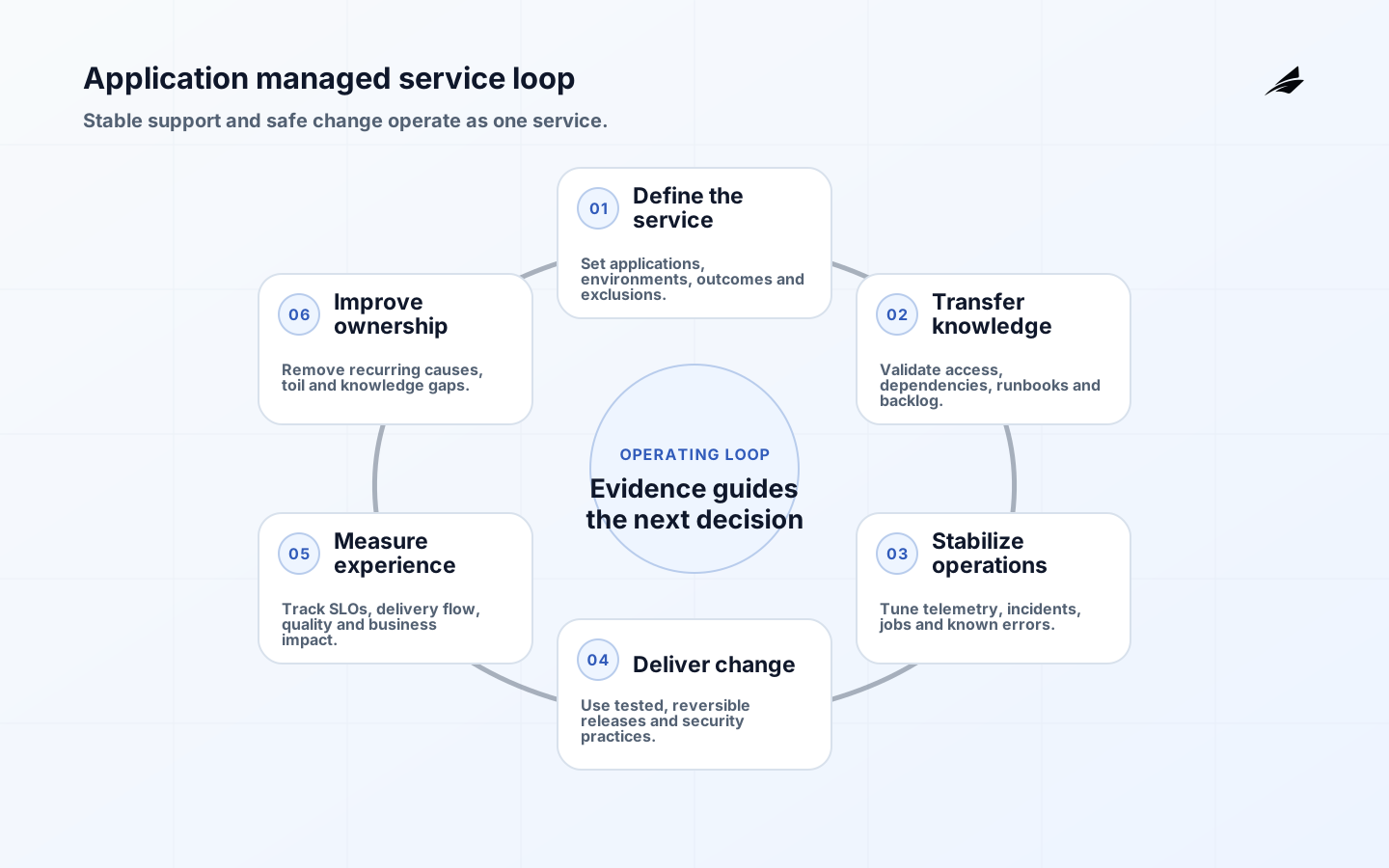
Application managed services provide ongoing support, reliability, maintenance, security and change for a defined application portfolio. The service may include functional support and product enhancement, or it may stop at technical operation. Buyers should therefore evaluate the operating boundary, not the AMS label. This application managed services FAQ explains how to define scope, transfer knowledge, set service objectives, govern incidents and changes, measure improvement and preserve an executable exit.
Use the application managed services delivery plan and application managed services implementation checklist for procurement and transition. Compare the broader application management transition checklist and application management FAQ where terminology differs. For every application, name environments, users, business criticality, code ownership, dependencies, service hours, recovery needs and excluded work.
What do application managed services include?
A complete service catalog may cover user requests, incident triage, problem management, monitoring, batch operations, data correction, configuration, release support, dependency updates, vulnerability remediation, testing, performance, capacity, backup coordination, recovery exercises and minor enhancement. Some activities are application-specific while others depend on platform, cloud, network, identity or third-party teams. Define the provider’s performer and coordination duties separately. A provider that raises a platform ticket has not necessarily restored the application.
Classify applications by business service and operating pattern rather than placing all systems under one generic SLA. A revenue API, monthly finance batch, internal workflow and archival reporting tool have different user journeys and failure consequences. AWS operational guidance emphasizes identified owners, observability, runbooks, playbooks, event response and continuous improvement in its Operational Excellence Pillar. Translate those practices into application-level obligations and evidence.
| Scope question | Specific answer required | Ambiguity to reject |
|---|---|---|
| Portfolio | Named applications, versions, environments and criticality | All business applications |
| Support | Channels, hours, languages, locations and severity | 24/7 support without response scope |
| Change | Configuration, code, database and dependency responsibilities | Minor enhancements included |
| Security | Scanning, triage, remediation, evidence and exception ownership | Security managed |
| Resilience | Backup dependency, restore execution and business validation | Disaster recovery supported |
| Suppliers | Coordination, escalation, authority and clock treatment | Third parties excluded |
How should an AMS transition work?
Begin with portfolio reconciliation, contracts, architecture, source and artifact access, deployment history, open incidents, known errors, vulnerability backlog, data flows, scheduled jobs, monitoring, credentials, recovery procedures and supplier contacts. Shadow current support across representative cycles, including period end and peak demand. The incoming provider should demonstrate work: investigate an alert, deploy a reversible change, recover a failed job, revoke access and restore data. Document gaps with owner, risk, interim action and acceptance date.
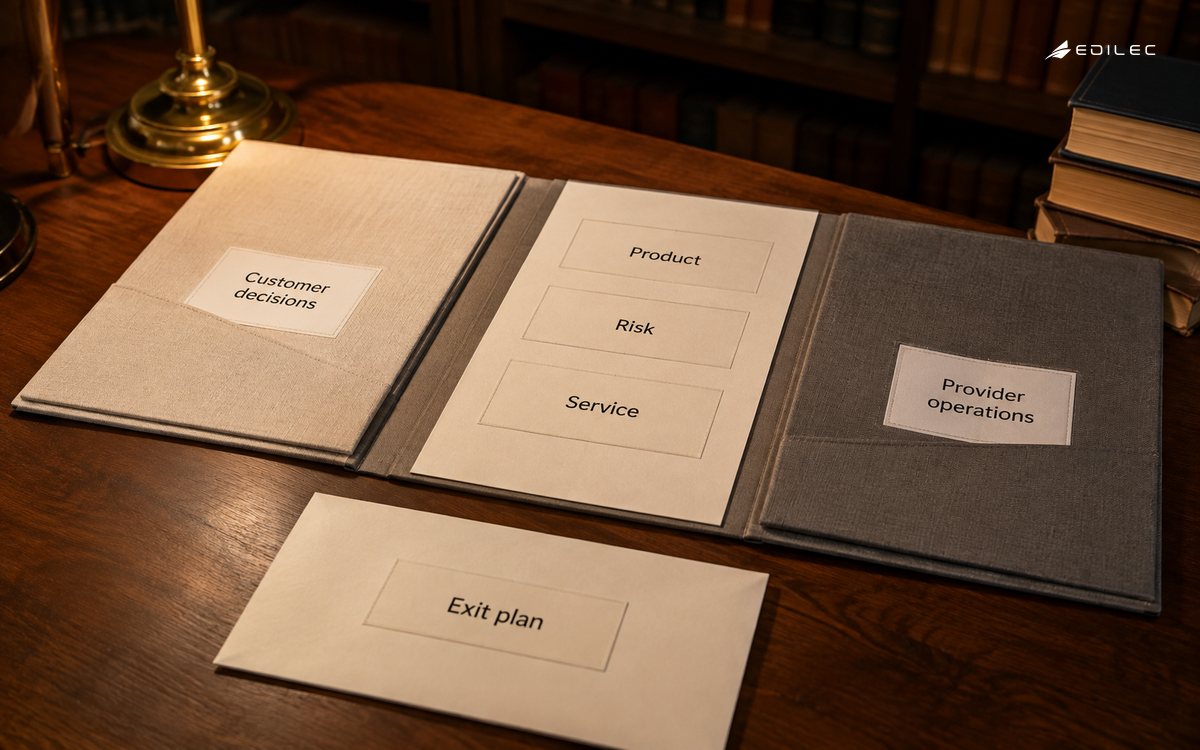
Use federated named identities, least privilege and time-bound elevation. Rotate credentials exposed to outgoing teams. Transfer code, pipelines, infrastructure definitions, test assets, configuration, telemetry queries, dashboards, runbooks and decision history into customer-controlled or contractually portable repositories. Set an acceptance baseline for application health, support backlog and technical debt so old defects do not become later attribution disputes. Transition ends when the provider can operate safely and evidence that operation, not when knowledge sessions are complete.
Which SLAs and SLOs are useful?
Measure user-facing service where possible. Google’s SLO guidance defines an SLO as a target for a service level measured by an indicator and explains error budgets as permitted unreliability. Select indicators such as successful transactions, latency, data freshness or batch completion that reflect user experience. Define population, window, exclusions and data source. Availability reported from server uptime can hide failed logins, corrupt responses or an unusable dependency.
Provider service levels should cover controlled work: acknowledgement, triage, communication, authorized restoration, request completion, vulnerability handling and evidence delivery. Specify severity, clock start, pause conditions, customer dependencies and remedies. Pair speed with quality: reopen, recurrence, failed change, escalation accuracy and knowledge reuse. Do not reward premature closure. Use error-budget or risk thresholds to decide when reliability work should displace planned change, with business and product owners involved.
| Measure | Definition example | Decision it supports |
|---|---|---|
| Journey availability | Valid user attempts completed within threshold | Reliability investment |
| Triage time | Alert availability to documented impact decision | On-call effectiveness |
| Failed change | Production changes requiring rollback, fix or incident | Release control improvement |
| Recurrence | Incidents linked to an unresolved known cause | Problem backlog priority |
| Vulnerability age | Applicable findings open beyond risk target | Remediation capacity |
| Restore proof | Scenario restored and business-validated within objective | Continuity readiness |
Who owns incidents, problems and application changes?
The customer should retain accountable business and product ownership while delegating defined operating tasks. Name an incident commander or authority model for material events. The provider may diagnose and execute pre-authorized recovery, but business interruption, customer communication, privacy notification and risky data correction need named decision rights. NIST SP 800-61 Revision 3 integrates response with governance, protection, detection and recovery; include contacts, evidence, communication, restoration and learning in the service.
Problem management should identify contributing conditions and remove recurrence, not produce a root-cause label unsupported by evidence. Track corrective work to completion and verify the expected signal changes. Changes need version control, peer review, tests, artifact provenance, separation of environments, deployment validation and rollback or forward recovery. NIST SP 800-218 provides a secure software development framework that can be built into AMS change work, including preparation, software protection, secure production and vulnerability response.
How should buyers compare price and improvement?
Normalize price against applications, users, environments, criticality, ticket and change volumes, support windows, locations, technologies, languages, telemetry, compliance, retained technical debt and included enhancement capacity. Separate transition, recurring operation, consumption, projects and exit. A low ticket price can encourage fragmentation or closure behavior. Ask for a worked scenario showing staffing, on-call, overage, indexation and supplier pass-through. Preserve customer access to operational data needed to validate invoices and service levels.
Measure delivery flow as well as support. Current DORA guidance uses five software-delivery measures: change lead time, deployment frequency, failed deployment recovery time, change fail rate and deployment rework rate. Apply them per application or service and interpret context rather than ranking unrelated teams. Combine these with SLO attainment, incident recurrence, security debt, user task success, support demand and cost. Require a funded improvement backlog and evidence that automation removes toil rather than merely moving it to the customer.
What security, assurance and exit terms matter?
Review provider access design, staff screening where lawful, secure development, vulnerability disclosure, tenant separation, subcontractors, data locations, continuity and independent assurance. Map evidence to the delivered team and systems. Require prompt incident escalation and notice of material control or supplier changes. Restrict production data in lower environments and support tools. Review privileged activity and access regularly. Ensure the customer can investigate using logs even when provider tools create the first case.
Exit terms should cover source, artifacts, configurations, pipelines, tickets, known errors, vulnerabilities, tests, runbooks, telemetry, reports, licenses, supplier contacts and open work in usable formats. Define assistance, timing, cost, retention and deletion evidence. Test an export during the service. On exit, transfer cases, rotate secrets, revoke identities, validate successor monitoring and preserve required records. An application is not transitioned until the successor can build, deploy, diagnose and recover it.
Control data fixes as production changes. Define which errors support teams may correct, required evidence, approval, validation and reconciliation. Prefer a supported administration function or versioned repair script over direct database editing. Record before-and-after values, actor, case and business confirmation without exposing sensitive data unnecessarily. For financial or regulated records, involve the relevant data owner and preserve chain of approval. Repeated repair is evidence of a product, integration or master-data defect and should create a problem record rather than becoming invisible routine work.
Operate knowledge as part of the service. Runbooks need owner, scope, prerequisites, safety checks, expected result, rollback and last validation date. Knowledge articles should identify audience and supported application version. Review usage and outcomes; a frequently opened article may be valuable or may indicate a recurring defect. Require updates after material incidents and releases. Test procedures with someone other than the author, because readable documentation is not the same as executable knowledge. Protect sensitive diagnostic commands and customer data while keeping responders effective.
Set governance for automation and AI assistance used by the provider. Name permitted use cases, data boundaries, review requirements and accountability for generated output. Prevent customer code, logs or tickets from entering unapproved training or public services. Measure false actions and operator overrides. The customer should receive enough evidence to investigate a decision even when the provider’s proprietary platform made the recommendation. Automation changes service capacity and risk, so material changes belong in normal change and assurance review.
Key takeaways
- Define AMS at application and activity level, including coordination with platforms and suppliers.
- Accept transition only after the incoming team performs representative operations.
- Use user-centered SLOs and provider-controlled service levels with stable definitions.
- Join incident, problem, secure change and product ownership in one improvement system.
- Preserve operational evidence and test service exit before commercial pressure makes it urgent.
Frequently asked questions
Does AMS replace the internal product team?
No. The customer still needs owners for business priority, data, risk, architecture, service objectives and supplier governance. A provider can supply operating and engineering capacity, but it cannot own enterprise risk or product value on the customer’s behalf.
Is ticket volume a useful workload measure?
It helps forecast effort when classification is consistent, but it is not an outcome. Automation, incident fragmentation and user adoption can change volume. Pair it with complexity, recurrence, user impact, flow and quality.
Should AMS include modernization?
It should include continuous maintainability and improvement, while major modernization may need separate funding and governance. Define thresholds so necessary dependency or security work is not excluded as transformation, and projects do not consume support capacity invisibly.
Conclusion
Application managed services are effective when stable support and safe product change reinforce one another. Define the portfolio, prove transition, measure user reliability, preserve customer authority and fund recurring-cause removal. That creates an accountable application service rather than a queue-processing contract.