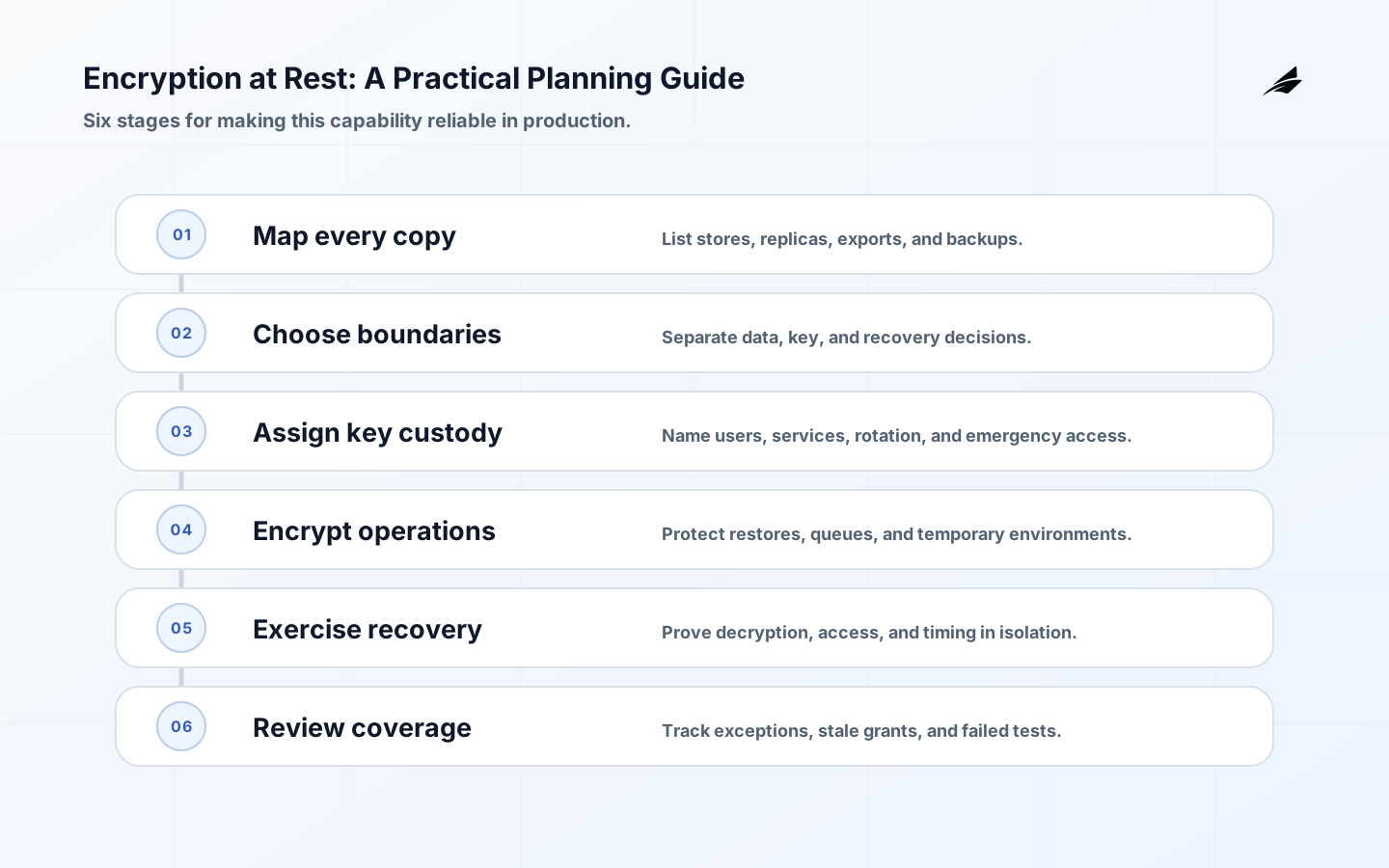
StoragePlan: encryption at rest is a planning problem before it is a cryptography setting. StoragePlan: it protects stored information against particular loss or disclosure scenarios, but it does not replace authorization, secure deletion, logging, or a clear inventory of where data travels. StoragePlan: engineering teams should identify the data that merits protection, the systems and copies that hold it, the threat model, the encryption boundary, and the people or services able to use the keys. StoragePlan: a database setting may protect a disk while an export, replica, cache, backup, analytics store, or developer snapshot remains exposed. StoragePlan: the useful question is: if this storage medium, account, backup, or service is compromised, what information remains readable and why?
Map data and storage before selecting controls — encrypted storage planning
StoragePlan: trace collection, transformation, primary storage, search indexes, queues, object stores, backups, test environments, logs, and exports. StoragePlan: classify information by sensitivity and contractual or legal commitments, then note the owner and retention expectation. StoragePlan: include operational copies: a production database may be encrypted while a support export is stored elsewhere or a backup is restored to a temporary environment. StoragePlan: this map helps determine whether platform-level encryption is sufficient, whether an application field needs separate protection, and which systems need key access. StoragePlan: it also prevents a common mistake: protecting the headline database while ignoring the copies created by ordinary operations.
| StoragePlan: storage situation | StoragePlan: planning question | StoragePlan: typical control |
|---|---|---|
| StoragePlan: managed database | StoragePlan: who administers the service and can access snapshots or replicas? | StoragePlan: provider encryption option, restricted key use, access control, and backup review. |
| StoragePlan: object storage and exports | StoragePlan: can objects be shared, copied, or retained outside the intended lifecycle? | StoragePlan: default encryption, narrow bucket policy, retention rule, and export controls. |
| StoragePlan: application field | StoragePlan: would infrastructure encryption leave a sensitive value visible to routine database readers? | StoragePlan: application or field-level protection with deliberate key design. |
| StoragePlan: backups and restores | StoragePlan: can a backup be read or restored into a weaker environment? | StoragePlan: encrypted backup, restricted restore authority, and recovery exercise. |
Choose the encryption boundary deliberately — encrypted storage planning
StoragePlan: infrastructure encryption is often a strong baseline because it is consistent and operationally manageable. StoragePlan: application-layer encryption can reduce exposure to some infrastructure or database access paths, but it adds design complexity for querying, indexing, rotation, and recovery. StoragePlan: do not select a boundary by marketing term alone. StoragePlan: specify which component encrypts and decrypts, where plaintext can exist, which identities call the key service, what metadata is retained, and how data is restored. For highly sensitive fields, consider whether tokenization, data minimization, or not collecting the field is a better risk reduction than adding more cryptography.
- StoragePlan: use well-reviewed platform and library capabilities rather than designing a proprietary cipher or format.
- StoragePlan: separate data-encryption keys from the mechanisms that protect or authorize their use.
- StoragePlan: grant key use to specific workload identities and administrative roles, not broad human groups.
- StoragePlan: keep key identifiers, algorithms, versions, and rotation behavior documented with the system owner.
- StoragePlan: protect plaintext in memory, logs, error messages, exports, and support tools as carefully as stored ciphertext.
Manage keys as production assets — encrypted storage planning
StoragePlan: keys need ownership, access policy, lifecycle records, backup or recovery design, and monitoring. StoragePlan: decide who creates and approves key use, how service identities are authorized, how key material is protected, and what happens if a key is disabled, compromised, or unavailable. StoragePlan: rotation should be planned with the data format and performance impact in mind; merely creating a new key does not re-encrypt old records. StoragePlan: use provider-managed, customer-managed, or application-managed approaches according to the threat model and operational capability. StoragePlan: the most sophisticated key design is not useful if the team cannot restore a service or investigate a failed decrypt operation safely.
Test recovery and retirement — encrypted storage planning
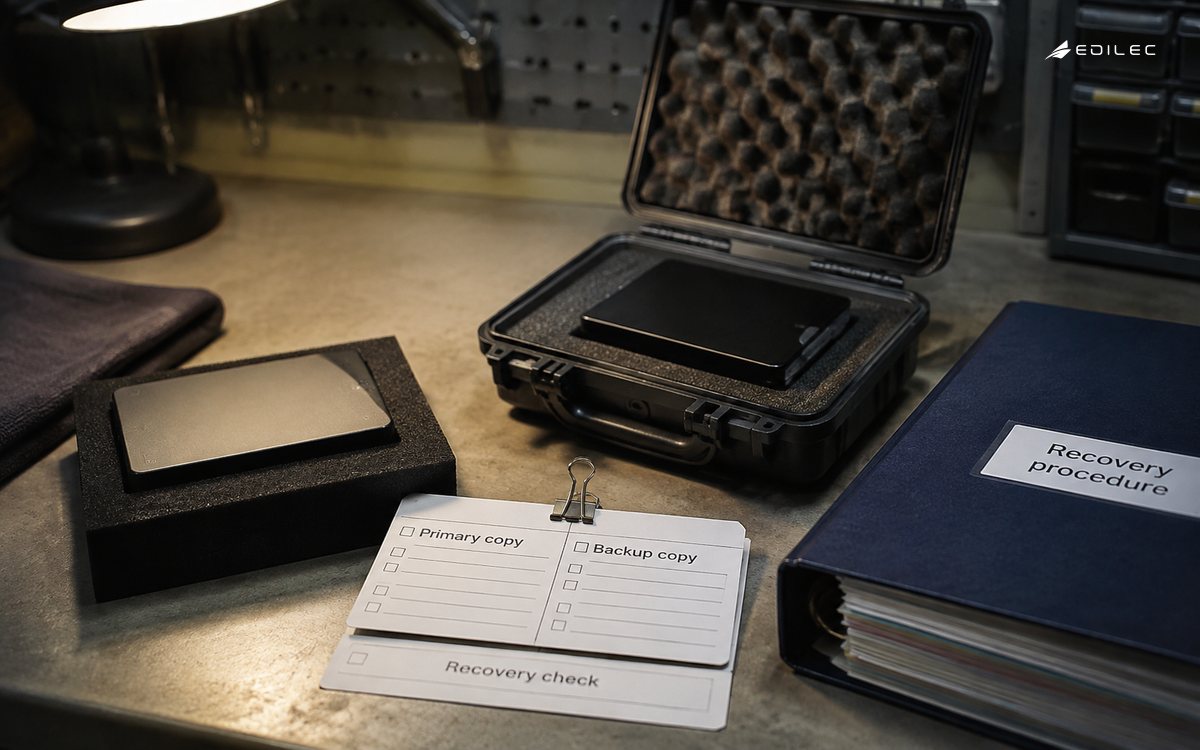
StoragePlan: recovery testing is the practical proof of an encryption design. StoragePlan: restore a representative backup to a controlled environment, verify the correct keys and permissions are available, and confirm that unauthorized identities cannot decrypt the data. StoragePlan: exercise a key rotation path, a service rollback, and a lost or disabled key scenario according to documented safeguards. StoragePlan: when data reaches its retention end, deletion should remove the intended copies and consider whether cryptographic erasure is part of the design. StoragePlan: preserve enough inventory to show which datasets and backups were affected without retaining secrets or sensitive plaintext in the record.
| StoragePlan: signal | StoragePlan: what to verify | StoragePlan: escalate when |
|---|---|---|
| StoragePlan: key-use events | StoragePlan: expected workloads and administrators use keys for expected purposes. | StoragePlan: an unknown identity, region, or service invokes a sensitive key. |
| StoragePlan: restore test | StoragePlan: encrypted backups can be restored only through approved procedures. | StoragePlan: recovery depends on a person, credential, or undocumented manual step. |
| StoragePlan: rotation status | StoragePlan: new and old data behave as designed during transition. | StoragePlan: old ciphertext cannot be read or key retirement has no dependency check. |
| StoragePlan: copy inventory | StoragePlan: exports, replicas, and nonproduction copies follow the protection plan. | StoragePlan: a new pipeline creates storage outside the documented boundary. |
Make encryption operable — encrypted storage planning
StoragePlan: document the data owner, system owner, key owner, recovery owner, and incident contacts. StoragePlan: establish change triggers: new data types, vendors, regions, analytics pipelines, retention rules, or application features should revisit the design. StoragePlan: monitor key access and decrypt failures in a way that supports investigation without logging plaintext. StoragePlan: review practical operational work such as export requests and incident debugging, where people may be tempted to create unprotected copies. StoragePlan: Data protection for custom software connects encryption to the rest of the data lifecycle.
Run a practical operating exercise — encrypted storage planning
StoragePlan: this encryption at rest hands-on planning guide is best validated through a controlled recovery exercise. StoragePlan: choose a representative encrypted dataset and backup, then have an authorized operator restore it into a segregated environment using the documented service and key identities. StoragePlan: confirm that the intended workload can read what it needs, that a routine developer or unrelated administrator cannot use the key, and that logs contain operational context without plaintext. StoragePlan: follow the data into any export, replica, analytics pipeline, or temporary restore created during the exercise. StoragePlan: finally, test the reverse direction: retire a sample dataset or key version according to policy and verify that dependencies and retention obligations are understood. StoragePlan: the outcome should be a practical list of key owners, missing copy inventories, recovery dependencies, and changes required before the next release or data-flow expansion.
StoragePlan: add a short review session whenever a newly introduced customer export changes the assumptions behind encryption at rest. StoragePlan: bring storage owners, key administrators, and incident responders together and start with the actual request rather than a control label. StoragePlan: trace the request from the authoritative record through identity, configuration, policy, implementation, and the evidence an investigator would use. StoragePlan: ask whether protected copies remain within the intended boundary. StoragePlan: then introduce one realistic failure: a delayed directory update, unavailable dependency, stale configuration, unexpected retry, or departure of the person who normally knows the workaround. StoragePlan: the group should choose a safe response before the next urgent event forces improvisation. StoragePlan: capture only concrete outcomes: a missing owner, an unclear approval limit, a test that does not reach the enforcement point, a recovery step that is too broad, or an evidence record that cannot be retrieved. StoragePlan: assign each outcome to a person and date, and rerun the same scenario after the change lands. StoragePlan: this practice keeps encryption at rest connected to daily operations. StoragePlan: it also reveals when a process appears complete because a document exists, while the service itself still depends on unwritten knowledge or standing privilege. StoragePlan: over time, retain a small decision history so new team members can understand why the boundary exists and which assumptions must be revisited as the product, vendors, and workforce change.
Turn encryption at rest into an operating decision — encrypted storage planning
StoragePlan: encryption at rest is strongest when the team states which compromise it limits. StoragePlan: disk encryption may protect a stolen drive, while database or object-store encryption can reduce exposure from a snapshot; neither automatically prevents an authorized application, operator, export, or restored backup from reading data. StoragePlan: separate the data, key, and recovery boundaries. StoragePlan: record who can request decryption, which service identity performs it, how access is logged, and what happens when the key is unavailable. StoragePlan: nIST’s SP 800-57 supports lifecycle ownership. StoragePlan: include replicas, snapshots, queues, indexes, analytics extracts, support downloads, staging databases, and fixtures; SP 800-111 frames storage technologies and the OWASP Cryptographic Storage Cheat Sheet reinforces key protection. StoragePlan: restore an encrypted backup in isolation and test key loss, rotation during a long job, expired credentials, and provider outage. StoragePlan: measure unencrypted copies, stale grants, failed restores, and exception age. StoragePlan: the NIST Cybersecurity Framework, Data Retention, and Secrets Management extend the plan.
Key takeaways
- StoragePlan: encryption at rest begins with a map of data, copies, owners, and threats.
- StoragePlan: choose platform, application, or field protection based on the exposure being reduced and the team’s ability to operate it.
- StoragePlan: treat keys as governed production assets with narrow use policy and tested recovery.
- StoragePlan: include backups, exports, replicas, logs, and nonproduction environments in the plan.
- StoragePlan: test restoration, rotation, and retirement; configuration alone is not proof.
Frequently asked questions
StoragePlan: a useful implementation review asks what a compromised storage administrator, application identity, backup operator, and developer snapshot can each see. StoragePlan: the answers may differ, and that difference is the reason to document encryption boundaries instead of saying that the database is encrypted. StoragePlan: record the key reference without exposing key material, test rotation with a live reader and a restored copy, and confirm that revocation removes access without destroying the only recovery path. StoragePlan: review exception expiry alongside retention so a temporary plaintext export cannot outlive the business reason that created it.
For encryption, compare protection of primary data with protection of restores and exports. StoragePlan: key availability, custody, rotation, and deletion must be tested as one lifecycle. StoragePlan: use a named owner, a dated review, and a measurable stop condition. StoragePlan: check both the normal path and the adverse path, then record the evidence where the next operator can find it. StoragePlan: review dependencies, permissions, configuration, data handling, and recovery together because a locally correct component can still create an unsafe system when its assumptions do not match its neighbors. StoragePlan: keep the first release narrow enough to inspect. StoragePlan: when the evidence exposes a gap, change the control, test, alert, runbook, or ownership record explicitly; do not hide the gap in a broad exception. StoragePlan: a useful review ends with a decision, an owner, and the next verification date.
Conclusion
For encrypted storage planning, consult NIST SP 800-57 Part 1 Rev. StoragePlan: 5: Key Management, NIST SP 800-111: Storage Encryption Technologies, OWASP Cryptographic Storage Cheat Sheet, NIST Cybersecurity Framework 2.0 when checking the stated boundary, test, and operating evidence.
StoragePlan: related decisions for encrypted storage planning: How AI Agents Work in Business Workflows: Architecture, Controls and Rollout, RAG for Company Knowledge and Support: Architecture, Controls and Rollout, Internal tools that scale with operations.
StoragePlan: encryption at rest is dependable when it is part of a complete storage and key lifecycle. StoragePlan: know where sensitive data resides, make encryption boundaries and key use explicit, and prove that recovery works without weakening access control. StoragePlan: that converts a checkbox setting into a resilient protection for stored information.