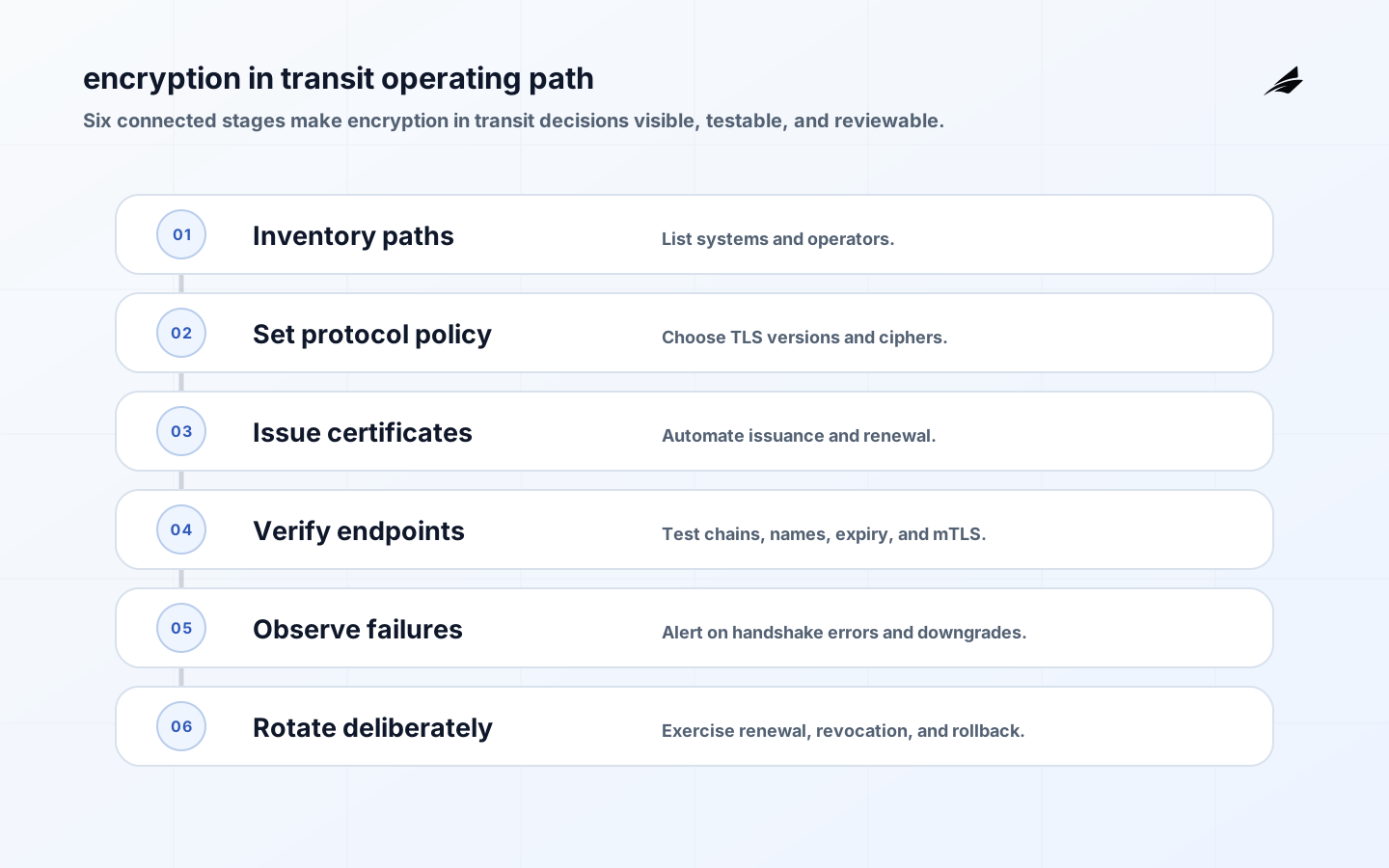
Encryption in transit protects information while it moves between a browser and application, services inside a platform, administration tools, APIs, queues, and third parties, specifically for encryption in transit. The technology is familiar, but failures are operational: an overlooked endpoint accepts plaintext, a certificate expires, a proxy terminates TLS before an untrusted network hop, a client stops validating names, or a legacy service uses a weak configuration, specifically for encryption in transit. A useful playbook treats secure transport as a complete connection lifecycle, specifically for encryption in transit. Map each connection, set a current TLS policy, manage certificates and trust anchors, deploy configuration consistently, observe failures, and rehearse renewal and rollback, specifically for encryption in transit. This scope includes internal paths; 'inside the network' is not a security property, specifically for encryption in transit.
For adjacent decisions, see related Edilec guidance 1, related Edilec guidance 2, related Edilec guidance 3, specifically for encryption in transit. These references are useful when the boundary touches identity, sessions, authorization, or operational evidence, specifically for encryption in transit.
Use NIST SP 800-52 Rev, specifically for encryption in transit. 2 for TLS configuration decisions, the OWASP Transport Layer Security Cheat Sheet for implementation checks, the Mozilla Server Side TLS guidelines for a concrete baseline, and the NIST Cybersecurity Framework 2.0 for governance and recovery, specifically for encryption in transit. Related Edilec guidance includes secrets rotation, audit-log architecture, and session security, specifically for encryption in transit.
Map every connection and trust boundary
List external domains, mobile and browser clients, APIs, load balancers, service-to-service calls, databases, message brokers, remote administration, vendor integrations, and monitoring agents, specifically for encryption in transit. For each connection, record client, server, data sensitivity, network path, authentication method, TLS termination point, certificate owner, and renewal path, specifically for encryption in transit. This reveals where a public HTTPS endpoint is well managed while a private API, callback receiver, or administrative tool has been overlooked, specifically for encryption in transit. It also clarifies whether traffic is encrypted only to a proxy or all the way to the component that processes sensitive data, specifically for encryption in transit. Make intended plaintext exceptions explicit and rare, specifically for encryption in transit.
| Connection | Key operational question | Evidence |
|---|---|---|
| Browser to edge | Does the public domain enforce current HTTPS and protect cookies and redirects? | TLS configuration, certificate inventory, security test, and monitoring. |
| Service to service | Is peer identity validated across internal boundaries? | Client trust policy, service identity, and deployment configuration. |
| Partner API | Who controls certificate and hostname validation on both sides? | Integration owner, endpoint contract, renewal contact, and test record. |
| Administration | Can privileged access be intercepted on an untrusted path? | Secure remote-access policy, strong authentication, and session records. |
Define a current TLS policy
Use supported protocol versions and well-maintained libraries and platform defaults, then set a configuration baseline that teams can apply consistently, specifically for encryption in transit. The exact cipher and version choices should follow current authoritative implementation guidance and the supported client population; avoid inventing a bespoke profile, specifically for encryption in transit. Disable outdated protocols and insecure fallback behavior when compatibility permits, specifically for encryption in transit. Enforce HTTPS redirects carefully, use secure cookies where applicable, and validate server names and certificate chains on clients, specifically for encryption in transit. For mutually authenticated service connections, manage client credentials with the same lifecycle attention as server certificates, specifically for encryption in transit. Policy is useful only when it can be measured against deployed endpoints, specifically for encryption in transit.
- For encryption in transit, assign a clear owner for every certificate, domain, trust store, and automated renewal path.
- For encryption in transit, use automated issuance and renewal where feasible, with alerts well before expiry and an exercised manual fallback.
- For encryption in transit, keep private keys protected, nonexportable where the platform permits, and inaccessible to ordinary application users.
- For encryption in transit, validate hostnames and certificate chains in clients; do not disable verification to solve a deployment problem.
- For encryption in transit, apply the same baseline to apis, callbacks, internal services, and administration paths, adjusted only for documented constraints.
Deploy without creating a blind spot
TLS often involves several layers: content delivery network, load balancer, ingress, service mesh, application runtime, and downstream client, specifically for encryption in transit. Identify exactly where encryption terminates and whether the next hop needs protection and identity verification, specifically for encryption in transit. Configuration drift can emerge when one environment, vanity domain, emergency endpoint, or legacy listener bypasses the normal deployment path, specifically for encryption in transit. Test from the perspective of the real client, including redirects, certificate names, older supported devices, and error handling, specifically for encryption in transit. Keep infrastructure changes reviewable and make a rollback plan that does not require re-enabling obsolete cryptography under pressure, specifically for encryption in transit.
Monitor renewal and failure
Monitor certificate expiry, handshake failures, protocol negotiation errors, unexpected plaintext listeners, issuance failures, and changes to trust configuration, specifically for encryption in transit. Alerts need an owner and enough lead time to renew without an emergency, specifically for encryption in transit. Log connection failures with safe context such as endpoint, client class, error category, and correlation identifier; do not log sensitive payloads or key material, specifically for encryption in transit. Review failed validation after deployments because it may expose an integration dependency or misconfigured endpoint, specifically for encryption in transit. Periodically scan the known internet-facing inventory and compare it with the connection map so new domains and services do not escape certificate management, specifically for encryption in transit.
| Incident signal | Likely issue | First response |
|---|---|---|
| Certificate nearing expiry | Renewal automation or ownership is failing. | Confirm owner, issuance path, deployment target, and a tested replacement. |
| Handshake error spike | Client compatibility, proxy, trust, or configuration change. | Segment by endpoint and client; roll back only the responsible change if safe. |
| Unexpected plaintext traffic | A listener or internal path bypasses the transport policy. | Contain exposure, identify the path, and add enforcement or network controls. |
| Trust-store change | A client may accept or reject a different set of peers. | Review scope, test intended services, and monitor post-change behavior. |
Exercise the operations playbook
Run a certificate rotation in a noncritical environment, simulate an impending expiry, test a partner endpoint with a changed certificate, and practice a safe rollback, specifically for encryption in transit. Confirm that the people on call can identify the endpoint owner and make a change without guessing, specifically for encryption in transit. Treat mergers, domain changes, new vendors, regional expansion, and platform migrations as triggers to revisit the connection map, specifically for encryption in transit. Encryption in transit works best when delivery teams see certificate and TLS configuration as ordinary production assets rather than mysterious infrastructure owned by nobody, specifically for encryption in transit.
Rehearse certificate operations with a real client
Use this encryption in transit operations playbook in a certificate-change rehearsal, specifically for encryption in transit. Select a noncritical endpoint, issue or stage a replacement certificate, deploy it through the normal pipeline, and test from the real client path rather than only from the server console, specifically for encryption in transit. Check hostname validation, redirects, proxy behavior, internal hops, monitoring, and rollback, specifically for encryption in transit. Then simulate a failure such as an incorrect name, expired trust chain, unavailable issuer, or partner endpoint that has not accepted the change, specifically for encryption in transit. The on-call team should be able to identify the endpoint owner, choose a safe action, and avoid weakening validation, specifically for encryption in transit. Record gaps in inventory, alerting, deployment, and external coordination, specifically for encryption in transit. A routine rehearsal makes certificate renewal ordinary work and demonstrates that secure transport can be restored without reopening obsolete or plaintext paths, specifically for encryption in transit.
Add a short review session whenever a new partner callback and an internal service route changes the assumptions behind encryption in transit, specifically for encryption in transit. Bring application owners, platform engineers, and the on-call lead together and start with the actual request rather than a control label, specifically for encryption in transit. Trace the request from the authoritative record through identity, configuration, policy, implementation, and the evidence an investigator would use, with the focus here on encryption in transit, specifically for encryption in transit. Ask whether every real client validates the intended peer, specifically for encryption in transit. Then introduce one realistic failure: a delayed directory update, unavailable dependency, stale configuration, unexpected retry, or departure of the person who normally knows the workaround, with the focus here on encryption in transit, specifically for encryption in transit. The group should choose a safe response before the next urgent event forces improvisation, with the focus here on encryption in transit, specifically for encryption in transit. Capture only concrete outcomes: a missing owner, an unclear approval limit, a test that does not reach the enforcement point, a recovery step that is too broad, or an evidence record that cannot be retrieved, with the focus here on encryption in transit, specifically for encryption in transit. Assign each outcome to a person and date, and rerun the same scenario after the change lands, with the focus here on encryption in transit, specifically for encryption in transit. This practice keeps encryption in transit connected to daily operations, specifically for encryption in transit. It also reveals when a process appears complete because a document exists, while the service itself still depends on unwritten knowledge or standing privilege, with the focus here on encryption in transit, specifically for encryption in transit. Over time, retain a small decision history so new team members can understand why the boundary exists and which assumptions must be revisited as the product, vendors, and workforce change, with the focus here on encryption in transit, specifically for encryption in transit.
Key takeaways
- For encryption in transit, encryption in transit covers every meaningful connection, including internal services and administration paths.
- For encryption in transit, maintain a current, measurable tls baseline and do not bypass certificate validation to restore service.
- For encryption in transit, give certificates, trust stores, private keys, and renewal paths named owners.
- For encryption in transit, know where tls terminates and test the real client path for drift and unintended plaintext.
- For encryption in transit, monitor expiry and failures, then rehearse renewal and incident response before an emergency.
Frequently asked questions
Conclusion: operate encryption in transit with evidence
Encryption in transit is reliable when it is operated as a known set of connections, policies, certificates, and recovery actions, specifically for encryption in transit. Map the paths, apply a current baseline, protect trust decisions, and rehearse change, specifically for encryption in transit. That gives the organization a durable defense against accidental plaintext and avoidable transport failures, specifically for encryption in transit.
Production decision evidence for encryption in transit
This encryption in transit review keeps the protected action, accountable owner, trusted inputs, failure response, and evidence visible for this article. The operating handoff is verified against the real workflow before release.