Workspace models look simple until a real organization changes shape. A person joins two customer organizations, an invited administrator leaves, a contractor needs a limited project, a parent company requests consolidated billing, or an account is acquired. Production workspaces must make membership, ownership, data scope, and authority legible across those events. The model is not just navigation vocabulary. It determines what an identity can see, how records are grouped, who can act, and how a customer can recover when the expected owner is unavailable. This guide gives engineering teams a practical way to set the boundary, design the controls, release safely, and keep improving from evidence.
Set the workspace models boundary before implementation
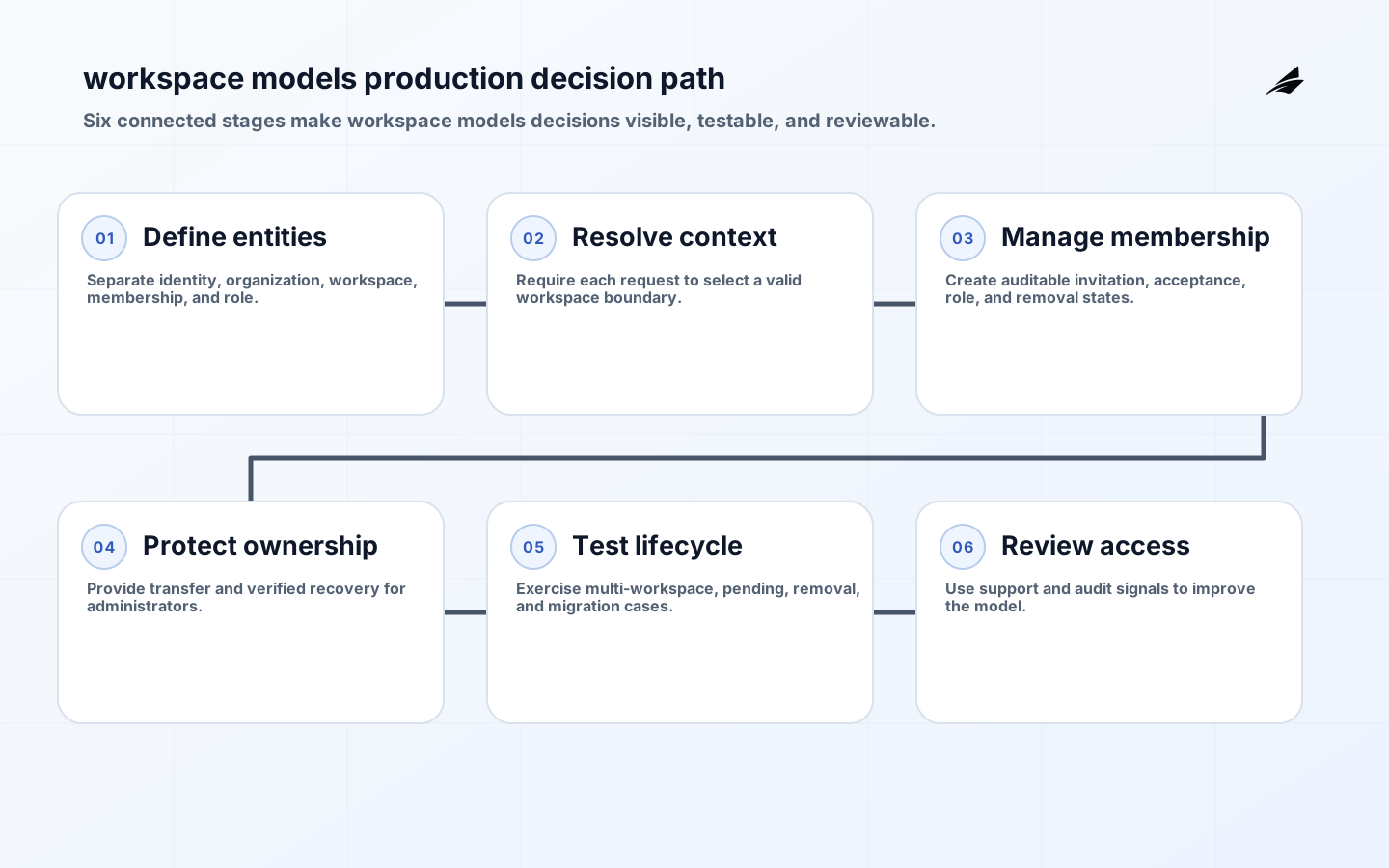
Define the nouns before implementing invitations: person, identity, organization, workspace, membership, role, team, resource, and billing account. State which relationship owns the permission to view or modify a resource. A user can be a member of several workspaces without those memberships implying a shared identity or shared data. Keep organization and workspace distinct if the product needs both; merging them prematurely makes later restructuring and billing changes expensive. The first boundary document should explain how a request resolves its current workspace and how the system rejects ambiguity. Before solution design, write down the outcome, the records involved, the actor who is accountable, and the evidence that proves a safe result. This narrow statement makes tradeoffs visible: some work must be synchronous and confirmed immediately, while other work can be durable and asynchronous. Treat the distinction as a product promise. A person should never have to infer whether a request completed, is pending, or requires another action.
| Decision area | Question to settle | Evidence to retain |
|---|---|---|
| Scope | Which workspace models outcome is being protected or improved? | Named owner and success condition |
| Authority | Which system or role may make the state change? | Policy version and decision record |
| Failure | What happens when a dependency or input is incomplete? | Visible status, retry rule, and responder |
| Review | Which signal changes the next product decision? | Threshold, cadence, and accountable team |
Design workspace models as an explicit operational contract
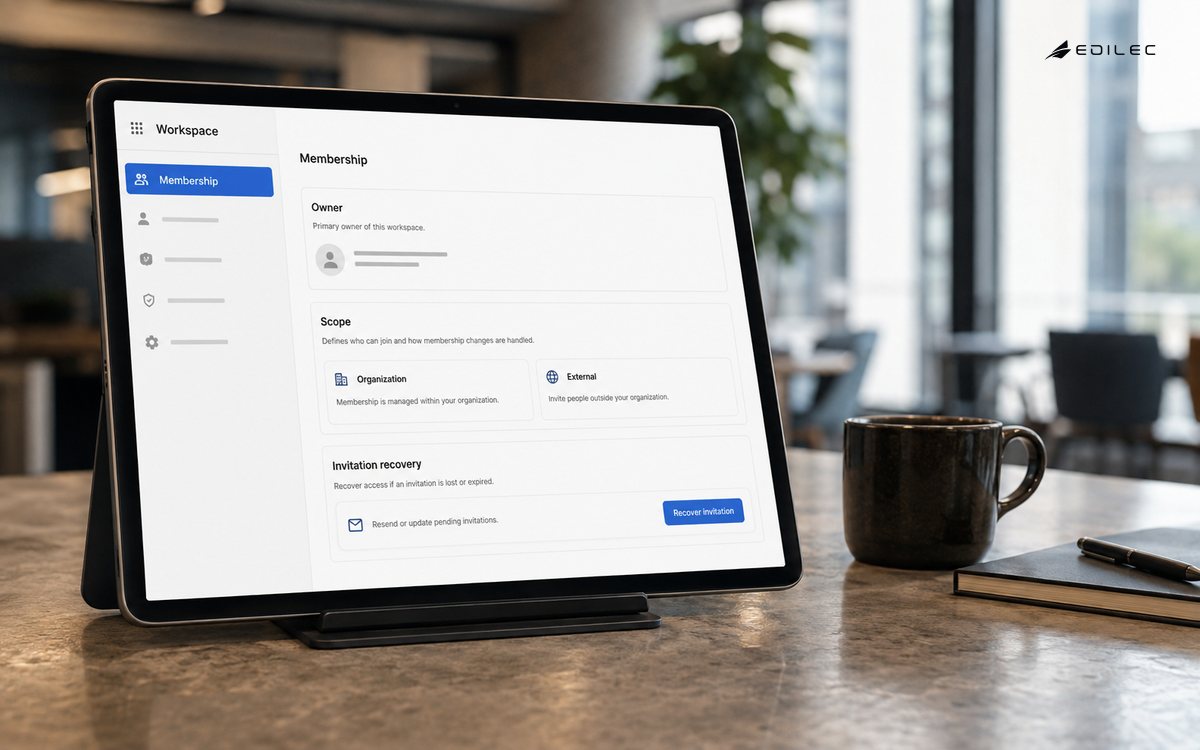
Use membership as an explicit, auditable relationship with status, role, inviter, acceptance time, and removal reason. Roles should grant actions within a defined workspace, while ownership should be a recoverable responsibility rather than a magical superuser concept. OWASP authorization guidance is useful here: evaluate the actor, target, action, and context instead of relying on a broad UI role. Design for an account with no remaining administrator, a pending invitation to an existing identity, and a person who needs to leave one workspace without losing access to another. Write acceptance criteria that include the unhappy path: a missing field, a duplicate action, a late response, an unavailable dependency, and a valid but unusual request. The intent is not to predict every incident. It is to make the normal rules and safe fallback visible enough that a colleague can reason about a new case without relying on private knowledge.
- Name the user-visible outcome and the state that confirms workspace models is complete.
- Assign authority for each important record, transition, and exception.
- Keep a durable identifier for requests, events, and corrections that may be repeated (workspace-context).
- Expose pending, failed, and completed states in language a customer can act on (workspace-context).
- Test denied or invalid paths as carefully as the intended successful path (workspace-context).
- Give every manual exception queue an owner, response expectation, and correction route (workspace-context).
Release workspace models with recovery and observability
Start with a full lifecycle test: create workspace, invite member, accept or decline, assign role, create scoped data, transfer administration, remove membership, and verify retained records and audit history. Test race conditions between invitation acceptance and role removal, and record a stable membership identifier so retries do not produce duplicated access. Support tooling should show the workspace context and decision history but must not default to broad cross-customer visibility. Roll out migrations with a clear mapping from old accounts to new workspaces and a reversible plan. Use a limited audience when the behavior or operating assumptions are new, but do not make the control itself contingent on a vague experiment. Capture correlation identifiers at boundaries so support and engineering can trace one real item from input to outcome. Confirm that a rollback preserves the ability to explain and correct records created during the release. billing workflow decisions is a useful adjacent decision when planning the customer-facing implications.
| Production risk | Practical control | Signal for review |
|---|---|---|
| Ambiguous state | Use an explicit lifecycle and durable identifiers | Conflicting or aged records |
| Unsafe retry | Make commands and event processing idempotent | Duplicate effects or corrections |
| Invisible exception | Create an owned queue and customer-facing status | Age of unresolved work |
| Uncontrolled change | Stage exposure and retain a rollback route | Unexpected outcome after release |
Operate workspace models from decision-ready signals
Track the health of the collaboration model, not only active users. Watch invitation delivery and acceptance, unowned workspaces, failed role changes, access-denied errors, administrator recovery requests, and time spent in pending states. Segment by workspace size and plan when it helps identify a scale or entitlement problem. Review the oldest pending invitations and ownerless accounts; these often expose a missing lifecycle rule rather than a messaging problem. Choose measures that lead to a named action: investigate a specific backlog, pause a rollout, contact affected customers, correct a record, or change a policy. Review the oldest unresolved cases alongside aggregate rates. Averages are useful for trend, but they can make a single consequential failure disappear. Keep event history proportionate to the need to reconstruct a decision and protect it with the same care as the workflow itself.
Keep workspace models changes reviewable
Workspace changes can alter authority over customer data. Record policies for ownership transfer, administrative recovery, data export, retention after a member leaves, and support elevation. Require a deliberate review for cross-workspace sharing, because it changes the default boundary users rely on. Product copy must use the same terms as the security model; people cannot make informed access decisions when workspace, team, account, and organization are used interchangeably. Keep the record short enough to use: purpose, affected users and records, accountable owner, release condition, recovery method, and review date. This is not ceremony for its own sake. It lets product, engineering, support, and operations distinguish a change in presentation from a change in authority, cost, or customer commitment. Retire old exceptions and temporary rules deliberately; they are part of the production behavior even when no longer visible in the interface.
Use authoritative guidance to check workspace boundaries
The recommendations here are informed by tenant-isolation architecture, SaaS design principles, authorization guidance, and HTTP semantics. These sources provide durable reference points for access decisions, accessible interaction, asynchronous integration behavior, reliable operation, or controlled delivery, depending on the problem at hand. For workspace models, apply them to membership authority, scoped record access, administrator recovery, and lifecycle audit evidence. They do not replace customer research, contractual obligations, or domain-specific review. Use them to challenge assumptions, then record the product-specific rule your team adopts and the evidence that will show whether it is working.
Key workspace models takeaways
- Define workspace models around a bounded customer outcome, not a feature inventory.
- Make ownership, state transitions, and exceptions explicit before expanding scope.
- Release with representative failure tests, traceable evidence, and a correction path.
- Use signals that trigger a concrete operational or product decision.
- Keep policy and change records understandable to the people who support the service (workspace-context).
- Remove temporary controls once their decision has been made and verified.
Workspace models FAQ
Can one user belong to more than one workspace? Yes, provided every request resolves a specific workspace and permissions are evaluated in that context. Who should own a workspace? Assign accountable administrators, but provide a verified recovery path so work does not depend on one person forever. Should an invitation create a user immediately? It can create a pending membership, but access should begin only after the appropriate acceptance and identity checks. How do we share across workspaces? Make it an explicit, reviewed feature with clear scope and audit evidence, not an accidental consequence of a broad role.
Conclusion: make workspace models dependable in production
A strong workspace model gives organizations room to change without weakening their boundaries. Make membership and ownership explicit, test the awkward lifecycle events, and let every operational view preserve the workspace context.
Workspace model decision test
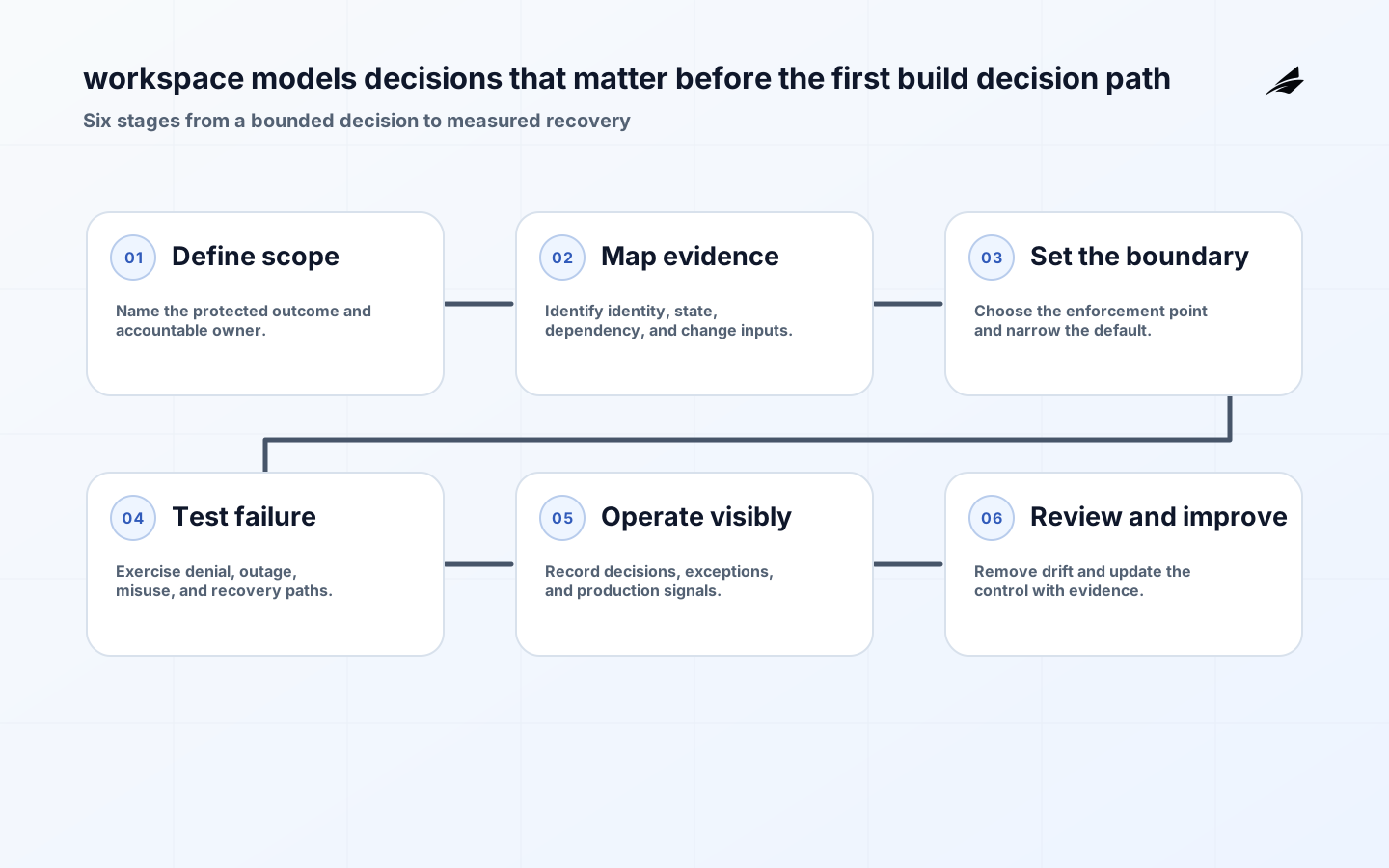
Workspace models need a decision test before the first build. Check isolation across reads, cache keys, exports, and jobs; collaboration across members, guests, and service accounts; and change across rename, archive, transfer, and migration. A model that passes CRUD tests but cannot explain a denied cross-workspace read is not ready. Give every workspace and membership a stable ID, keep display names out of keys, make backfills idempotent, and record the source version. Demonstrate a normal invite, a denied read, a role change, an archived workspace, and a failed retry. For each, name the actor, policy point, evidence, and repair owner.
| Decision | Tenant ownership | Membership | Hierarchy | Recovery |
|---|---|---|---|---|
| Evidence before build | Owner, lifecycle, and billing boundary | Invite, suspend, guest, and leave cases | Move, inheritance, and deletion rules | Restore and migration rollback path |
| Review cadence | Named reviewer and decision interval | Open exceptions and recovery drills | Policy changes and affected records | Next review date and owner |
Frequently asked questions
These questions focus on the decisions operators need when the control moves into a live service.
When to reject a model shortcut
Reject a shortcut when it hides ownership, makes a cross-tenant query ambiguous, or requires a direct database repair for a normal lifecycle event. For example, storing membership only in a denormalized JSON field may look fast but makes suspension, audit, and concurrent updates difficult to prove. Keep the normalized authority record and derive read models deliberately. If a product requirement genuinely needs a shortcut, document the invariant it preserves, the backfill path, and the test that detects drift. That record is valuable when the team grows or when a future migration changes the underlying storage.
Conclusion
A durable implementation is a bounded decision with an owner, evidence, a tested denial path, and a safe way to recover. For supply chain security, start with the highest-value release workflow and expand from what the team can explain and repair.
Related Edilec guidance for workspace access: session security decisions, OAuth security for growing teams, and zero trust for growing teams. The source-backed design checks are Microsoft multitenant architecture, Microsoft multitenant identity guidance, PostgreSQL row security policies, and Stripe connected accounts: use them to verify tenant scope, identity context, database enforcement, and account ownership.