Connected operations changes character in production. Before launch, a prototype can show that an operating workflow can coordinate; after launch, an operator must decide what the operational state means, who can change it, and how to recover when the expected path breaks. For IT managers, the useful question is not which platform is fashionable. It is whether the first production scope can make clear which system is authoritative when device condition, work status, and human approval disagree. This guide treats connected operations as an operating capability: a bounded workflow, an accountable owner, explicit evidence, and feedback that changes the next release.
Set the production boundary for connected operations
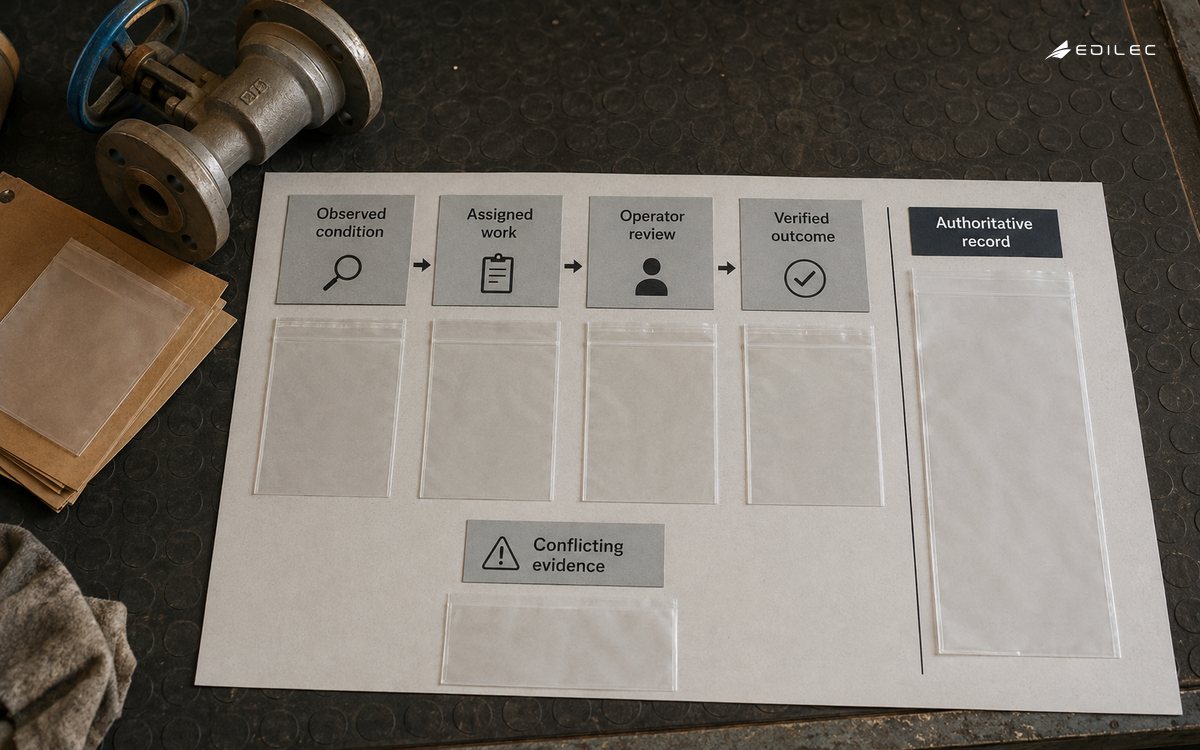
Start with one cross-team loop from an observed condition to an assigned, verified outcome. Write the normal path, the delayed path, and the unsafe path in plain language. Name the accountable operations leader, supported by named owners for each integrated system before configuring software, because a technical component cannot resolve a business disagreement by itself. The boundary should say where operating workflow begins, which system may create or amend the operational state, how long uncertainty is acceptable, and which human role can override a result. That is small enough to rehearse and broad enough to expose missing controls before real work depends on it.
| Decision to settle | Question for the first release | Evidence to retain |
|---|---|---|
| Authority | Who is permitted to decide which system is authoritative when device condition, work status, and human approval disagree? | Named role, policy version, and decision timestamp |
| Scope | Which instance of one cross-team loop from an observed condition to an assigned, verified outcome is included? | A concrete inclusion and exclusion rule |
| Data | Which fields make the operational state understandable later? | asset and site identity, source timestamps, current state, responsible role, evidence links, approval history, and exception status |
| Recovery | What happens when the expected flow is incomplete? | Visible exception state, owner, and correction record |
Treat the record as more than a payload. A reliable operational state preserves enough context for a later reviewer to distinguish a real condition from a late arrival, a duplicate, a configuration change, or an operator correction. The NIST Cybersecurity Framework and NIST Guide to Operational Technology Security are useful anchors for designing contracts and controls, but neither replaces a local decision about safety, availability, or accountability. Keep the business meaning separate from transport convenience: a message being delivered does not prove the underlying work is complete.
Design the connected operations architecture around decisions
The first architecture diagram should follow the decision, not the vendor boundaries. Show the producer or entry point, validation step, authoritative store, operator surface, and reporting path. For connected operations, the critical facts are asset and site identity, source timestamps, current state, responsible role, evidence links, approval history, and exception status. Decide where each fact is first known, who can correct it, and whether a correction produces a new record or amends an earlier one. This prevents the familiar production surprise in which dashboards, logs, and field staff each have a plausible but incompatible version of the same situation.
- What action becomes safer, faster, or more accountable when this operational state is available?
- Which identity is being trusted when a operating workflow attempts to coordinate?
- Which fields are required before an automated action can proceed, and which merely improve later analysis?
- How is time represented when devices, sites, and services have different clocks or lose connectivity?
- What can be retried without creating a second operational effect, and what requires human confirmation?
- Who investigates an exception, and what evidence will let that person reconstruct the sequence?
| Layer | Production responsibility | Failure to make visible |
|---|---|---|
| Entry and validation | Accept only a operational state that meets the agreed contract. | a dashboard becomes a second source of truth and teams debate the state of work instead of resolving the underlying condition |
| Authority and storage | Preserve the source, current state, and corrections with their owners. | A convenient replica becomes an accidental source of truth. |
| Operator experience | Show uncertainty, age, and the next responsible action. | Users work around an ambiguous status outside the product. |
| Observability | Connect technical health to the operational decision. | A green component dashboard masks delayed or unusable work. |
Make the connected operations operating path explicit
Production readiness is proven by a rehearsed path rather than a successful happy-path demonstration. Run a normal case, a delayed case, a duplicate or conflicting case, and a case where the responsible person is unavailable. Confirm that the person on call can find the operational state, identify its source and age, see the policy that applied, and return the workflow to a safe state. Explicit system authority, state transitions, data-quality rules, access boundaries, and a review cadence for recurring exceptions are not a compliance appendix; they are the practical ingredients that make the operating path dependable under ordinary pressure.
Review connected operations risks as operational failures
The riskiest implementation choice is usually the invisible assumption. In connected operations, that assumption may concern identity, time, delivery, measurement quality, a local network, or a human handoff. Make it testable. Ask what happens if the upstream system is unavailable, the same input arrives twice, a configuration changed between collection and use, or a technician disputes the status. The OpenTelemetry event semantic conventions frames useful security or interoperability concerns; the OGC SensorThings API helps keep protocol and lifecycle choices grounded in an external specification rather than folklore.
Measure whether connected operations supports better work
Choose signals that reveal whether the workflow is becoming easier to run. For this capability, monitor exception age, reconciliation volume, time from alert to accountable action, data freshness by source, and manual work outside the system. Pair quantitative measures with a short weekly sample of real exceptions: what took longest to resolve, which fact was absent, which owner was unclear, and whether a user bypassed the intended system. A lower error count is welcome, but it can be misleading if people stop reporting problems. The better test is whether a new operator can understand the current condition and safely make the next decision without private knowledge.
| Signal | What it can reveal | Review response |
|---|---|---|
| Freshness and completeness | Whether the operational state arrives with usable context. | Trace gaps to the producer, interface, or contract owner. |
| Exception age | Whether a failure has a clear route to resolution. | Escalate unowned or repeatedly reopened cases. |
| Manual bypasses | Whether the designed workflow fits real operational conditions. | Observe the workaround before removing it or automating it. |
| Change and recovery time | Whether connected operations remains manageable as conditions change. | Improve the runbook, test, or ownership boundary that slowed recovery. |
Use a staged implementation sequence
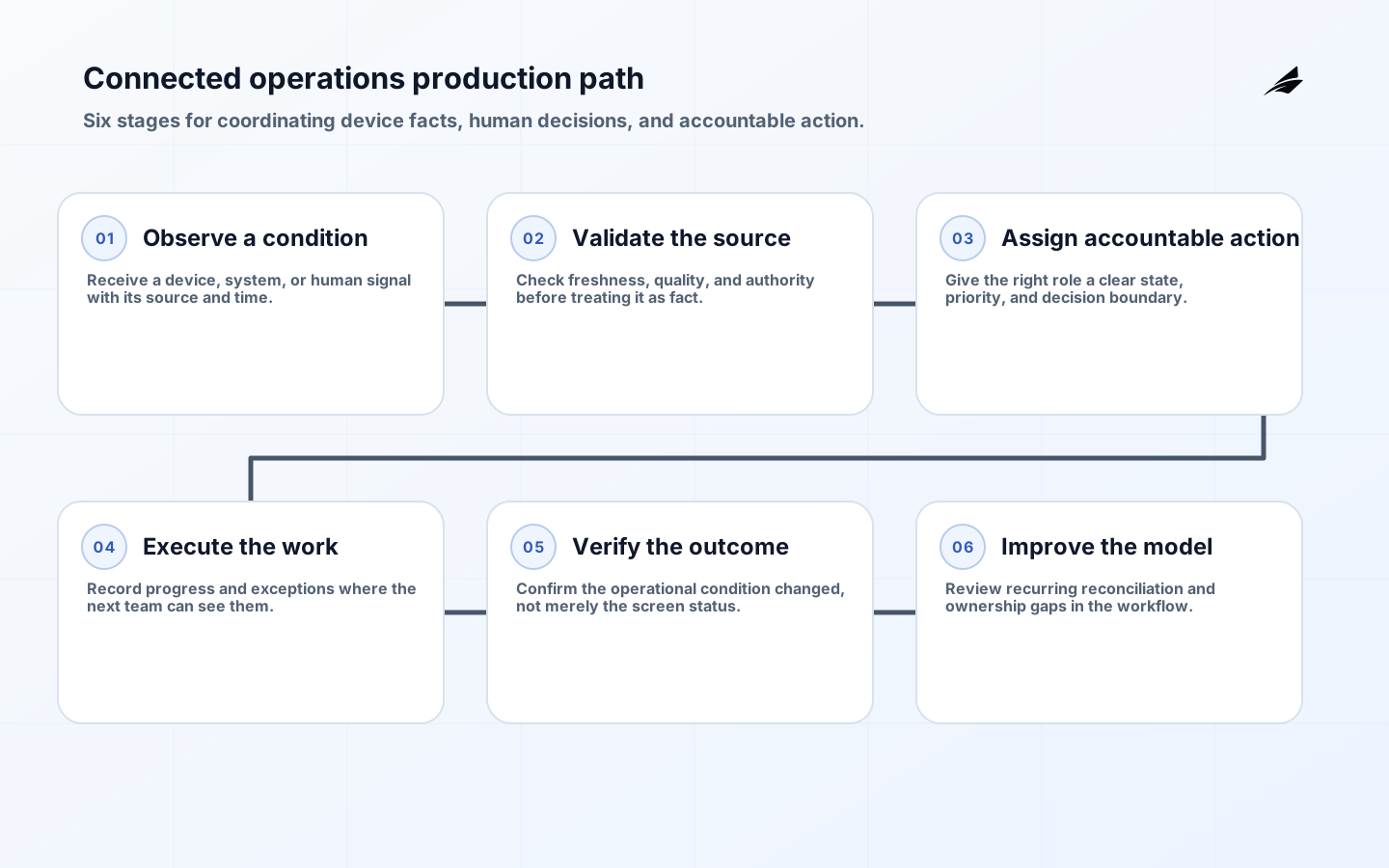
First, inventory the actors, systems, and records involved in one cross-team loop from an observed condition to an assigned, verified outcome; do not start by copying every available field. Second, publish the contract and authority rules for asset and site identity, source timestamps, current state, responsible role, evidence links, approval history, and exception status. Third, build one observable route through the workflow, including the error and correction states. Fourth, exercise it with production-like timing and permissions. Fifth, train the people who receive exceptions and give them a short decision record rather than a technical diagram alone. Finally, compare the initial signals with the manual baseline and change only the constraint that the evidence exposes. This sequence keeps connected operations tied to a decision the organization actually needs to make.
Key takeaways for IT managers
- Connected operations is production-ready when its operational decision and accountable owner are explicit.
- Keep asset and site identity, source timestamps, current state, responsible role, evidence links, approval history, and exception status close to the operational state; later reconstruction is a product requirement.
- Test delayed, duplicated, unavailable, and disputed conditions before broader rollout.
- Use exception age, reconciliation volume, time from alert to accountable action, data freshness by source, and manual work outside the system to judge the workflow, not only component uptime.
- Expand from one cross-team loop from an observed condition to an assigned, verified outcome only after exception handling has become routine and observable.
Connected operations FAQ
What is the smallest useful first release? It is the release that handles one cross-team loop from an observed condition to an assigned, verified outcome with an explicit owner, trusted record, visible exception path, and one measure of operational value. Should every possible edge case be automated first? No. Classify the edge case, make its safe handling visible, and give a named person a workable recovery route. Who owns quality? The accountable operations leader, supported by named owners for each integrated system owns the operating decision; technical, security, and field teams contribute the controls and evidence that keep it credible. When should the design be revisited? Revisit it after an incident, a material workflow change, a recurring workaround, or a signal that shows rising manual recovery.
Conclusion: make connected operations dependable in daily operations
Connected operations earns its place in production when it gives people an honest view of what is known, what is uncertain, and who must act next. Begin with one cross-team loop from an observed condition to an assigned, verified outcome, preserve the context that makes the operational state defensible, and rehearse recovery before adding adjacent features. Continue with connected operations playbook, connected operations practical guide, and connected operations for operations leaders to deepen the implementation choices around this operating capability.