Edge Computing for CTOs: Placement, Control, and Recovery
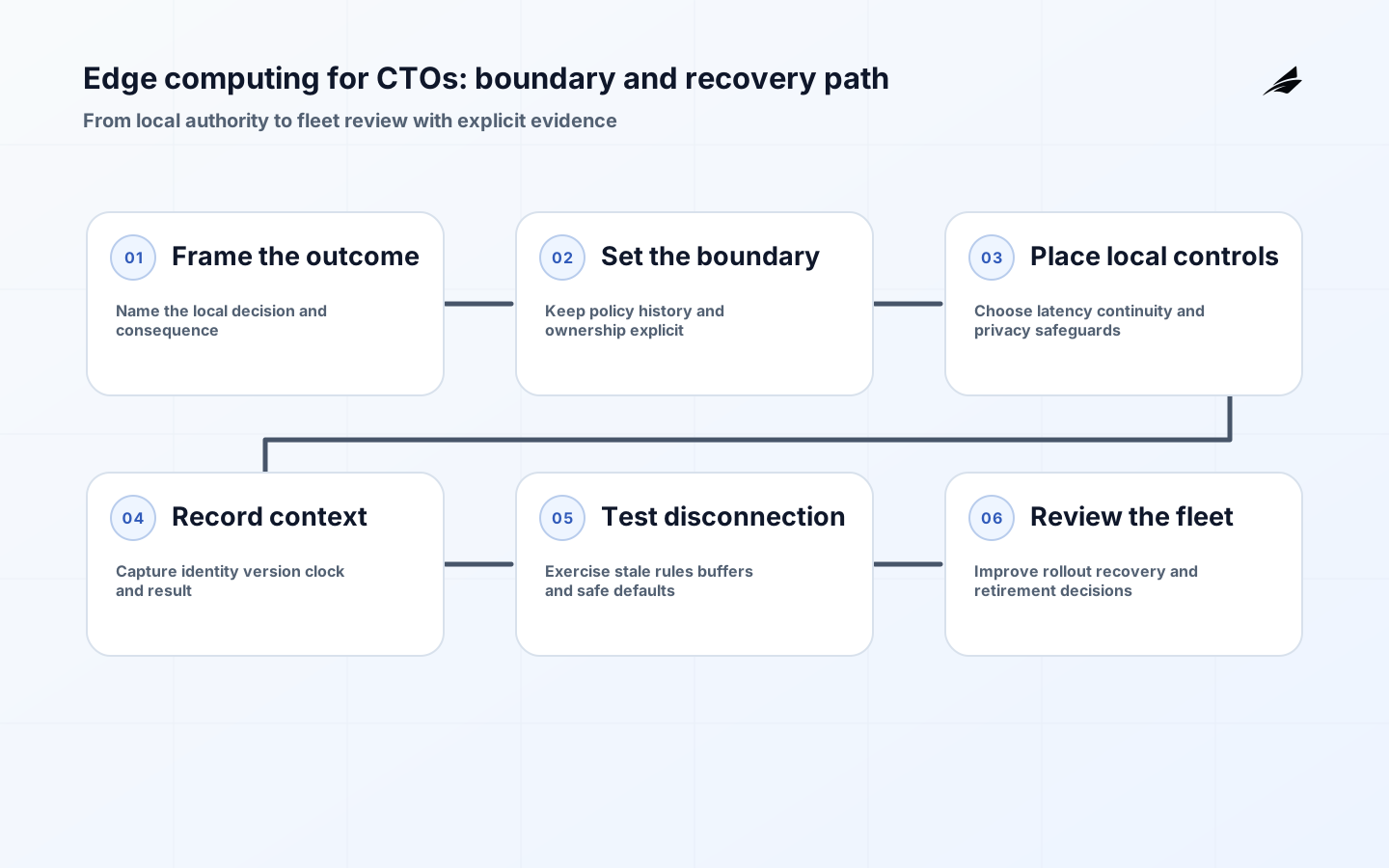
Edge computing becomes useful when it improves a real operating decision. For CTOs, its job is to make bounded local decisions when latency or connectivity makes a central round trip unsuitable. The team should therefore define the acting role, trusted inputs, consequence of an error, and safe fallback before discussing a platform. That framing prevents a broad technical initiative from becoming another system that captures data without helping people act. A clear boundary also makes it possible to explain results after a handoff, outage, or disputed event.
Edge computing for CTOs — Set the edge computing operating boundary
The first edge computing release should serve one repeatable workflow and one accountable operating group. Write the decision in plain language, then specify which assets, sites, and conditions are deliberately out of scope. Record identity, source time, receipt time, quality, owner, policy version, action, and outcome. Those details make the result reviewable and stop a temporary assumption from becoming invisible system behavior. A small boundary is not a lack of ambition; it is the evidence needed to expand responsibly.
| Decision area | Question to settle | Evidence to keep |
|---|---|---|
| Purpose | Which decision does edge computing improve and for which operating role? | Named owner, expected action, and success condition. |
| Scope | What is inside the first edge computing cohort and what remains manual? | Asset identity, inclusion rule, and accountable team. |
| Freshness | When is a edge computing input too old or incomplete to trust? | Source time, receipt time, quality state, and expiry rule. |
| Fallback | What should staff do when edge computing cannot decide safely? | Escalation, manual procedure, and recovery record. |
Edge computing for CTOs — Make the edge computing contract operable
A edge computing contract is more than a payload or screen. It must name the authoritative source, stable identifier, time semantics, quality conditions, allowed side effect, and exception owner. Give consequential events a correlation context that a responder can follow across services. Decide how late corrections are represented before they occur: as a new event, an interpretation change, or a human review. These choices protect history and make the workflow intelligible to people who did not build it.
- Name an accountable owner for the edge computing decision and exception queue.
- Store the rule or configuration version with consequential outcomes.
- Make overrides attributable, narrow, time-bounded, and routinely reviewed.
- Test normal, stale, malformed, duplicate, and corrected inputs.
- Keep a readable explanation close to each consequential action.
Edge computing for CTOs — Build controls around edge computing
For edge computing for CTOs, make placement authority explicit before the workflow reaches its next decision point. NIST SP 800-82 Rev. 3 keeps operational consequences in scope, while NIST SP 800-213 frames device capabilities as system requirements. Apply both to the actual edge computing path: constrain authority before a side effect, reject untrusted context, and retain enough evidence to investigate exceptions. A control is credible only when it has been tested through retries, configuration changes, staff handoffs, and a legitimate manual correction. Ordinary success alone does not show that the process is safe.
| Failure mode | Preventive control | Operating signal |
|---|---|---|
| Unknown or stale context | Require trusted inputs before a edge computing action takes effect. | Rejections by source, site, reason, and age. |
| Duplicate or reordered work | Use durable identities, sequence rules, and idempotent handlers. | Duplicate suppression and replay outcomes. |
| Unexplained action | Record actor, target, rule version, and correlation context. | Audit completeness and reconstruction time. |
| Unsafe exception | Use reviewed overrides with scope, expiry, and approver. | Override age and post-expiry activity. |
Edge computing for CTOs — Implement edge computing as a thin, testable path
Build edge computing from one complete operational story. Follow an input from origin through validation, decision, side effect, notification, and review. Keep credentials and configuration separate from business facts so a change can be assessed and reversed. Make missing evidence, delayed delivery, rejected action, and user correction visible in the first release. This is how a system remains understandable when the original implementation team is unavailable and the operation is under pressure.
Keep only the work that must remain local at the edge. Define policy expiry, local authority, storage limits, and how a reset gateway is replaced. A site workload earns trust when it can be recovered and reconciled without relying on the engineer who made the first image.
Use a release sequence that begins with observation where possible, establishes a baseline, then enforces on a small cohort. Treat a rise in exceptions as evidence to investigate, not a reason to silently remove the control. Review a sample of resolved and unresolved cases with the people who perform the work. Their questions reveal whether edge computing is providing context at the moment of decision or merely moving an existing problem into a new interface.
Edge computing for CTOs — Review edge computing in the real operating environment
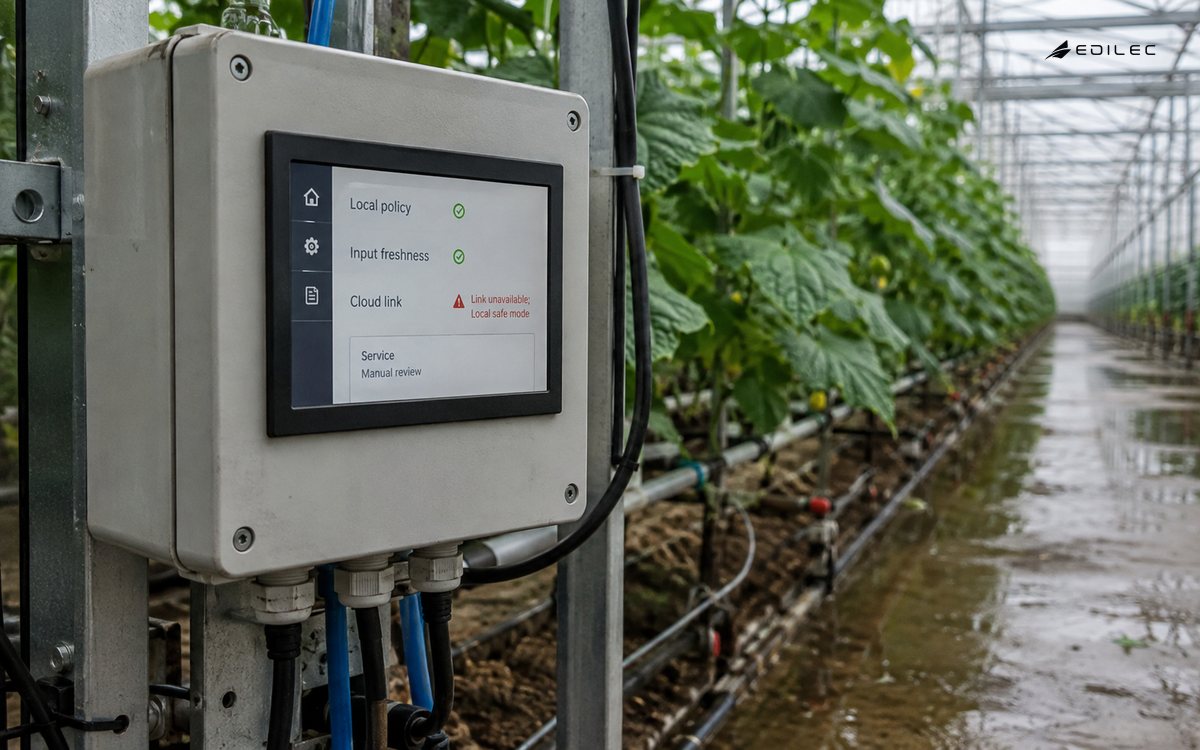
Review local authority after topology, software, and policy changes. The key test is whether a site can keep the permitted workflow safe during a central outage without silently taking on new authority. Inspect queue limits and retained secrets on real hardware, not only emulators. A replacement drill should prove that local facts and pending work return to the central record in a comprehensible order.
Edge computing for CTOs — Measure edge computing in operational terms
Measure edge computing through timeliness, input quality, failed actions, exception age, recovery duration, manual overrides, and the operating outcome it is meant to improve. Break the data down by site, cohort, version, owner, and failure reason. In edge computing for CTOs, test latency budgets against the user action and record the resulting control evidence. AWS Secure Edge Computing Guidance and the ETSI MEC Framework and Reference Architecture provide useful context for placement and connectivity choices. Pair system signals with an outcome such as avoided repeat work, faster safe decisions, or more reliable completion evidence.
Edge computing for CTOs — Recover edge computing without losing history
Recovery for edge computing must restore a safe operating state without erasing the story of what happened. Preserve enough context to distinguish an action never accepted from one accepted but not observed, and a late reading from one that was wrong at source. Rehearse recovery with the people who own the operational consequence. The rehearsal should include escalation, manual operation, evidence review, and the decision to resume. A restart is only one technical step in that wider operating procedure.
| Review cadence | What to inspect | Decision |
|---|---|---|
| Daily or shift | New exceptions, stale inputs, and failed actions. | Route, correct, or contain before workarounds become routine. |
| Weekly | Failure reasons, repeated overrides, and unowned backlog. | Adjust the rule, ownership, or support procedure. |
| Per release | Changes, cohort effects, and recovery rehearsal results. | Expand, pause, roll back, or add a guardrail. |
| Quarterly | Assumptions, access, evidence, and dependencies. | Retire weak controls and renew the agreement. |
Key takeaways
- Edge computing starts with a named operating decision, not a broad rollout.
- Keep the first cohort small enough that CTOs can inspect exceptions.
- Identity, time, quality, ownership, and version make outcomes reviewable.
- A visible fallback gives operators a safer lesson than a silent retry.
- Use the adjacent connected-operations guides before multiplying workflows.
Frequently asked questions about edge computing
What should be designed first? Start edge computing with the decision and the consequence of a wrong or late result. Identify the acting role, trusted facts, escalation threshold, and safe manual alternative. Technology follows those constraints; it should not erase them.
How much evidence is enough? Retain identity, source and receipt time, quality state, rule version, actor, outcome, and resolution context for important edge computing events. Retention periods vary, but a reviewer should not need guesswork to reconstruct the decision.
When should edge computing expand? Expand after the first cohort shows reliable inputs, understandable exceptions, exercised recovery, and a measurable operational improvement. Lower error rates are insufficient if failures remain opaque or support staff quietly absorb extra work elsewhere.
Decision ownership is the practical test for edge computing. Someone must be able to say which inputs are trusted today, who changes the rule, who receives an exception, and who decides whether a recovered result may affect normal work again. Make those responsibilities visible in the runbook and in the system state. When evidence is incomplete, record that condition rather than inventing certainty. This habit makes later review faster, protects the people doing the work, and gives the team a reliable basis for improving edge computing after each release.
Conclusion: make edge computing accountable
The durable form of edge computing is a bounded operating capability with a clear decision, credible controls, useful measurement, and a recovery path people can execute. Start by using it to make bounded local decisions when latency or connectivity makes a central round trip unsuitable. When ownership, evidence, and exceptions are designed together, the team can extend the system without making it harder to operate.
For a CTO, the edge boundary is an authority decision rather than a hardware placement exercise. Specify which facts may be trusted locally, which policy version is allowed to act, and what a site must do when its clock, link, or configuration is stale. A useful review follows one event from source through local validation, action, evidence, central reconciliation, and human exception handling. It should show the operator the next safe action without requiring access to implementation notes. Keep fleet-wide policy, identity authority, release approval, and durable history centrally governed even when a bounded decision runs near the process. That separation lets the organization gain latency or continuity without creating an unmanaged second platform.
Related reading: Related guide 1, Related guide 2, Related guide 3.
Before widening local authority, have the operating owner review one normal event, one stale input, one rejected action, and one recovery record. The review should state what the site may decide, what central services must approve, and which evidence proves the boundary was respected. This makes edge adoption a measurable operating change rather than an infrastructure preference.