Network segmentation is an operating boundary before it is a diagram or product selection. The first build should make it difficult for a compromised workstation, vendor account, or cloud dependency to reach a production controller without a named, justified, and observable path.
Define the network segmentation decision — zone policy and maintenance paths
Set the boundary in plain language. For network segmentation, record asset role, owner, location, protocol, data direction, and the consequence of an unavailable or altered connection. Separate observations from commands, convenience from required behavior, and a temporary workaround from a supported capability for segmentation zones. A useful design review asks who owns the decision, which system is authoritative, what changes state, and how a person will recognize an exception for segmentation zones. The operational-technology guidance in NIST SP 800-82 Rev. 3 is a useful reminder that availability, safety, and reliability can constrain an otherwise sensible IT pattern for segmentation zones. A boundary is credible only when it names the action that is allowed, the action that is deliberately excluded, and the route for requesting a change for segmentation zones.
| Decision area | Question to settle before build | Evidence to retain |
|---|---|---|
| Outcome | What must network segmentation make possible under ordinary conditions? | A named user decision and acceptance example |
| Authority | Which record, policy, or person is decisive for network paths between operational technology, corporate services, vendors, and cloud workloads? | Owner, source of truth, and approval path |
| Failure | What is the safe state when a dependency or connection fails? | Test case, degraded behavior, and recovery owner |
| Change | Who can alter the rules, mappings, or access? | Reviewed change record and rollback point |
Model the network segmentation operating context
For network segmentation, a component map alone leaves the operating story unfinished. Map the actor, asset or service, input, decision rule, output, and evidence for each important exchange. Include time semantics so measured, received, processed, and confirmed states remain distinct; include quality semantics so unavailable, estimated, stale, and rejected values cannot masquerade as current. The NIST SP 800-41 Rev. 1 offers a useful governance lens, but local engineering judgment must turn it into a runbook that people can execute.
Use realistic cases while modeling. Ask how network segmentation behaves during a planned maintenance window, a partial outage, a credential change, a delayed upstream record, and an operator handoff. A capable system preserves context across those moments. It does not force the next person to infer intent from an ambiguous status or a timestamp without a source for segmentation zones. The design should also state which data is sensitive, which decisions need human confirmation, and how long evidence must remain available for segmentation zones. These choices determine operational cost as surely as CPU, bandwidth, or licensing for segmentation zones.
Set network segmentation controls and trust boundaries
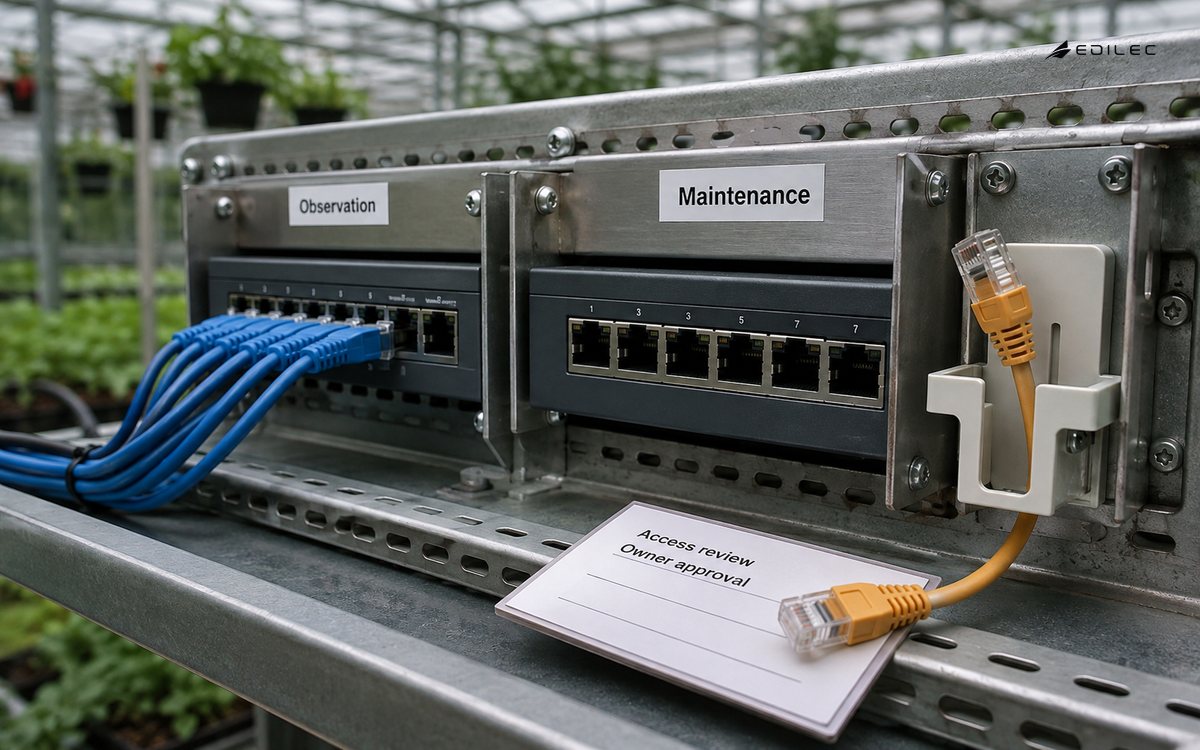
Controls should reduce a specific failure mode, not decorate a segmentation diagram. Use deny-by-default conduits, narrowly scoped rules, jump-host administration, and reviewed exceptions. NIST SP 800-207 makes the central point: a familiar network location is not proof of trust, so identity, policy, and context must travel with the request. Where older equipment cannot host modern controls, use a mediated boundary, compensating monitoring, and a limited maintenance route.
- Give network segmentation a named technical owner and an operations owner.
- Document the normal path, the degraded path, and the recovery path.
- Keep privileged actions separate from routine observation where possible for segmentation zones.
- Record exceptions with an expiry, approver, and evidence of removal.
- Test that unavailable or low-quality inputs produce an understandable state for segmentation zones.
- Review changes against the consequence to people, equipment, and service for segmentation zones.
Design network segmentation for degraded operation
The important question is not whether a failure can occur; it is what the system will do next for segmentation zones. A broad firewall rule added during an outage remains in place long after the emergency. Design the degraded state deliberately: preserve the last known fact with its age, stop actions that need fresh authority, queue only work that can later be reconciled, and tell the user what is pending for segmentation zones. Do not equate retrying with recovery. Retries need stable identifiers, bounded timing, and a way to detect that an action already succeeded for segmentation zones. A recovery procedure should identify the evidence to compare, the owner who can decide a disputed outcome, and the conditions that permit normal processing to resume for segmentation zones.
Build and release network segmentation in bounded steps
A network segmentation release needs topic-specific proof, not a generic readiness claim. Start with one controlled path and its uncomfortable cases. Build a representative test environment, then validate identity, data quality, authorization, behavior during loss of a dependency, and recovery for segmentation zones. Release first to a bounded cohort or a noncritical workflow when the consequence allows it for segmentation zones. Instrument the handoffs before volume arrives, including rejected input, delay, policy denial, and manual bypass for segmentation zones. The NIST IoT device cybersecurity capability baseline is helpful here because it treats configuration, data protection, logical access, software update, and cybersecurity state awareness as operating capabilities rather than a one-time procurement checklist for segmentation zones. Keep the release decision reversible until real evidence shows the path is understood for segmentation zones.
| Release checkpoint | What to prove | Decision if it fails |
|---|---|---|
| Inventory | The participating assets and owners are known | Pause expansion and repair the inventory |
| Normal flow | A representative network segmentation transaction completes with traceable evidence | Correct the contract or mapping before rollout |
| Degraded flow | Loss, delay, or invalid input produces the intended safe state | Fix recovery behavior and repeat the exercise |
| Operations | The support team can identify, contain, and reconcile an exception | Keep the change in a limited cohort |
Measure network segmentation operational fitness
Choose measures that reveal whether the promised outcome still holds. Track unapproved pathways, rule-review age, denied-connection investigations, and time to remove an emergency exception. Pair the number with a review question: what decision will change if this worsens for segmentation zones? A dashboard with twenty unowned counters creates attention without accountability for segmentation zones. A smaller set connected to a threshold, owner, and response habit can improve the system for segmentation zones. Review both leading signals, such as an overdue credential rotation or rising backlog, and lagging signals, such as a failed recovery exercise for segmentation zones. Sample successful cases as well as incidents, because silent drift often appears in ordinary work before it becomes a visible outage for segmentation zones.
Decide segmentation by consequence, not device count
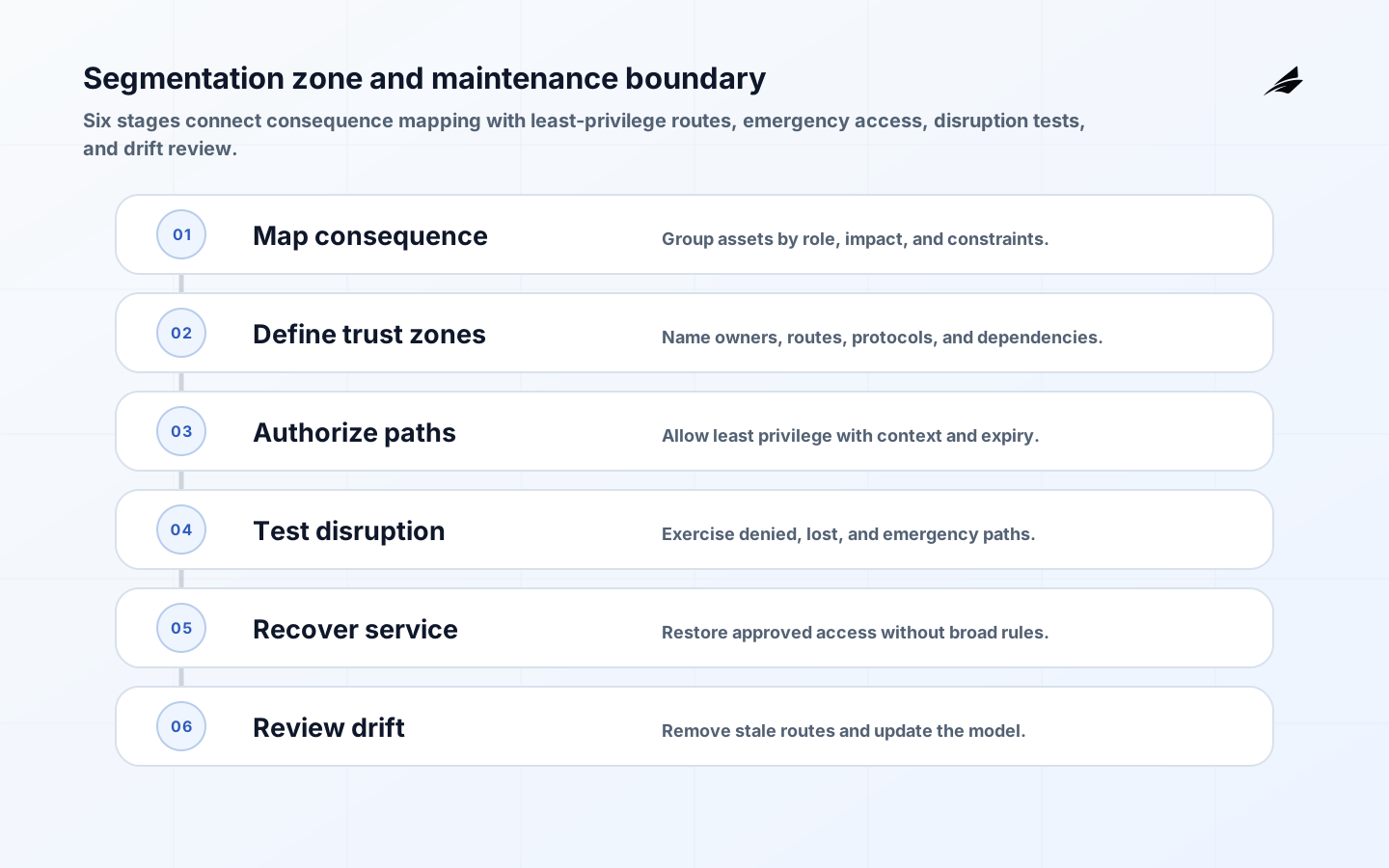
A network segmentation plan becomes useful when every permitted path has a reason and every denied path has a safe alternative. Begin with consequences: what could happen if a workstation, gateway, vendor account, or cloud service were compromised? Group assets by role, safety impact, update constraints, and required communication rather than by organizational chart alone. A reporting service may need read-only access to a broker, while a maintenance laptop needs a time-limited route to one gateway through an approved jump host. The route, identity, destination, protocol, expiry, and evidence should be visible. NIST SP 800-82 Rev. 3 is a helpful reminder that operational technology availability and safety constraints affect the control choice; a theoretically stronger control can be unsafe if it interrupts a process without a tested safe alternative.
For segmentation zone design, compare What Changes When Network Segmentation Moves into Production, Gateway Security for Connected Systems: A Practical Guide, What Changes When Network Observability Moves into Production; together they frame segmentation zones, ownership, and recovery without asking the reader to infer the operating boundary.
- Classify assets by consequence, role, and maintenance constraints.
- Give each route an owner, purpose, protocol, expiry, and evidence record.
- Design vendor and emergency access as controlled lifecycle paths.
- Exercise containment and service recovery before expanding the boundary.
Network segmentation before the first build takeaways for operators
- Network segmentation should begin with an operational outcome and a named decision owner.
- Make identity, time, quality, authority, and recovery visible in the design for segmentation zones.
- Treat degraded operation as a first-class user and support experience for segmentation zones.
- Release in a bounded scope, then expand only with observed evidence.
- Use measurements to trigger review and improvement, not to create passive reporting for segmentation zones.
Segmentation FAQ: questions to settle before construction
Is network segmentation mainly a technology selection? No. Technology matters, but the durable choice is the operating contract around it: what is trusted, who can act, what happens under failure, and how change is reviewed for segmentation zones. A tool that fits those constraints is usually easier to operate than a feature-rich product adopted without them for segmentation zones. How much should the first implementation cover? Cover one valuable path end to end, including a realistic exception and recovery exercise for segmentation zones. The first release needs enough scope to prove ownership, evidence, and support, but not so much that the team cannot learn from a contained failure for segmentation zones. Add adjacent paths only after the initial behavior is reliable. When should the design be revisited? Revisit it after a material incident, a new device or integration class, a change in data sensitivity, or evidence that manual workarounds are becoming routine for segmentation zones. Those are signs that the original boundary no longer matches the work for segmentation zones.
Conclusion: keep segmentation zones explainable
Good network segmentation design makes the next action clearer when the system is under pressure. It connects network paths between operational technology, corporate services, vendors, and cloud workloads to an accountable outcome, makes its limits explicit, and retains enough evidence to investigate and improve. Begin with the example that matters most to the people doing the work, specify the normal and degraded paths, and prove that the team can recover before broadening the scope for segmentation zones. That is how an early technical decision becomes a dependable operating capability rather than a fragile layer of complexity for segmentation zones.