How Founders Should Think About Procurement Software
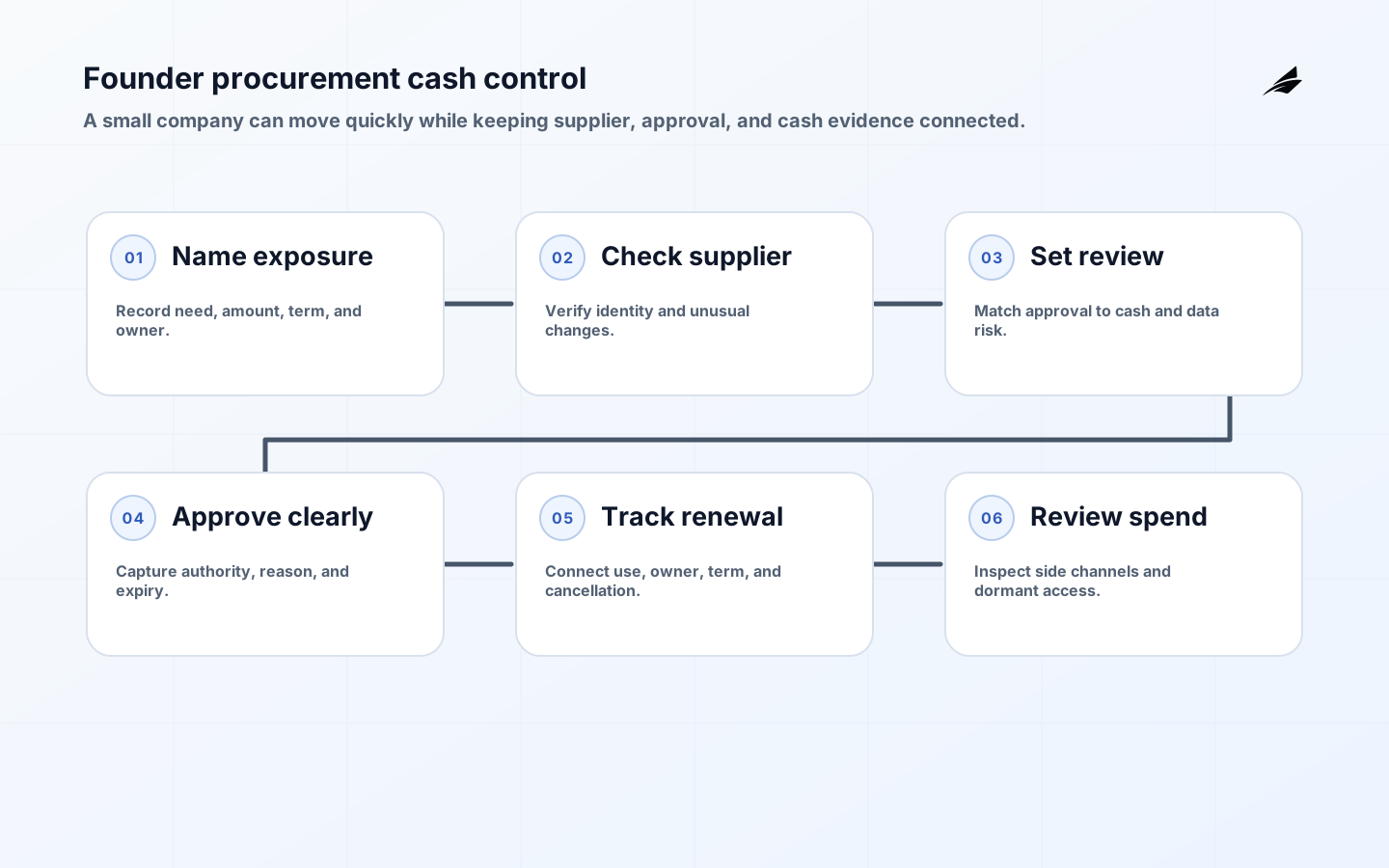
Procurement software for founders should protect cash and supplier trust without slowing ordinary decisions. Founders often meet procurement software when a fast purchase becomes a recurring risk: a vendor is paid twice, a renewal surprises the budget, or nobody can explain who approved a commitment. Early controls should preserve speed by making the important boundaries obvious rather than recreating a large enterprise bureaucracy. This guide focuses on supplier identity, approval scope, cash exposure, renewals, and lightweight review. Related reading includes the enterprise procurement guide, the engineering procurement playbook, and the inventory guide.
Choose the few decisions that matter

Start with purchases that can create durable exposure: recurring software, access to customer data, external contractors, high-value equipment, and supplier bank changes. Define who can request, who owns the budget, and which commitments need a second review. A founder may hold several roles, but the workflow should still show which capacity authorized the decision.
Keep the first policy short enough to use during a busy week. A request should state purpose, supplier, amount, currency, renewal or end date, data access, and proposed owner. The SBA size standards remind teams that company context can influence obligations; the right control set should reflect the company's actual risk and contracting environment.
Make supplier identity reliable
A supplier record should have legal identity, payment destination, contact, contract owner, verification date, and change history. Do not rely on a name typed into a request. Match possible duplicates and route uncertain bank changes to a person who can use an independent contact path.
Small teams are vulnerable to social pressure because one person often knows every vendor. Make the safe action easy: hold an unusual change, show the evidence that triggered the hold, and name the person who can clear it. Do not paste sensitive payment details into broad notification channels.
Keep approval proportional to exposure
Use approval tiers based on amount, commitment period, data access, and reversibility rather than treating every purchase equally. A low-cost annual tool may still deserve review if it can export customer data. An urgent purchase may move faster, but the urgency reason and later review should be explicit.
The NIST SP 800-63 Digital Identity Guidelines offer a more precise way to discuss identity and authentication than “the founder approved it.” Require stronger verification for account takeover and payment changes, and ensure delegated authority expires when the business context changes.
Control renewals and silent growth
Recurring subscriptions and usage-based services can grow without a new purchase request. Store renewal date, notice period, owner, seat or usage basis, cancellation path, and expected business outcome. Alert the accountable owner before the decision window, not on the invoice date.
A renewal review should ask whether the service is still used, whether its data access is still needed, and whether the price or scope changed. Keep the original commitment and current decision linked. A “renewed” status without the current owner is not useful evidence.
Connect purchasing to cash and access
The purchase record should link budget, contract, supplier, invoice, payment, and access owner without duplicating every document into every tool. When a service grants system access, create a separate joiner, mover, leaver responsibility so payment cancellation is not confused with access removal.
Set a clear difference between request accepted, approved, ordered, received, invoiced, and paid. A payment processor acknowledgement does not prove the supplier delivered value. CISA Secure by Design is a helpful reminder to make safe defaults and misuse resistance part of the product flow.
Design a useful exception path
The exception queue should distinguish an unclear supplier, missing contract, budget question, suspicious bank change, urgent need, and integration failure. Give each a safe temporary state and expiry. A founder should be able to approve a genuine exception without making the shortcut invisible to future reviewers.
Never let “I know this supplier” substitute for evidence when the action changes payment or access. Record the reason, authority, expiry, and follow-up. The best exception experience preserves momentum while making the debt visible enough to close.
Use a small pilot and observe it
Choose one purchasing category, such as software subscriptions or professional services. Compare time to request, time to approve, renewal surprises, duplicate suppliers, blocked requests, and manual corrections. Ask a person who did not configure the policy to approve a normal request and handle a suspicious change.
Avoid measuring success by the number of forms completed. A good pilot reduces uncertainty around cash and authority while keeping the request experience understandable. Stop and simplify when controls create side-channel buying that is harder to see than the original process.
Review the control set as the company grows
Growth changes who owns budgets, which contracts matter, and how much access a supplier receives. Review approval tiers, delegated roles, dormant subscriptions, supplier changes, and unresolved exceptions on a regular cadence. The ISO 20400 Sustainable procurement reference can broaden a supplier conversation beyond price, but a startup should choose the criteria it can actually evidence.
Record what the company is intentionally not controlling yet and the trigger for revisiting it. That is more useful than pretending an incomplete policy is comprehensive. When headcount or spend crosses a meaningful boundary, update the authority map and test it before the next busy purchasing cycle.
Buy simplicity, keep evidence
Choose software that supports the small set of decisions the company actually makes, exports its records, handles identity changes, and makes exception ownership visible. Avoid a platform whose complexity forces buyers back to email. Confirm how supplier data, approval history, invoices, and renewal dates can be retrieved if the tool changes.
A founder-friendly system is not one with the fewest fields; it is one where a new owner can understand a commitment without asking the original founder. Keep the control contract stable while the interface and vendor evolve.
| Risk | Minimum evidence | Review owner |
|---|---|---|
| Recurring commitment | Owner, term, renewal, usage basis | Budget owner |
| Payment change | Supplier identity, independent verification, actor | Finance or founder delegate |
| Data-access purchase | Data scope, security contact, offboarding | Technical owner |
| Urgent exception | Reason, approver, expiry, follow-up | Exception owner |
Key takeaways
- Control recurring spend, supplier payment changes, sensitive access, and durable commitments first.
- Keep authority visible even when one founder holds several roles.
- Make renewals, exceptions, and offboarding part of the purchase record.
- Use proportional review tiers instead of treating every purchase alike.
- Choose simple software that lets a new owner retrieve the evidence.
| Signal | What it tells you | Response |
|---|---|---|
| Renewal surprise | Ownership or notice timing is weak | Assign owner and review window |
| Side-channel purchase | Workflow is too slow or unclear | Observe request friction and simplify |
| Dormant subscription | Cash and access are drifting | Reconcile usage, owner, and cancellation |
| Supplier change alert | Payment or fraud risk may be rising | Verify independently and record decision |
Frequently asked questions
When should a startup adopt procurement software? When recurring spend, supplier count, access risk, or approval ambiguity makes informal tracking unreliable. Start with one high-value category.
Do founders need separation of duties? They need proportionate checks. A founder may approve a purchase, but payment changes, sensitive access, and unusual commitments should have independent verification where practical.
What should a first procurement workflow include? Request purpose, supplier identity, amount and term, budget owner, approval scope, renewal date, exception reason, and links to the resulting commitment and invoice.
As headcount grows, authority changes faster than founders expect. Review delegated roles, budget ownership, supplier contacts, and access to procurement tools after reorganizations or departures. An old approval grant is not harmless if it can create a new commitment. Pair role changes with an inventory of recurring subscriptions and external accounts so payment and access are retired together.
Cash controls should distinguish a planned commitment from a payment event. A request can be approved while an invoice is disputed, a service can be cancelled while a final charge remains, and a supplier can change payment details without changing the contract. Link these states rather than collapsing them into paid or unpaid. That gives finance a clear exception path and gives the business a chance to stop a mistake before it repeats.
For a small company, the best procurement record is one that survives a handoff. Store why the purchase exists, who owns the outcome, how long the commitment lasts, which supplier was verified, and what access or data it creates. A future operator should not need the founder's memory to decide whether a renewal is still useful. Keep the evidence concise, but make the owner and expiry impossible to miss.
The founder should also decide what evidence can be lightweight and what evidence cannot be skipped. A small purchase may need only purpose, owner, amount, and supplier check. A recurring tool with customer data needs a clearer access owner, renewal date, offboarding plan, and security contact. Proportionality keeps controls usable without treating high-consequence purchases as ordinary expenses.
A procurement control should reduce the number of decisions that depend on a founder being awake, available, or able to remember a conversation. Make the normal path self-explanatory and route unusual exposure to a named reviewer. This protects speed because routine work keeps moving while the few decisions that can hurt cash, data, or trust receive the attention they deserve.
Conclusion
Founders do not need ceremony for its own sake; they need enough structure to protect cash, supplier trust, and access while the company moves quickly. Start with recurring commitments and unusual changes, then let evidence guide the next control.