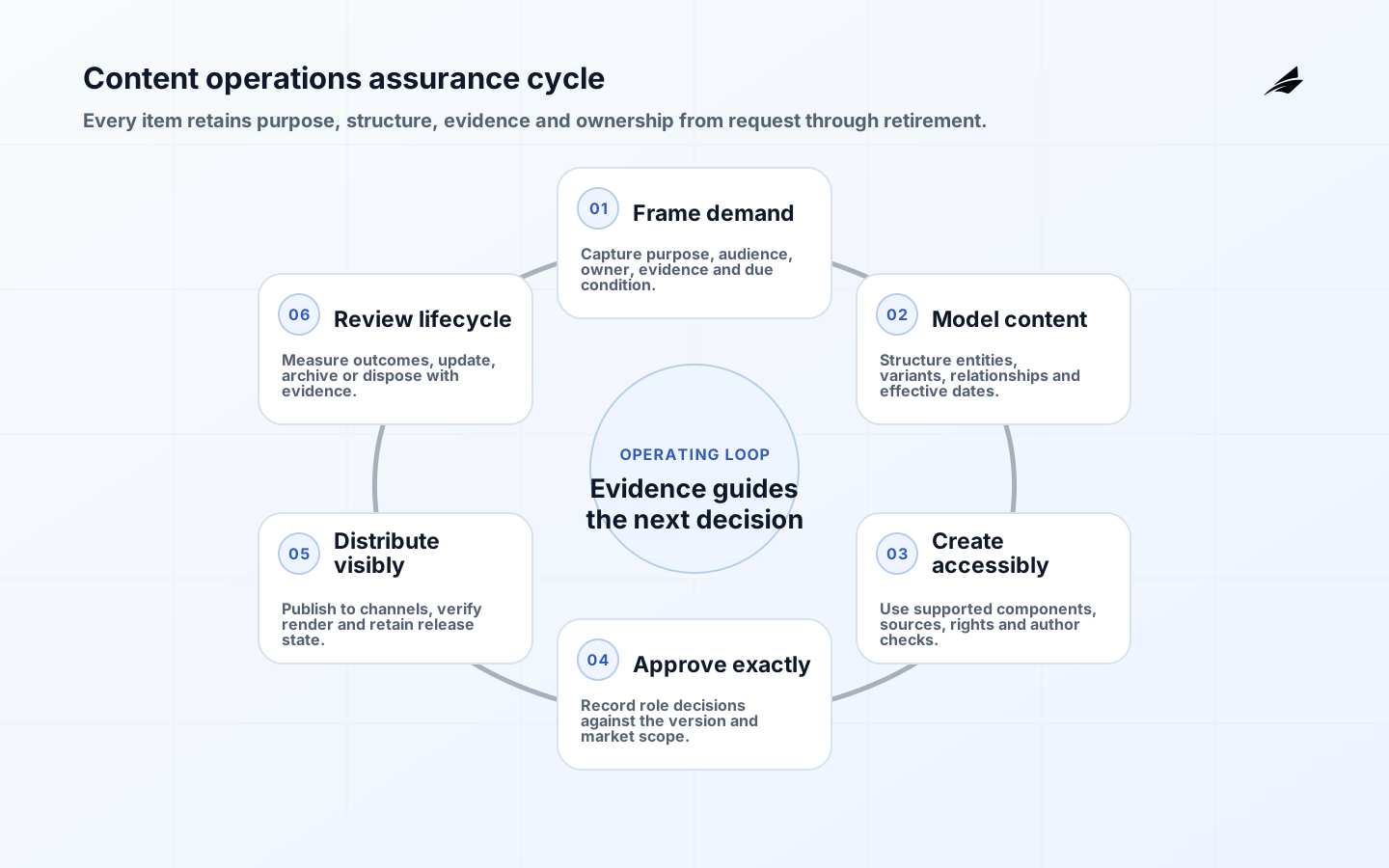
This content operations system FAQ explains how a team can manage content from request through retirement without reducing editorial work to a ticket queue. The system is the combination of content model, authoring tools, roles, workflow, repositories, channels, controls and measures. It should help people create accurate, accessible and reusable content, show what is approved for which audience, and preserve evidence when content changes.
The content operations practical guide describes the operating model, and the implementation checklist provides release gates. Teams working on discovery markup should use the schema and sitemap guide. A CMS may be part of the solution, but purchasing one does not establish content ownership, quality or lifecycle discipline.
What is a content operations system?
A content operations system coordinates demand, planning, creation, review, approval, publication, distribution, measurement, update and retirement. It links a content item to its purpose, audience, owner, sources, rights, variants, status, channels and retention. The system may span a planning tool, CMS, digital asset manager, translation platform, repository and analytics. Integrations should preserve identity and state so teams can answer which version is live and why.
Begin with recurring content journeys: a policy update, product page, support article, campaign asset or regulatory notice. Map request, evidence, decisions, handoffs, exceptions and delay. Define service levels by risk and urgency. Remove reviews that do not add distinct value. A legal review may be essential for a claim; requiring the same queue for a spelling correction increases lead time without reducing risk. Workflow should route by content attributes and consequence.
| Capability | System must answer | Evidence |
|---|---|---|
| Intake | Why is this needed and who owns it? | Brief, audience, objective and due condition |
| Creation | Which structure and sources apply? | Content type, fields and source links |
| Review | Who decides accuracy, rights and risk? | Role-specific approvals and comments |
| Publish | Where, when and in what variant? | Release record and channel status |
| Lifecycle | When is it reviewed or removed? | Owner, review date and disposition |
How should a content model be designed?
Model durable concepts rather than page layouts. A product, person, policy, event, answer or location can be reused across channels while presentation changes. Define fields, relationships, allowed values, validation, localization and ownership. Avoid one giant rich-text field that hides headings, claims and calls to action from governance and reuse. Also avoid fragmenting prose so aggressively that authors cannot create a coherent argument. Test the model with representative content and exceptions.
Separate canonical facts from channel-specific expression. A product specification may have one governed source and different summaries for web, app and partner feed. Record effective dates and market applicability. Prevent circular relationships and uncontrolled taxonomy growth. Establish a change process because model changes affect APIs, templates, analytics and migrations. Version content contracts and provide compatibility windows to consumers. Content modeling is information architecture with operational consequences, not form design.
Who owns content and workflow decisions?
The content owner remains accountable for purpose, accuracy and lifecycle. Authors create and update. Subject experts validate facts. Legal, privacy, security, brand and accessibility specialists review only where their expertise and risk criteria apply. A managing editor resolves priorities and standards. Platform owners operate tools and integrations. Define who may publish, schedule, unpublish, override and restore. Emergency publication needs a named authority and retrospective review, not shared credentials.
Capture approvals as records linked to the exact content version. ISO 15489-1 describes concepts for creating, capturing and managing records across formats and environments. Apply proportionate record controls to policy, regulated claims and consequential communication. Comments alone may not prove approval after a document changes. Keep rationale, sources, approver, timestamp and effective scope, then apply retention and legal-hold rules.
| Risk | Preventive control | Operating signal |
|---|---|---|
| Stale fact | Named owner and review date | Overdue high-impact items |
| Wrong variant | Market and channel applicability rules | Publication mismatch incidents |
| Inaccessible output | Accessible components and author checks | Manual journey failures |
| Rights breach | License, consent and expiry metadata | Assets nearing expiry |
| Unauthorized change | Role separation and version audit | Emergency or reverted publishes |
How does the system support accessible publishing?
Accessibility must be supported by components and authoring flow. W3C's ATAG overview explains that authoring tools should be accessible to authors and help them produce accessible content. Require structured headings, meaningful link text, alternative-text decisions, captions, transcripts, table headers, language and clear error messages. Do not auto-fill image filenames as alternatives or treat a checker score as conformance.

Test published templates and real content against WCAG 2.2 with automation, expert review and users of assistive technology. Preserve accessibility information through translation, transformation and syndication. Preview must represent the actual channel. Make remediation ownership visible and block only failures proportional to risk; silent warnings train authors to ignore the system. Track recurring failures back to components, templates, training or model design.
How are sources, rights and provenance managed?
Link material claims to authoritative sources, owner and verification date. Record creator, transformations and published derivatives. W3C PROV-O supplies concepts for entities, activities and agents that can inform interoperable provenance. For media, store license, territory, channel, attribution, consent, model release and expiry. The system should prevent use outside approved conditions and notify owners before rights expire.
Content credentials can add tamper-evident provenance to supported media workflows. The current C2PA technical specifications define a technical approach for manifests, signed claims and assertions, but credentials do not prove that a claim is true and absence does not prove deception. Preserve source files, editorial evidence and access controls. Explain credentials accurately to users and avoid presenting one technical signal as a universal authenticity verdict.
How should localization and omnichannel delivery work?
Treat locale, language, market and regulatory variant as explicit dimensions. Define which fields inherit, which require translation and which need local approval. Preserve translation memory and terminology while allowing local teams to flag cultural or legal mismatch. When a canonical fact changes, identify affected variants and channels. Do not overwrite a deliberate local adaptation with an automated source update. Track completeness and freshness by required market.
Publish through versioned APIs or feeds with authentication, caching, invalidation and consumer contracts. Keep preview separate from public delivery and prevent draft leakage. Record channel acknowledgments so a CMS success is not mistaken for an updated website, app or kiosk. Design withdrawal and correction across every consumer. For high-impact content, verify the rendered result and search discovery after release. Distribution is complete only when intended audiences receive the right version.
How is a content system migrated and measured?
Inventory content, owners, traffic, links, rights, variants and dependencies. Classify each item as retain, revise, merge, archive or delete. Map models and URLs, cleanse metadata, migrate representative complex items first and reconcile counts and relationships. Preserve redirects and records. Freeze or coordinate changes during final migration. Do not import stale content merely because it exists; migration is a governance decision and a chance to reduce risk.
Measure request-to-publish time by class, first-pass acceptance, rework cause, overdue reviews, accessibility defects, stale high-impact content, rights exceptions, localization lag, successful channel delivery and outcome measures such as task completion. Volume published is not quality. Review whether workflow steps predict better outcomes. Remove redundant gates, improve templates where defects recur and retire unused items. Combine system data with interviews because teams may maintain invisible workarounds outside the platform.
Practical example: governing product support content
A software company has duplicate support articles across a website, in-product help and partner portal. Customers find obsolete steps, while writers cannot tell which version a release changed. The team models product, version, task, procedure, warning and channel variant. Each article receives an outcome owner, technical source, supported versions, review date and retirement rule. High-risk security and billing procedures route to specialist approval; ordinary clarity changes use editorial review.
Authors work in accessible structured templates that require meaningful headings and explicit decisions for images, tables and code. A source change identifies every affected locale and channel. Publication records exact content, approvals and rendered destinations. Partners consume a versioned feed and acknowledge updates. Migration retains useful URLs, redirects merged articles and archives records needed for prior supported versions. Expired screenshots cannot publish because rights and product-version metadata are enforced.
After launch, the company measures successful self-service, search refinement, first-pass technical approval, stale high-impact items, translation lag and accessibility failures. A high-volume article still generates contacts, and session review shows the procedure assumes administrator rights. The owner adds a user-permission branch and the component team improves how prerequisites are presented. A later product retirement automatically identifies dependent articles, locales and partner feeds for disposition. This is content operations as product learning: workflow evidence changes the content and its reusable publishing controls.
Editors can trace a customer-visible sentence to the release, technical source, translator and approval that produced it. That trace shortens corrections during incidents and makes accountability practical without exposing internal workflow details to readers.
Key takeaways
- Design the system around complete content journeys, not a CMS feature list.
- Model durable entities, variants, relationships and effective dates.
- Assign purpose, accuracy, publication and lifecycle authority.
- Embed accessible authoring and verify rendered content.
- Preserve source, rights, approval and provenance evidence.
- Measure quality, freshness and audience outcomes, then simplify workflow.
Frequently asked questions
Does a content operations system need a headless CMS?
No. Headless delivery can support structured omnichannel content, but it adds preview, integration and frontend responsibilities. Choose it when channel reuse and architecture needs justify the operating complexity.
Can generative AI approve or publish content automatically?
It can assist drafting or classification within controls, but approval authority should follow consequence, source quality and accountability. High-impact claims need qualified human judgment, version evidence and constrained publication permissions.
Conclusion
A content operations system is successful when it makes good publishing easier and risky ambiguity visible. Structure content for reuse, route review by consequence, preserve rights and decision evidence, and manage every item through retirement. The result is faster work with stronger accessibility, accuracy and accountability across channels.