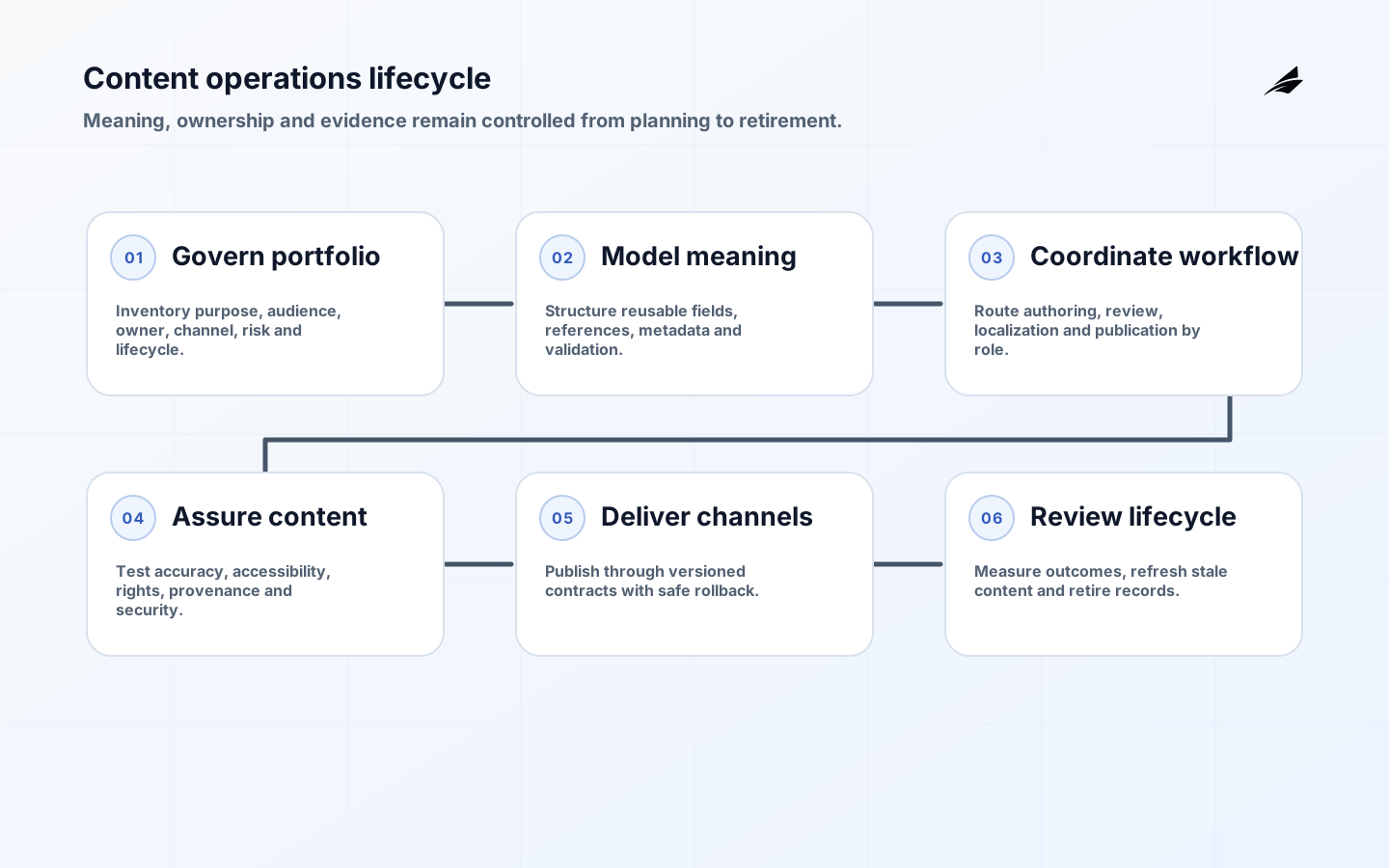
A content operations system coordinates how an organization plans, creates, reviews, publishes, localizes, updates and retires content. Implementation is not a content-management-system installation. It is the design of roles, models, workflow states, evidence and channel contracts around a publishing lifecycle. This content operations system implementation checklist helps teams create a dependable source of truth while preserving accessibility, provenance, security and the ability to change platforms later.
Pair this checklist with the content operations system guide, content operations FAQ and schema and sitemap publishing guide. Decide the operating model before importing content. Migration magnifies existing ambiguity: duplicate pages, unclear owners and uncontrolled fields do not become governed merely because they enter a new repository.
1. Define the content portfolio and operating outcomes
Inventory content by type, audience, channel, language, sensitivity, business purpose and lifecycle state. Count records and reusable assets, but also map important journeys: product launch, policy update, campaign approval, incident notice and regulated disclosure. Establish outcomes such as shorter update time, fewer conflicting versions, higher accessibility conformance or lower translation rework. Assign an executive owner for the operating change and content owners who can approve meaning, not just formatting.
Set the system boundary. A content operations system may include planning, digital asset management, structured authoring, translation, review, delivery APIs, web rendering, search and archive services. Name the authoritative system for each record and define which integrations copy, reference or transform it. Record exclusions and manual steps. Avoid making the new platform an accidental master for product, customer or legal data that another governed system already owns.
| Decision | Minimum evidence | Acceptance question |
|---|---|---|
| Portfolio | Content types, volumes, channels, owners and risk tiers | Do we know what must migrate, archive or be deleted? |
| Outcome | Baseline and target for speed, quality, risk and reuse | Will the system change an operating result? |
| Authority | Owner, reviewer, publisher and emergency roles | Can every state transition be approved by an accountable role? |
| Boundary | Systems of record, transformations and consumers | Can a team trace where each public field originates? |
2. Design reusable content models and metadata
Model content around meaning and reuse rather than one page layout. A product claim, eligibility rule, office location or author biography should be structured once when multiple experiences need it. Define required fields, allowed values, references, validation, localization behavior and ownership. Keep presentation concerns in rendering components where possible. Version schemas and provide migration paths, because changing a shared field can affect websites, applications, feeds and archived records simultaneously.
Metadata should support discovery, workflow, rights, retention and measurement. Use controlled vocabularies for stable concepts and governance for adding terms. Preserve creator, source, approval, effective date, expiry, locale, rights and sensitivity. The W3C PROV-O recommendation offers useful concepts for representing entities, activities and responsible agents. Teams do not need a complex ontology to retain a clear chain from source through editorial action to published variant.
3. Configure workflow, roles and service levels
Create explicit states such as draft, subject review, legal review, localization, ready, scheduled, published, superseded and archived. Define entry criteria, permitted transitions, accountable role, expected time and escalation for each. Separate authoring from publication for sensitive content. Support expedited publishing through a named emergency path with retrospective review, not shared administrator credentials. Notifications should identify the decision required and deadline; excessive alerts teach reviewers to ignore the system.
Use role-based permissions at the content type, locale, business unit and action levels. Joiner, mover and leaver processes must reach the content platform and connected asset, translation and deployment tools. Review privileged access and service accounts. Keep decision records for approvals, rejected changes and overrides. Workflow history is operational evidence, so define retention and export requirements before selecting a platform. A visually rich activity feed is not enough if records cannot be queried or preserved.
| Workflow control | Practical implementation | Metric |
|---|---|---|
| Review scope | Route by content risk and changed fields | Review time by risk tier |
| Separation of duties | Restrict sensitive publication to approved roles | Unauthorized transition attempts |
| Staleness | Set owner, review date and expiry action | Overdue content by type |
| Localization | Lock source version and track locale status | Rework caused by source changes |
| Emergency change | Time-bound privilege and retrospective review | Emergency changes closed with evidence |
4. Build accessibility and quality into authoring
Convert quality policies into authoring constraints and acceptance checks. Templates can require useful headings, link purpose, text alternatives, language, captions and descriptive labels. Component design should support keyboard use, focus, zoom and status messages. WCAG 2.2 applies to complete pages and processes, so validating fields in isolation is insufficient. Test rendered experiences with automated tools, keyboard interaction, zoom and representative assistive technology, including authentication and form errors.
Add editorial rules for accuracy, evidence, dates, claims and plain language. Validate broken references, orphaned assets, missing ownership, invalid locale fallbacks and structured data that disagrees with visible content. Google's structured data guidelines require markup to represent visible page content and prohibit misleading or hidden data. Generate schema from governed fields when possible, then test representative templates after release instead of relying on hand-edited markup.
5. Protect rights, provenance and content integrity
Record license, creator, release, permitted channels, territory and expiry for media and third-party text. Prevent publication when required rights are missing. For AI-assisted work, retain the source material, tool and human approval appropriate to risk; never treat generated citations as evidence without opening the source. The C2PA 2.2 specification defines technical mechanisms for cryptographically bound media provenance, but provenance describes history rather than declaring content true. Use it where ecosystem support makes it useful.

Protect administrative sessions, preview URLs, webhooks, API tokens and deployment credentials. Validate and sanitize content at trust boundaries, restrict executable embeds and scan uploads. Apply secure development practices to custom extensions and rendering code; the NIST SSDF provides a common set of practices for preparing, protecting, producing and responding to vulnerabilities. Maintain backups and test restoration of content, assets, schema, configuration and audit history together.
6. Migrate, integrate and cut over safely
Classify every source item as migrate, merge, rewrite, archive or delete. Normalize identifiers and map old fields to the new model with explicit transformation rules. Preserve canonical URLs, redirects, publication dates and required records. Run trial migrations and reconcile counts, references, assets, permissions and representative renders. Sample high-risk content manually. Freeze only the minimum necessary window and define how changes made during migration will be replayed or reconciled.
Test channel contracts under failure: delayed asset processing, translation outage, malformed webhook, partial deployment and cache inconsistency. Use idempotent integrations and correlation identifiers so retries do not duplicate publication. Establish rollback criteria and rehearse them. After cutover, monitor old URLs, API errors, search visibility, accessibility defects, editorial queues and support demand. Do not decommission the source until legal retention, export completeness and operational acceptance are signed by named owners.
7. Measure adoption and lifecycle health
Measure completed content outcomes, not logins or raw publishing volume. Useful signals include time from request to approved publication, review queue age, reuse of governed components, accessibility defects, stale records, translation rework, emergency changes, failed deployments and content-related support incidents. Segment by content type and risk so high-volume low-risk pages do not conceal a slow regulated workflow. Review whether metrics prompt a decision and remove those that do not.
Maintain a governance cadence for model changes, vocabulary, roles, integrations and vendor releases. Review a sample from source through published variants and archive. Gather author, reviewer, translator, developer and audience feedback, then prioritize constraints that create unsafe workarounds. A content operations system should reduce coordination cost while improving control; if teams export work to documents and chat to get around it, investigate the workflow rather than blaming adoption.
Practical example: governed policy publishing
Consider a company publishing customer eligibility policies across web, application, contact-center scripts and downloadable documents. The content model separates policy identity, jurisdiction, eligibility rule, evidence requirement, effective date and approved explanation. Legal owns the rule, operations owns executable guidance and channel teams own rendering. A change cannot publish until affected channels acknowledge the same approved version, accessibility checks pass and old policy variants receive a superseded date.
The migration finds three conflicting source pages and several PDFs with no owner. The team does not import all of them. It identifies the authoritative decision record, archives superseded material with retention metadata and creates redirects. After launch, measures include time from approval to channel consistency, overdue acknowledgements, accessibility defects and support contacts caused by unclear wording. This example shows why content operations governs meaning and state, not merely page production.
Implementation takeaways
- Inventory the portfolio and assign owners before selecting migration rules.
- Model reusable meaning and govern metadata independently from page layout.
- Make workflow states, authority, service levels and emergency changes explicit.
- Test accessibility and content quality in rendered end-to-end experiences.
- Retain rights, provenance, security evidence and recoverable audit history.
- Reconcile migrations and measure lifecycle outcomes after cutover.
Frequently asked questions
Is a content operations system the same as a CMS?
No. A CMS may be a central component, but content operations also includes planning, governance, review, assets, localization, delivery, measurement and retirement across tools and teams. The operating system is the combined process, roles, data and technology.
Does headless architecture solve content reuse?
It enables channel-independent delivery, but reuse still depends on well-designed models, semantics, governance and compatible channel contracts. A headless repository filled with page-shaped blobs simply moves coupling from templates into API consumers.
Conclusion
A successful content operations system makes every important item understandable, owned, reviewable, accessible and traceable across channels and time. Implement the lifecycle and evidence model alongside the platform, migrate by disposition rather than volume, and measure completed publishing outcomes. The result is faster content work with stronger control, not merely a newer place to type.