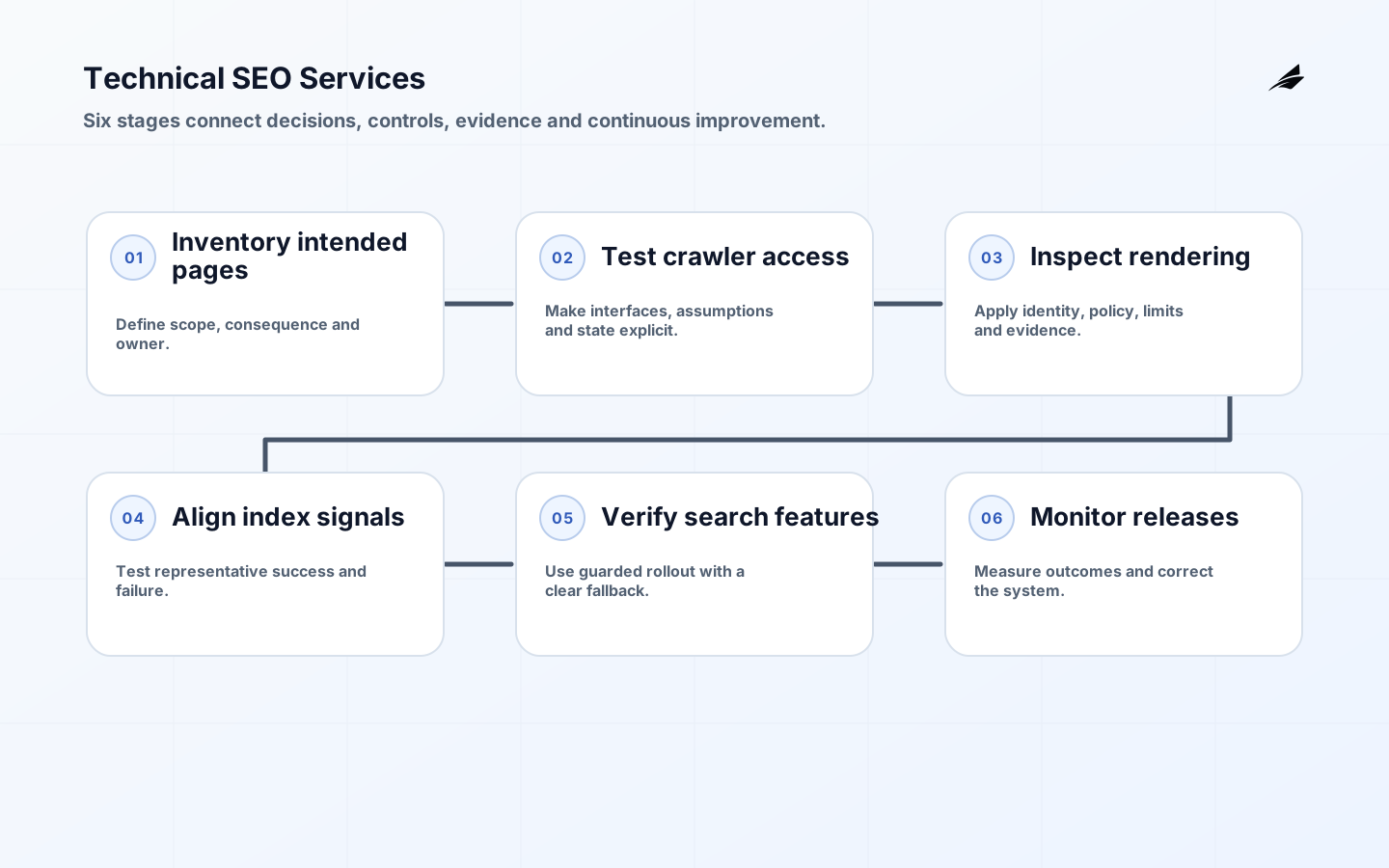
Technical SEO services diagnose and improve the systems that let search engines discover, render, understand, index and serve useful web pages. The work spans application architecture, HTTP behavior, templates, internal links, metadata, structured data, performance and release controls. It cannot guarantee ranking, and it should never substitute for useful content, sound information architecture or an accessible product.
Use this FAQ with the technical SEO services delivery plan, enterprise technical SEO scope guide, enterprise implementation checklist and enterprise FAQ. A useful engagement connects each finding to affected page groups, user value, implementation ownership and verification.
What technical SEO services should cover
Google’s crawling and indexing documentation separates concerns such as URL structure, sitemaps, robots rules, canonicalization, JavaScript and metadata. An audit should map these mechanisms to the site’s actual templates and business inventory. Sample checks are not enough for a marketplace, documentation estate or international site with millions of URL combinations.
Begin with page types, domains, languages, rendering modes, traffic and conversion roles. Reconcile known URLs from the CMS, database, routes, sitemaps, analytics, logs and external crawls. Classify pages that should be indexable, discoverable but excluded, private, redirected or retired. This expected-state inventory makes later findings testable and prevents blanket rules from hiding valuable pages.
Control crawler access without confusing it with security
The Robots Exclusion Protocol, RFC 9309, standardizes robots.txt parsing and matching. Robots rules request crawler behavior; they are not access authorization. Protect private content with authentication and authorization. Test rules by user agent and path, account for case and encoding, and monitor changes to the file as production configuration.
Use sitemaps for canonical, indexable URLs with accurate modification information where supported. Keep internal links crawlable and meaningful. Faceted navigation, search results, calendars and tracking parameters can create enormous URL spaces; manage them through product-aware URL design, canonical behavior, links and crawl controls. A blocked URL can still appear without content information, so blocking is not a dependable de-indexing method.
| Symptom | Evidence to inspect | Common mistake |
|---|---|---|
| Important page absent | Expected inventory, links, robots, status, render and index state | Requesting recrawl before fixing access |
| Wrong URL shown | Redirects, canonical, sitemap, hreflang and internal links | Sending contradictory canonical signals |
| Rich result lost | Visible content, policy, markup and template changes | Assuming valid syntax guarantees display |
| Traffic drops after release | Deploy diff, logs, page groups and query trends | Treating all pages as one aggregate |
Align canonical, redirect and index signals
Canonicalization selects a representative URL among duplicate or very similar pages. Google’s current canonical URL guidance describes redirects and rel=canonical as strong signals and sitemap inclusion as weaker. Signals should agree: internal links, redirects, canonicals, sitemaps and hreflang should point toward the intended URL set.

Use noindex when a crawlable page should not be indexed, not as a canonicalization shortcut. Validate status codes and final destinations across chains. Keep canonical elements in valid document head markup and use absolute URLs. For JavaScript applications, inspect server HTML and rendered output; client code must not create conflicting canonical or robots directives. Verify with search-engine inspection and observed indexing, not source code alone.
Use structured data that matches visible content
Structured data can clarify entities and enable eligible search features, but it does not guarantee presentation. Google’s general structured data guidelines require markup to represent visible, relevant content and comply with feature policies. Generate markup from the same authoritative fields as the page, then validate syntax, required properties and image accessibility.
Choose the most specific supported type that reflects the page’s main purpose. Do not mark up fabricated ratings, hidden FAQs or unrelated entities. Test templates and representative records because null values, escaping and stale content often break otherwise correct code. Monitor enhancement reports and production changes. Treat structured data as application output with tests, ownership and release review.
Measure real user experience and rendering reliability
Core Web Vitals currently cover Largest Contentful Paint, Interaction to Next Paint and Cumulative Layout Shift. Google’s threshold methodology uses the 75th percentile and defines good thresholds of 2.5 seconds for LCP, 200 milliseconds for INP and 0.1 for CLS. Use field data segmented by template, device and geography; laboratory tests support diagnosis but do not replace user evidence.
Improve the actual bottleneck: image discovery and sizing, server response, render-blocking resources, main-thread work, hydration, third-party scripts or unstable layout. Search impact is only one reason to act. Faster, stable interaction supports users and conversion. Set performance budgets in delivery pipelines and observe regressions after release, including pages and devices with less traffic than the headline dashboard.
| Deliverable | Useful form | Acceptance check |
|---|---|---|
| Indexability model | Page groups with intended crawl and index state | Owner can identify exceptions |
| Issue backlog | Template-level evidence, impact and implementation path | Engineering can reproduce finding |
| Migration map | Every material old URL to intentional destination | Automated status and target tests pass |
| Monitoring | Stable page groups, alerts and release annotations | A regression triggers an owned response |
Treat site migrations as controlled product releases
Create an old-to-new URL map from authoritative inventories, not only a crawl sample. Preserve valuable content, intent, internal links and metadata. Implement direct permanent redirects, update canonicals, hreflang, sitemaps and links, and prevent staging directives from reaching production. Test representative and high-value URLs before cutover and crawl both estates afterward.
Define rollback conditions carefully because reversing URLs can add more redirects and ambiguity. Monitor server errors, redirect targets, robots changes, indexed pages, query/page trends and conversion. Separate expected temporary volatility from clear implementation defects. Keep legacy redirects for as long as users and external references reasonably depend on them, subject to platform and policy constraints.
How to select and manage a technical provider
Ask for a sample finding showing evidence, affected scope, business impact, recommendation, owner and verification. Confirm capability across server behavior, rendering, analytics, accessibility and software delivery, not only crawler tools. The provider should work with engineering and content owners, use permitted access, minimize collected data and avoid claims of guaranteed positions.
Define deliverables as prioritized issues, reproducible queries, page-group inventories, implementation notes and post-release validation. Agree how access and exports are deleted at exit. Measure resolved impact rather than issue volume. A provider who reports thousands of identical URLs as separate problems creates noise; template-level diagnosis and durable regression checks create value.
Example: diagnose a faceted category index problem
An ecommerce site exposes millions of filter combinations while only a curated set has distinct user value. Reconcile route rules, product data, internal links, sitemaps, log requests and indexed examples. Define which category-filter combinations deserve stable pages, which remain usable but non-indexable and which should not be generated. Align canonicals and links with that model.
- Inventory filters and combinations from application rules, not crawl output alone.
- Select indexable pages from demand, inventory and distinct usefulness.
- Ensure canonical pages return useful content and stable 200 responses.
- Remove crawlable links to valueless combinations where product design allows.
- Keep robots, noindex, canonical and sitemap signals consistent.
- Monitor crawler demand, indexed page groups and user conversion after release.
Implement at the template and routing layer, then test representative combinations including empty inventory, pagination, sorting and multiple filters. A successful change reduces wasteful URL discovery while preserving useful navigation and intended pages. Reporting should show page-group behavior and business outcomes, not a single sitewide indexed-page count.
Operate the capability as a managed system
Technical search governance belongs in ordinary product delivery. Define automated checks for status, robots, canonical, hreflang, sitemap, metadata and structured-data invariants by template. Add release annotations to monitoring and assign alerts to engineering or content owners who can act. Keep a small set of inspected reference URLs for each important page group and refresh it when routing or templates change. Review server logs and search-console samples with privacy and access controls. Where measured search changes cannot be confidently attributed, say so and continue observing. This operating model prevents a one-off audit from decaying and gives teams a practical way to catch regressions before they affect an entire inventory.
Review evidence before expanding scope
Before expanding technical SEO services, the accountable owner should review representative outcomes, exceptions, access, changes, operating cost, user feedback and recovery evidence. Confirm that metrics still reflect the intended business result, that known limitations are visible to users and that suppliers have not changed material behavior without evaluation. Exercise one realistic failure and reconcile the resulting records. Record the decision to scale, narrow, correct or retire the capability, including assumptions and a review date. This review keeps implementation evidence connected to authority and prevents a successful pilot from becoming an unmanaged dependency.
Key takeaways
- Define the intended page inventory before interpreting crawler or index data.
- Keep robots, status, canonical, sitemap, internal-link and index signals coherent.
- Generate structured data from visible authoritative content and test it as application output.
- Use field performance data and template-level diagnosis.
- Manage migrations and remediation through software delivery, ownership and post-release verification.
Frequently asked questions
Can technical SEO services guarantee rankings?
No. Providers can improve crawlability, indexing signals, performance and implementation quality, but search systems decide results using many factors outside provider control. Require evidence-based work and avoid guaranteed positions, secret methods or changes that mislead users and crawlers.
How often should a technical audit run?
Perform a deep baseline after major architecture change and use continuous automated checks for critical rules. Review logs, index reports, performance and template samples on a regular cadence. Trigger focused audits for migrations, rendering changes, domain consolidation, international expansion and unexplained page-group shifts.
Is robots.txt enough to remove a page from search?
No. Robots.txt controls crawler access and is not an indexing or security mechanism. A blocked URL may still be known from links. For removal, use the method appropriate to the case, such as authentication, a crawlable noindex directive, or retirement with a suitable status, and verify the result.
Conclusion
Technical SEO services are most useful when they connect search behavior to real application and content systems. Build an expected-state inventory, diagnose by page group, align technical signals and verify changes in production. The durable outcome is not a long audit document; it is a site whose teams can release, migrate and monitor without repeatedly recreating the same defects.