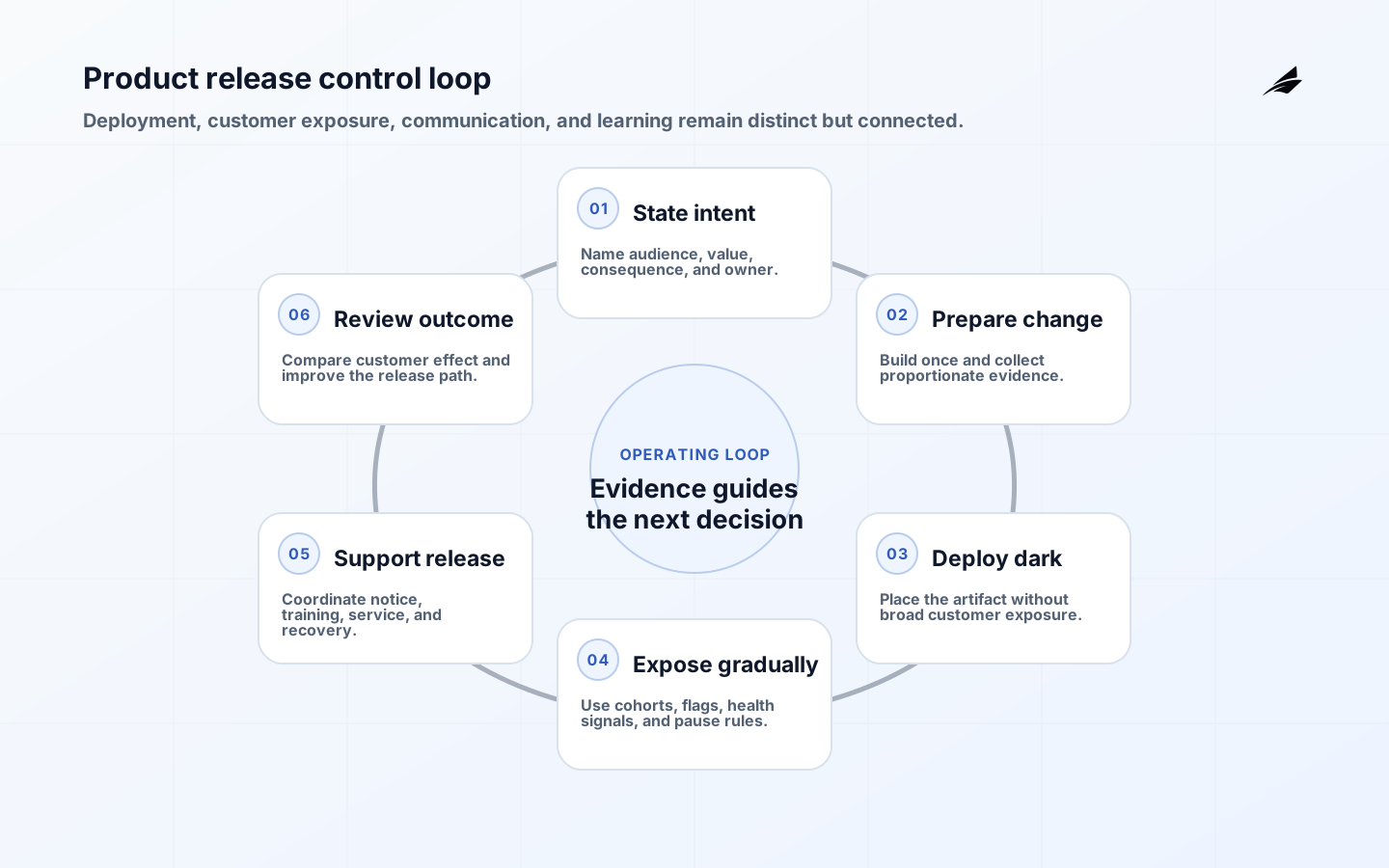
Release management for products is the discipline of deciding when a customer-facing change is ready to be exposed, supported, communicated, and learned from. Deployment moves software into an environment; a product release changes what a defined audience can experience. The two events may happen together, but feature flags, mobile-store review, data migration, contractual notice, training, or customer sequencing often separate them. A useful release system keeps those decisions visible without making every small change wait for a large meeting.
Why this decision changes delivery outcomes
Product leaders need one release record that connects intended audience, customer value, dependencies, technical evidence, support readiness, communication, exposure controls, and rollback authority. It should be assembled from delivery systems rather than copied into a ceremonial document. DORA defines continuous delivery as the ability to release changes on demand quickly, safely, and sustainably. That capability is compatible with product oversight: evidence is produced continuously, while the release decision remains proportionate to customer and business consequence.
Separate deployment, exposure, and product release
Model three timestamps when they differ. Deployment records when an artifact reaches an environment. Exposure records when a cohort can execute the new behavior. Product release records when the organization treats the capability as available and supported. This distinction makes progressive delivery legible: a service can deploy dark, expose to staff, expand to a pilot cohort, and become generally available only after support and commercial obligations are ready. Kubernetes Deployment guidance illustrates technical rollout states, but those states do not by themselves prove customer, support, or commercial readiness. The release record should identify which lever restores customer safety: disable a flag, route traffic, restore an artifact, reverse a schema path, or suspend a downstream action.

Set release classes from consequence, not team seniority. A copy correction can rely on automated evidence and ordinary ownership. A change to authentication, billing, data retention, or irreversible state needs named readiness evidence and an explicit pause authority. Google SRE's release engineering guidance emphasizes consistent, repeatable processes and self-service where possible, while NIST's Secure Software Development Framework keeps security practices inside ordinary development and release work. Apply both by encoding routine checks and reserving human judgment for ambiguity, policy, and customer impact. Teams planning cloud and DevOps delivery should review the exception path as carefully as the calendar.
Key takeaways
- Treat release management for products as an operating capability with named owners, not a tool purchase or one-time project.
- Make the important decision, its evidence and the conditions for pause or reversal visible before broad rollout.
- Use small, controlled changes to test technical behavior and the real support or operating path together.
- Keep security, access, reliability and recovery expectations inside ordinary delivery work.
- Review outcomes with the people who own the customer, service and financial consequences.
- Define the business outcome before selecting tools for release management for products.
- Map the real workflow for a cloud migration, including exceptions and approvals.
- Identify the systems of record, integration points and data freshness needs.
- Decide which actions can be automated and which require human review.
- Create a measurement plan so the project is judged by adoption, quality and time saved.
Design the operating path before selecting tools
| Decision | What to define | Why it matters |
|---|---|---|
| Workflow boundary | Where release management for products starts, pauses, escalates and finishes | Prevents the system from becoming too broad to launch |
| Data ownership | Which records are trusted and which fields can be updated | Reduces duplicate data and reporting conflicts |
| Access model | Roles, permissions and approval points for a cloud migration | Keeps sensitive actions controlled and auditable |
| Operating model | Who monitors, supports and improves the workflow after launch | Makes the system dependable beyond the first release |
Controls that preserve speed and accountability
- Document the assumptions behind release management for products before build begins.
- Keep audit trails for important state changes and automated decisions.
- Use clear fallback paths when data is missing, confidence is low or approvals are delayed.
- Review permissions and reports with real users before production rollout.
- Add internal links, schema metadata and media alt text so the page and assets can be crawled cleanly.
Measure the behavior that should improve
| Metric | Signal | Review cadence |
|---|---|---|
| Cycle time | How long the workflow takes before and after launch | Weekly during rollout |
| Error rate | How often records, approvals or handoffs need manual correction | Weekly until stable |
| Adoption | How many intended users rely on the system for real work | Monthly |
| Business impact | Time saved, revenue protected, cost avoided or visibility improved | Monthly or quarterly |
Release management for products works best when the workflow is clear enough to operate and simple enough to improve.
Edilec Research
Choose a small, evidence-producing first step
If your team is evaluating release management for products, create a one-page workflow map with users, records, decisions, permissions, risks and target metrics. That map becomes the starting point for scope, architecture, cost and delivery planning with Edilec.
Start with the real operating context
Release management for products is useful only when it is tied to a real operating decision. In this guide, the practical center is release and platform operations: which release path gives the team speed without hiding rollback, ownership or production health. That framing keeps the article away from empty terminology and closer to the questions a buyer, founder or engineering lead has to answer before money is spent on software.
Make constraints and boundaries explicit
A strong architecture for release management for products should include versioned infrastructure, automated checks, observable services, rollback paths and incident routines. The important data is build metadata, deployment state, service health, incidents, costs and customer-impact signals. These details sound small, but they decide whether the system can be tested, secured and improved after launch. If they are left vague, the product team ends up debating behavior through support tickets instead of through a shared model.
| Area | Decision to make | Delivery evidence |
|---|---|---|
| Workflow | What status tells a user what should happen next? | States, owners, handoffs and exception paths are visible |
| Data | Which record proves mean time to restore changed? | Fields, timestamps, lineage and source ownership are documented |
| Integration | What happens when a dependency fails? | Retry rules, visible queues and alert ownership are designed |
| Security | How does the system reduce unrehearsed rollback? | Role checks, policy review and audit events are part of the release |
Build through controlled increments
- Collect real examples of release and platform operations from current work, including normal cases and uncomfortable edge cases.
- Write the decision rules in plain language before turning them into screens, policies, prompts or services.
- Define the service dashboard before building the interface so permissions, data and reporting have a shared reference.
- Build the first release around one valuable path, including the unhappy path, the support path and the rollback path.
- Instrument mean time to restore, cloud cost per active user, open exceptions and manual bypasses from the beginning.
- Review feedback after launch and expand only when the first workflow is stable enough to operate.
Review quality with production in mind
| Risk | Control | What to monitor |
|---|---|---|
| unrehearsed rollback | Make ownership and review rules explicit in the product. | Unassigned items, blocked states and approval delays |
| manual deployment drift | Keep audit trails and source metadata close to the action. | Missing evidence, stale records and unresolved exceptions |
| shipping faster while making production harder to understand when something goes wrong | Design the product around repeated daily work instead of presentation alone. | deployment frequency, change failure rate, mean time to restore and alert quality |
Practical checklist
- Gather five real examples of the workflow before estimating the build.
- Name the users, reviewers, system owners and support owner.
- List the systems that must be connected in release one and the systems that can wait.
- Decide which report or metric proves the project is working.
- Document what happens when data is missing, stale or disputed.
- Keep deployment frequency, change failure rate, mean time to restore and alert quality visible during review so the team can improve the system after launch.
Put the operating decision into practice
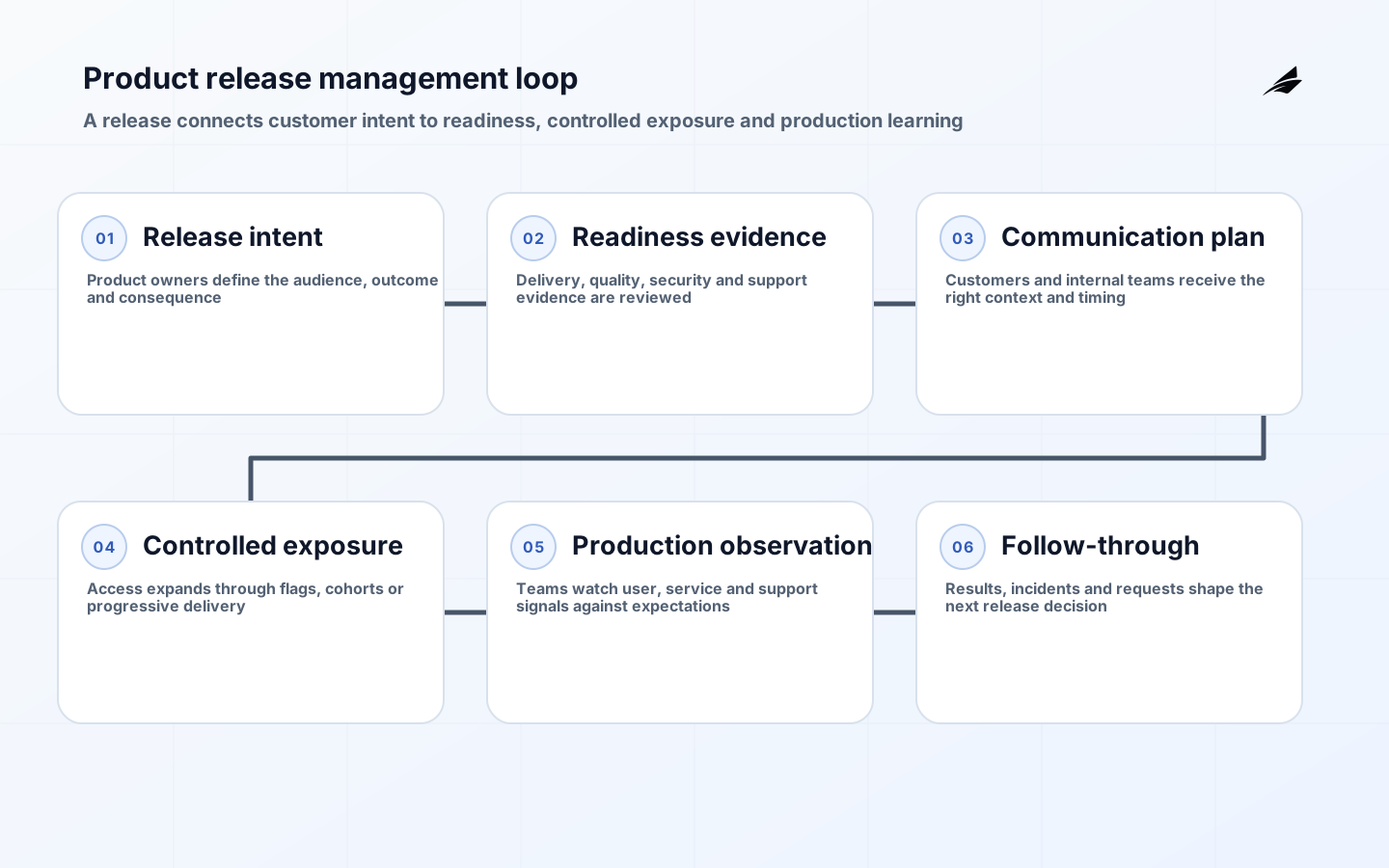
Release management for products brings product intent, technical readiness, customer communication and operational response into one lightweight system for changing a live service.
Match the release process to consequence. A low-risk interface improvement should not wait for a committee, while a change to data access, billing or a critical workflow deserves explicit evidence, owners and communication.
Release calendars are coordination aids, not proof of readiness. Keep a lightweight record of the decision, cohort, expected signals, support contact and rollback or disablement path. This gives customer-facing teams reliable context without forcing every product change into a synchronized, high-risk event. After the release, close the record only when user feedback, support effects and operational follow-up are understood or clearly assigned.
| Decision | Evidence to gather | Accountable owner |
|---|---|---|
| Scope | A defined user, service or workflow boundary and excluded work | Product or service owner |
| Risk and recovery | Failure modes, operating constraints and a tested response path | Engineering and operations leads |
| Readiness | Quality, security and support evidence appropriate to the change | Release decision owner |
| Outcome | A measurable service, customer or business signal after release | Named business owner |
Frequently asked questions
What is release management in a product team?
It is the coordination of product, engineering, support, security and communications work needed to introduce a change responsibly and learn from its production behavior.
How is release management different from deployment?
Deployment moves software into an environment. A release exposes a capability to users or customers. The two may happen at different times through feature flags, staged access or commercial readiness.
Who should approve a release?
Approval belongs to the people accountable for the change and its risk. Define decision rights by consequence so routine releases remain fast and exceptional releases receive the necessary attention.
Conclusion
Use every release to improve the next one. Capture what changed, who was affected, what signals were watched and what follow-up remains so the organization accumulates delivery confidence instead of only calendar entries.