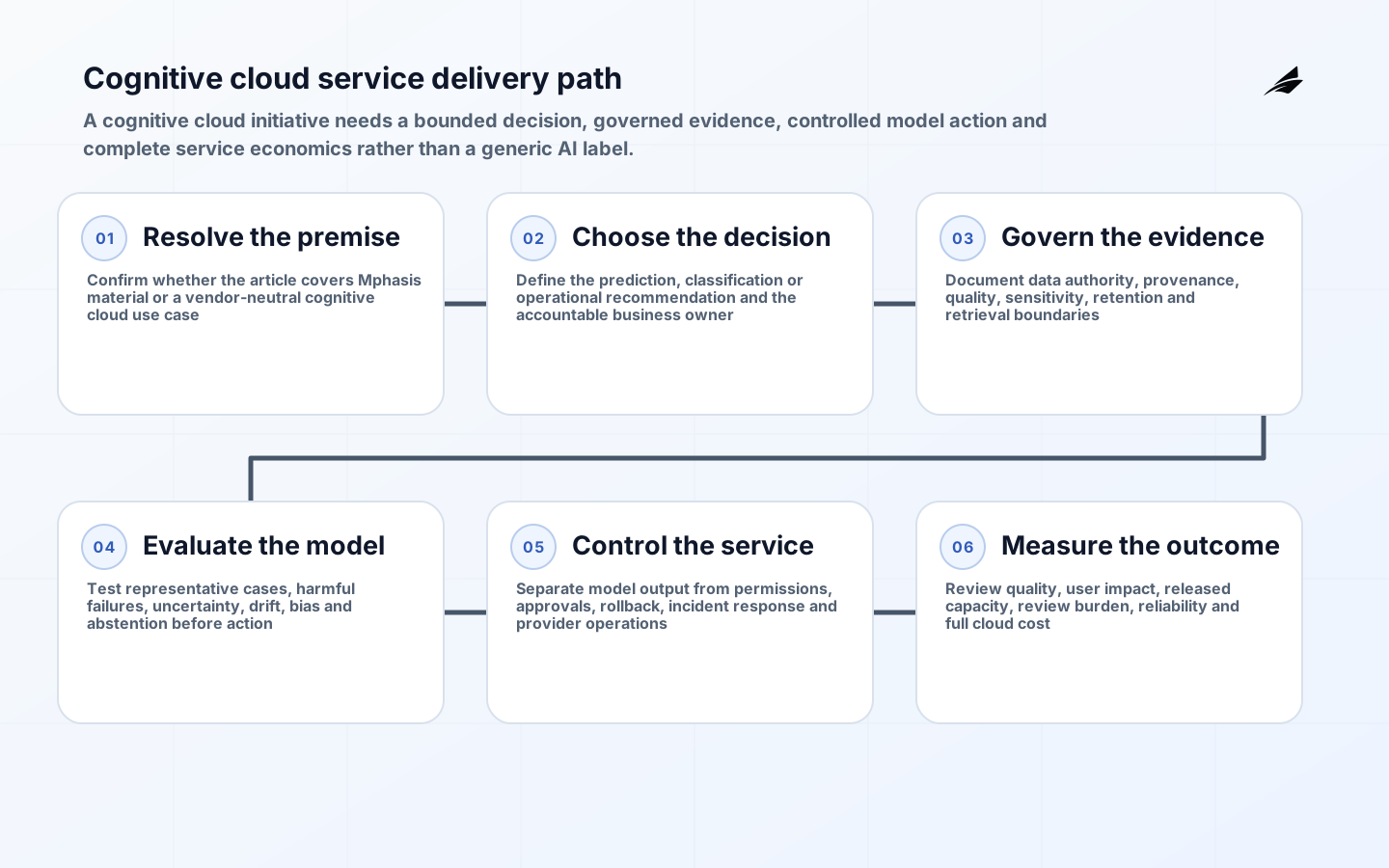
A cognitive cloud services delivery plan applies managed AI capabilities such as language, vision, speech, search, recommendations or decision support to a bounded business workflow. The word cognitive does not guarantee understanding or autonomy; it is a convenient umbrella for probabilistic services that infer, classify, retrieve or generate outputs. Success depends on a measurable task, representative data, controlled integration and an operating model that can detect degradation. Buying an API is the beginning of the system, not the end of delivery.
This plan complements the cognitive cloud implementation checklist and cognitive cloud FAQ. It follows the NIST AI Risk Management Framework, which organizes work around Govern, Map, Measure and Manage. Those functions encourage teams to connect governance with the use context, evaluate behavior with evidence and respond to changing risk throughout the lifecycle.
Scope one decision or task before choosing services
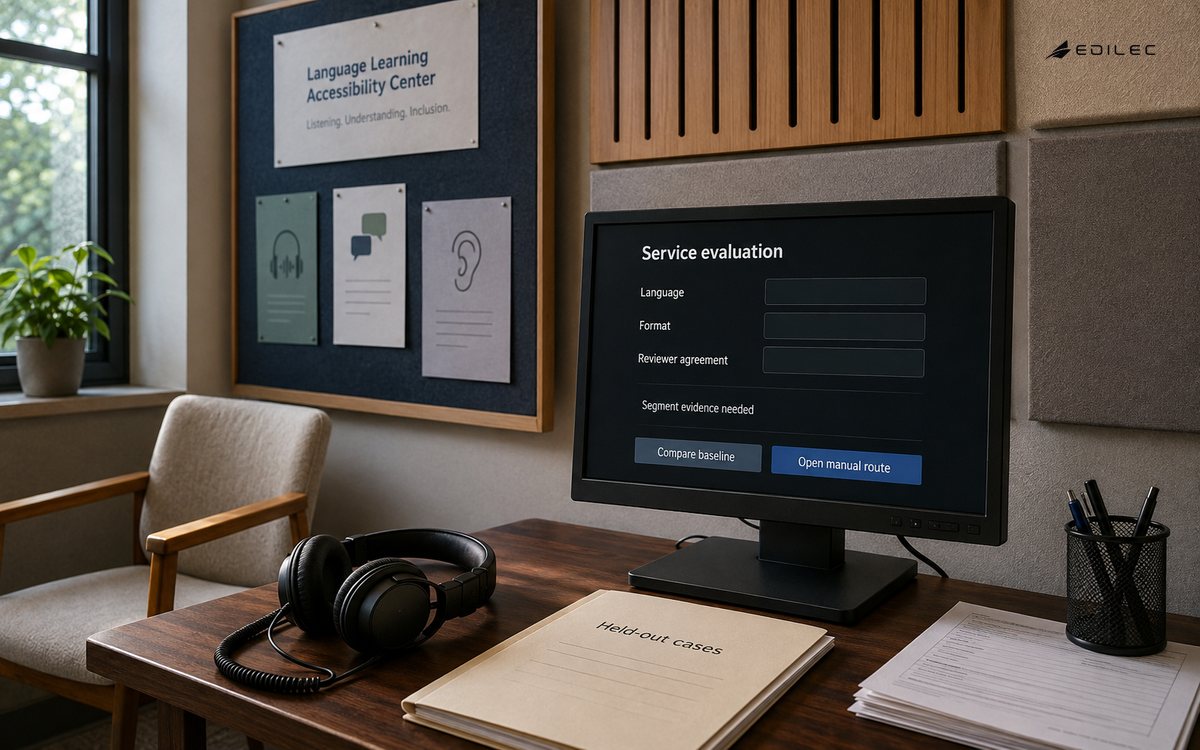
Describe the actor, input, current process, AI output, downstream action and accountable human. State whether the service assists, recommends, prioritizes or acts, and identify decisions it must never make. For document extraction, define fields and acceptable abstention; for support summarization, define evidence and prohibited disclosure; for recommendations, identify eligible choices and business constraints. Baseline cycle time, error, cost and user impact before automation. A broad ambition such as improve customer experience cannot support evaluation or a credible cost model.
Map affected people and failure consequences. A wrong product tag is different from an incorrect benefits decision or unsafe maintenance instruction. Determine notice, consent, review, appeal and accessibility requirements with legal and domain owners. Identify languages, formats, devices and groups for which performance matters. Exclude unsupported conditions explicitly and provide a safe fallback. Prioritize an initial use case with sufficient volume and data to learn, modest irreversible harm, a willing process owner and a clear route to human handling.
| Use-case element | Decision to record | Evidence before pilot | Stop condition |
|---|---|---|---|
| Business task | Exact input, output, user and accountable action. | Baseline volume, effort, error and outcome. | No measurable improvement target or owner. |
| AI authority | Assist, recommend, prioritize or execute. | Human review and prohibited-action design. | System can take an irreversible action outside authority. |
| Data | Purpose, source, rights, quality and retention. | Representative sample and lineage review. | Required data cannot be used lawfully or reliably. |
| Performance | Metrics and thresholds by meaningful segment. | Evaluation set, rubric and reviewer agreement. | Critical segment or safety threshold is missed. |
| Fallback | Abstention, escalation and manual continuity. | End-to-end exercise under provider failure. | Users cannot distinguish uncertainty or recover work. |
Design data, model and integration boundaries
Trace data from source through preprocessing, model request, output, logs, caches and downstream records. Record lawful purpose, minimization, residency, retention and deletion for prompts, files, embeddings, labels and reviewer feedback. Separate production data from experimentation and use synthetic or de-identified data where it remains representative. Provider settings for data retention or model improvement must be verified contractually and technically. Secrets and personal information should not appear in ungoverned prompt templates, notebooks or telemetry.
Create a service abstraction only where it provides real portability, policy enforcement or observability. Document provider, model or API version, region, quotas, latency, content limits and fallback. Use idempotency and correlation identifiers for retried workflow actions. Preserve source evidence when users must verify an output. Retrieval systems need document ownership, access-aware indexing, freshness and deletion propagation. A model must not retrieve information the requesting user could not access directly. The architecture review should distinguish model behavior from deterministic business rules and keep irreversible policy checks outside unconstrained generation.
Build a cost model from workload behavior
Estimate request volume, input and output size, model tier, vector storage, data transfer, indexing, evaluation, observability, moderation, human review and engineering support. Include retries and peak concurrency. Unit economics should use a business measure such as cost per processed document or resolved request, not only provider spend. Compare the full current process, including rework, with the proposed hybrid process. A cheaper model that creates more review or customer correction may increase total cost. Reserve budget for evaluation and incident response after launch.
Google Cloud's AI and ML cost guidance recommends defining cost and return, allocating resources, governing data, using MLOps and considering managed or pretrained services. Apply those ideas independently of provider: set budgets and anomaly alerts, cache only where privacy and freshness permit, batch suitable workloads, cap generation, route simple work to smaller models and stop unused experiments. Commitments should follow stable demand and an exit assessment, not optimistic pilot traffic.
| Cost driver | Planning unit | Control | Hidden trade-off |
|---|---|---|---|
| Inference | Requests, tokens, images, audio minutes or compute time | Routing, batching, limits and model selection | Lower price may reduce quality and increase review. |
| Retrieval | Documents, embeddings, updates and queries | Lifecycle, deduplication and scoped indexes | Stale content can create operational harm. |
| Human review | Items reviewed and minutes per item | Confidence bands and risk-based sampling | Removing review too early transfers correction cost. |
| Evaluation | Cases, segments, reviewers and test frequency | Reusable sets and automated checks | Weak evaluation hides drift and regressions. |
| Operations | Alerts, incidents, support and change effort | SLOs, runbooks and versioned deployment | Managed APIs still require system ownership. |
Control AI, security and supplier risk
Assign an accountable product owner, domain approver, data owner, security owner and model operations owner. Maintain a use-case record with intended purpose, affected groups, data, metrics, limits, versions and approved changes. Threat-model prompt injection, data exfiltration, malicious files, unsafe tool use, excessive agency and model supply-chain compromise. Validate structured outputs before downstream use and allow-list tools and actions. Apply least privilege to runtime identities and separate model access from authority to commit business transactions.
Assess provider terms, security evidence, model change notice, regional processing, incident support, subcontractors, intellectual property, service limits and export options. The NIST AI Resource Center provides resources for testing, evaluation, verification and validation. Use its risk-management orientation to build a control set proportionate to the use case rather than treating all AI as one risk class. Record residual risk and review triggers, including material model updates, new data, expanded users, changed workflow authority or observed harm.
Use evaluation gates from prototype to production
Create an evaluation set from representative normal, boundary, adversarial and failure cases. Freeze a holdout portion and version the set. Choose task-appropriate measures: field accuracy, retrieval relevance, groundedness, harmful output rate, abstention quality, latency and reviewer agreement. Report by meaningful language, document type or user segment rather than only an aggregate. Where judgment is subjective, define a rubric and calibrate reviewers. Automated model-based evaluation can scale testing, but validate it against qualified human review and avoid using one model's preferences as ground truth.
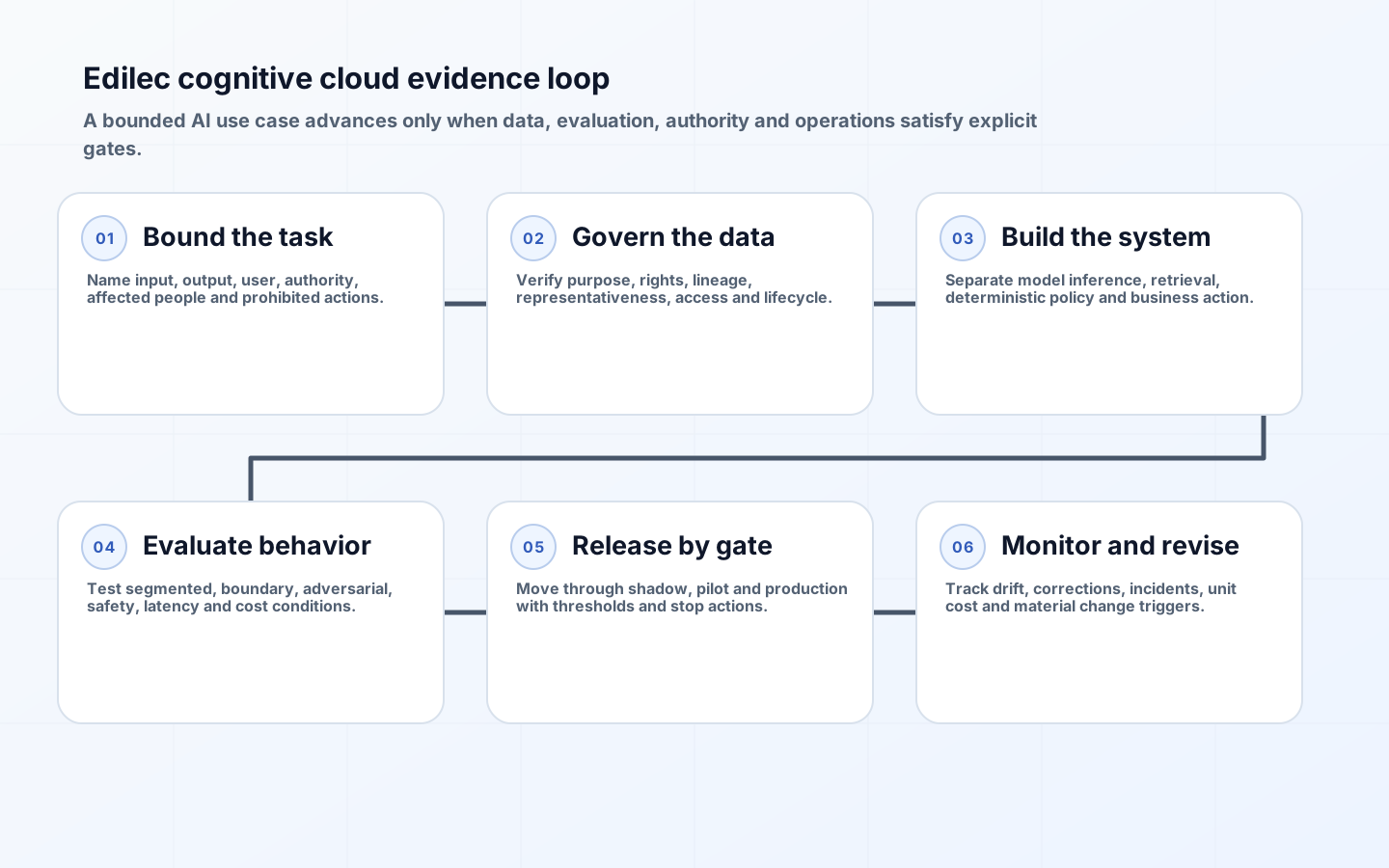
Set gates for offline evaluation, shadow operation, limited pilot and broader release. A gate should name thresholds, evidence, approver and rollback action. Shadow mode reveals workload and integration behavior without exposing outputs as decisions. During pilot, preserve comparison to the previous process and sample outputs beyond reported failures. Stop or narrow the system when critical thresholds fail, users over-rely on outputs, cost exceeds the model or the provider changes material behavior. The Google Cloud Well-Architected Framework offers a useful cross-check across security, reliability, operations, performance, cost and sustainability.
Roll out with observability and human recovery
Log model and prompt versions, retrieval sources, latency, token or compute use, policy decisions, user corrections and downstream outcomes while minimizing sensitive content. Monitor input drift, output distribution, fallback, override, complaint and unit cost. Alert on user-impact conditions rather than every noisy model fluctuation. Give users clear uncertainty signals, source access and a practical way to correct or escalate. Feedback needs triage because user preference, factual error, policy disagreement and abuse are different categories that require different owners.
Maintain runbooks for provider outage, quota exhaustion, elevated unsafe output, data leakage, corrupted index, bad prompt release and unauthorized action. Test disabling the AI component while preserving essential workflow. Re-evaluate after model, prompt, retrieval corpus, policy or user population changes. Review whether automation changes staffing, workload concentration or service equity. The broader cloud services delivery plan can help teams place this AI component within foundation, networking and operations work that remains necessary.
Plan phases, roles and acceptance
A practical sequence is discovery, data readiness, prototype, controlled pilot, production foundation and measured expansion. Discovery should eliminate weak use cases early. Data readiness proves access, rights, quality and representative evaluation. The prototype tests technical feasibility without pretending to be production. The pilot validates workflow and human factors. Production work adds hardened identity, observability, support, cost controls and change governance. Expansion follows evidence by segment and workload rather than a deadline chosen before learning.
Define acceptance around business, model, system and operating evidence. Business acceptance shows an improved outcome without unacceptable harm. Model acceptance meets segmented thresholds. System acceptance covers security, latency, resilience and integration. Operational acceptance demonstrates monitoring, incident response, rollback, cost ownership and trained users. Keep unresolved assumptions in a visible decision log with due dates. This structure allows sponsors to understand which uncertainty remains and prevents a successful demo from being mistaken for a deployable cognitive service.
Cognitive cloud delivery takeaways
- Define one bounded task, authority level and accountable human before selecting an AI service.
- Trace data through requests, retrieval, logs and downstream actions with purpose and lifecycle controls.
- Model total unit cost, including evaluation, review, correction and operations.
- Evaluate normal, segmented, boundary and adversarial behavior through explicit release gates.
- Constrain tools and irreversible actions with deterministic policy and least privilege.
- Operate with version evidence, user recovery, incident runbooks and re-evaluation triggers.
Frequently asked questions
Are cognitive cloud services the same as generative AI? No. The category can include vision, speech, language, search, recommendations and predictive models as well as generative systems. Architecture and evaluation should follow the actual task and failure consequences rather than a marketing label.
Should a team build a custom model or use a managed API? Begin with requirements for quality, control, data, latency, cost, skills and portability. A managed API can shorten time to evidence, while customization may be justified by domain performance or control. Compare full lifecycle ownership, not only initial development effort.
How long should a pilot run? Long enough to cover representative volume, segments, operational conditions and downstream outcomes. Calendar duration alone is not a criterion. Define the sample, thresholds and decision gate before starting, then extend only to resolve a named uncertainty.
Conclusion
Cognitive cloud services create value when probabilistic capability is embedded in a controlled business system. A bounded task, governed data, realistic economics, segmented evaluation, constrained authority and observable operations turn an impressive API into a dependable service. This plan lets teams learn quickly while preserving the evidence and human accountability needed to expand responsibly.