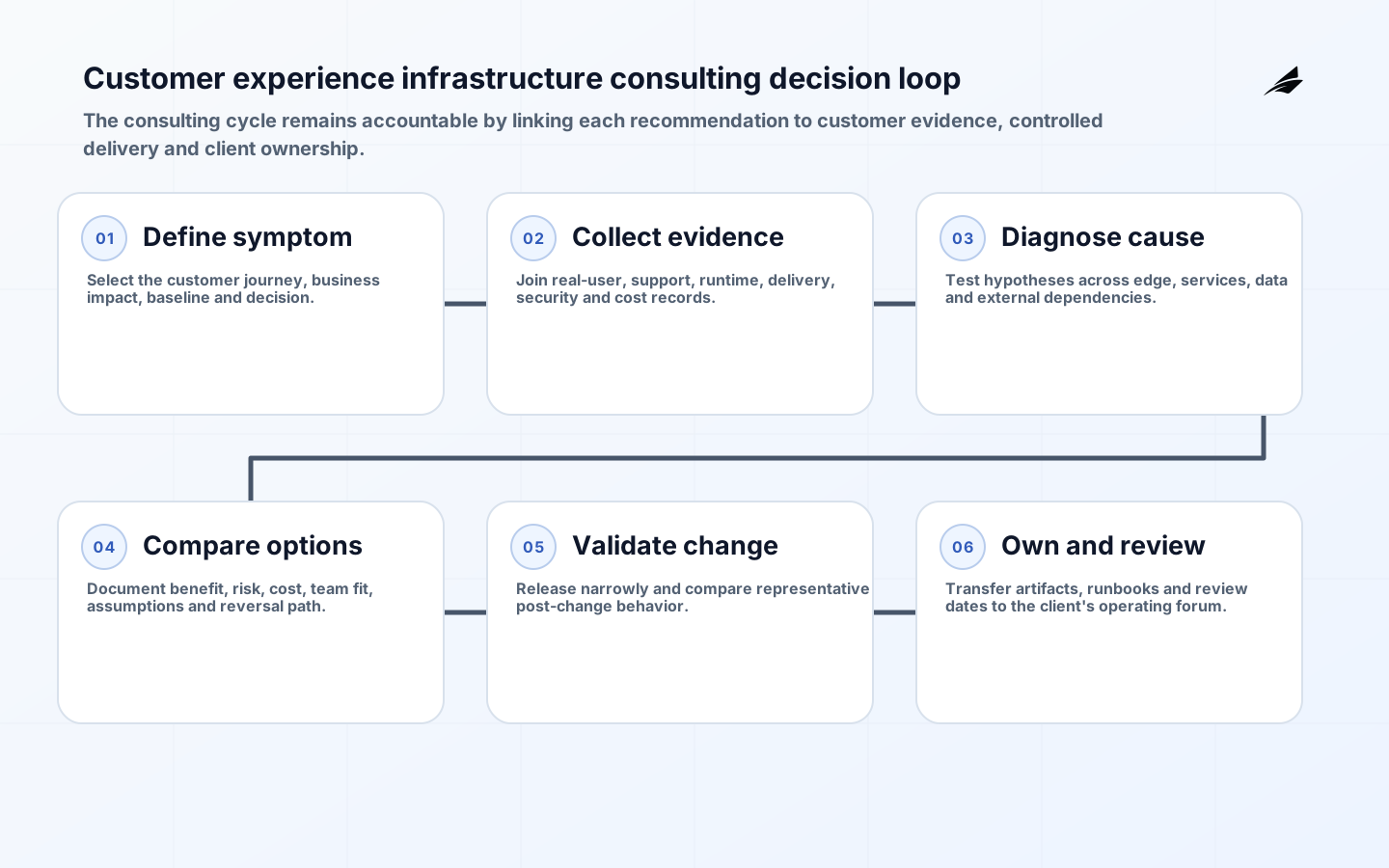
Customer experience infrastructure consulting examines whether the technical system beneath a digital journey is reliable, responsive, secure and economical enough for the customer promise. It is relevant when a business sees slow pages, inconsistent transactions, regional failures, fragile releases or support cases that cross many teams. The consultant should connect those symptoms to runtime evidence and owned changes rather than prescribe a platform from a slide.
This FAQ focuses on selecting and governing the work. The customer experience infrastructure scope and delivery plan explains the staged method, while the implementation checklist covers acceptance. Broader programs can use the cognitive infrastructure checklist for automation-related platform controls.
What does customer experience infrastructure include?
Scope may include DNS and edge delivery, network paths, identity, application runtime, APIs, queues, databases, caches, files, search, observability, deployment systems and critical third parties. It also includes the operating model: objectives, on-call response, change control, capacity, security, backup, recovery and cost ownership. The relevant boundary is whatever can materially affect the selected journey.
It does not replace product research or interface design. Those disciplines establish what customers need and whether they can use the experience. Infrastructure consulting explains whether the underlying service delivers that experience consistently. The strongest engagement joins product analytics, support evidence and real-user measurements with logs, metrics, traces and deployment records.
| Business symptom | Evidence to request | Likely domains | Useful outcome |
|---|---|---|---|
| Checkout abandonment | Journey funnel and tail latency | Edge, API, payment, data | Reliable completed order |
| Repeated sign-in | Auth traces and session errors | Identity, cache, browser | Stable authenticated session |
| Delayed status | Queue age and provider callbacks | Jobs, integrations, notification | Predictable update time |
| Regional complaints | Real-user data by region | CDN, network, region placement | Consistent regional objective |
| Release incidents | Deploy and recovery history | CI/CD, migration, observability | Smaller reversible changes |
When should a business commission the work?
Commission it when customer impact is material, ownership spans teams, evidence is fragmented or a growth event will exceed current confidence. Examples include a new market, peak season, data-center exit, platform migration, acquisition integration or recurring high-severity incidents. Do not wait for a crisis if capacity and dependency risks are already visible.
A focused internal review may be enough when one team owns a simple service and can reproduce the issue. An external consultant adds value through cross-domain diagnosis, independent challenge, specialized testing or temporary delivery capacity. State the decision the engagement must enable; otherwise assessments expand to whatever the consultant prefers to inspect.
How should a consulting provider be evaluated?
Ask candidates to reason through one journey and its failure paths. They should request baselines, incidents, architecture, objectives, costs and team responsibilities before proposing products. Look for experience in production diagnosis, observability, migration, security and organizational transfer. Confirm named personnel, subcontractors, cloud incentives and how recommendations remain provider-neutral.
Review sample deliverables: a service map, hypothesis log, architecture decision, test result, migration reconciliation and runbook. Ask how the team handles incomplete telemetry and contradictory evidence. References should match scale and risk. A partner should be willing to recommend no migration when a smaller change solves the measured problem.
What access and evidence are required?
Provide current diagrams, inventory, service objectives, incident reports, support themes, release records, utilization, cloud bills, vendor contracts and representative telemetry. Grant read-only, time-bound access first. Protect personal data and secrets in logs. For active testing, define production windows, approvals, rollback and communication. Missing evidence should produce an observability task, not unsupported certainty.
Map customer evidence to technical identifiers without exposing unnecessary content. A correlation ID can join a support report to traces while preserving minimization. Sample across successful and failed journeys, regions, devices and customer tiers. Average server response time alone cannot establish customer experience, and a synthetic check alone cannot reveal every real-user condition.
| Deliverable | Must contain | Acceptance question | Owner after exit |
|---|---|---|---|
| Current-state map | Journey, services, dependencies, authority | Can an incident path be traced? | Service owner |
| Prioritized backlog | Impact, evidence, effort, risk | Does ranking follow customer value? | Product and engineering |
| Target decision | Options, tradeoffs, trigger | Can the choice be revisited? | Architecture owner |
| Implemented change | Tests, rollout, telemetry, rollback | Did measured behavior improve? | Workload team |
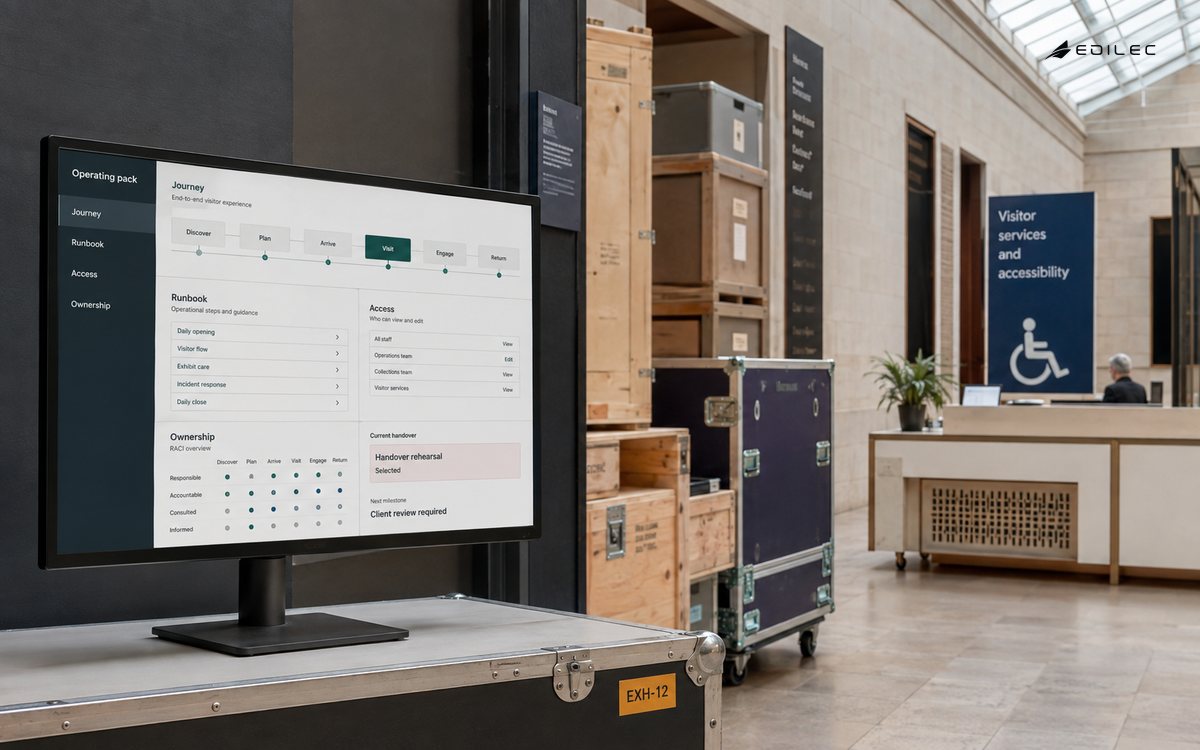
| Operating pack | Objectives, alerts, runbooks, access | Can the team respond unaided? | Operations lead |
How are security and governance handled?
Define asset, identity and data boundaries, then review least privilege, privileged access, network exposure, secrets, patching, logging, backup and incident response. Use NIST CSF 2.0 outcomes to connect governance with identification, protection, detection, response and recovery. Specific legal or industry controls require the organization's qualified security and compliance owners.
Infrastructure as code and policy enforcement reduce drift when combined with tested exceptions and ownership. Microsoft recommends applying policy at appropriate scopes and automating enforcement where feasible, starting with a small essential set. A blanket deny can disrupt production just as an absent policy can create exposure, so stage changes, evaluate existing resources and provide remediation paths.
How are cost and return assessed?
Fees depend on scope, estate complexity, evidence, testing and implementation. Ask for discovery, delivery and ongoing support to be priced separately with assumptions. Internal time, production windows and vendor work are real costs. Avoid contracts whose success is defined as a migration or cloud-spend commitment rather than an outcome.
FinOps treats technology value as a collaboration among engineering, finance and business. Measure cost per successful journey or active customer alongside reliability and performance. Estimate savings from rightsizing or commitments conservatively, account for engineering effort and verify realized impact after change. A recommendation that saves infrastructure expense but increases support or abandonment fails the value test.
How should recommendations become production changes?
- Select the highest-impact journey constraint supported by evidence.
- Write the expected behavior, customer measure, technical signal and risk.
- Choose the smallest change that can test the hypothesis.
- Define security, migration, performance and rollback acceptance before build.
- Deploy through automation with progressive exposure where possible.
- Compare baseline and post-change behavior across representative segments.
- Record residual risk, update runbooks and assign continuing ownership.
AWS reliability guidance treats internal deployments and external demand as changes the workload must accommodate. Tests should therefore include both release behavior and changing load. Keep changes small enough to diagnose and reverse. If several recommendations ship together, the business may be unable to determine which one improved or harmed the journey.
What does a successful engagement leave behind?
Success is a measurable improvement or a well-supported decision not to pursue one, plus durable operating capability. The client owns diagrams, code, infrastructure definitions, dashboards, data, tests, decisions, runbooks and access. Teams can explain customer impact, detect objective breaches, execute recovery and evaluate the next change without consultant-only tools.
Schedule a post-engagement review after representative traffic and at least one normal change cycle. Confirm that benefits persisted, alerts remained useful and costs matched the estimate. Close or re-rank recommendations whose assumptions changed. This review turns a project into a repeatable improvement practice.
Which consulting red flags should buyers challenge?
Challenge a proposal that guarantees a percentage performance gain before baseline access, recommends migration before reproducing the problem, prices only provider consumption, or treats a tooling dashboard as the final outcome. Other warning signs include unnamed delivery staff, production access without controls, no data-handling terms, no rollback, cloud incentives left undisclosed and deliverables the client cannot export. Ask the provider to connect every major recommendation to a customer measure, technical evidence and accountable owner.
Also challenge overconfident precision. In a poorly observed estate, the first useful result may be a narrower uncertainty range and a telemetry plan. A trustworthy consultant states what is known, inferred and unverified. The engagement contract can make this behavior concrete by requiring a hypothesis register, evidence citations inside findings, decision alternatives, assumptions and a list of access or data limitations.
For final acceptance, select one representative recommendation and trace it end to end: original symptom, baseline, technical evidence, decision, change record, test, rollout, post-change measure and operating owner. If that chain breaks, the engagement may have produced documents without creating a managed improvement capability.
Key takeaways
- Define the engagement by a customer journey and business decision.
- Require customer, runtime, delivery and cost evidence together.
- Evaluate providers on diagnosis, production proof and transfer behavior.
- Stage governance and architecture changes with tests and rollback.
- Accept the work only when the client can operate the result.
Frequently asked questions
Does the consultant need every cloud certification?
Certifications can demonstrate product knowledge but do not prove systems reasoning or delivery. Match expertise to the actual estate, then assess the proposed team's ability to trace customer behavior, test failure, manage change and transfer ownership.
Must observability be fixed before consulting starts?
No, but missing evidence limits conclusions. The initial engagement can establish a minimum telemetry baseline and use incidents, customer data and targeted tests. Observability improvements should be prioritized by the decisions and failures they enable.
Should the same provider operate the platform afterward?
It may, if responsibilities, service objectives, access, exit rights and incentives are clear. Keep client ownership of essential accounts and evidence. Evaluate ongoing service separately so assessment recommendations do not automatically create an unexamined managed-services contract.
Define how findings age. A capacity conclusion based on last quarter's demand or a supplier assurance based on an expiring report should carry a review date. The client should be able to distinguish durable architecture decisions from time-sensitive observations, then reopen the latter when traffic, contracts or platform behavior changes. Assign that review to an existing operating forum so it survives the project calendar.
Conclusion
Customer experience infrastructure consulting should make digital reliability a tractable business capability. Start with one journey, demand defensible evidence, implement measured changes and retain operational ownership. The result is not merely a cleaner architecture; it is a customer promise the organization can observe and improve.