This pharma and medical device digital systems FAQ explains how business and technology teams can plan cloud, software and automation work without separating delivery from regulated evidence. The first question is never simply whether a platform is validated. Teams must define the product or process, intended use, users, jurisdiction, records, patient or product risk, quality-system role and responsibility boundary. Those facts determine the controls, assurance depth and approvals that a particular system needs.
Use the practical digital systems guide to frame the operating context and the implementation checklist to manage evidence. This article summarizes common questions but cannot classify a device, interpret a specific regulation or replace quality and regulatory counsel. Requirements vary across medicinal products, medical devices, clinical work, manufacturing, quality management, markets and contractual commitments.
How do intended use and system scope change the plan?
Intended use states what the system is expected to do, for whom, under which conditions and with what effect. The same analytics technology may be low impact when exploring internal trends and safety-critical when driving a device function. Map the regulated process and decision, including upstream data, configuration, interfaces, users, electronic records, signatures and downstream actions. Mark what is inside the assurance boundary and justify exclusions. A supplier's product description cannot define the customer's intended use.
Classify functions, records and failure effects with quality, regulatory, clinical or safety experts as applicable. Determine whether software is part of a medical device, supports device production or a quality management system, manages clinical or laboratory data, or supports another regulated process. The EU Medical Device Regulation provides a legally binding framework for devices placed on the Union market, while U.S. pathways and quality rules differ. Build a jurisdiction matrix instead of assuming one approval or control set travels everywhere.
What is computer software assurance?
Computer software assurance is a risk-based approach for establishing confidence that automation used in production or a quality management system is fit for intended use. FDA's February 2026 Computer Software Assurance guidance discusses identifying where rigor is appropriate and using suitable testing and objective evidence. It does not mean eliminating documentation; it means directing effort toward patient safety, product quality and process risk rather than producing repetitive evidence with little decision value.
Start with the process risk if software fails, produces an incorrect result or is misused. Define critical functions and foreseeable failures, then choose assurance activities that can establish confidence. Unscripted or scenario testing may be useful for lower-risk functions, while higher-risk functions can require more rigor, traceability and independent review. Preserve what was tested, by whom, in which configuration, with what result, and how deviations were resolved. The rationale for the approach is itself important evidence.
| Scope question | Evidence artifact | Decision owner |
|---|---|---|
| What is the intended use? | Approved use statement and process map | Business and quality owners |
| What happens on failure? | Patient, product and process risk assessment | Quality, safety or clinical role |
| Which configuration is controlled? | Version, settings, interfaces and environment record | System owner |
| Which assurance is proportionate? | Test strategy, results, deviations and rationale | Quality assurance |
| Which records are regulated? | Record inventory, retention and signature assessment | Records and regulatory owners |
| Who approves release? | Role matrix and release evidence package | Authorized process owner |
When do electronic records and signatures matter?
Identify records required by applicable predicate rules and determine whether the organization relies on electronic records or signatures to satisfy them. The official 21 CFR Part 11 text addresses electronic records and electronic signatures under its scope. Teams should assess closed or open system controls, record protection, retrieval, access, audit trails, authority checks, signature manifestation and signature-to-record linkage as applicable. Do not label every database field a Part 11 record without an analysis.
Audit trails need a defined purpose and review process. Confirm that relevant creation, modification and deletion events are captured with reliable identity and time context, protected from inappropriate alteration, retained with the associated record and available in a readable form. Test common failure paths such as clock drift, interface retries, restored backups, changed user identities and bulk imports. An unread log archive does not provide useful traceability, and collecting excessive personal data creates its own risk.
Can regulated workloads use cloud and SaaS services?
Yes, when the chosen service, configuration, controls, supplier relationship and operating process support the intended use and applicable obligations. Cloud does not receive a universal validation certificate that transfers to every customer. The supplier can provide platform controls, documentation and assurance reports; the regulated organization remains responsible for its process, data, configuration, access, integrations and use. Map shared responsibilities at the service level because IaaS, PaaS and SaaS create different control boundaries.
Assess supplier quality and security capability, subcontractors, data locations, availability, backup, incident notification, change notice, audit or information rights, vulnerability management, support, export and termination. Review whether provider release cadence permits impact assessment and regression evidence. For configurable SaaS, establish approved settings and monitor drift. For infrastructure and platform services, control deployment through versioned automation and maintain evidence that the complete workload, not just the provider layer, meets requirements.
How does the quality management system affect digital delivery?
The quality management system connects requirements, risk, design and development, suppliers, production, complaints, corrective action, records and change. FDA states that its Quality Management System Regulation became effective on February 2, 2026 and incorporates ISO 13485:2016 by reference for covered device manufacturers. Applicability and required procedures depend on the organization and product, so teams should work from their approved QMS rather than treating a project template as the governing process.
Integrate digital work into design and change controls proportionate to its role. Maintain approved requirements, architecture, risk controls, verification or assurance, configuration, release authorization and traceability to unresolved deviations. Define how incidents, complaints, nonconformities and corrective actions feed back into software and infrastructure changes. Agile delivery can operate in a regulated environment when increments preserve control and evidence; speed does not excuse an unknown production state or an unapproved intended-use change.
What cybersecurity evidence is expected for connected devices?
Cybersecurity is a lifecycle quality and safety concern. FDA's February 2026 medical device cybersecurity guidance addresses device design, labeling and recommended premarket documentation for devices with cybersecurity risk. For a connected product, define security architecture, threat model, trust boundaries, authentication, authorization, update mechanism, logging, resilience and secure defaults. Consider the device, companion applications, cloud services, deployment environment and support tools as one attack surface.
Maintain a software bill of materials where required, a vulnerability intake and coordinated disclosure process, monitoring, triage criteria, patch capability and customer communication path. Assess safety impact when security controls fail or a remediation changes device behavior. Test update authenticity, interrupted updates, rollback, key rotation, expired certificates and long-lived deployment constraints. A plan that depends on every hospital or user applying an urgent patch instantly is not a complete risk control.
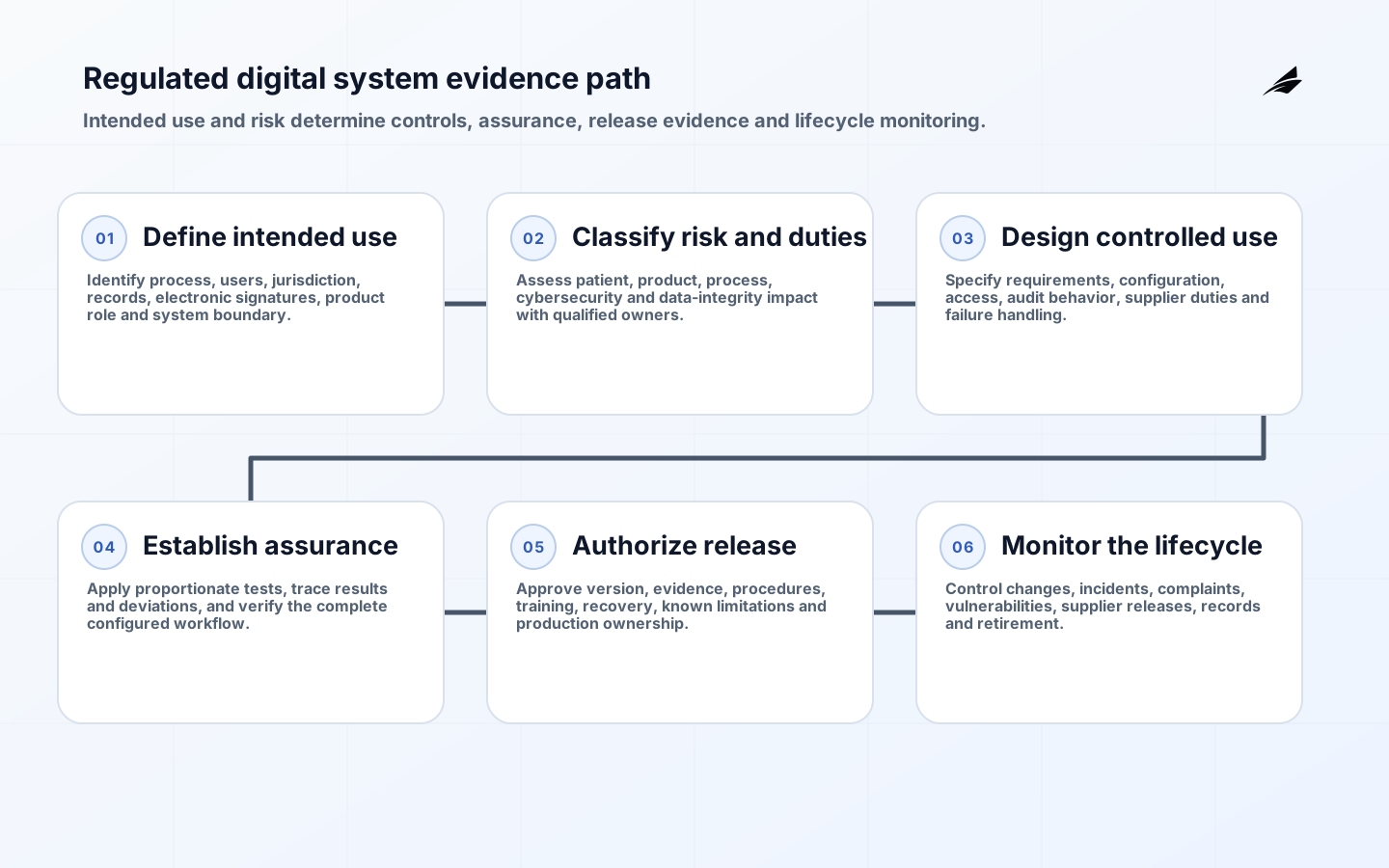
Use a six-stage regulated system evidence roadmap
A disciplined sequence defines intended use, classifies risk and obligations, designs controls, configures and verifies the system, releases through authorized evidence, and monitors the live lifecycle. The diagram for this section makes the stage gates explicit. Each gate links a decision to approved artifacts and named roles. When scope, supplier, configuration or intended use changes, assess which evidence remains valid and which activities must repeat.

Avoid postponing evidence assembly until deployment. Requirements, risk controls, tests, audit behavior and operating procedures should evolve together in controlled repositories. Use automated evidence capture where it improves integrity and repeatability, but review generated artifacts for meaning. A pipeline can prove which artifact passed a test; it cannot decide whether the test adequately covers a patient or product risk without qualified human judgment.
How should changes, incidents and suppliers be controlled?
Classify a proposed change by impact on intended use, requirements, risk controls, records, interfaces, cybersecurity, performance and regulatory commitments. Establish approval authority and required regression evidence for configuration, infrastructure, application, model, data and supplier changes. Emergency change procedures should permit timely protection while preserving authorization, testing, traceability and retrospective review. Test rollback, but also determine whether reverting software would conflict with data or record changes.
Supplier monitoring continues after selection. Track relevant service changes, assurance reports, incidents, vulnerability posture, performance and contract commitments. Maintain an exit plan with data export, record readability, configuration capture, replacement interfaces, retention and deletion. For critical suppliers, rehearse contact and continuity procedures. The customer must know how to preserve regulated operations if a vendor is acquired, discontinues a feature, changes a subprocessor or experiences a prolonged outage.
| Lifecycle event | Required assessment | Evidence to retain |
|---|---|---|
| Configuration change | Impact on requirements, risk and records | Approval, diff, tests and release identity |
| Supplier release | Compatibility, control and regression impact | Notice, assessment and acceptance result |
| Security vulnerability | Exploitability, safety and product impact | Triage, decision, remediation and communication |
| Quality event | Link to software behavior and affected records | Investigation and corrective-action trace |
| Infrastructure incident | Data integrity, availability and recovery | Timeline, restored state and reconciliation |
| Retirement | Retention, export, dependency and deletion duties | Approved archive and closure confirmation |
Regulated digital systems takeaways
- Define intended use and failure impact before selecting assurance activities.
- Apply the approved quality system and jurisdiction-specific requirements.
- Treat supplier evidence as an input to customer assurance, not a substitute.
- Design electronic records, audit trails and signatures around actual obligations.
- Manage connected-device cybersecurity across the total product lifecycle.
- Reassess evidence when configuration, supplier, data or intended use changes.
Frequently asked questions
Does FDA certify cloud platforms as validated? No universal supplier status makes a customer's configured use compliant; the organization must establish fitness and control for its intended use. Is every spreadsheet a regulated system? No. Its role, records and risk determine the assessment, though uncontrolled spreadsheets can still create serious quality risk. Can automated tests replace approval? They provide repeatable evidence, while authorized roles must judge scope, adequacy, deviations and release.
Must every software change receive the same testing? No. Use a documented, risk-based impact assessment under applicable procedures. Are backups enough for data integrity? No. Organizations must test restoration, readability, completeness, relationships and business reconciliation. Does an SBOM eliminate cybersecurity risk? No. It supports component visibility; vulnerability monitoring, secure design, updates, risk assessment and response remain necessary. Can agile teams work compliantly? Yes, when controls and evidence are built into the lifecycle.
Conclusion
Digital delivery in pharma and medical devices becomes manageable when teams trace every control to intended use, risk and an accountable process. Determine applicability with qualified experts, choose proportionate assurance, control the complete configured system and retain meaningful evidence through change and operation. Cloud and automation can improve consistency and speed, but only when shared responsibility, records, cybersecurity and supplier lifecycle are designed into the service from the beginning.