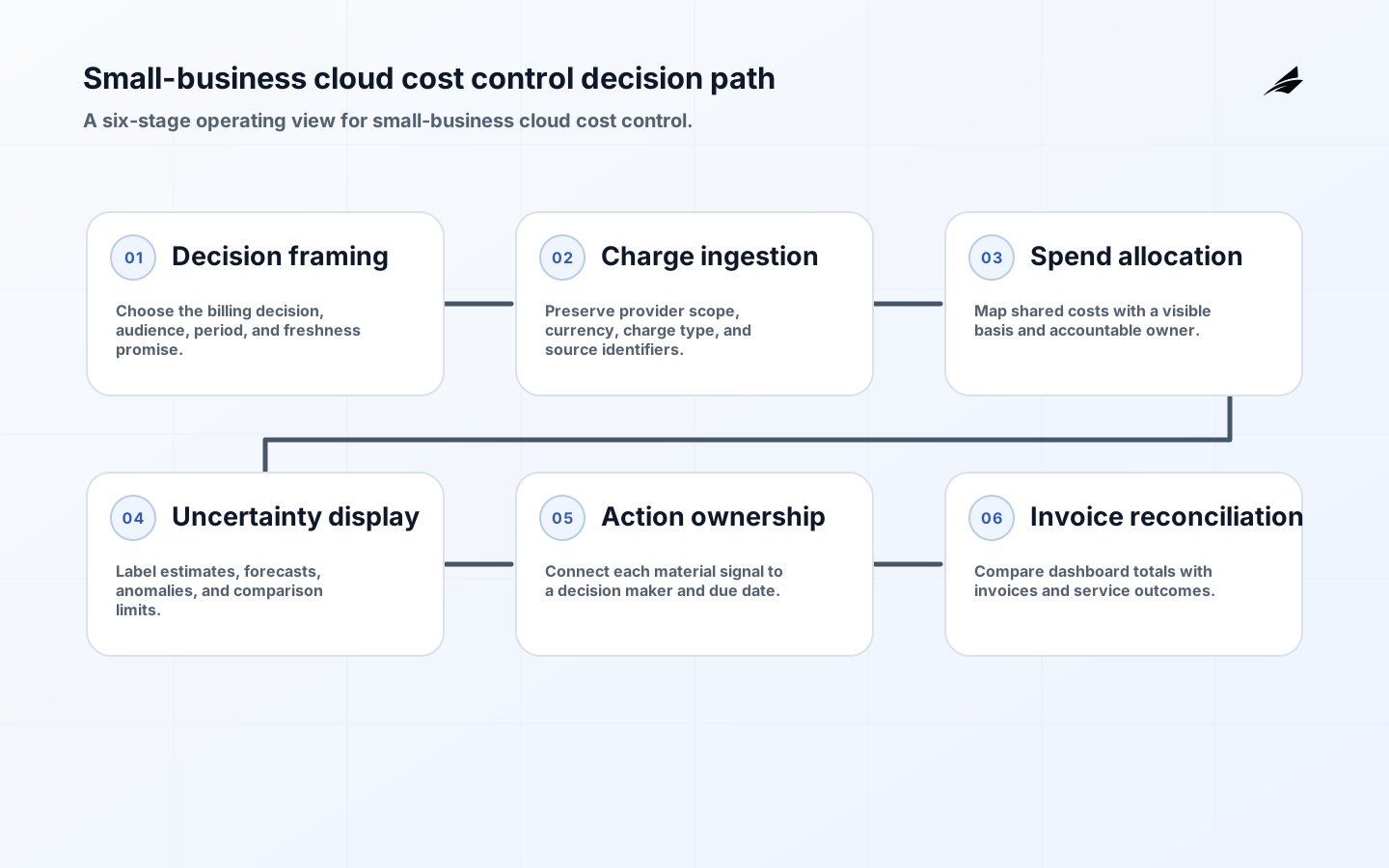
A small-business cloud cost optimization dashboard should help someone explain a bill and choose a responsible action. It does not need every FinOps feature on day one. It does need reconciled provider data, honest allocation, visible freshness, budget context, anomaly ownership, and a way to verify whether a change saved money without damaging service quality.
The FinOps Framework capabilities connect allocation, forecasting, budgeting, anomaly management, usage optimization and unit economics. The FinOps cost allocation guidance sharpens the treatment of shared spend. A small team needs a focused decision surface, not a miniature enterprise data warehouse; provider-specific cost-management guidance from Microsoft Azure and AWS helps ground the implementation.
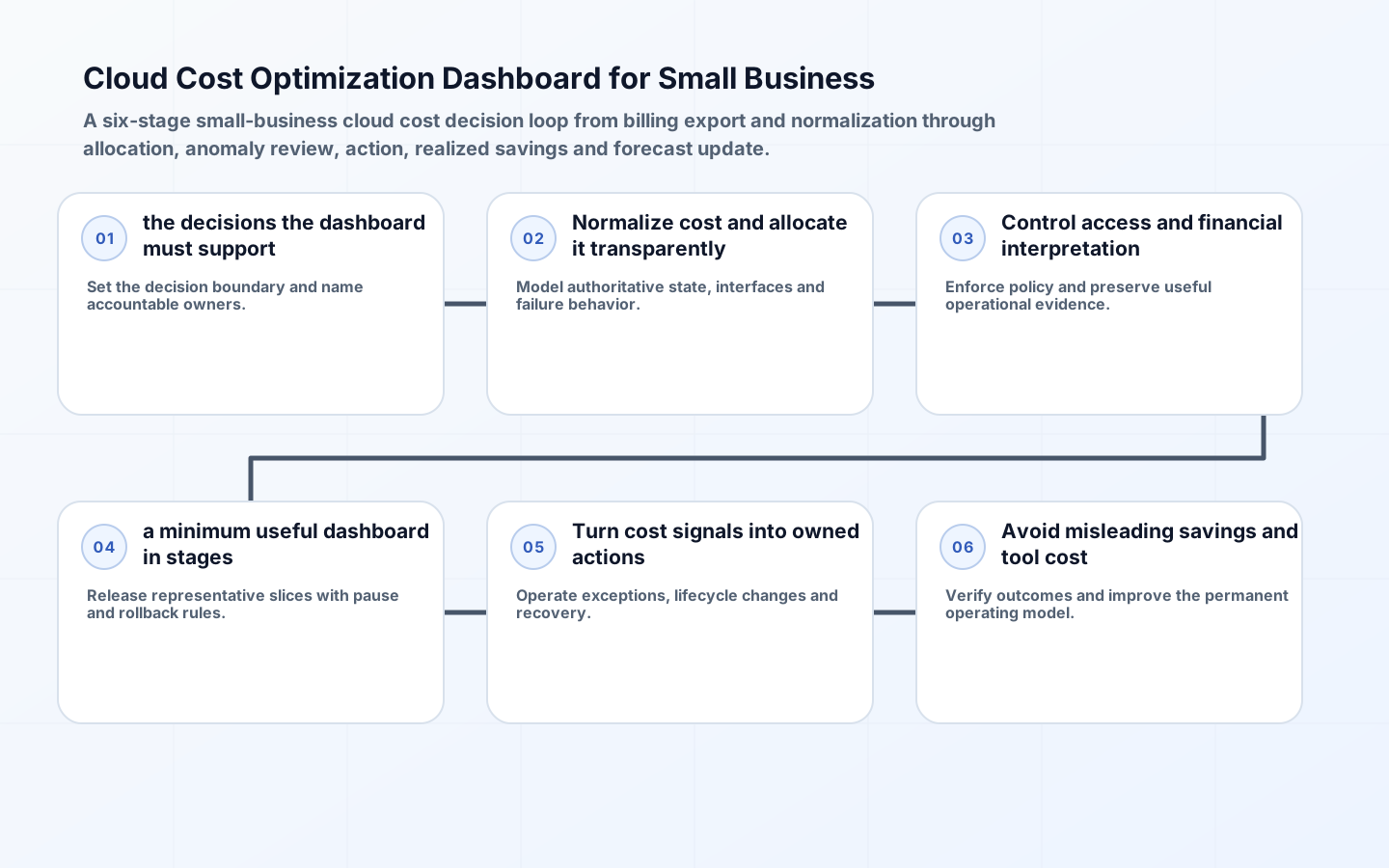
Define the decisions the dashboard must support for small-business cost control
Start by writing the decision or service outcome in one sentence and naming who depends on it. Define acceptable timeliness, accuracy, availability and recovery, then connect those measures to the user journey. For a cloud cost optimization dashboard for small business, the most important boundary is which billing scopes, discounts, shared charges and business units the dashboard includes and how the team communicates freshness. State exclusions and assumptions openly. A requirement that cannot be observed or tested should be rewritten before it becomes architecture.
For a cloud cost optimization dashboard for small business, map the actors, records, interfaces and suppliers that participate in the outcome. Include human approvals, scheduled jobs and support actions, not only interactive screens. Assign one accountable owner for the complete journey and technical owners for each component. Record who may accept risk, authorize a consequential change and declare recovery. This avoids a common failure in which every component is monitored but nobody owns the result seen by the customer or business team.
| Planning decision | Evidence required | Stop condition |
|---|---|---|
| Scope | Billing accounts and dates documented | Invoice total cannot be reconciled |
| Allocation | Owner and shared-cost rules | Unallocated cost is hidden |
| Freshness | Last complete period displayed | Partial day appears as savings |
| Value | Decisions and action owners named | Dashboard is only descriptive |
Normalize cost and allocate it transparently for small-business cost control
Ingest provider cost and usage exports at the correct billing scope, preserve source currency and charge type, and distinguish actual, amortized and forecast values. Normalize account, service, region and resource identifiers before adding business mappings. Keep identifiers stable across requests, events, logs and reports so an operator can reconstruct what happened without joining records by guesswork. Define source-of-truth ownership and synchronization behavior for every replicated field. If two systems may legitimately disagree, state which one controls each decision and how reconciliation occurs.
Allocate directly attributable cost first. Put shared cost in visible pools with documented rules such as usage, headcount or revenue. Report unallocated spend rather than forcing every charge into a misleading owner. Treat bulk operations and exceptional paths as first-class architecture. Preview target scope, enforce limits, make retries idempotent and preserve enough evidence to distinguish a repeated request from a new instruction. The design should remain understandable under partial failure; silent compensation and hidden manual repair make the apparent success rate unreliable.
Control access and financial interpretation for small-business cost control
Restrict billing data and negotiated rates according to finance policy while giving engineers enough detail to act. Separate dashboard viewers, mapping editors and budget approvers. Enforce policy at the server or authoritative service boundary rather than trusting a browser, client-supplied role or display filter. Deny by default where consequence warrants it. Test horizontal access, stale membership, disabled accounts, background workers and support tooling because controls often differ outside the primary interface.
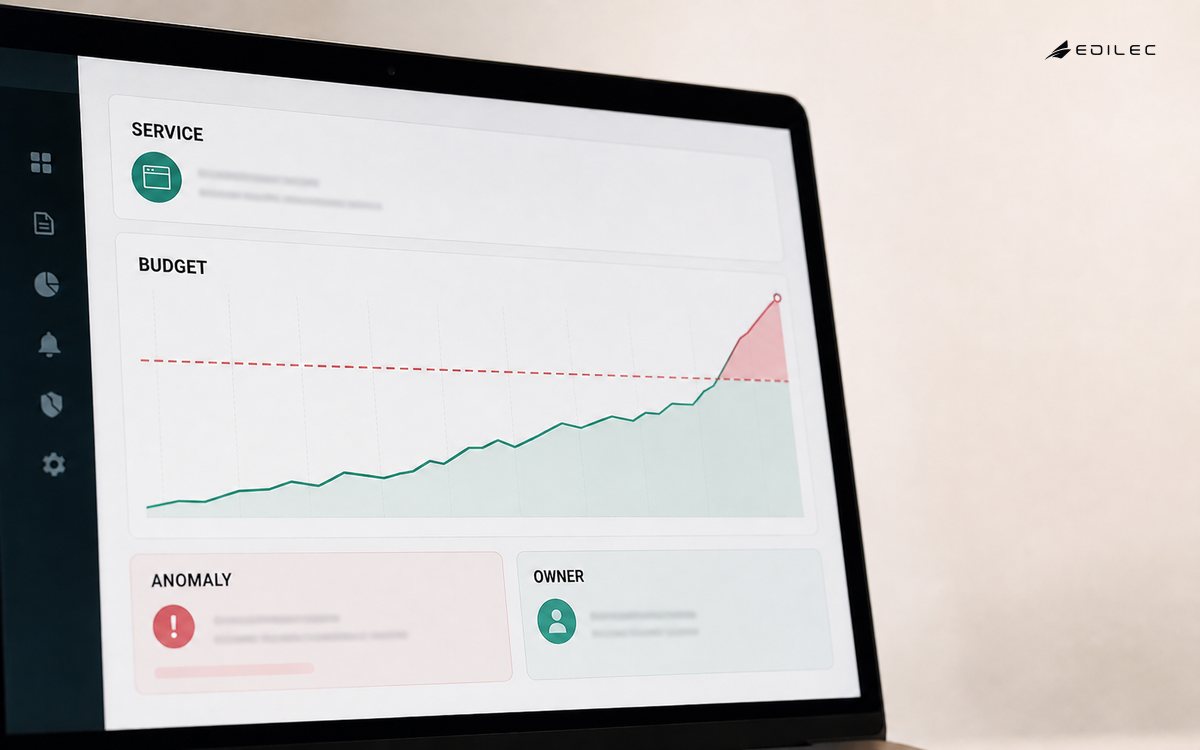
Version allocation rules, commitment treatment and business mappings. Changes should explain restated history so teams do not interpret a classification update as an actual cost spike. Log the decision inputs, policy version, actor, target, outcome and correlation identifier while excluding secrets and unnecessary personal data. Alerts should represent violated expectations rather than raw event volume. Every high-severity alert needs an owner, a runbook and a tested escalation route. Evidence should support both immediate diagnosis and later review.
Deliver a minimum useful dashboard in stages for small-business cost control
Start with daily or provider-appropriate freshness, total and trend, owner allocation, budget variance, top changes and unallocated spend. Add recommendations only after source totals reconcile. Build a representative vertical slice before expanding breadth. The slice should cross the real identity, data, integration and observability paths and include one failure and recovery scenario. Use production-like scale and policy where practical. A prototype that bypasses the hardest dependency proves interface design, not operational readiness.
Use a fixed review cadence and deliver one end-to-end action, such as removing an idle resource or correcting a storage lifecycle, with measured before-and-after cost and service impact. Release through observable cohorts with explicit entry, success, pause and rollback rules. Compare technical signals with business outcomes and support contacts. Preserve configuration and data migrations in version-controlled, repeatable mechanisms. When an exception is approved, record its owner, reason, expiry and compensating measure rather than weakening the standard silently.
| Delivery gate | Minimum proof | Owner question |
|---|---|---|
| Data | Closed-period invoice reconciliation | Who signs off on differences? |
| Anomaly | Known spike detected and routed | Does alert create an owned task? |
| Optimization | Action measured before and after | Was service quality preserved? |
| Unit economics | Governed cost and denominator | Can volume explain cost change? |
Turn cost signals into owned actions for small-business cost control
Every anomaly needs materiality, baseline, owner and status. Suppress known one-time events deliberately. Connect the change to deployment, usage or pricing evidence before labeling it waste. Dashboards should answer what changed, who is affected, whether the result is trustworthy and what action is expected. Separate service health, data quality, security and business outcomes so one healthy aggregate cannot hide another failing dimension. Include freshness and coverage. A green chart built from delayed or incomplete data is a particularly dangerous failure mode.
Track realized savings separately from recommendations and avoid double counting overlapping actions. Add unit measures such as cost per order, active customer or processed job when the denominator is governed and timely. Exercise routine and disruptive operations: onboarding, access change, configuration rollout, failed dependency, backup restoration, credential rotation, ownership transfer and retirement. Measure elapsed time and manual effort, then improve the runbook and automation. Operational acceptance belongs before broad launch because the first incident is an expensive place to discover missing authority or evidence.
Avoid misleading savings and tool cost for small-business cost control
Include data pipeline, BI license and review labor in dashboard cost. A complex platform that costs more to run than the addressable savings are worth for a small business. Estimate cost from enduring operating work as well as initial delivery. Include data cleanup, integration change, testing, support, observability, security review, supplier coordination, migration overlap and exit. Distinguish fixed platform cost, variable usage cost and human operating load. An apparently inexpensive design can become costly when every new customer, site or workflow requires bespoke intervention.
Commitment discounts trade lower rates for usage risk. Present coverage, utilization and expiry alongside recommendations. Do not frame every on-demand charge as savings available for commitment. Maintain a risk register with observable triggers and named treatment owners. Review concentration risk, unsupported dependencies, data-quality gaps, privilege accumulation, performance saturation and recovery uncertainty. Avoid false precision in cost or schedule estimates; give ranges, assumptions and decisions that would change the estimate.
Accept the dashboard through invoice reconciliation for small-business cost control
Reconcile dashboard totals to provider invoices for closed periods and explain tax, credit, refund, support and timing differences. Sample resources back to source export rows. Acceptance should be demonstrated by a cross-functional team using representative data and identities. Require successful ordinary journeys, rejected unauthorized actions, controlled partial failure, reconciliation, observable recovery and export of required evidence. Sample reported totals against authoritative records rather than accepting dashboard agreement with itself.
Ask each owner to explain one variance and complete one action from the dashboard. If a chart cannot lead to a responsible decision, simplify or remove it. Transfer ownership with maintained documentation, source and configuration access, alert routing, support procedures and a backlog of known limitations. Set a review date for assumptions and thresholds. A sustainable result is one the permanent team can explain, operate and improve without relying on the original project members for hidden context.
Review cloud cost optimization dashboard for small business: implementation checklist as a living operating capability after launch. At each review, compare the documented boundary with production configuration, recent incidents, support work, supplier changes and measured outcomes. Sample evidence rather than relying only on aggregate status. Record decisions, owners and due dates, and retire controls or reports that no longer support a real risk or business need. This cadence keeps architecture, policy and day-to-day practice aligned as customer volume, integrations, regulations and team responsibilities change.
Key takeaways: cloud cost optimization dashboard for small business
- Design the dashboard around recurring business decisions.
- Reconcile source billing before optimizing.
- Document direct, shared and unallocated cost clearly.
- Route anomalies and recommendations to named owners.
- Measure realized savings and service impact without double counting.
Usually not. Provider billing exports can lag and may be revised. Display the last complete period, ingestion time and known incompleteness so users do not confuse latency with a sudden saving.
Tags help but are often missing, mutable or unavailable for some charges. Combine account structure, resource metadata, cost categories and explicit shared-cost rules, then report allocation coverage.
Start with native exports and a focused review. Buy or build more when multiple clouds, complex commitments, scale or labor justify it. Include tool and operating cost in the value case.
A governed unit cost tied to business activity is often more useful. Pair it with budget variance, unallocated share, anomaly response and realized savings so growth is not mistaken for inefficiency.
A useful small-business cloud cost dashboard makes billing trustworthy and action obvious. It shows where cost came from, how it was allocated, what changed, who owns the response and whether an optimization delivered value without harming the service. Starting with reconciled data and a small operating cadence produces better results than filling a screen with recommendations that no one can verify or execute.
Practical decisions for small-business cloud cost control
Design the dashboard around one monthly review: what changed, who explains it, which cost is shared, and what action has an owner? Show billing period, ingestion timestamp, currency, provider scope, allocation coverage, and comparison basis beside every important number. Keep unallocated cost visible instead of spreading uncertainty across teams. A recommendation should state evidence, expected benefit, service risk, prerequisite, owner, and review date. Compare complete post-change billing data with a baseline and include engineering time, commitment risk, and service impact before calling savings realized.
Related reading for small-business cloud cost control
Compare this guide with Cloud Cost Dashboard for Small Business: Scope, Cost and Delivery Plan, Cloud Cost Optimization Dashboard for Small Business: Practical FAQ, Cloud Cost Visibility: Connect Spend to Product and Architecture Decisions. During decision framing for small-business cloud cost control, these adjacent articles help connect the implementation choice to ownership, delivery, and operations.
Cloud Cost Dashboards for Small Business: A Practical Build Plan FAQ
What must a small cost dashboard show beside a number?
Show the billing period, freshness, currency, allocation basis, uncertainty, comparison point, and person responsible for the next action beside each number.
What is the practical starting point?
Reconcile one complete billing review, explain what the total excludes, and assign every follow-up to an owner before adding more dashboard dimensions.
When should the team scale the approach?
Expand when invoice reconciliation is repeatable, allocation exceptions are visible, and the dashboard costs less to operate than the decisions it improves.
Conclusion: small-business cloud cost control
A small-business cost dashboard is valuable when it turns an imperfect charge feed into a decision someone can own. Reconcile totals, show uncertainty, explain allocation, and keep the operating burden proportionate to the savings opportunity.