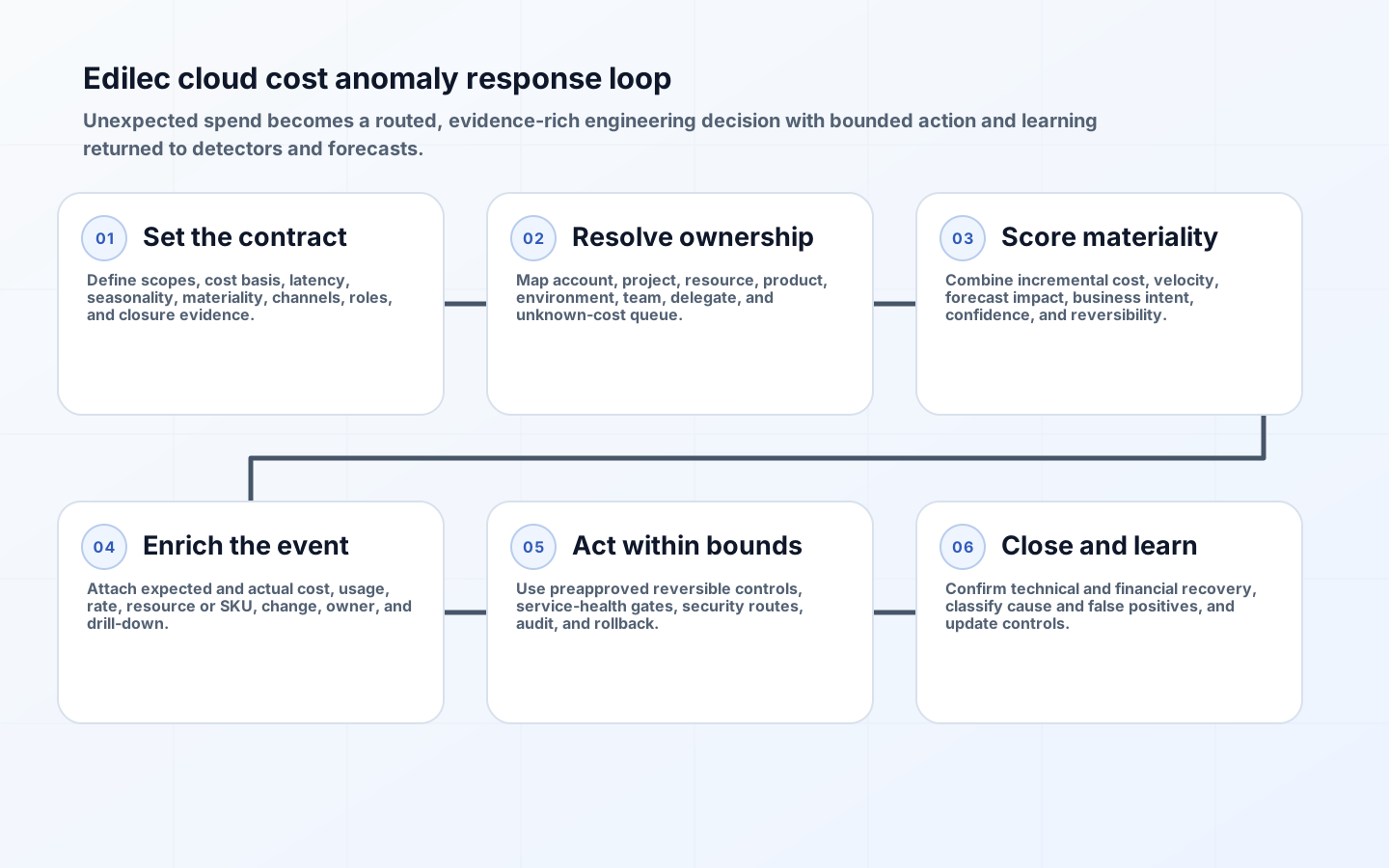
A cloud cost anomaly becomes actionable when the alert identifies a material deviation, the resources or services that changed, the engineering owner, and the first safe investigation steps. Detection alone is not response. Sending every provider alert to a FinOps mailbox creates a queue of unexplained money; paging every engineer creates noise. Build a joint operating loop that combines financial materiality, technical context, ownership, and bounded remediation authority.
The FinOps anomaly management capability covers detection, identification, clarification, alerting, management, false positives, and resolution documentation. It also stresses allocation metadata because granularity determines who can evaluate an event. Cost data is delayed and corrected, so this is not an exact copy of latency incident response. Severity and urgency need to account for detection lag, spend velocity, business intent, and reversibility.
Define the anomaly operating contract
Specify monitored scopes, cost basis, currencies, data latency, detector cadence, expected seasonality, minimum materiality, channels, response hours, roles, and closure evidence. Decide whether the system detects upward spikes, downward drops, new spend, missing spend, commitment vacancy, or all of them. A sudden cost decrease can signal telemetry loss, accidental deletion, or failed customer activity and deserves a route even when it helps the budget.
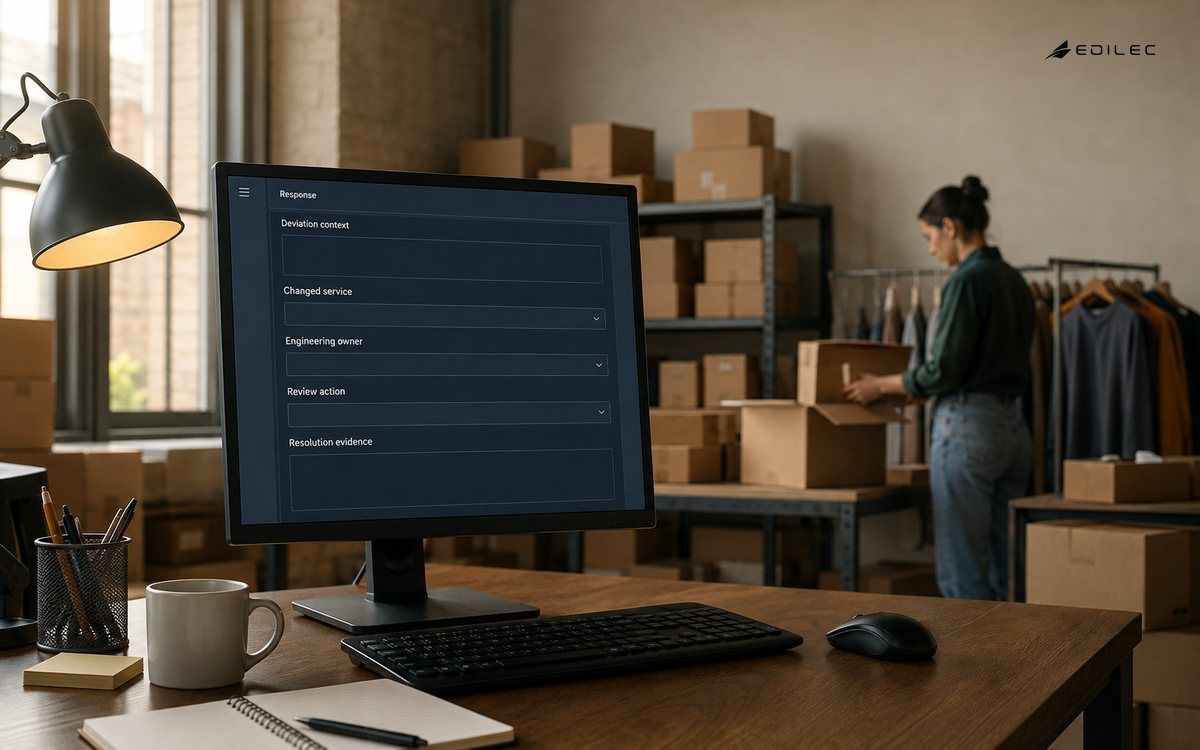
Separate detector score from business severity. A statistically unusual small sandbox charge may be low severity; a modest deviation in a high-velocity production service may threaten the forecast. Use estimated incremental cost, rate of change, forecast impact, data sensitivity, production risk, and reversibility. Set escalation windows appropriate to billing latency. Do not call an engineer at night for a charge that cannot materially change before business hours.
| Factor | Low | Medium | High |
|---|---|---|---|
| Financial materiality | inside team variance band | threatens monthly team budget | threatens product or company forecast |
| Spend velocity | bounded or stopped | continuing at known rate | accelerating or unbounded |
| Business context | expected experiment | unconfirmed production change | no approved change or possible compromise |
| Reversibility | easy low-risk correction | requires owner decision | delay increases loss or security risk |
| Data confidence | preliminary weak signal | multiple dimensions agree | provider detail and resource evidence confirm |
Build ownership and routing before tuning alerts
Resolve provider account or subscription, project, resource, service, environment, product, team, cost center, and support channel through effective-dated metadata. Use tags where available, then account hierarchy, deployment catalog, infrastructure state, and exception mappings. Every unresolved event goes to an ownership queue with age and materiality, not permanently to “central.” The FinOps allocation capability provides the upstream discipline that makes routing credible.
Route to a team channel for investigation and to a central anomaly record for governance. Page only when severity and safe action justify interruption. Include FinOps as coordinator for cross-account, discount, invoice, or provider questions; include security for suspicious creation, credentials, mining patterns, or unexpected regions. Maintain delegates for absent owners and a platform route for shared infrastructure. Test routing quarterly with synthetic records and reorganizations.
Send evidence, not a naked threshold
An alert should show detected time, affected interval, data freshness, actual and expected cost, estimated incremental amount, confidence, provider, account, service, region, charge category, top resource or SKU changes, owner, recent deployments, planned change links, and direct drill-down. Compare usage and rate: cost can rise because quantity changed, a discount expired, pricing changed, a credit moved, or commitment coverage shifted. Each cause needs a different responder.
Provider tools expose different evidence. AWS documents Cost Anomaly Detection against processed net unblended cost and provides monitors, subscriptions, and root-cause views in its official guide. Azure Cost Management’s unexpected-cost analysis distinguishes new, removed, and changed costs. Preserve native detector identifiers and links while normalizing severity and ownership in the central process.
| Observation | Likely branch | Evidence to inspect | Potential action |
|---|---|---|---|
| Usage and cost rise | demand or runaway resource | quantity, resource events, product traffic | validate demand, cap or stop safely |
| Cost rises, usage stable | rate or discount change | price, commitment, credit and SKU | repair coverage or update forecast |
| New service or region | deployment or compromise | audit events, identity and IaC | approve, contain or delete |
| Cost falls abruptly | outage, deletion or data delay | service health and export completeness | restore service or wait for final data |
| Shared cost shifts | allocation or account change | rule version and ownership map | correct model, not workload |
| Repeated false alert | detector context gap | seasonality and planned change | tune scope with documented reason |
Grant bounded remediation authority
Responders need a safe action catalog. Low-risk actions may include stopping an approved non-production resource, reducing a runaway autoscaling maximum, revoking a leaked credential under security procedure, or disabling a malformed batch job. High-risk production deletion, database resizing, region changes, or commitment purchases need service-owner approval. Every automated action requires scope, threshold, dry run, audit log, rollback, and a service-health guard.
Treat cost and reliability together. Stopping expensive production compute can create greater business loss than the anomaly. If the cause is legitimate demand, the correct response may be raising a forecast, not throttling customers. If a rate change caused the event, engineering may have nothing to remediate. Assign incident commander, technical owner, FinOps analyst, and communications owner for high severity, with one canonical record and timestamps.
Close anomalies with evidence and learning
A resolved record includes cause, financial impact, affected resources, business impact, action, owner, timestamps, remaining risk, and expected billing correction. Keep it open until cost or usage returns to the accepted band, a legitimate change is incorporated into baseline and forecast, or a provider adjustment is confirmed. Because billing lags, technical containment and financial closure may occur at different times; record both.
Classify false positives: planned event, seasonality, data delay, allocation change, credit timing, detector sensitivity, or duplicate alert. Feed the correct class into monitor scope, suppression calendar, ownership data, or baseline model. Do not suppress a whole service because one noisy event annoyed responders. Measure detection delay, routing success, acknowledgment, time to containment, incremental cost avoided, false-positive rate, recurrence, unowned-event age, and percentage with complete closure evidence.
Use change calendars as context, not automatic suppression. A planned load test explains an increase but can still exceed its approved budget or continue after its window. Attach expected services, regions, time, maximum incremental cost, and owner to each event. The detector should label a matching anomaly as planned and route it to that owner with the remaining budget; it should escalate when scope or amount exceeds the declaration. This preserves control without training teams to disable monitoring during precisely the changes most likely to create runaway consumption.
Test the response system with tabletop and controlled technical exercises. Simulate a forgotten GPU job, a public object-store request surge, an expired discount, a compromised credential creating resources, a delayed billing export, and a legitimate product launch. Verify detection assumptions, enrichment, ownership fallback, security escalation, safe action, service-health checks, and closure reconciliation. Record gaps as improvements to metadata, provider monitors, runbooks, permissions, or forecasts. An anomaly program becomes reliable through exercised coordination, not through progressively lower statistical thresholds.
Coordinate detectors across providers and internal models. Provider-native systems understand their own billing dimensions and may surface root-cause candidates quickly; a central detector can compare products, budgets, and normalized history. Preserve both identities and deduplicate notifications using provider, account, interval, service, and cause rather than suppressing one source wholesale. When detectors disagree, show the data basis and freshness. A central model operating on yesterday's export and a provider model using newer processed data can both be correct for their observation windows. Responders need that timing context before labeling either one false.
Protect the anomaly channel itself. Restrict who can alter monitors, thresholds, subscriptions, routing, and suppression; log every change; and alert on disabled high-value scopes. Review dormant monitors and notification destinations after reorganizations. An attacker or accidental administrator who disables cost detection can extend both financial and security impact. Monitor health should include expected evaluation cadence and delivery tests, not merely the absence of tool errors.
Key takeaways
- Define anomaly scope, data latency, materiality, roles, and closure before enabling broad alerts.
- Route through effective-dated resource and product ownership, with an explicit queue for unknowns.
- Enrich events with expected versus actual cost, usage, rate, resource, change, and confidence context.
- Grant only bounded, reversible remediation and gate production actions on service health.
- Turn false positives and resolved causes into detector, metadata, forecast, and control improvements.
Frequently asked questions
Should every cost anomaly page an engineer?
No. Page only when materiality, velocity, confidence, and actionable urgency justify interruption. Route lower-severity events asynchronously with ownership and due dates.
Should the system automatically stop costly resources?
Only for preapproved scopes with clear thresholds, audit, rollback, and service-health protection. Broad production deletion based solely on cost is unsafe.
Is legitimate demand an anomaly failure?
No. Detection correctly found an unexpected change. The response is to validate demand, update forecasts and capacity assumptions, and adjust the baseline.
Conclusion
Cost anomaly response succeeds when a statistical signal arrives with enough technical and organizational context to support a safe decision. Build ownership first, measure materiality, preserve provider evidence, and close the loop into forecasts and controls. Then alerts reach the people who can act without turning every unusual bill into either a finance mystery or an indiscriminate production page.